

TTC
TTC on April 10 reported a new service milestone: completing 34 billion customer trips on the transit agency’s streetcar, subway and bus networks since operations began in 1921. (Click here to view system map.)
The 34 billionth trip was made April 4 and followed a year of what TTC called “significant ridership growth.” In 2024, customers took 420 million trips with TTC, an increase of 23.5 million rides from 2023. Riders in 2024 made 204 million trips on the TTC bus network, 181 million subway rides, and 35 million streetcar trips. TTC said it expects approximately 439 million rides in 2025.
The agency surpassed 33 billion rides in October 2022 and 32 billion in May 2019.
“Achieving 34 billion rides after a year of solid ridership growth shows us that customers are relying on TTC buses, streetcars, and the subway network to get where they need to go,” TTC CEO Greg Percy said. “The TTC has experienced annual ridership increases for the past three years, having reached nearly 420 million trips in 2024, which could not be possible without the skill and professionalism of our workforce who work tirelessly to get our customers from A to B safely.”
In other news, TTC recently awarded the Progressive Design-Build contract for its Bloor-Yonge Capacity Improvement project, and in January set a 2025 operating budget of C$2.8 billion and a capital program of C$16.4 billion.
TransLink
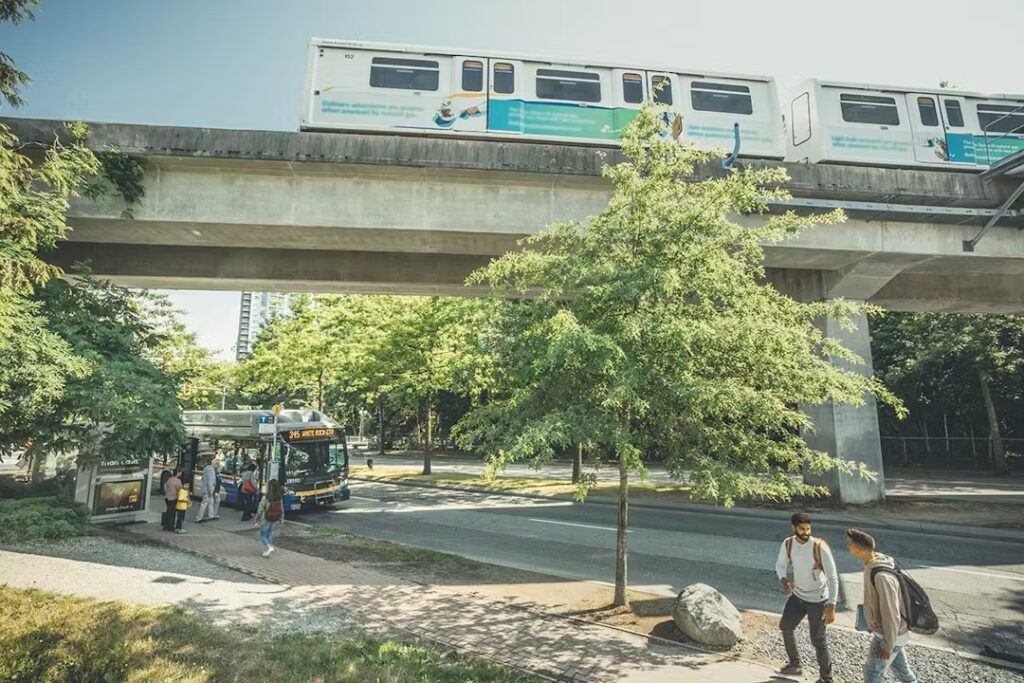
TransLink is seeking public feedback on its 2025 Investment Plan that it said will increase bus service, reduce overcrowding, and deliver projects to improve the region’s transportation system. The plan also defers any potential cuts to transit services by fully funding TransLink operations until the end of 2027, according to the agency. Comments are due April 24.
Following public consultation, the plan will be voted on for approval by the Mayors’ Council and TransLink’s Board on April 30.
Expanding Transit
According to TransLink, proposed investments advance early priorities in the Access for Everyone Plan, and could begin as early as September 2025. It said proposals include:
- “The largest increase in bus service since 2018, including:
- “Increasing service on up to 50 bus routes to address overcrowding.
- “40 new or improved routes to support transit-oriented communities, industrial areas, as well as neighborhoods with limited or no transit services.
- “Seven new or improved seasonal services to parks and beaches.
- “Extending the North Shore’s R2 RapidBus to Metrotown by 2027.
- “Design of three BRT [Bus Rapid Transit] corridors.
- “Additional HandyDART trips in response to growing ridership.
- “Adding West Coast Express [regional/commuter] railcars to address customer demand.
- “More funding for the Major Road Network, including funding to address the deterioration of road conditions in many areas of the region.
- “Continuing investments in local active transportation infrastructure and bus priority infrastructure, which also speeds up bus service and makes it more cost-efficient to deliver.”
Funding the Investment Plan
TransLink reported facing a structural deficit of more than C$600 million annually due to “a shortage of operating funding caused primarily by declining fuel tax revenue, increasing costs, and fare increases being capped under the rate of inflation between 2020 and 2024.” Its 2025 Investment Plan is said to “fully funds services through to the end of 2027 and cuts the structural deficit nearly in half starting in 2028.”
According to TransLink, funding this plan will include several measures:
- “A transit fare increase of 5% in July 2026 followed by 2% increases annually. This amounts to a C$0.14 increase for an average trip in 2026.
- “An increase in the YVR AddFare by C$1.50 in July 2026 followed by 2% increases annually. This will be the first increase in this fare since its inception in 2009.
- “An additional 0.5% increase to the median household’s property tax in 2025, which equates to C$20 for the median household.
- “An increase in off-street parking taxes from 24% to 29%.
- “Annual operating funding from the government of British Columbia.”
“TransLink is committed to continuing to manage its budget prudently,” the agency reported. “Last year, TransLink announced C$90 million in annual cost efficiencies that reduced headcount by eliminating corporate roles, reduced outsourcing contracts by bringing more services in-house, and increased fare evasion enforcement, among other actions. TransLink also had an expert review organizational efficiency, accepted all recommendations that did not reduce transit services, and will identify further cost-efficiencies and savings.”
TransLink noted that it appreciates the investments by its government partners on the Mayors’ Council on Regional Transportation and the Province of B.C. “to advance these critical initiatives that will help ensure the delivery of quality transit services in the Metro Vancouver region.”
Separately, TransLink in March completed upgrades to the Brentwood Town Center SkyTrain Station in Burnaby, and began field testing the first of its new Mark V trainsets from Alstom, which will run on the SkyTrain automated rapid transit system.
ACE

In mid-May, ACE, the San Jose-to-Stockton, Calif., regional/commuter rail service, will release a new ticketing platform and mobile app that will include the following changes:
- Every passenger will be required to have a valid ticket associated with them—meaning that multi-ride tickets cannot be shared. Group ticketing will be a part of future phases, according to ACE.
- The age qualification for seniors will be lowered from 65 to 62.
- Children ages 3 to 12 will be eligible for discounted fares.
- Children ages 2 and under can ride for free accompanied by a paying adult.
- An ADA-certified passenger with a Personal Care Attendant may be escorted by one PCA at no additional fee. Companions are subject to regular fares.
The agency said it will phase out paper tickets in the future.
The loyalty program will also change, according to ACE. At this time, riders who purchase a monthly ticket for 11 consecutive months can get their next month’s pass for free, which can be as much as a $386.00 savings for the year. “With the change in rider travel patterns and behaviors shifting from being on board the train five days a week to two to three days a week, on average, the agency plans to reimagine the loyalty program and come up with a solution that expands to all types of riders regardless of their frequency of travel,” ACE reported. The agency said it is still in the “exploratory phase” of the future of its loyalty program. Additionally, the new ticketing environment will support the introduction of promotional offers and deals to help attract new riders, which has been a limited option in the past, ACE said.
“Over the coming months, ACE riders can look forward to a much-improved ticketing experience that allows them to look up their past travel history, enables our staff to resolve customer service issues in a more timely fashion, and will better prepare our agency to respond to new forms of travel incentives,” said David Lipari, Deputy Director of Passenger Experience and Communications for the San Joaquin Regional Rail Commission, which owns, operates, and is the policy-making body for ACE regional/commuter rail service.




