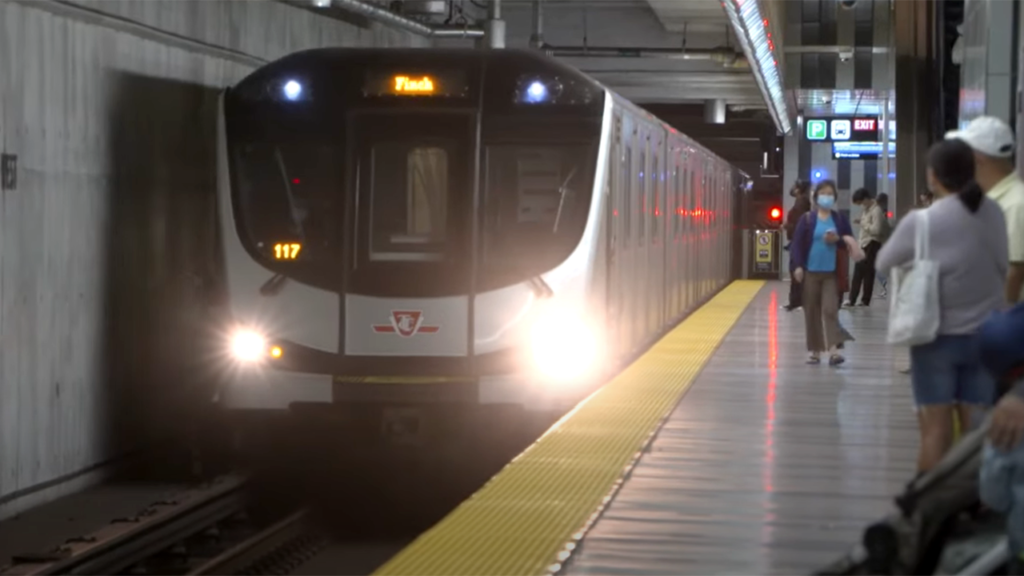
The Toronto Transit Commission has set a 2025 operating budget of C$2.8 billion and a capital program of C$16.4 billion. TTC touted the program as freezing fares for the second straight year, adding the most service in a decade, improving system safety and cleanliness, and investing in long-term capital projects.
The C$2.8 billion combined operating budgets for the TTC conventional system and Wheel-Trans (paratransit) represent a 6.5% increase over the approved 2024 budget. It allocates C$33 million “to preserve and build on service increases made in 2024 and address rising demand on weekends and evenings as well as challenges posed by road congestion. The overall increased service hours will match pre-pandemic levels.” Wheel-Trans funding increased by $14.2 million to “meet rising demand.”
The ops budget creates a new subway stations management pilot program to add more staff and improve cleanliness at six priority locations—Scarborough Town Centre bus terminal, and Kennedy, Dundas, Finch, Spadina, and Lansdowne stations. It also establishes a pilot project on 11 routes across the Toronto “to reduce bunching and gapping of vehicles in real-time through enhanced on-street route management, and funds operating and maintenance costs for the opening of Lines 5 and 6 in 2025 as well as full-year operations on the Line 3 SRT bus replacement service.
The recommended 2025-2034 Capital Budget and Plan of C$16.395 billion is C$5.1 billion higher than last year’s Capital Budget and represents the largest funding increase since 2019. Almost C$4.9 billion of the increase is dedicated to “crucial unfunded state-of-good-repair (SOGR) work, such as track safety and reduced speed zones, and projects to make all stations accessible.” The additional investments reduce the TTC’s SOGR funding backlog by almost 50% from C$8.2 billion by 2033 to a projected C$4.3 billion over the next 10 years.
Capex highlights include 55 replacement subway trainsets on Line 2 with the recently announced C$1.5 billion matching Federal and Provincial funding (C$2.3 billion total project cost); subway systems infrastructure (signals, electrical, communication) and escalator/elevator overhaul/replacement programs, with C$368 million in additional funding; bus, streetcar and subway fleet overhaul programs directly resulting from the C$500 million funding provided through the City’s reallocation of the Gardiner/DVP funding; and investments in approximately 700 eBuses and 950 charging systems totaling C$1.2 billion over the next five years, with a total project cost of approximately C$2.4 billion.
TTC’s capex budget also includes climate adaptation and resiliency, efficiency measures and projects that will reduce GHG emissions, key initiatives of the TTC’s Innovation and Sustainability Strategy, with more than C$67 million in new funding; and targeted station/transit priority investments of C$15 million over 2025 and 2026 to improve station conditions and aesthetics, pilot a public address system upgrade and station lighting LED retrofit at six key stations and install red paint treatment on existing city roads, intersections and TTC stations to improve transit priority and safety, and support fare compliance at station entrances.