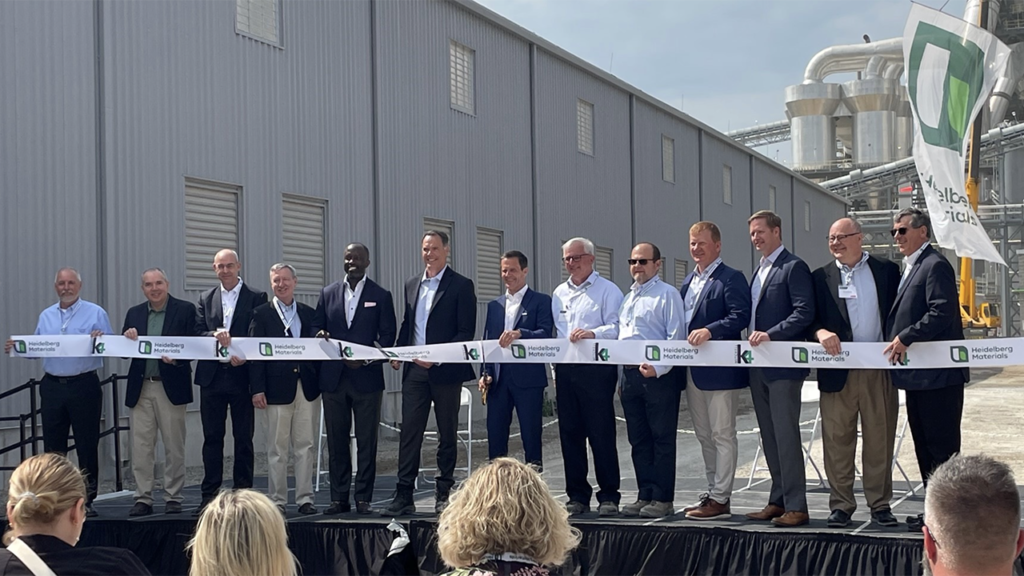
The plant has a capacity for 2.4 million tons of cement per year, and features a 72-yard-wide, 54-yard-high storage dome that can hold 154,000 tons of clinker; an automated lab; a smart motor control center to collect and communicate data; and a high-speed automated rotary-type packing machine capable of filling 3,600 bags per hour, according to Heidelberg Materials. The company said it replaces a more than 50-year-old plant “to better support our existing customer base in the Midwest while also expanding our reach in this growing market.”
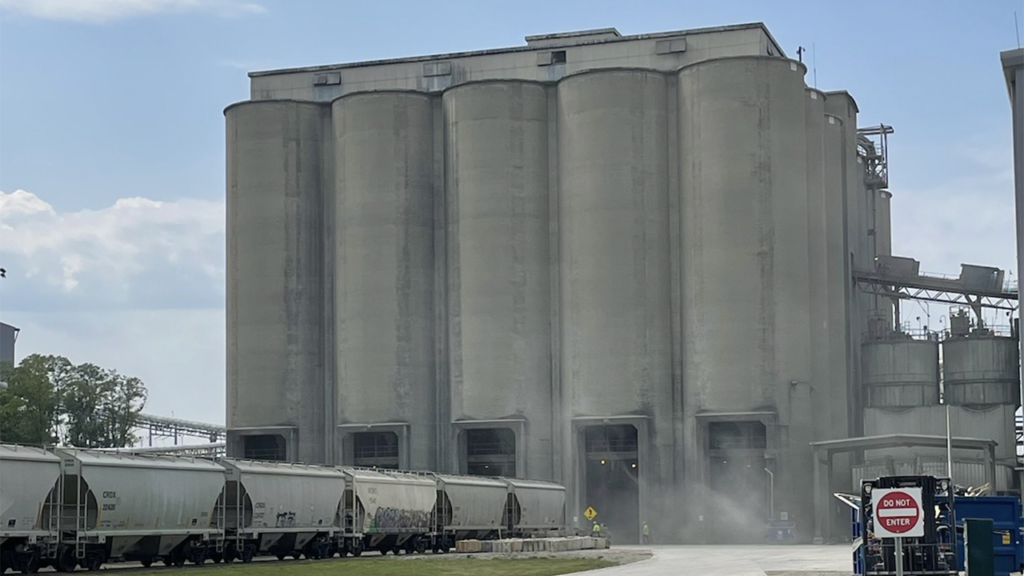
CSX collaborated with Heidelberg Materials throughout design and construction to improve and expand rail infrastructure, reported the Class I railroad, which took part in the ribbon-cutting event.
“The Heidelberg Materials team and its contractors showed tremendous vision not only in designing and building a state-of-the-art cement production facility, but also in ensuring it would achieve supply chain efficiencies through increased use of rail,” CSX Executive Vice President of Sales and Marketing Kevin Boone said. “Our commercial, industrial development and transportation teams all worked closely with Heidelberg to optimize the facility for rail service.”
“The plant will substantially contribute to Heidelberg Materials’ offering of low-carbon cement and concrete—it is the springboard to become the first fully decarbonized cement plant in the USA,” Heidelberg Materials CEO Dominik von Achten said. “It represents our commitment to further strengthening our North American footprint and increasing the sustainability of our products.”
“The plant will reduce clinker production carbon dioxide emissions per ton of product by almost 30% mainly through operating on natural gas,” added Chris Ward, a member of the Heidelberg Materials Managing Board and responsible for the North America Group area. “Our investment in the Mitchell facility helps us lower our carbon footprint while serving the growing demand for more sustainable products in this key market.”