
As my constituents in Upstate New York and Americans across the nation face a historic affordability crisis, conditions are set to get a lot worse if the California Air Resources Board (CARB) succeeds in getting authorization from the U.S. Environmental Protection Agency to ban locomotives from operating in California beginning in 2030 unless they are “zero-emission.”
As a House Transportation & Infrastructure Committee member, as a conservationist and as a New Yorker, I can tell you, this regulation is a disaster waiting to happen. It sets unrealistic and misguided limitations on locomotives, will increase the cost of goods, place an additional strain on roads and bridges and weaken our supply chain.
Although the proposed regulation could only be enforced in California initially, the impact will be national if CARB gets federal approval to move forward. That’s because railroads operate on an interconnected network in which an obstruction in one state reverberates system-wide, slowing rail traffic and snarling the supply chain.
First, the problem with “zero emissions” by 2030 is that the battery technology and supporting infrastructure required to accomplish this does not exist and is nowhere close to fruition. Compliance would be impossible and rail service would effectively shut down at the California border, creating massive disruptions throughout the 140,000-mile North American rail system.
Second, the plan is completely misguided and will not accomplish the conservation goals that lawmakers like me fight for. Railroads move 40% of U.S. long-distance freight. But according to the EPA they only account for just 1.7% of transportation-related greenhouse gas emissions and 0.5% of overall emissions. That’s because trains can move an entire ton of goods across 500 miles on a single gallon of fuel. With ongoing advances in locomotive technology, improved routing software and battery-electric and hydrogen locomotives in development, rail will only build on this advantage.
Rather than incentivizing these steps and other responsible progress toward shared emissions reduction goals, the CARB regulation would require phaseout of diesel locomotives on an unrealistic timetable and force railroads to fund California-administered “spending accounts” of as much as $800 million per railroad per year. Many short line railroads would likely be driven out of business.
Third, adoption of the CARB regulation would disrupt nationwide supply chains and pass significant economic pain onto consumers. If we turn back time just a few years, most of us can vividly remember the supply shortages that impacted our families, friends and neighbors. In my state of New York alone, there are 38 railroads operating across 3,442 miles that would be significantly impacted by rail network disruptions caused by the CARB plan.
We need to address the emissions related to climate change and other threats to health and the environment. I am committed to progress on this front and believe an all-of-the-above energy approach gets us there—an approach that preserves our economy, supports working families, farmers and businesses, and allows for continued growth to meet the needs of our state and nation.
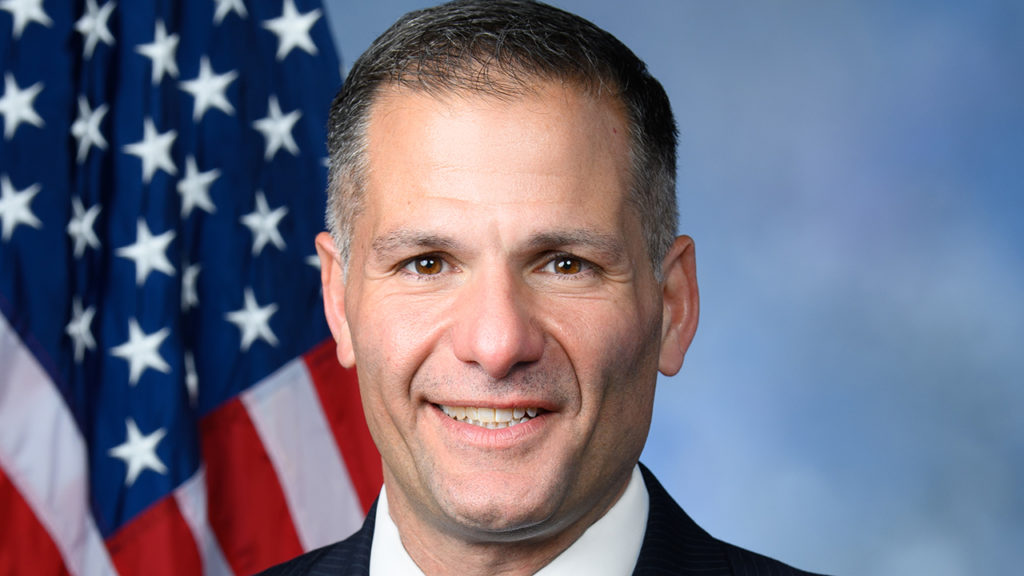
Marc Molinaro (R-N.Y.) serves as the U.S. representative for New York’s 19th congressional district.




