
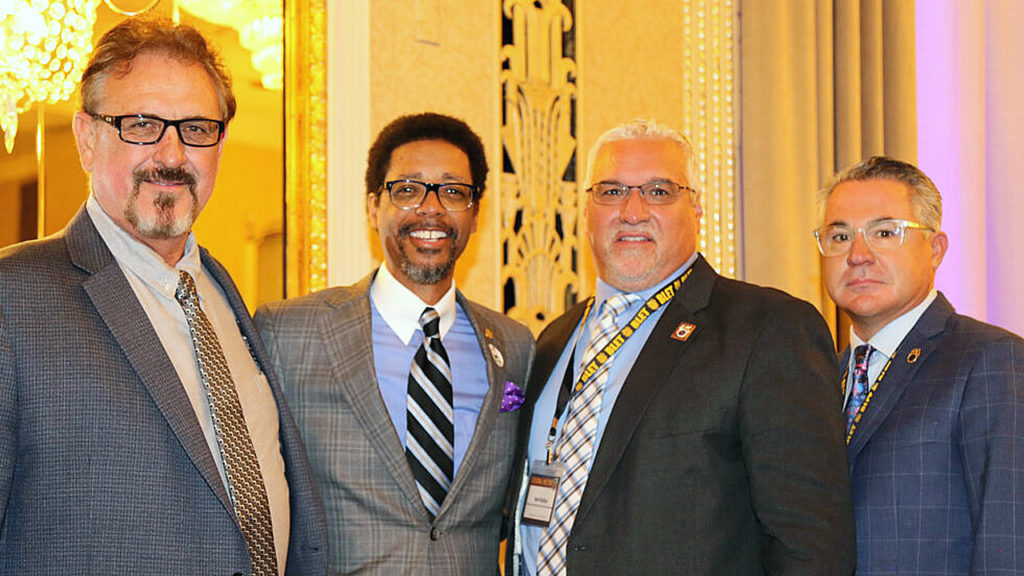
NEWS ITEM: Robert E. Primus, named by President Biden in May to succeed Martin J. Oberman as Surface Transportation Board (STB) chairperson, last week scheduled a public hearing in Washington for Sept. 16-17 “to gather information about recent trends and strategies for growth in the freight rail industry.” Invited to testify are “executive-level officials” from all Class I railroads and representatives from smaller railroads, labor unions, shippers, rail suppliers and industry analysts.
Primus called the hearing without seeking a concurring vote of fellow STB members.
The subject of this hearing displays unreserved moxie on Primus’ part. He has a perceived cozy relationship with rail labor plus owns a history of a prickly exchange with the late and former CSX CEO Jim Foote from an April 2022 hearing called by Oberman into rail service disruptions. Foote, the only CEO to attend, termed his attendance a “courtesy” to the Board and soon found himself in a contentious exchange with Primus.
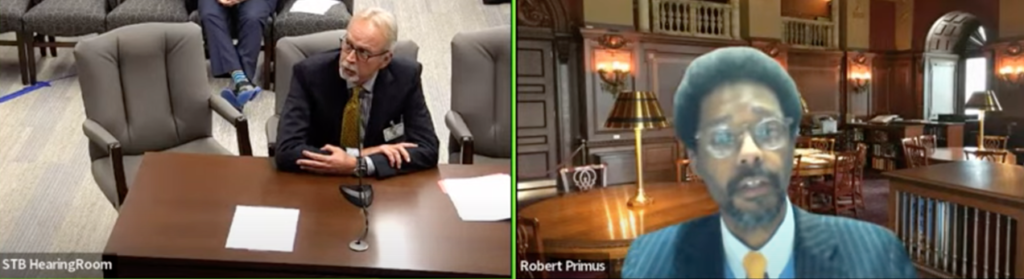
Whether CEOs attend this hearing is to be seen, as they prefer travel to Washington only to lobby lawmakers, attend congressional fundraisers or Association of American Railroads board meetings. Even senior adjutants to rail CEOs can consider contemptuous their treatment as subordinates by unelected regulators who have never signed the front of paychecks, dealt with bankers and investors ready to choke off capital investment when alternatives shine brighter, or fully understand that profits are not entitlements for shippers and labor.
If Primus intends to impersonate a railroad board of directors and cross-examine rail officials as to marketing and investment strategy decisions, his reach may exceed his statutory grasp. The STB statute provides for regulating service disruptions, anticompetitive activity, rate reasonableness, revenue adequacy and financial health. The statute does not give the STB authority to regulate crew size, employee headcounts, train length or capital investment.
Such interrogation would be a high-hazard broad interpretation of the STB statute since the Supreme Court in June ruled that it is the function of courts, not regulatory agencies, to interpret congressional statutes. Federal court smackdowns are a most unpleasant experience for regulators.
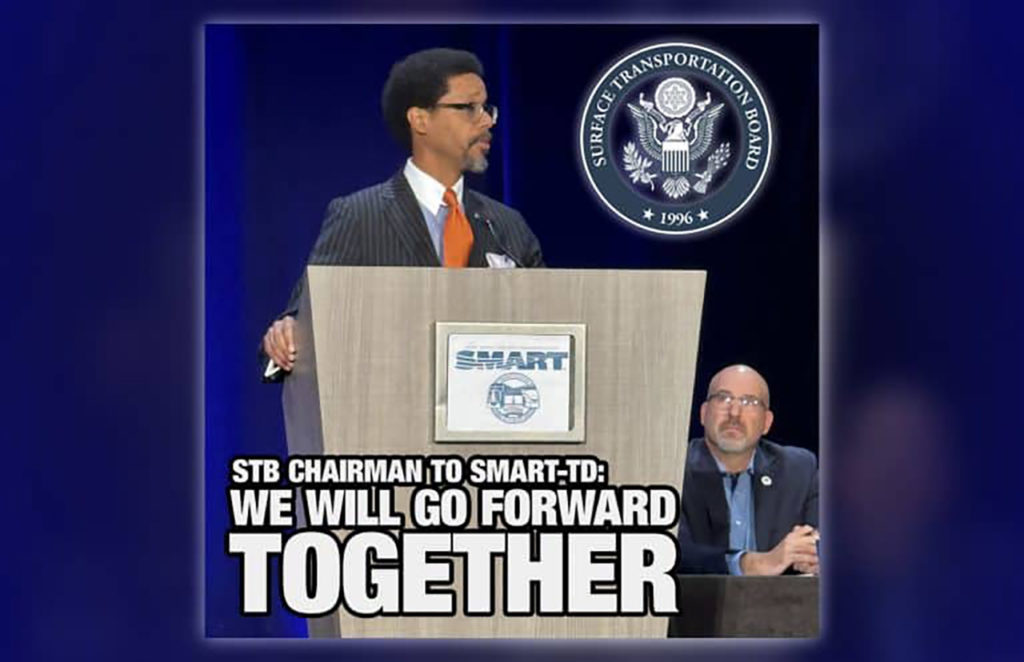
Questioning Primus’ motive for this arguably problematic September hearing is proper given a perception he has a thumb on the regulatory scale in favor of rail labor. Just days before announcing the hearing, Primus was hosted by the Transportation Division of the International Association of Sheet Metal, Air, Rail and Transportation Workers (SMART-TD), telling its leadership, “Thank you for letting me represent you.”
Earlier this year, 13 rail labor unions, in a letter to President Biden supporting Primus’ nomination to a second term, called Primus “a true friend to rail labor” who is “vehemently opposed” to crew-size reduction. (Download letter below.)
Railroads are not without opportunity at this hearing to explain the devastating impact of declining coal revenue and an urgency that the STB not reverse a 44-year course of limited economic regulation. The proven most effective prescription for growing traffic, cultivating long-term revenue adequacy, assuring a smoother flow of interstate commerce, and capturing more highway freight is to rely on market forces to do the regulating where shippers have effective transportation alternatives to rail.
STB’s statute limits members to two terms. Primus, age 54 and a Democrat, is in his second term, expiring Dec. 31, 2027. Other members, and their term expirations, include: Democrat Karen J. Hedlund, age 75, Dec. 31, 2025; Republican Michelle A. Schultz, age 52, Jan. 11, 2026; and Republican Patrick J. Fuchs, age 36, Jan. 14, 2029. Oberman’s seat on the five-person STB remains vacant awaiting a Biden nomination and Senate confirmation, or a Presidential nomination and Senate confirmation in 2025.
Wilner’s new book, Railroads & Economic Regulation, is available from Simmons-Boardman Books at www.railwayeducationalbureau.com, 800-228-9670.




