The Federal Railroad Administration (FRA) on July 17 published a Second Supplement to Safety Advisory 2023-01, originally published on March 3, concerning the use of hot bearing wayside detectors (HBDs).
According to FRA, the second supplement (download below) expands on recommendations provided in the initial safety advisory published in March 2023 and the first supplement to that advisory published in June 2023. The FRA focuses on analysis and use of wayside detector data, basing this information on the agency’s analysis of recent accidents and safety trends.
In addition to expanding on existing recommendations, FRA adds two new ones. Among other things, “railroads are advised to evaluate the process used to monitor and act upon information from wayside detectors and ensure desks for monitoring wayside detector reports, advisories and alerts are staffed at all hours of railroad operation.”
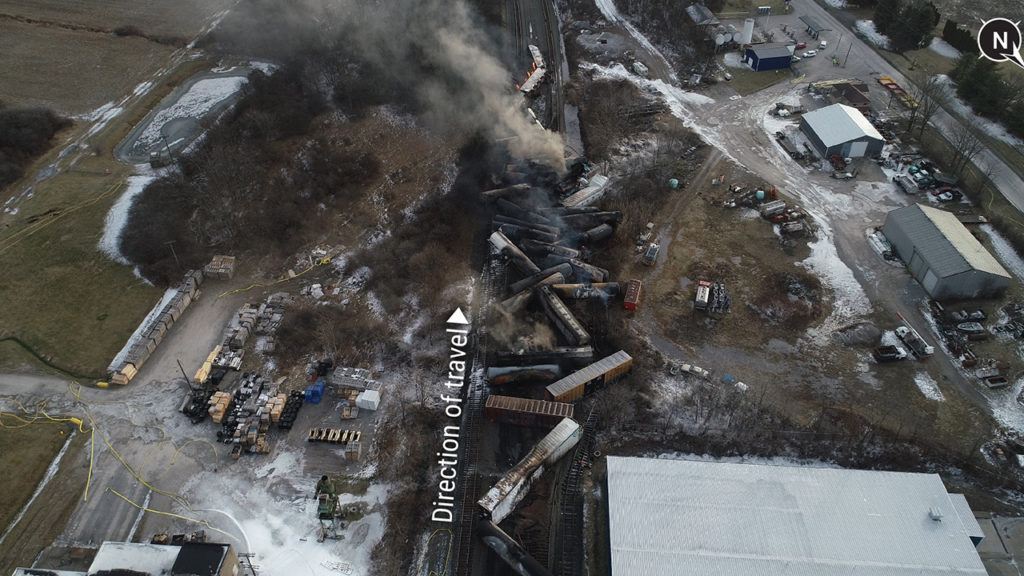
In response to FRA’s ongoing investigation of the derailment in East Palestine, Ohio, FRA is supplementing the recommendations included in Safety Advisory 2023-01 and its June 14, 2023, Supplement to expand upon recommendations numbers 3 and 5, as well as adding two additional recommendations. For ease of reference, FRA’s existing recommendations numbers 1 through 5 are reproduced below, with changes to recommendations number 3 and number 5 and including the new recommendations numbers 6 and 7. Accordingly, FRA recommends that railroads take the following actions:
- “Review existing HBD system inspection and maintenance policies and procedures for compliance with existing industry standards and manufacturer recommendations for HBDs.
- “Review existing procedures to train and qualify personnel responsible for installing, inspecting, and maintaining HBDs to ensure they have the appropriate knowledge and skills. Railroads should also develop and implement appropriate training on the inspection and maintenance requirements for HBDs and provide that training at appropriate intervals to ensure the required knowledge and skill of inspection and maintenance personnel. Further, railroads should evaluate their training content and training frequency to ensure any employee who may be called upon to evaluate a suspect bearing has the necessary training, experience, and qualifications. FRA also encourages railroads to ensure these individuals are available at all hours of operations across a railroad’s network.
- “Review current HBD detector trending logic and thresholds considering recent derailments, and all other relevant available data (including data from any close calls or near misses), to determine the adequacy of the railroad’s current trend analysis and thresholds levels. Thresholds should be established for single measurement as well as multiple measurements of individual bearings to enable temperature trend analysis. Railroads should maximize the opportunity for journal bearing trending and seek opportunities to integrate wayside detector data types to evaluate railcar health and action critical issues, including risks associated with burnt journal bearings.
- “Review current procedures governing actions responding to HBD alerts to ensure required actions are commensurate with the risk of the operation involved. With regard to trains transporting any quantity of hazardous materials, FRA recommends railroads adopt the procedures outlined in AAR’s OT-55 for key trains as an initial measure.
- “Rigorously evaluate the resiliency and accuracy of the overall process used to monitor and act upon information from wayside detectors, with specific focus on steps and tasks that, if not performed or performed incorrectly, could mislead decision makers. The process of monitoring, reporting, inspecting, analyzing, and acting on information from detectors includes tasks that, if incorrectly executed, could introduce risk. Railroads should also evaluate each step and task performed by railroad personnel to pinpoint any HBD reporting failures to report potential problems and implement appropriate safeguards to minimize their impact when monitoring, analyzing, and responding to detector information. For example, relating to the May 10, 2023, NS derailment in New Castle, Penn., referenced in the June 14, 2023, Supplement to Safety Advisory 2023-01, although the investigation is still ongoing, FRA is probing the communication and timing of the alarm and alerts to both the locomotive, wayside detector desk and the dispatch center, and if there was a failure of the railroad’s process that contributed to the accident.
- “Ensure that desks for monitoring wayside detector reports, advisories, and alerts are staffed during all hours of railroad operation, including back-up personnel to ensure coverage when personnel take breaks or step away from the desk to perform other duties. All personnel that monitor the desks should be trained and knowledgeable in railcar health and wayside detector capabilities, capable of reviewing alerts and trends and corresponding with train crews regarding potential unsafe conditions.
- “Maximize the use of HBD data, as well as data from other types of wayside detectors, sharing data between railroads as a train travels from one railroad’s tracks to another railroad’s tracks, including advising a receiving railroad when a railcar has a trending journal bearing or other potentially unsafe conditions.”
As noted in Safety Advisory 2023-01 and its June 14, 2023, Supplement, the issues identified in this second supplement to Safety Advisory 2023-01 are “indicators of a railroad’s safety culture,” FRA noted. “Implementing procedures to ensure safety and adequately train personnel so that those procedures become second nature, is vital. Equally important is the commitment, throughout a railroad’s organization, to safety and empowerment of personnel to live up to that commitment. Further, railroads must work together to maximize the use of wayside detector data and information, sharing this information openly to maximize safety,” FRA concluded.
FRA encourages railroads to take actions consistent with Safety Advisory 2023-01, “as originally published, as supplemented, and as further amended in this second supplemental notice, as well as any other complementary actions, to ensure the safety of rail transportation.” FRA says it may modify this notice, issue additional safety advisories, or take other actions necessary “to ensure the highest level of safety on the Nation’s railroads, including pursuing other corrective measures under its authority.”
Further Reading: