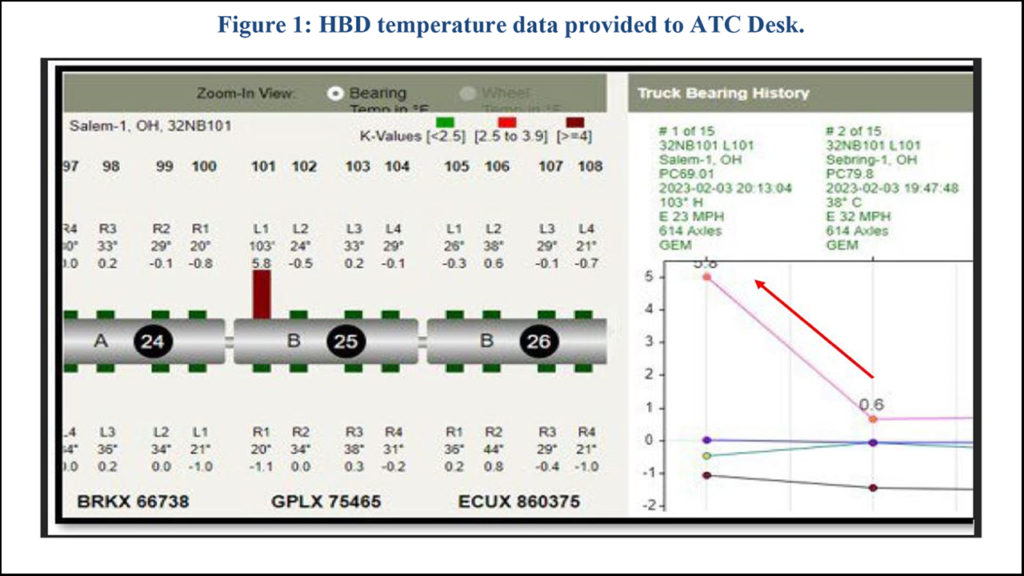
According to FRA, the agency found that the derailment was “caused by a roller bearing that failed due to overheating,” consistent with the investigation findings of the National Transportation Safety Board (NTSB). “NS’s procedures and the inadequate staffing for communicating information from the Hot Box Detectors (HBDs), a type of wayside detector installed along the railroad right of way that monitors the condition of freight and passenger rolling stock, to the train crew may have contributed to the accident,” FRA noted.
FRA does not currently regulate the location, installation, operation, or maintenance of wayside detectors, unless a detector interfaces with a railroad’s signaling system. However, this is a topic where FRA says it will “aggressively use its existing authorities but encourages Congress to also act in any future rail safety legislation.”
According to the agency:
- “FRA inspected thousands of wayside detectors on 28 different railroads last year alone as part of a high-hazard route assessment, and the agency assessed Class I dispatching centers to evaluate how railroads report, evaluate, and take actions following wayside detector alarms.
- “On multiple occasions, FRA has urged railroads using wayside detectors to evaluate their inspection processes and prioritize proper training for personnel working with them. This includes a Safety Advisory in March 2023 and two additional advisories in June 2023 and July 2024.
- “FRA also continues to conduct safety culture assessments of all Class I freight railroads. FRA completed its assessment of Norfolk Southern last year, which evaluated the railroad’s procedures related to wayside detector maintenance, inspections, and alerts, and made recommendations to address issues and improve safety.
- “Importantly, FRA has tasked its Railroad Safety Advisory Committee with reviewing current industry practices relating to wayside detectors, determining current best practices, and developing recommendations and proposals to update existing or develop new regulations and guidance.”
As a result of FRA’s investigation, the agency initiated 12 enforcement cases with 117 counts against the railroad and other entities. These potential violations were found across technical disciplines examined by FRA inspections, such as operating practices, which “ensure internal railroad rules are communicated to workers and followed, as well as motive power equipment, which includes the mechanical elements such as locomotives and freight cars.” FRA examined all available evidence to ensure compliance with federal regulations. “While the enforcement process governed by statute allows parties the opportunity to respond to potential violations, the initiation of these cases is an important step and one of several ways USDOT is taking actions to ensure accountability and improve railroad safety,” FRA noted.
FRA’s investigation also looked closely at the hazardous materials being transported in the train to “ensure compliance with all required documentation, package marking, labeling, and emergency response information requirements as well as the use of a general-purpose DOT-111 specification tank car to transport butyl acrylate, a flammable liquid.” The DOT-111 tank cars were breached in the derailment. FRA found that such use contributed to the severity of the accident because they were “not equipped with a jacket, tank head puncture resistance system, or thermal protection system.”
In addition, FRA’s final report notes the recommendation that NS and its contractors made to execute a vent and burn procedure. “FRA neither made, directed, nor participated in the decision to conduct a vent and burn operation, and the agency has no role or authority in such a decision,” the agency said.
USDOT’s Pipeline and Hazardous Materials Safety Administration (PHMSA) also responded to the accident site within hours.