
FRA Finalizes Dispatcher, Signal Employee Certification Rules
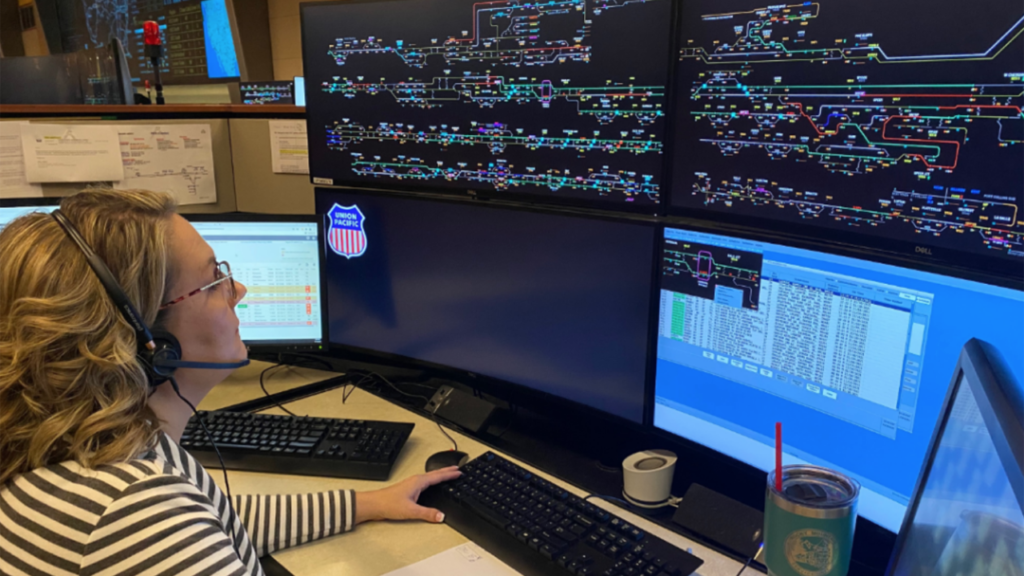
“Unlike with conductors and locomotive engineers, there have previously been no federal regulations mandating specific training requirements, safety and knowledge checks, and verification of safety records for dispatchers and signal employees,” the FRA reported. “These final rules address this gap in rail safety and will help ensure that certified dispatchers and signal employees are qualified and fit for duty.” The federal agency proposed the regulations in May 2023, with comments due July 31, 2023.
Under the final rules, railroads must submit for FRA approval certification programs that will evaluate the knowledge, skills, and prior safety records of dispatchers, who allocate and assign track use and route trains, and of signal employees, who install, repair, and maintain signal systems that direct train movements, according to the FRA. These certification programs, it noted, “will help ensure that dispatchers and signal employees periodically receive training on railroad safety and operating rules and practices as well as on new systems and technology.”
The two regulations are in accordance with section 402 of the Rail Safety Improvement Act of 2008, according to the FRA, which is releasing them in the Federal Register’s May 21 edition (scroll down to download the public inspection documents).
Under the regulation for dispatcher certification, railroads are required to have “formal processes for training prospective dispatchers, as well as verifying that each dispatcher has the requisite knowledge, skills, safety record, and abilities to safely perform all of the safety-related dispatcher duties mandated by federal laws and regulations, prior to certification,” according to the FRA. “In addition, railroads are required to have formal processes for revoking certification for dispatchers who violate specified minimum requirements.”
According to the FRA, Class I railroads, Amtrak and commuter railroads will have to submit their written certification programs to FRA no later than 240 days after the effective date of this rule. Class II (regional) and Class III (short line) railroads will be required to submit their written certification plans 480 days after the rule goes into effect. New railroads that begin dispatching operations after the rule’s effective date will be required to submit their written certification programs to FRA and obtain FRA approval before starting dispatching operations. FRA reported that it will issue a letter to the railroad when it approves a certification program; a program will not be considered approved until FRA issues the lette. FRA also noted that railroads “seeking to materially modify their FRA-approved certification programs must obtain FRA approval prior to implementing such modifications.”
Similarly, under the regulation for signal employee certification, railroads are required to have “formal processes for training signal employees, as well as verifying that each signal employee has the requisite knowledge, skills, safety record, and ability to safely perform assigned tasks mandated by railroad rules and safety standards and federal law and regulations prior to certification,” FRA reported. Railroads will also be required “to have formal processes for revoking certification (either temporarily or permanently) for signal employees who violate specified minimum requirements.”
According to the FRA, Class I’s, Amtrak and commuter railroads must submit their written certification programs to FRA no later than eight months after the rule’s effective date. Class II’s and Class III’s will be required to submit their written certification plans 16 months after the rule’s rule effective date. The FRA noted that new railroads that begin operation after the effective date will be required to submit their written certification programs to FRA and obtain FRA approval before installing their signal systems and commencing operations. Also, railroads seeking to “materially modify their FRA-approved certification programs” are required to first obtain FRA approval.
For both regulations, railroads must “evaluate certification candidates in multiple areas, including prior safety conduct as a motor vehicle operator, prior safety conduct with other railroads, substance abuse disorders and alcohol/drug rules compliance, and visual and hearing acuity,” FRA reported.
Also, FRA said, with the exception of individuals designated as certified dispatchers or signal employees prior to FRA approval of the railroad’s certification programs, the rules prohibit railroads from certifying these employees for intervals longer than three years. This three-year limitation, it said, “is consistent with the 36-month maximum period for certifying locomotive engineers in 49 CFR 240.217(c) and the 36-month maximum period for certifying conductors in 49 CFR 242.201(c),” and “allows for periodic re-evaluation” of certified dispatcher or signal employees “to verify their continued compliance with FRA’s minimum safety requirements.”




