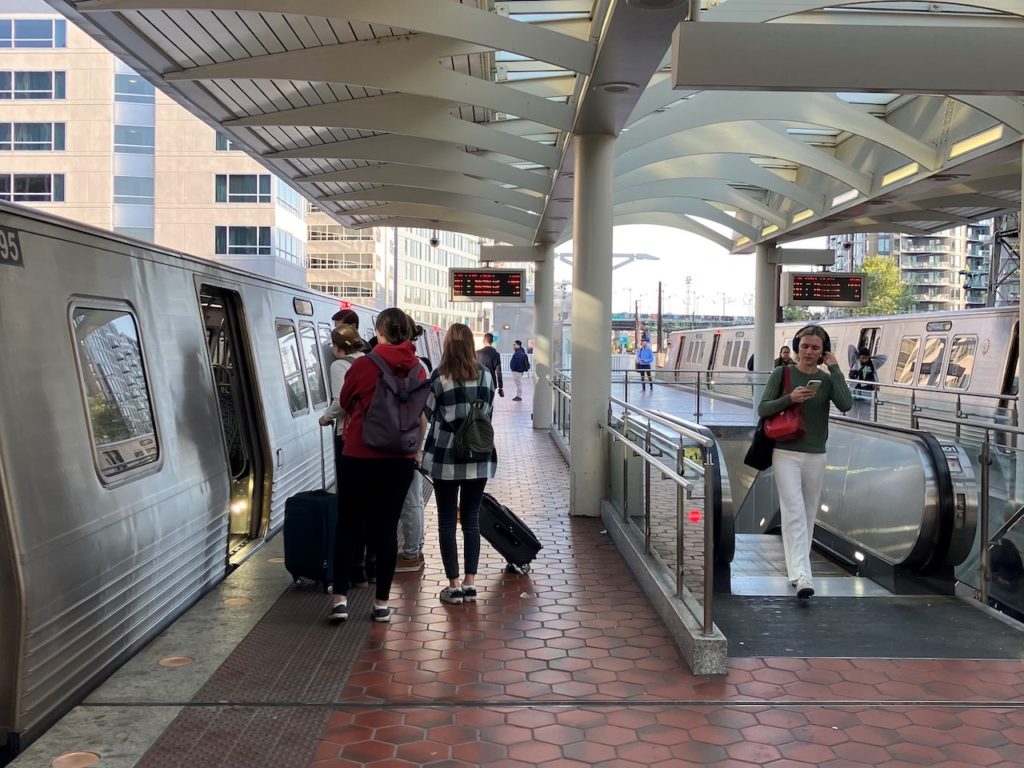
The approved budget continues to fund WMATA at levels where service is “safe, frequent, and reliable,” the agency said, adding that, in recent years, it has seen increased ridership thanks to those tenets and expects that trend to continue with additional Metrorail service and a revamped bus network coming in June.
“We’ve now accomplished 48 months of ridership growth with continued increases to service and continuous improvements for customers,” said WMATA General Manager and CEO Randy Clarke. “I want to thank our Board of Directors for their support of this budget and our jurisdictional partners in Maryland, Virginia, and Washington D.C. Metro could not move the region without their collaboration and leadership.”
WMATA says it has also done its part to become a “leaner, more efficient organization” by identifying $20 million in operational savings from bus scheduling, rail service, fleet management, and administrative savings.
“The Board commends the Metro senior team and staff for identifying opportunities to streamline and improve operations and achieve cost efficiencies across both service and administrative areas,” said Board Chair Valerie Santos. “Even during the significant budget challenges of recent years, Metro’s unwavering commitment to provide efficient, accessible, safe, and reliable excellent service guides the team’s work.”
Operational Budget
The FY2026 Operating Budget is $2.498 billion and supports the launch of the Better Bus Network Redesign in year one, which introduces 11 new routes to the Frequent Service Network, expands midday, evening, and weekend service, and enhances connectivity to transit stations, employment centers, and key destinations.
Metrorail Changes Effective Sunday, June 22
- Longer weekend hours: The rail system will open one hour earlier at 6 a.m. on Saturdays and Sundays. The system will close one hour later on Fridays and Saturdays at 2 a.m.
- Split Silver Line service: The Silver Line will run in two service patterns, with half of trains operating between Ashburn and Downtown Largo, and half operating between Ashburn and New Carrollton.
- More Silver Line service during peak times: Additional trains will operate during peak rush hour on weekdays, with trains running from Wiehle-Reston East to New Carrollton in the morning and from Stadium-Armory to Wiehle-Reston East in the afternoon.
- More Red Line service during peak times: Additional Red Line trains will be scheduled to run at least 4 minutes (up from every 5 minutes) during the busiest portions of weekday rush hours.
The extension of the Yellow Line, with half of WMATA’s trains operating between Huntington and Greenbelt and half operating between Huntington and Mt. Vernon Sq., will begin in December, according to the agency.
Capital Budget
According to WMATA, the $2.373 billion capital budget invests in the system to “modernize and provide safe, efficient, and reliable service for customers, employees, and the region by addressing repair needs and replacing aging equipment.” Approximately $200 million of capital expenditures previously planned for FY2026 and FY2027 are deferred or delayed beyond FY2027 in the updated capital budget recommendation. Ongoing projects and programs with updated six-year expenditure schedules include: Digital Customer and Information Displays, Bus Fleet Acquisition, Fare Collection Modernization, Rail Automation, Union Station First Street Entrance Improvements, and Rail Vehicle Scheduled Maintenance Program.
WMATA’s fiscal year 2026 runs from July 1, 2025, to June 30, 2026. More information about WMATA’s approved budget is available to download below.