WMATA
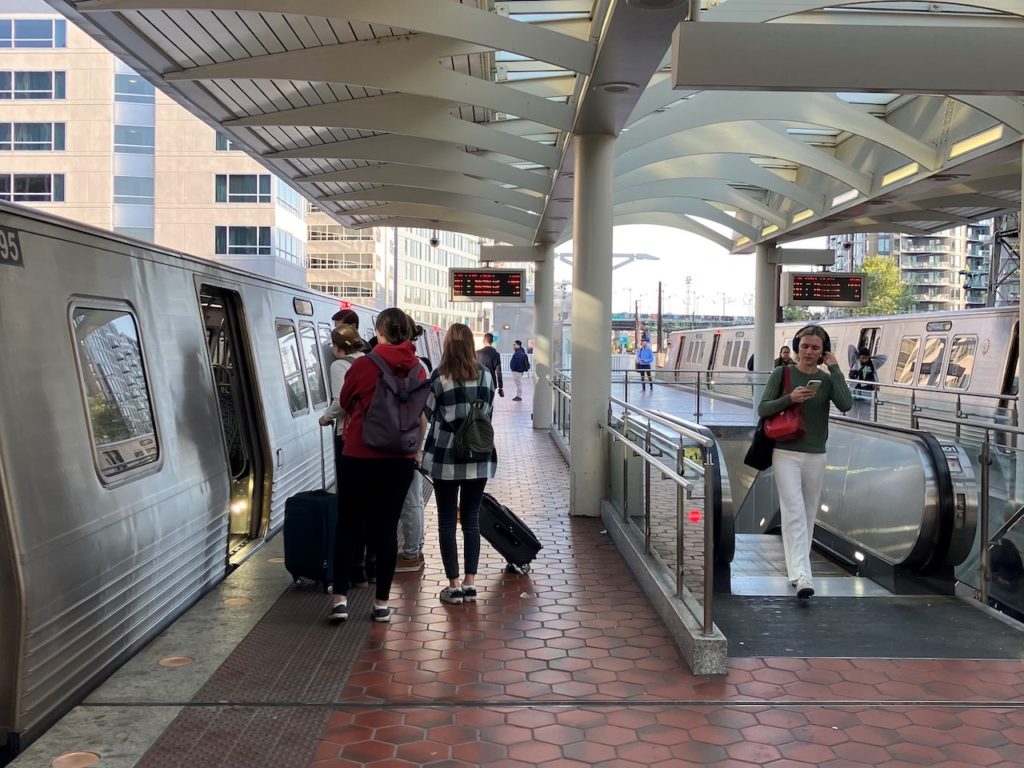
Virginia leaders from Arlington, Fairfax, and Loudoun counties and the cities of Alexandria, Fairfax, Falls Church, and Manassas along with Maryland leaders from Montgomery and Prince George’s counties and cities of College Park, Greenbelt, and Rockville recently endorsed the DMVMoves Task Force recommendations “to increase regional funding to WMATA’s annual capital budget by $460 million and to index the new funding to grow at 3% annually to address inflation and support a revolving bond program.”
The DMVMoves initiative brought leaders in the District of Columbia, Maryland, and Virginia together in May 2024 to develop a unified vision for the region, “delivering a more efficient, reliable, and seamless experience for transit users across all three jurisdictions,” according to the agency. After concluding 18-months of work groups and meetings, a historic vote in November by Washington WMATA and Metropolitan Washington Council of Governments (COG) boards endorsed future dedicated funding for the agency and recommendations to better integrate the region’s 14 transit operators, including WMATA, MARC, VRE, and local bus systems.
“We appreciate Virginia and Maryland leaders’ collective show of support to ensure America’s Metro System continues to deliver the world-class service our region deserves,” said WMATA General Manager and CEO Randy Clarke. “Metro’s future is bright, and I am confident with this new dedicated funding indexed to grow, we will continue to deliver the service this region deserves.”
All jurisdictions are now working through their governing boards and legislative sessions to identify how to advance the DMVMoves recommended capital funding investment.
DART
The DART Board of Directors on Feb. 10 voted on a resolution that “proposes a new governance and funding model for its 13 member cities,” according to a KERA report.

Under the new model, according to the report, “each city would get a seat on the board as opposed to some seats being shared by a single member. That would reduce the city of Dallas’ majority on the board to 45%. It would also implement a program that would return sales tax contributions to member cities over the course of six years.”
“For our organization to try to be a regional organization, and not just our services, but how we address the concerns of our 13 cities, I felt it would be best that for both governance and for funding that we approach both problems with a regional solution,” said DART Board Chairman Randall Bryant.
The resolution on the new funding model passed in a 14 to 1 vote, with Dallas and Cockrell Hill representative Enrique Macgregor voting against it, according to the KERA report.
The vote comes after Plano’s City Manager announced Feb. 9 that the city is “considering DART’s proposal.” The Plano City Council tabled a decision on a rideshare service that would have replaced DART if voters chose to withdraw in the May 2 election, according to the report.
The new proposal, KERA reports, “also calls for DART and the North Central Texas Council of Governments to create a new transit authority for all commuter rail lines in North Texas. That authority would then operate DART’s Silver Line, Trinity Metro’s Trinity Railway Express, TEXRail and Denton County Transit Authority’s A-Train.”
The Regional Transportation Council (RTC), which represents various local governments and entities on transportation matters, would also provide funding to cities under the new model, according to the report.
DART, KERA reports, “is also going to seek additional funding through a local effort for a new vehicle registration fee, depending on state legislation. The board will vote on specific language in an interlocal agreement later this month.”
The RTC was expected to vote on its participation in the new funding model with DART on Feb 12.
Withdrawal elections in six member cities—Addison, Farmers Branch, Highland Park, Irving, Plano and University Park—are still scheduled for May 2. Cities have until March 18 to rescind the elections.
CABR
After news of a recent MOU, which was signed Jan. 20, between Canada’s Building Trades Unions, the Building Trades of Alberta and Friends of CABR, Mayor Morgan Nagel said, “he is excited about the [C$2.6 billion] project and what it could mean for Cochrane,” according to a Cochrane Eagle report.
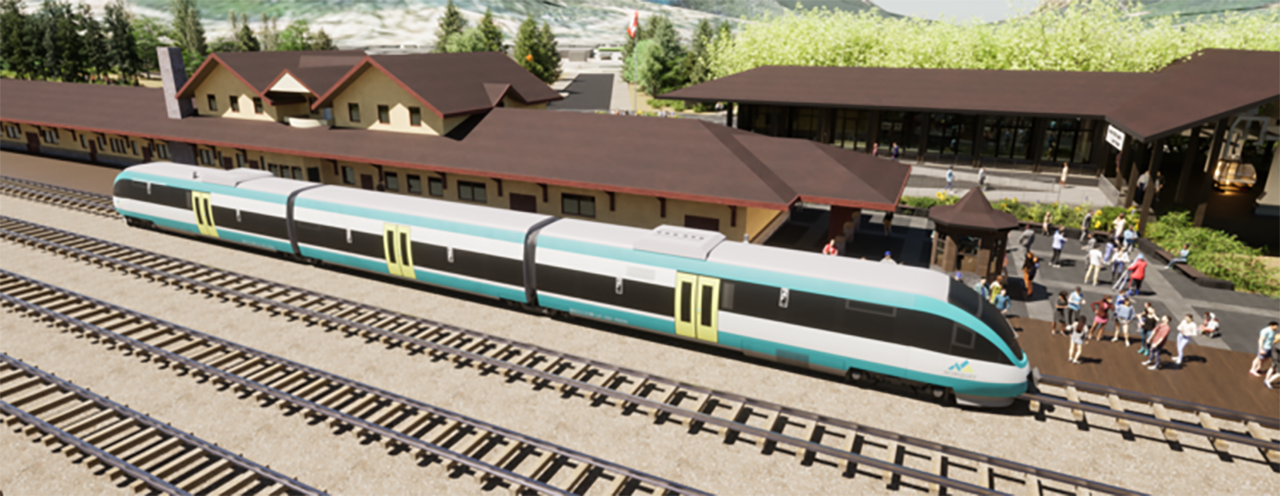
“The Calgary–Banff rail project presents a truly transformational opportunity for Cochrane,” Nagel said. “Essentially, this train would mean Cochrane suddenly has a real and thriving tourism industry. From there, I think the world may realize that Cochrane’s unique western identity can provide an experience that nowhere else can offer.”
According to the report, Nagel said the project “could create opportunities for hotels, restaurants and entertainment businesses, attracting visitors not only from neighboring communities but from across Canada and internationally.”
“One of our top priorities in Cochrane is supporting local businesses and attracting new major job creators,” he said. “If we can get a train connecting Cochrane to the Rockies, it will unlock a new paradigm for our tourism industry.”
Friends of CABR Executive Director Bruce Graham said the Calgary-Banff proposal “stands out among rail projects in Canada due to its relative affordability and readiness to proceed,” according to the Cochrane Eagle report.
Graham, according to the report, added, that the key advantage of the Calgary–Banff proposal “is its use of an existing Canadian Pacific Kansas City (CPKC) rail corridor.”
“There’s a lot of added cost and time involved in creating a new corridor,” he said. “What we’re doing is adding a rail line within an existing, disturbed rail corridor that CPKC already has secured.”
Despite that advantage, including only building 20 of the 150-km-proejct, Graham said “the province appears to be leaning toward a high-speed express option that would bypass several communities, including Cochrane,” the Cochrane Eagle reports.
For now, the Cochrane Eagle reports, “project proponents and Friends of CABR are awaiting an announcement from the province on which direction it will take. Meanwhile, the Town of Cochrane continues to advocate for the Calgary–Banff rail proposal.”
“When it comes to Cochrane, our first focus is making sure it happens,” Nagel said. “We’re doing everything we can to encourage stakeholders and decision-makers to get behind this project, and it’s something we’re talking about and working toward on a weekly basis.”