TTC

TTC riders of Line 5, Eglinton Crosstown Light Rail Transit, between Don Valley and Kennedy stations, and across Line 6, Finch West LRT, will start to see improved trip times with the rollout of “enhanced transit signal priority” at intersections on the street-level portions of each line, the agency reported March 11.

The City of Toronto has made changes to traffic signals that allow LRT trains to move through these intersections before left-turning vehicles, according to TTC. “Additional enhancements to the signals to make them more dynamic and responsive in real time are in the works on both lines and will be rolled out in the coming months,” it said. “Enhanced transit signal priority is implemented at all intersections on Line 6, and at the following Line 5 intersections: Victoria Park Avenue, Eglinton Square/O’Connor Drive, Pharmacy Avenue, Hakimi Avenue/Lebovic Avenue, Warden Avenue, Sinnott Road/Thermos Road, Rosemount Drive, Ionview Avenue, andSloane Avenue/Bermondsey Road. Improvements at Leslie Street will be implemented after further testing and coordination with other planned traffic operations changes.”
TTC is the operator for Line 5 Eglinton and Line 6 Finch West. Under agreements with Metrolinx and the City of Toronto, it is responsible for operating trains, providing security and revenue control, and staffing stations. The agency began an introductory service period on Line 5 on Feb. 8; and launched Line 6 service on Dec. 7.
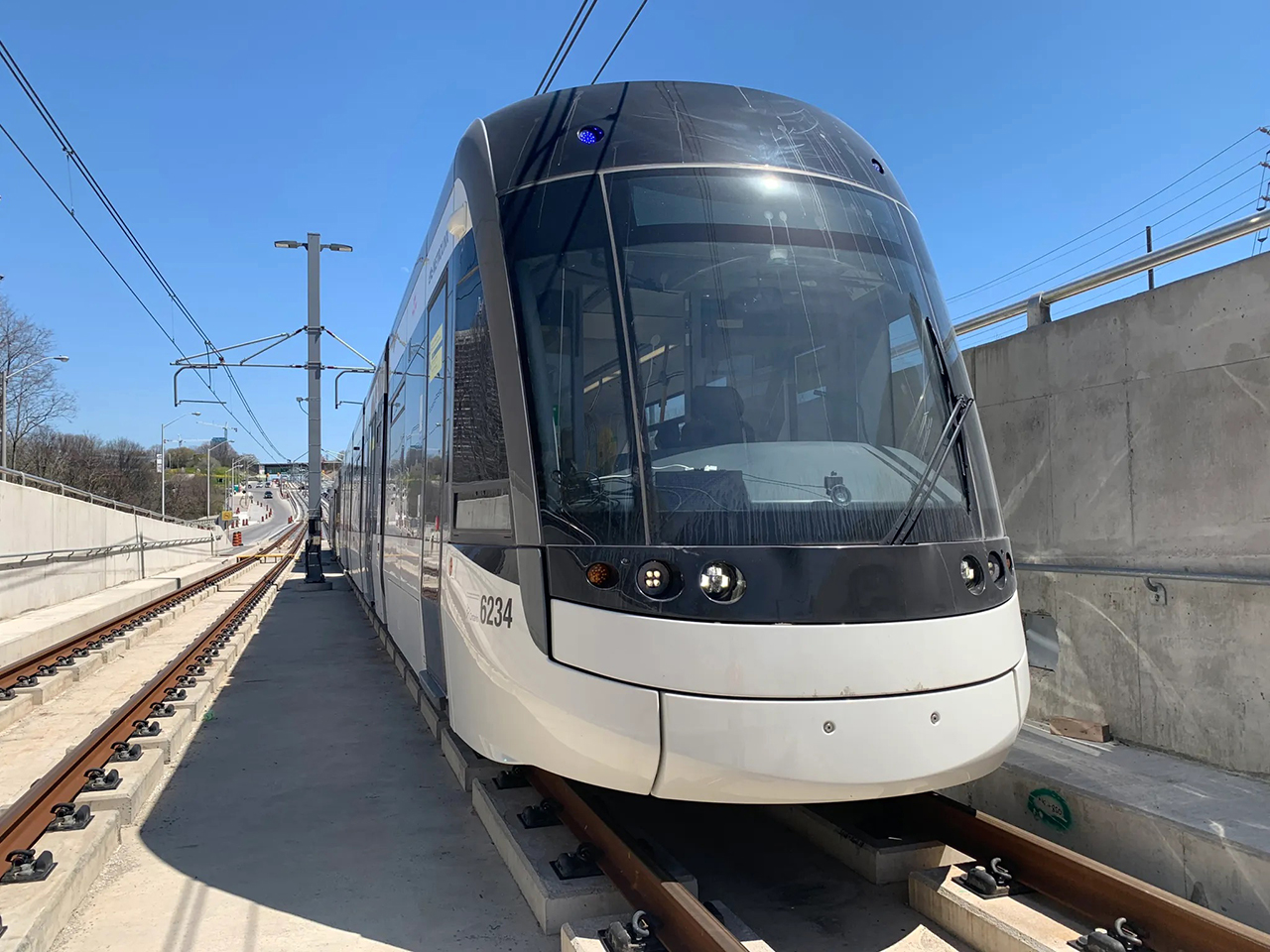
Line 5’s infrastructure and vehicles are maintained by Crosslinx Transit Solutions (CTS) under contract to Metrolinx; for Line 6 they are maintained by Mosaic Transit Group (MTG) under contract to Metrolinx.
“We are taking action to save customers on Line 5 and Line 6 more time on their trips,” Toronto Mayor Olivia Chow. said “Rapid deployment of new enhanced transit signal priority measures is part of our plan to speed up transit across our city and give people more time with their families and less time commuting.”
“I have been clear that rapid transit must be rapid,” TTC Chair Jamaal Myers said. “I want to thank the City, TTC and Metrolinx teams for moving quickly on these signal priority improvements. This is a practical step that will help keep LRT vehicles moving and improve travel times for riders, especially along the Line 5 corridor in Scarborough.”
“As the operator of Lines 5 and 6, we are listening to our customers when they tell us they want to see their trip times sped up as part of broader improvements,” added TTC CEO Mandeep S. Lali. “This first, new phase of Transit Signal Priority is going to bring real, measurable, incremental improvements upon which we can continue to build, bringing with it an enhanced experience for the City, the region and our customers.”
Meanwhile, TTC on March 15 will extend LRT service on Line 6 to 1 a.m. Trains will arrive every six and a half minutes during weekday morning and afternoon rush hours, and every 10 minutes at all other times, the agency reported March 10.
With this change, late-evening replacement buses will no longer operate after 10 p.m. along the Finch West corridor. TTC’s Blue Night bus service will operate from 1 a.m. until the start of train service at 6 a.m. Monday to Saturday, and 7:30 a.m. on Sundays. TTC noted that in the event of an unexpected service disruption, shuttle buses will continue to be available if needed.
Line 6 opened in December under temporary “soft opening” conditions, with early nightly closures providing the line’s maintainers, MTG, with an extended maintenance window, allowing staff to become more familiar with the line and monitor it for any issues while in full revenue service, according to TTC.
TriMet
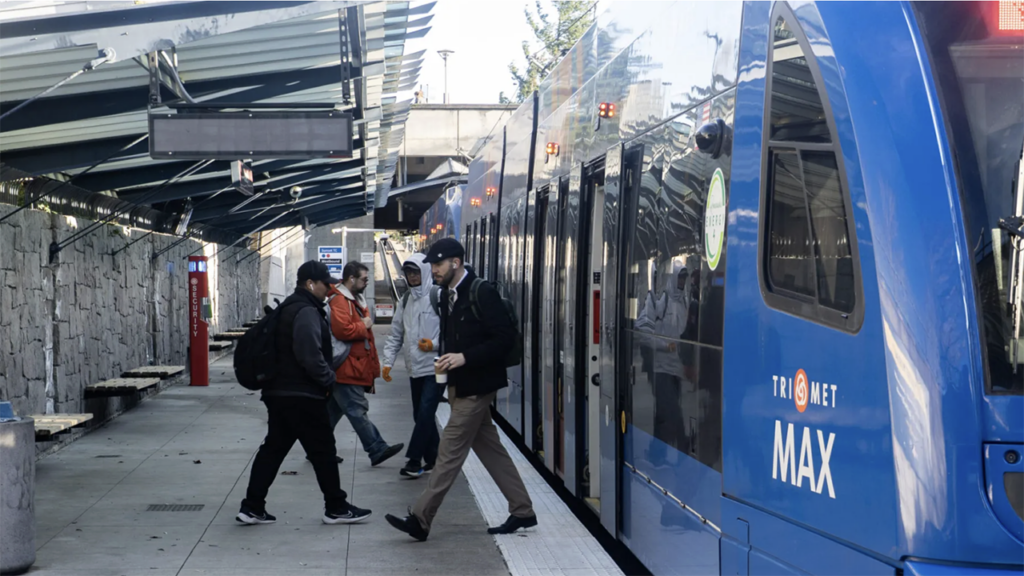
TriMet has released an updated package of service proposals to its Board of Directors for consideration as it continues efforts to balance the budget for FY 2027, according to the transit agency, which provides MAX light rail, WES commuter rail, bus, and LIFT paratransit services in Oregon’s three most populous counties (Multnomah, Washington and Clackamas).
“With steep cost increases, less revenue coming in from fares and projections showing all of our funding streams lower than expected, service cuts are a difficult but necessary step toward our long-term financial stability,” TriMet reported March 11. “By taking action now, we will preserve vital transit service to jobs, schools, services and other important destinations across our 533-square-mile service district for decades to come.”
TriMet released service proposals in January outlining a number of changes and cuts to service. “Following extensive community engagement, including 13 open house events and a survey that drew more than 8,100 responses, our final package makes changes to 34 lines,” it said. “That includes updated proposals affecting 12 lines.”
Among the largest changes made to the proposals, the agency said it now plans to:
- Continue Line 19 service along NE Glisan Street to serve Providence Portland Medical Center.
- Adjust proposed Line 10 route to run on SE Duke Street and adjust hours to maintain transit service for students at Portland Public Schools’ Community Transition Program.
- Maintain Line 97 serving Tualatin-Sherwood Road and extending north to Barbur Transit Center.
Updated proposals adjust the plans for the following lines: 10, 16, 19, 29, 34, 38, 58, 63, 97, and 156. The agency said it has dropped proposed changes to lines 22 and 23. All but one of the proposed changes will take effect Aug. 23, 2026, if approved, according to TriMet, which noted that the changes “remain centered on network efficiency, combining lines or reducing where lines run near others, eliminating some bus lines and moving routes.” The goal, it said, “is maintaining as much service as possible while focusing our service investment where it is needed and used most.”
The TriMet Board is now considering these proposed changes as part of the FY 2027 service plan. The Board will vote on an ordinance approving the plan on April 22, 2026, the agency said.
TriMet also released its proposed budget for the coming fiscal year—July 1, 2026 to June 30, 2027 (above). “It continues to rely on reserve funds to preserve the core transit service essential to our riders, employees and the regional economy while we work to balance our expenses with our resources,” the agency said. “While the proposed budget absorbs the initial measures TriMet has taken to cut spending, including reducing internal expenses and staff, it does not reflect all upcoming cost-cutting efforts.” That includes the service changes proposed to take effect in August since the TriMet Board has yet to approve them. Also, TriMet said its leadership is currently finalizing another round of internal spending cuts as well as a staffing reduction that will include another round of layoffs. Those service and internal spending cuts will be included in the budget when it goes to the TriMet Board for adoption in May. Because of that, the FY2027 adopted budget is expected to come in less than the current proposed budget, according to TriMet.
Public comment on the proposed budget is open through noon, March 24 or at the TriMet Board’s March 25 business meeting.
CTA

CTA has submitted its Revised Security Enhancement Plan to the FTA, which includes “a 75% increase in monthly system policing hours, aggressive crime reduction targets, and expanded social service support—bolstered by early data showing that crime reduction strategies implemented over the past three months are working* ,” the transit agency reported March 10. The plan is CTA’s formal response to an FTA Special Directive issued in December and details how the agency will “significantly expand the law enforcement surge it launched in December.”
CTA said the plan was created in collaboration with the Chicago Police Department (CPD)—CTA’s primary law enforcement partner—and the Cook County Sheriff’s Office. CTA is also in communication with the Cook County State’s Attorney’s Office about security initiatives.
The plan’s increased policing includes 34% more hours from CPD’s Public Transit Section; double the off-duty officers patrolling CTA on their days off as part of CPD’s Voluntary Special Employment Program (VSEP); and Cook County Sheriff’s Police officers working on CTA’s rail lines (4,400 hours monthly).
The plan also features other aspects of what CTA called its “comprehensive approach to keeping its employees and riders safe”:
“Social Services & Crisis Intervention
- “Partnership with Chicago Department of Family and Support Services: CTA funds outreach teams on the Blue and Red lines (24-hour service) to connect unhoused riders with shelter, housing, and social services. Since 2023, more than 300 people have been placed in shelters and 200 moved to stable or permanent housing. In 2026, CTA is funding 30 dedicated shelter beds—a five-fold increase—with $1.65 million in allocated funding.
- “Partnership with Chicago Department of Public Health (CDPH): CDPH funds overnight outreach by The Night Ministry two nights weekly at Blue and Red Line terminals to connect people with social services and housing. CTA also added a police kiosk at Forest Park Blue Line station for local police to staff and have a presence on the platform.
- “Safe Ride Specialists pilot: This year, CTA is launching Crisis Intervention Specialists and Violence Interrupters—trained staff to de-escalate mental health and behavioral crises and refer and connect riders to social services.”
“Fare Evasion Mitigation
- “High-barrier fare gates pilot: CTA will expand the installation of non-ADA, high-barrier fare gates at rail stations that are typically staffed but continue to have high rates of fare evasion.
- “Farecard inspection missions: In 2026, CTA is launching farecard inspection missions to uncover the use of free, reduced, or other entitlement fare media by someone other than the authorized holder and revoke the entitlement if the eligible user is allowing the inappropriate use of the fare media.
- “Enhanced ridership data: The CTA is using new data tools to track fare evasion more precisely. On buses, it’s analyzing passenger counts by route and time of day. On trains, video audits are measuring evasion at individual branch lines. The more detailed picture will help CTA deploy enforcement resources more strategically and measure whether they’re working.”
“Technology, Infrastructure and Public Messaging
- “AI-powered gun detection technology: CTA is continuing to expand the use of AI-powered gun detection technology to more than 1,500 cameras across its Chicago rail stations.
- “Enhanced fare messaging: New bus signage and ‘fare required’ audio announcements are being added to CTA buses to clarify fare payment requirements.”
“Partnerships
- “Increased transit crime prosecution in collaboration with the Cook County State’s Attorney’s Office: CTA and CPD are working closely with the CCSAO as it continues to enhance its operations and protocols to proactively and vigorously prosecute transit-oriented crime.
- “Project Safe Neighborhoods (PSN): CTA has entered into a partnership with the U.S. Attorney’s Office for the Northern District of Illinois to address violent crime on transit—the first PSN deployment on a mass transit system. PSN is a federally funded, nationwide initiative and brings together federal, state, and local law enforcement and other stakeholders.”
“This plan represents my commitment to our employees and riders,” CTA Acting President Nora Leerhsen said. “As part of its holistic approach to security, CTA is significantly increasing policing hours through the Chicago Police Department’s Public Transit Section and off-duty policing program, and the Cook County Sheriff’s Police Department has been engaged to bring their officers onto CTA. CTA is also expanding social service support, from introducing mental health teams to funding shelter beds for the unhoused and investing in technology that supports the officers that patrol the system. The January and February results* from CTA and CPD’s joint security surge have been promising, and we’ve built on that momentum by creating a sustainable security model that puts people first.”
“CPD, in close partnership with CTA, is committed to enhancing safety on the public transit system for all ridership and employees,” added CPD Superintendent Larry Snelling. “In this updated security plan, CPD will have more officers patrolling the rail system to both deter crime and respond to incidents more quickly. This builds on the progress we have made throughout the past year to hold criminal offenders accountable through an increased police presence on the rail system, the launch of a new Public Transit Strategic Decision Support Center and strengthened, specialized transit crime investigations.”
“The CTA is one of the largest public transit systems in America and our office looks forward to working closely with them as they expand and invest in their security environment,” Cook County Sheriff Tom Dart noted. “Along with providing Sheriff’s Police officers that will soon be patrolling the CTA, my office will be leading a public safety task force for the new Northern Illinois Transit Authority starting in June. NITA is a recently created government body that will oversee CTA, Metra and Pace.”
According to CTA, it has worked with CPD to implement new police missions across its system, including:
- “Transit Rider Interaction Program (TRIP) missions: Teams of six-eight officers board trains and inspect cars at high-incident stations. More than 300 TRIP missions have been conducted since they were launched in January; crime at targeted stations dropped 15%.
- “Bus Ride-Along missions: Officers patrol CTA bus routes with the most reported crimes and highest rates of fare evasion.
- “Bus Safe Corridor missions: Police are stationed at bus stops in high-crime areas during peak hours.”
* CTA reported that the improved security numbers since the December 2025 introduction of the CTA and CPD’s joint security surge “are compelling”:
- “Total transit worker assaults fell 25% in January and 29% in February when compared to the six-month average leading up to the start of the security surge in December 2025.
- “[W]hen comparing the period since the start of the surge (Dec. 19, 2025) through the end of February 2026, with the same period in the previous year: Violent crime on buses plummeted 19%; systemwide crimedropped 9%; and incidents of crime on CTA’s rail system fell 9%.”
WMATA
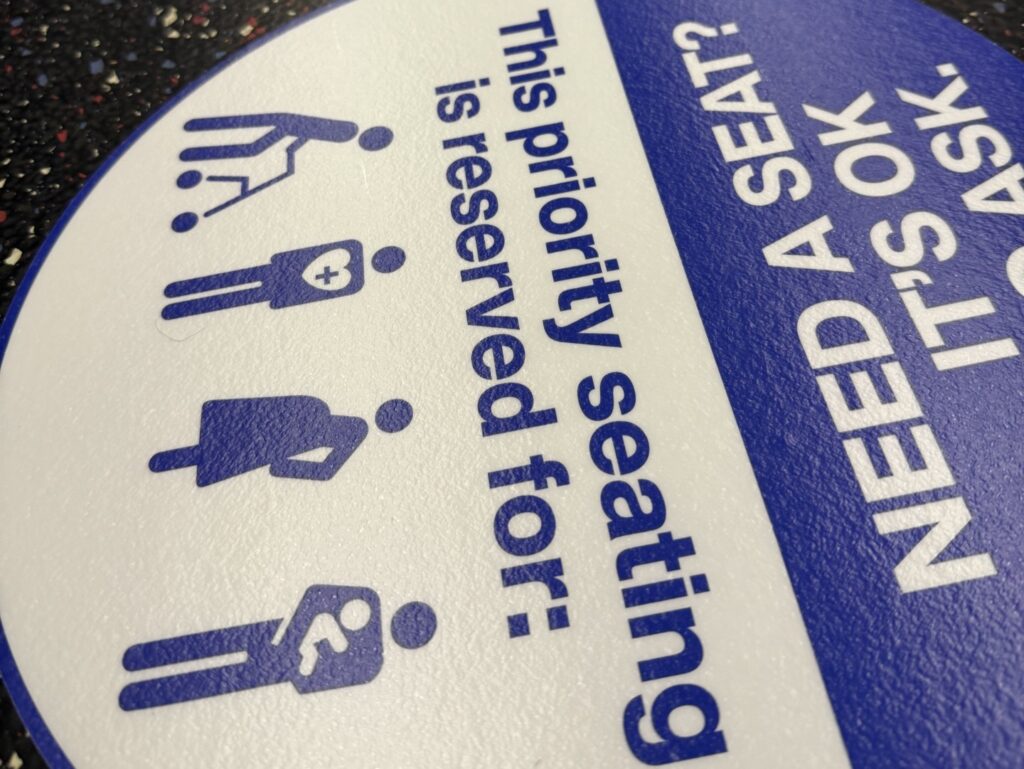
Starting the week of March 8, WMATA reported that new non-slip decals will be on the floor of 20% of its Kawasaki Rail Car, Inc.-built 7000-series rapid transit cars for approximately three months, “reminding customers sitting in priority seats to offer them to those in need.“
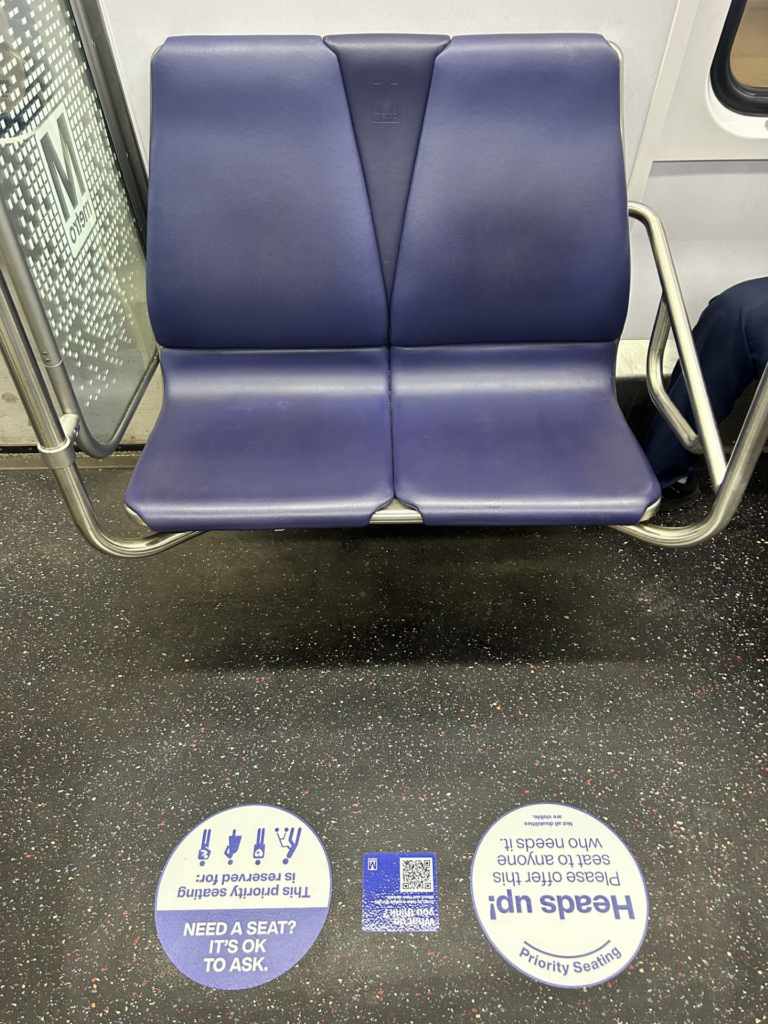
Priority seating, it noted, is intended for “people with disabilities, people who use mobility devices, older adults, pregnant people, and others with not-always-visible disabilities.” These seats are next to the center doors of each railcar and are marked with signs above the seat, but the signs “can be difficult to see in crowded trains or when customers are seated,” according to WMATA, which serves a population of approximately four million people across Washington, D.C., Maryland, and Virginia within a 2,054-square-mile jurisdiction. The transit agency has a network of six rail lines, 98 stations, 126 bus routes, and a door-to-door paratransit service (see map below).

The floor decals “will remind customers to look up and proactively offer the seat to fellow passengers who may need it more,” according to WMATA.
“Accessible transit is as much about infrastructure as it is about culture,” WMATA Chief Customer Officer Sarah Meyer said. “In a world where many of us are distracted by our phones and plugged into noise-cancelling headphones, we sometimes forget about our surroundings. These decals are a simple but powerful reminder that we all share responsibility in making [WMATA] welcoming and accessible to everyone.”
WMATA said it will use feedback from riders, its Office of ADA Policy & Planning, and the Accessibility Advisory Committee to evaluate the pilot’s effectiveness before deciding the next steps. It noted that its upcoming fleet of Hitachi-built 8000-series cars will also include more accessibility features, including a dedicated spot for people using wheelchairs.