Transdev Canada
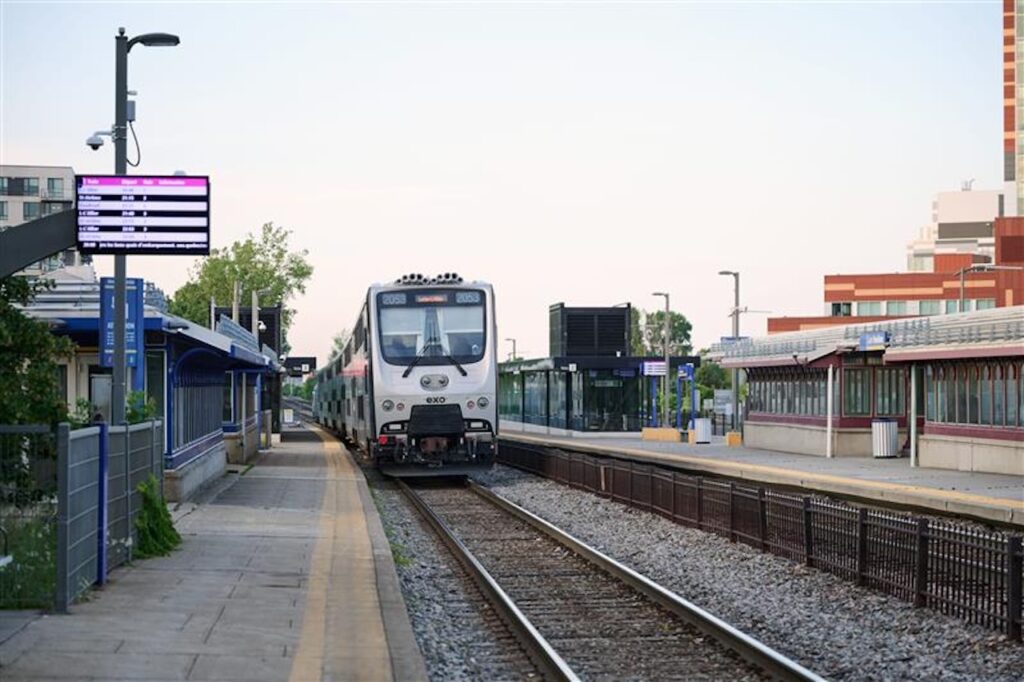
In a contract that spans from July 1, 2026, to June 30, 2040, Transdev Canada will be responsible for exo’s train operations, the maintenance of locomotives and passenger cars, as well as the upkeep of yards and maintenance centers.
The contract includes a one-year mobilization period “to ensure a smooth transition from the current provider and two renewal options of two years each.” The current provider will continue to operate the network until June 30, 2027.
This contract is the result of a call for tenders launched in December 2024, conducted through a single-envelope weighted bidding system that included competitive dialogue. This approach is based on both quantitative and qualitative criteria and involves structured discussions with bidders. These exchanges, Transdev says, “allow for the adjustment of certain parameters to better target specific needs and secure the most advantageous proposals.” At the conclusion of this process, the decision to award the contract was ratified by exo’s Board of Directors on Thursday, March 12, 2026.
To ensure the “fairness, rigor, and compliance” of the process, exo engaged several external firms to establish a strict independent framework. This oversight guaranteed the integrity of the procurement stages and the quality of the analyses conducted throughout the call for tenders, the agency noted.
“This partnership represents a key milestone for exo. Transdev Canada’s recognized expertise will allow us to continue our efforts in maintaining the reliability, quality, and efficiency of our services, while ensuring long-term savings aligned with our 2026–2028 optimization plan. We are excited to work together to better meet the current and future needs of our passengers” said exo Executive Director Marc Rousseau.
“We are honored by this partnership with exo, which aligns with Transdev Canada’s long-term vision for mobility in the region. Through this mandate, we intend to contribute responsibly to the public transit ecosystem, drawing on our expertise as well as the know-how of the teams working on the ground every day,” added Arthur Nicolet, CEO of Transdev Canada.
MARTA
MARTA’s new, better Breeze fare payment system goes live Saturday, March 28, 2026, and features flexible payment options, modern, touchscreen ticket vending machines, and more secure faregates for a safer transit system.
The new, better Breeze system will have tap to pay where customers can tap a bank card or mobile wallet directly at the faregate or validator to pay for their ride. This type of payment system is used worldwide at restaurants, retailers, and other transit systems.
The better Breeze system also features new Breeze cards and a new app. Beginning March 28, 2026, customers will be able to purchase a new Breeze card, download the Breeze app to manage their card, and use the tap to pay feature to pay with a bank card or mobile wallet.
From March 28 to May 2, 2026, both the old and new Breeze systems will be active to allow customers time to learn the new system and switch to the payment option that works best for them. During the customer transition, riders can still use their old Breeze cards and the Breeze Mobile 2.0 app at any existing old fare equipment, but old ticket vending machines will be turned off, and no fare may be added to old fare media.
SEPTA
System-wide ridership for February 2026 decreased 2% or by 11,862 unlinked trips per weekday from February 2025, SEPTA recently reported. “It’s important to remember that February 2025 experienced a bump in ridership thanks to the Eagles Super Bowl parade,” the agency noted. Ridership in February 2025 increased 8% from February 2024. On average there were 55,634 more trips per day in February 2025 compared to February 2024.
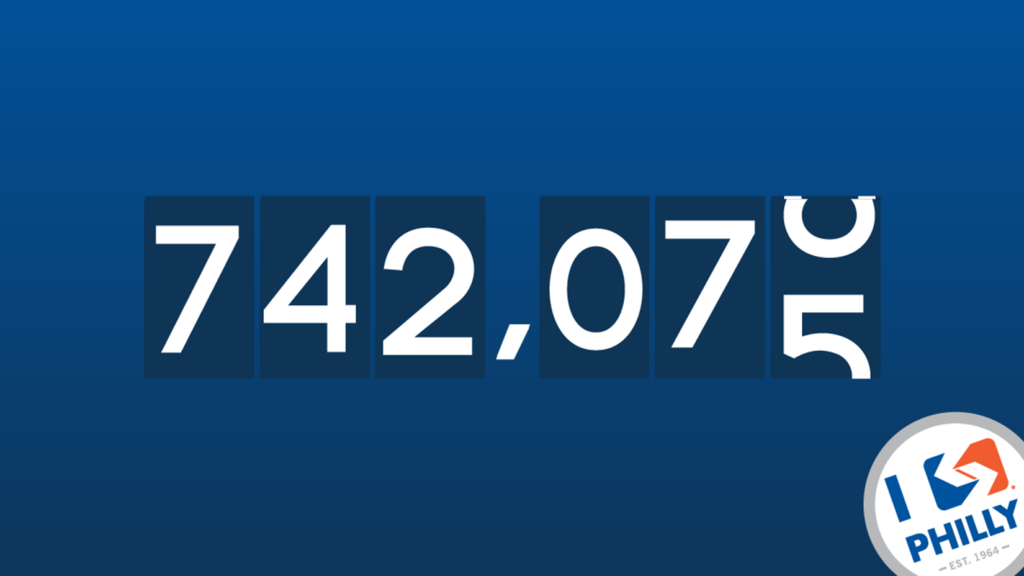
Average daily ridership was 742,075 unlinked passenger trips across all modes which is 4% higher than January 2026.
Weekday ridership dropped to 158,721 on February 23, 2026, due to Winter Storm Hernando. Ridership was also lower on February 16 due to President’s Day and February 17 due to the Lunar New Year and Philadelphia public schools being closed.
Average daily ridership was 742,075 unlinked passenger trips across all modes which is 4% higher than January 2026.
Metro ridership increased by approximately 2% or 5,556 trips relative to this time last year. This is primarily driven by a 4% increase or 8,988 average weekday trips on the B, L, and M. Trolley ridership continues to recover from the tunnel closure.
Regional Rail ridership declined by 18% or 15,697 trips per day relative to this time last year. “But again, February 2025 was high thanks to the parade and ridership in 2026 was impacted by the major winter storm and two holidays,” SEPTA added.
BART
BART’s transformative Next Generation Fare Gates Project is being recognized by two prestigious national organizations. The American Public Works Association named the fare gates as its winner of the 2026 Public Works Project Award and the International Partnering Institute announced the gates as its 2026 Collaborative Project of the Year. In August 2025, BART completed the replacement of 715 gates in all 50 stations across a system that spans five counties. The project was completed four months ahead of schedule.
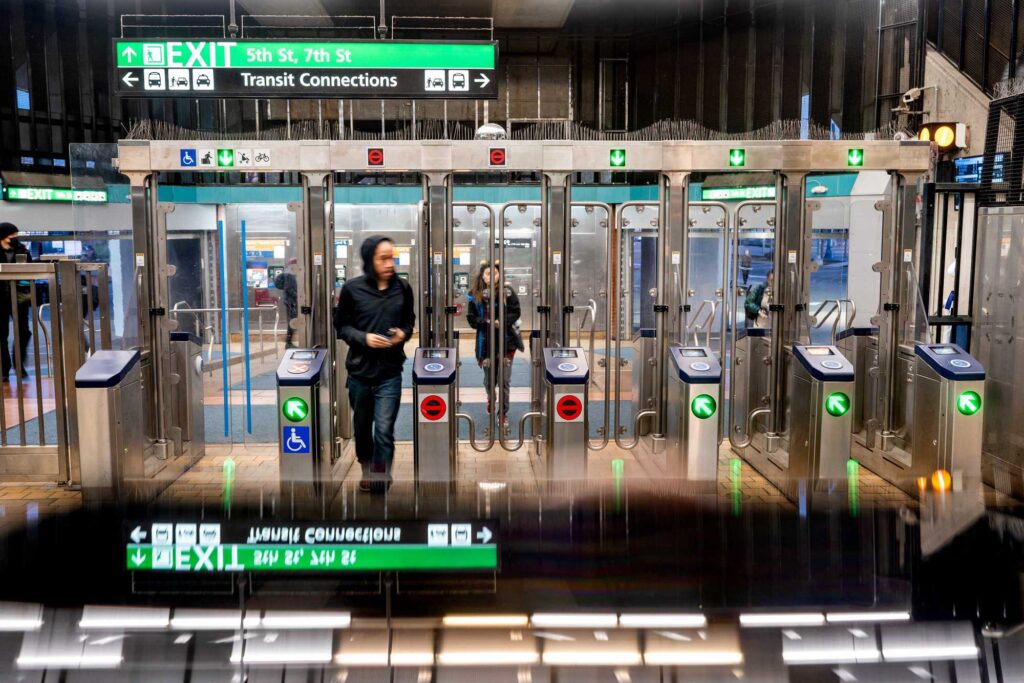
“No other transit agency in the world has fare gates quite like these,” said BART Assistant General Manager for Infrastructure Delivery and head of the fare gates project Sylvia Lamb. “This project is a true example of a BART-wide effort with every department contributing to the successful installation of new fare gates at every station.”
There are several examples of how Next Generation Fare Gates have transformed the rider experience:
- “The number of riders who tell BART they’ve witnessed fare evasion has dropped more than 50% compared with before the start of installation.
- “New gates and BART Police Department’s increased visible presence are critical parts of a comprehensive approach to rider safety that has resulted in a 41% drop in BART’s overall crime rate.
- “Hours spent on corrective maintenance inside BART stations for vandalism, graffiti, and broken items decreased 961 hours in the first six months after all stations had new gates.
- “Early indications are the gates are responsible for BART fare revenue growing by about $10 million annually through reduced fare evasion.”
The gates feature a unique door locking mechanism that makes their swing barriers very hard to push through, jump over, or maneuver under. The overall fare gate array height (gate, console, integrated barrier) forms a barrier of 72 inches minimum to deter fare evasion.