Transit Briefs: Sound Transit, Infrastructure Ontario/Metrolinx

Sound Transit
Sound Transit announced Aug. 28 that passenger service will begin on the Link 1 Line to Federal Way on Dec. 6. The 7.8-mile Federal Way Link Extension includes three new stations in South King County, serving Kent Des Moines, Star Lake and Federal Way Downtown. During peak hours, trains will operate every eight minutes.
The Federal Way extension will serve the following stations, all of which will include multiple transit connections:
- Kent Des Moines Station. Located east of I-5 at S 236th Street on the border of Kent and Des Moines, Kent Des Moines is an elevated station that serves Highline College, includes a 500-space parking garage, and features transit-oriented development opportunities including a 233-unit affordable housing project from Mercy Housing Northwest set to break ground this winter.
- Star Lake Station. Located at S 272nd St and 26th avenue, Star Lake station will serve as a key interchange for Link, St Express, King County Metro, and park-and-ride commuters. The elevated station features a new bike and pedestrian access path to the station plaza, connects to the existing freeway station, and will add 1,100 parking spaces in a new garage that replaced surface parking.
- Federal Way Downtown. Located at the Federal Way Transit Center, this elevated station serves one of the busiest transit centers in the region from the heart of Downtown Federal Way. The station features 400 new parking spaces in addition to existing garages, public restrooms, and a rebuilt street grid with pedestrian and bicycle improvements and opportunities for affordable housing and sustainable transit-oriented development.
The new Federal Way bus loop, which opened earlier this year, connects King County Metro, ST Express, and Pierce Transit buses directly to the station, “providing fast and reliable light rail connections to South King and Pierce County,” the agency noted.
“Today’s announcement on Federal Way shows that the region continues to make significant progress toward our mass transit goals,” said Sound Transit Board Chair and Snohomish County Executive Dave Somers. “This is one more step in completing the spine and providing relief from gridlock and more travel options for our residents. I look forward to the day we open Everett, and Tacoma, and the other key elements of the Sound Transit 3 package.”
“It’s exciting to see trains out there running on the tracks as we continue to prepare for the opening of this crucial extension, further knitting our region together with clean, traffic-free light rail,” said Sound Transit CEO Dow Constantine. “Thank you to our partners at the Washington State Department of Transportation and the local jurisdictions who have accommodated years of project activity, and to our hard-working contractors and staff.”
According to a KIRO 7 News report, Sound Transit staff recently said they are “facing a 20-25% increase in costs compared to what’s currently outlined in the Long-Range Financial Plan, unless cost-saving measures are applied.
Voters approved the Sound Transit 3 (ST3) System Plan in 2016; however, according to the report, the agency says, “much has changed since then, citing challenges including lower-than-expected revenues, rising costs and uncertainty surrounding tariffs and federal funding commitments.”
On Aug. 28, staff reported a need for an additional $14 to $20 billion in today’s dollars “to cover capital program costs to complete the major, voter-approved ST3 light rail projects,” including West Seattle, Ballard, Tacoma Dome, Everett, Tacoma Community College and South Kirkland-Issaquah Link extensions.
The agency, KIRO 7 News reports, also says it will need a few billion dollars more to cover service delivery costs, including new and replacement light rail vehicles, investments to improve light rail system resiliency and other maintenance and operations costs.
On top of growing costs, staff expect revenue to fall, according to the report.
For the last few months, the Board has been focused on implementing an action plan, deemed “the Enterprise Initiative,” which the agency describes as a “comprehensive effort that helps identify affordability gaps and tools available to cut costs.”
The initiative, KIRO 7 News reports, “aims to update the system plan, while staying in line with the original voter-approved ballot measure.”
Some of that increase can be tied to industry-wide issues, while other cost issues are related to “agency process, procedure, and delays since ST3 adoption,” according to Sound Transit documents and as reported by KIRO 7 News.
According to the report, “Phase 1 of the Enterprise Initiative calls for analyzing how the region has changed since 2016, building a deep understanding of the scale of the problem and understanding how to use available tools to solve these challenges (or coming up with new tools to fix them).
“Phase 2, which the agency has previously said will begin in 2026, calls for identifying approaches for updating the ST3 System Plan and adopting a new long-range financial plan.
“It also calls for conducting more public engagement about the initiative. During this phase, the Board is set to take action to amend the ST3 System Plan and adopt the new long-range financial plan.”
Board members on Thursday, according to the KIRO 7 News report noted that “the cost increases are unprecedented, but that Sound Transit is not the only agency in the country dealing with challenges out of the COVID-19 pandemic.”
Sound Transit staff believe there are some cost-saving measures that can be applied to future projects, but it’s not clear at this time exactly how Sound Transit will make up the gap, according to the report.
The process, KIRO 7 News reports, “is expected to be finished by the middle of next year, but the deadline is not set in stone.”
Once complete, the agency will release an updated System Plan and a new Long-Range Financial Plan.
Infrastructure Ontario/Metrolinx
Infrastructure Ontario and Metrolinx announced Aug. 28 that they have selected Trillium Rail Partners (TRP), a consortium comprised of WSP Canada Inc.; Amico Major Projects Inc.; Alberici Constructors, Ltd.; and Acciona Infrastructure Canada Inc., to deliver the Stations, Rail and Systems (SRS) package for the Eglinton Crosstown West Extension. The team has signed a Development and Master Construction Agreement with Metrolinx.
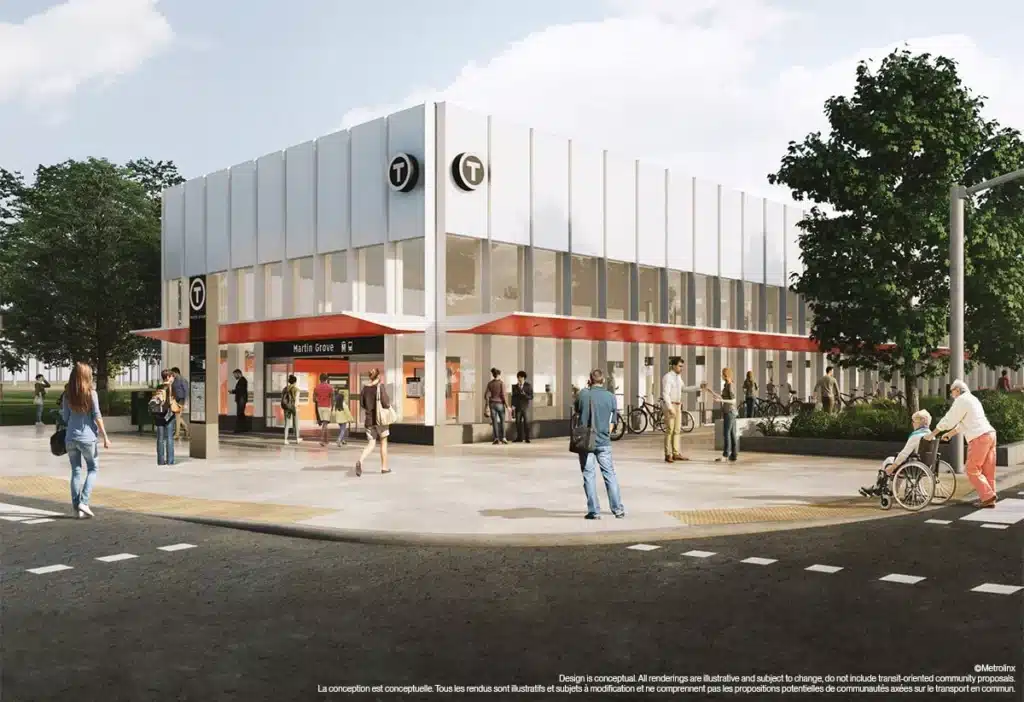
According to Infrastructure Ontario, the team was selected following an evaluation of proposals. The selection of TRP “is the result of an open, fair and competitive procurement process overseen by a third-party fairness monitor,” the agency noted.
The Development and Master Construction Agreement (DMCA) marks the start of the development phase, part of a progressive design-build procurement model. The DMCA, Infrastructure Ontario says, enables TRP to begin construction of early works and for them to collaborate with Metrolinx to further develop the design scope, risk allocation and pricing of various elements as part of the development phase.
The scope of work for the project’s SRS package includes design and construction of seven stations and installation of rail and systems for the 9.2-kilometer (5-7-mile) extension and works at the existing Mount Dennis Station to connect the ECWE with future Line 5 Eglinton LRT service.
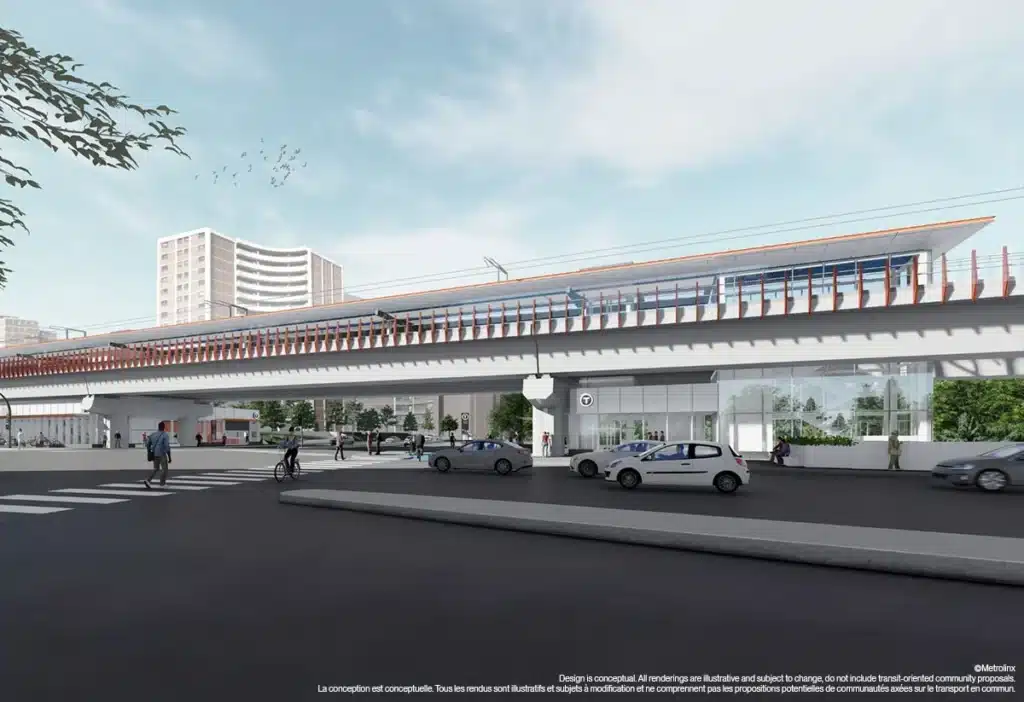
The overall Eglinton Crosstown West Extension project is being delivered through various Public-Private-Partnership (P3), progressive design-build and traditional procurement contracts.
“The Eglinton Crosstown West Extension is a vital east-west transit connector for Toronto, one that will significantly reduce commuting times for people throughout the city. We are proud to be part of a project that, once complete, will make it easier for thousands of people in the Greater Toronto Area get to the places and people they value most,” said Corina Moore, Executive Vice President, Transportation and Infrastructure at WSP in Canada, which will lead the design as part of the TRP consortium.