Sound Transit
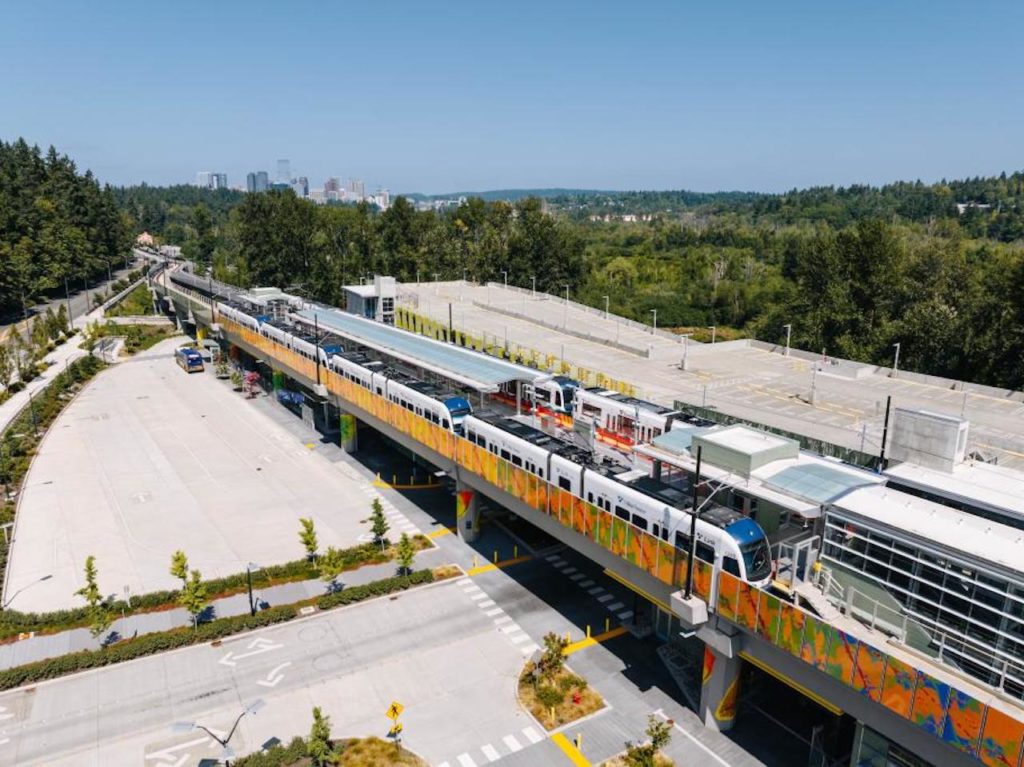
Building on a successful pilot launched earlier this year, Sound Transit is extending the use of the GoodMaps app to five additional 1 Line stations, effective Dec. 18.
The GoodMaps app, which uses light detection and ranging (LiDAR) mapping technology to create highly accurate 3D maps of large public spaces’ interiors, will be added to the Northgate, University of Washington, Capitol Hill, Columbia City and SeaTac/Airport stations. The app has been available at the Westlake and International District/Chinatown stations since February 2024.
With its real-time, turn-by-turn directions via a smartphone app, GoodMaps provides accessible wayfinding for all passengers, including those who have visual or hearing impairments, are neurodivergent, or have limited mobility, as well as anyone who feels anxious or uncomfortable in new or complex environments or just wants to find their way more efficiently, Sound Transit noted.
“Expanding GoodMaps will help all of our riders, whether they have vision or mobility challenges, are tourists new to the city or are regular riders experiencing a new part of the system,” said Justin Deno, program manager for passenger-facing technology. “The app aligns with Sound Transit’s commitment to improve passenger experience through technology and provide inclusive and accessible public transportation.”
Riders can view the video below to see how GoodMaps works. GoodMaps includes Spanish language support with additional languages coming in 2025. If the pilot is successful, Sound Transit says it will evaluate launching GoodMaps to all Link light rail stations.
AECOM/ATP
AECOM announced Dec. 19 that it has been selected by ATP as the delivery partner for the Phase 1 delivery of Austin’s first light rail transit system.
AECOM’s responsibilities will include program management oversight and initiation, environmental services, design management, rail activation, and operational readiness. Phase 1 of this project will introduce an approximately 10-mile light rail system to Austin with 15 stations to enhance regional connectivity and mobility for communities in the region.
As delivery partner, AECOM will also lead a technical team of subconsultants, including Disadvantaged Business Enterprise (DBE) firms. By collaborating with DBE firms, AECOM “seeks to provide opportunities for socially and economically disadvantaged individuals to engage in and benefit from the project’s development,” the company said.
“We are the global leader in transportation, and we are proud of our partnership with ATP for Austin’s first light rail transit system,” said AECOM President Lara Poloni. “Cities across the U.S. continue to make unprecedented investments in rail infrastructure, and Austin is no exception. This critical project will transform how Austinites navigate their city, with the promise of stimulating economic growth, protecting the existing environment and promoting a sustainable future for generations to come.”
“As Austin continues to grow into one of the most vibrant and dynamic metro areas in the U.S., Austin Light Rail holds immense promise for the City and its residents in transforming local transit connectivity,” said Drew Jeter, Chief Executive of AECOM’s Program Management global business line. “Our outcome-driven program management approach will leverage our expertise in global large-scale transit programs to meet the growing demand for reliable and accessible transportation benefiting the City of Austin and connecting communities.”
The Austin Light Rail is a key part of the City’s larger Austin Strategic Mobility Plan (ASMP), which aims to “enhance the accessibility, reliability, and connectivity of Austin’s transportation network.” The new rail system will link major destinations across the city, such as Lady Bird Lake, downtown Austin, and the University of Texas at Austin. Future expansions are planned to extend north to major hubs and south to Austin’s airport.
“We are thrilled to partner with AECOM on this landmark project that will significantly enhance Austin’s transportation infrastructure and support the city’s growing population,” said ATP Executive Director Greg Canally. “After a thorough vetting and evaluation process, AECOM’s selection reflects our organization’s shared values and collaborative spirit.”
DPU/MBTA
DPU on Dec. 19 received a stamp of approval from the FTA on the DPU’s oversight of the MBTA in the FTA’s most recent 2024 triennial audit, which reflects the work the Department’s Rail Transit Safety Division performed to “increase its oversight and compliance with federal and state requirements for safety oversight of the MBTA.”

The FTA’s 2024 audit results, the Department says, demonstrate the DPU’s significant progress from its previous audits and inspections. The FTA concluded in its audit that there are no issues of noncompliance with federal requirements for the State Safety Oversight (SSO) Program. As part of the FTA’s audit report, it acknowledges the DPU’s enforcement authority, highlighting the improvement in the state’s safety oversight of the MBTA’s rail system.
In 2018, the DPU was certified by the FTA to administer the SSO Program. The DPU’s Transportation Oversight Division, which currently still handles the safety oversight of MBTA buses and regional transit districts, handled the state safety oversight responsibilities of the MBTA until a decision was made to establish a new division that would be solely responsible for managing the SSO Program.
In late 2022, the DPU created the Rail Transit Safety Division and hired its first Director, Robert Hanson. Hanson is a venerable transit safety official having served previously with the Amtrak Police Department. The Division has more than doubled in staff size since its inception to include investigators, engineers, data analysts, lawyers, and an experienced leadership team that involves an Assistant Director of Compliance and Engineering and an Assistant Director of Safety Assurance who work closely with Director Hanson. “The division’s constant engagement in both the field and administrative oversight ensures that safety remains the top priority across the MBTA’s subway system,” according to DPU.
The DPU’s Rail Transit Safety Division is responsible for overseeing the safety of equipment and operations of the MBTA’s subway system and has regulatory authority over all public rail crossings in Massachusetts. The Division oversees the MBTA’s implementation of its transit safety plan, including its response to safety events. This Division conducts inspections of the MBTA’s railcars, stations, and car houses, and produces external safety and compliance audits including its own triennial safety audits of the MBTA. The safety of MBTA riders and employees is the top priority for the Rail Transit Safety Division, DPU noted.
The FTA’s 2024 audit reviewed the DPU’s implementation of the SSO Program, which oversees safety of the MBTA’s rail transit (subway) system: the Red, Blue, Orange, Green, and Mattapan Trolley lines. The MBTA Silver Line is not part of the SSO Program as it is not a fixed rail line. The MBTA is the only rail transit system in Massachusetts that is subject to FTA’s SSO requirements. There are 30 states in total that are required to have a SSO Program for their rail transit systems.
To conduct the 2024 audit, the FTA interviewed DPU and MBTA staff, visited several MBTA railway locations, and reviewed documents used by both agencies to direct, manage, implement, and monitor DPU’s SSO Program. The scope of the FTA’s audit also included how the DPU addressed noncompliance issues the FTA found in previous audits and inspections. The FTA verified that the DPU participates in accident investigations and conducts independent reviews of MBTA findings of causation. Further, the FTA concluded that the DPU ensured that all investigations were conducted thoroughly and identified causal and contributing factors.
Previously in the spring of 2022, the FTA conducted a full safety management inspection of both the MBTA and the DPU based on reported safety events. During this inspection, the FTA determined that the DPU had seven open findings from FTA’s 2019 triennial audit out of 16 findings identified. The FTA also reviewed the organization, staffing, and technical capacity of the DPU to oversee a rail transit agency of the size and complexity of the MBTA.
The FTA’s 2022 inspection also assessed the financial and legal relationship between the DPU and the MBTA. The FTA evaluated the DPU’s actions to oversee implementation of the MBTA’s Agency Safety Plan and Safety Management System. The FTA also assessed opportunities for the DPU’s SSO Program to conduct more active and engaged oversight of MBTA’s rail transit system. This inspection led to the FTA issuing two Special Directives to the DPU (22-8 and 22-13) and eight Special Directives to the MBTA in 2022.
The DPU worked diligently to address the FTA’s concerns. Its efforts led to the FTA’s full closure of one of the two Special Directives (22-8) issued to DPU, which was the first special directive ever closed by the FTA. In a letter to the DPU, the FTA stated, “[its] determination that DPU has satisfied all the requirements related to SD 22-8 represents a tremendous amount of work, and FTA greatly appreciates your efforts.” The DPU continues to work with the FTA to make progress on the last Special Directive.