Transit Briefs: SEPTA, NCDOT, North Texas Commuter Rail, Santa Clara VTA
SEPTA
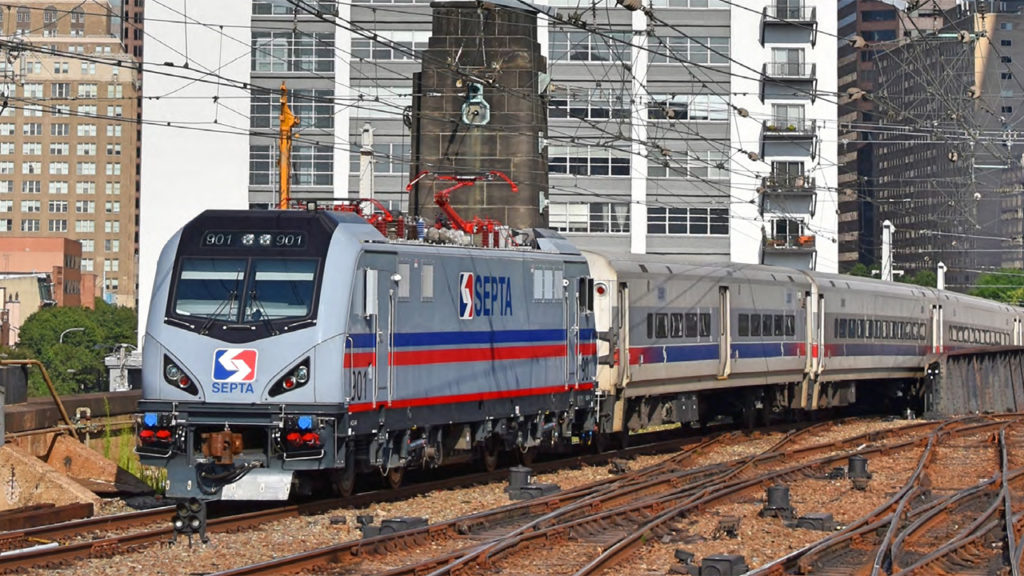
SEPTA average daily ridership in February 2025 was 753,937 unlinked passenger trips across all modes, the agency recently reported.
Systemwide ridership in February 2025 increased 8% from February 2024. On average there were 55,634 more trips per day in February 2025 compared to February 2024.

According to SEPTA, all modes experienced an increase in ridership relative to this time last year. Much of the overall ridership growth was driven by the B and L as heavy rail ridership grew 21% relative to February 2024. This is equivalent to 36,995 trips. In fact, heavy rail ridership growth accounts for 67% of new riders. It’s important to note, SEPTA says, that ridership for the Eagles Super Bowl Parade is captured in this month’s totals.
Trolley ridership increased by 8% or 4,298 unlinked trips per weekday relative to February 2024. Weekend trolley ridership growth has been stronger than weekdays.
Regional Rail ridership increased by 15% or roughly 11,334 unlinked trips per weekday for an average of 88,400 trips per day. This is the highest daily ridership in five years, according to the agency. It’s important to note, SEPTA says, that ridership for the Eagles Super Bowl Parade is captured in this month’s totals.
NCDOT
NCDOT is considering building a temporary station at the unopened Charlotte Gateway Station to begin running Amtrak passenger trains, according to an Axios report.
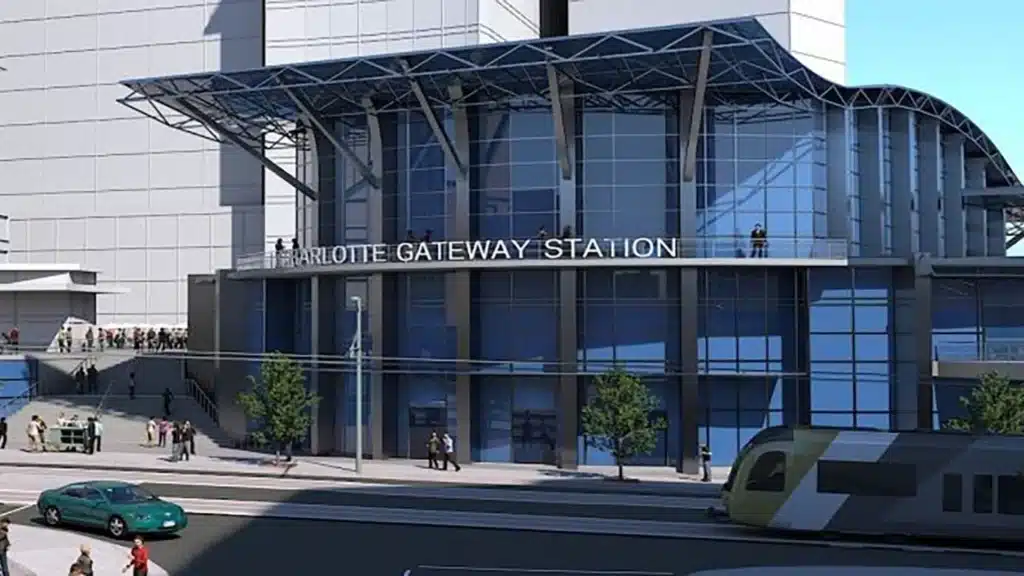
According to the report, the agency’s current station on North Tyron is “inconvenient” with NCDOT acknowledging that the station is “poorly located, subject to flooding, too small, and not an ideal front door to the Queen City.”
According to the Axios report, NCDOT has invested $84.6 million in new train tracks and a platform in Uptown and has “successfully tested running trains to the site,” but the Charlotte Gateway Station hasn’t opened yet.
The agency, according to the report, is waiting for the city to begin the project’s second phase—a mixed-use development with a transit hub to include the station, built in partnership with a private developer—which has not broken ground.
As an interim solution, NCDOT has discussed building a “temporary” or “early” station along Wilkes Place between Trade and Fifth Streets, according to the Axios report. The state-owned land is adjacent to the completed platform and across from the permanent station and future development site.
NCDOT, according to the report, confirmed it is in discussions with its partners, including the City of Charlotte, about establishing an early station, which needs additional infrastructure to “safely access and support serving customers.”
“There is currently no way to safely get from the platform to the ground nor a building to service travelers’ needs,” an NCDOT spokesperson said.
The proposed temporary station building, according to one slideshow obtained by Axios, would be 4,828 square feet, including a 2,500-square-foot waiting room. No plans, including estimated costs or the timeline, have been finalized, according to the report.
In a letter to Charlotte City Manager Marcus Jones, NCDOT Deputy Secretary for Multimodal Transportation Julie White wrote that the early solution would “ensure we reap the benefits of the completed infrastructure the State invested in as quickly as possible and provide the best possible access for visitors to Charlotte’s Uptown,” according to the Axios report.
NCDOT is requesting $10 million from the Federal Railroad Administration (FRA) for an “early station” that could be completed in the next few years, according to the letter and as reported by Axios.
The agency asked the City of Charlotte to provide half of the required nonfederal match ($1.25 million), contribute $1.5 million for upgraded facilities, such as elevators, and cover any cost overruns. The NCDOT spokesperson said there are no updates on these funding requests, according to the report.
More information is available here.
North Texas Commuter Rail
A proposed regional rail authority—incorporating Fort Worth, Dallas and Denton commuter train systems—”could be a viable option in four North Texas counties if it has dedicated operational funding and cohesive branding,” a key transit official said, according to the Fort Worth Report.
According to the report, the suggestion for a rail authority emerged from a March 13 Regional Transportation Council (RTC) meeting in response to proposed state legislation, House Bill 3187 and Senate Bill 1557, which seeks a 25% funding cut from member cities that fund Dallas Area Rapid Transit (DART).
The legislation, if approved, according to the Fort Worth Report, “threatens” the Trinity Railway Express (TRE), the commuter rail line that 1.1 million riders use each year to travel between Fort Worth and Dallas. The line is owned and operated by DART and Trinity Metro, the Fort Worth area transit agency. Both agencies told the Fort Worth Report that “neither would be able to operate the commuter train service without joint participation. The train would be vital for the region since transportation officials plan to use the service to help transport sports fans to Arlington for FIFA 2026 World Cup games.”
DART’s 26-mile Silver Line from Plano to Dallas Fort Worth International Airport, which is planned to launch this year, would likely be limited to one daily trip under a federal funding tie if the legislation is approved, according to the Fort Worth Report. Trinity Metro’s TEXRail shares the same rail line to transport riders to DFW Airport from Fort Worth, North Richland Hills and Grapevine, but those daily operations “would not be affected under the bills,” according to the report.
Transportation Director Michael Morris of the North Central Texas Council of Governments told the Trinity Metro Board of Directors on March 17 that the legislation, if approved, would have “significant consequences” and force planners to “revise the organization’s future long-range transit plans that have been in the works for years,” according to the Fort Worth Report.
The Mobility 2050 plan, scheduled to be adopted by RTC in the summer, addresses growth concerns in the 12-county North Texas area—including the “possible loss of federal funds and sanctions in response to the region not meeting federal air quality standards”—as sprawl extends to rural areas, according to the report.
Morris said RTC staff members are involved in mediation efforts between DART and member cities but declined to comment on those ongoing negotiations, according to the Fort Worth Report.
The proposed rail authority, he said, “could be a good alternative if the bills are approved to allow member cities to use a portion of the sales tax dedicated to DART for local transit improvements.”
“Plano, for example, is overpaying DART by more than 200%, paying over $100-plus million into the DART system while receiving less than $45 million in services,” said Rep. Matt Shaheen, the House bill sponsor, but he did not address the possibility of the loss of the TRE service that could result from his bill, according to the Fort Worth Report.
According to the Fort Worth Report, “a potential rail authority could operate primarily in Tarrant, Dallas, Denton, and Collin counties and use sales tax contributions from cities, rather than transit agencies. A unified brand would be suggested since each agency operates its rail services under different names, Morris said. The proposal would also incorporate rail operations of the Denton County Transportation Authority, which operates the A-train Rail Trail, a 19-mile line that runs from Carrollton to Denton at the end of DART’s northern service to Carrollton.”
The proposed rail authority, according to the Fort Worth Report, would need to be funded through at least 8/10ths of a penny derived from sales taxes, Morris said. Trinity Metro receives less funding than DART, with a .5% portion of the local 8.25% sales tax. DART receives double that amount from local sales tax. Sub-regional boards could also be established.
Morris told Trinity Metro directors they need to “advocate city leaders for transportation options—including transit-related developments where people live, work and play—because North Texas’ population is expected to grow by four million by 2050, mostly in suburban and rural areas. The service areas for transit authorities is expected to decrease from 47% of the regional population to 38% by 2050, data from the council of governments shows,” according to the Fort Worth Report.
Santa Clara VTA
A Santa Clara County Superior Court judge denied the Santa Clara VTA’s bid for “a temporary restraining order to stop the ongoing strike Monday but granted an order requiring the union to appear in court and explain why their strike is legal,” according to court documents obtained by The Mercury News.
According to a report byThe Mercury News, Amalgamated Transit Union (ATU) Local 265 has entered its second week of striking after negotiations fell apart over issues of higher pay and guaranteed arbitration in early March, with a few sessions of mediation and negotiation “resulting in little progress toward a resolution late last week and over the weekend.” VTA filed the lawsuit on the first day of the strike claiming that the union violated a “no strike” clause in the previous collective bargaining agreement, while the union maintains that that previous agreement “expired, and the clause no longer applies.”
As reported by The Mercury News, Santa Clara County Superior Court Judge Daniel T. Nishigaya granted the VTA’s application for an order to show cause—summoning union representatives to appear at a hearing to explain why the injunction should not be issued, according to court documents. The ruling comes as no further negotiations have taken place between the two sides since the weekend, according to ATU Local 265 President Raj Singh.
The temporary restraining order was denied, according to court documents. Representatives from the union and from the transit agency will appear in court March 26.
The VTA, The Mercury News reports, also submitted a proposed order to show cause and temporary restraining order that, if signed by the judge, “would bar the union from continuing its strike activities,” according to court documents.
“Unfortunately for our passengers, that does not allow for the workers to come back and therefore service to be reinstated,” said VTA Deputy General Manager Greg Richardson at a press conference Monday. “From the standpoint of the overall action from VTA to ATU, it does recognize the merits of the case, and it is basically allowing for that to go forward on the breach of contract piece.”
In a statement Monday night, the VTA said that they believe the judge’s ruling means they met the initial burden to “show a likelihood of success on the merits of its breach of contract claim,” according to the report.
Richardson added that the VTA will “continue to pursue negotiations with the union to come to a resolution as soon as possible.”
Singh said that the union waited for a call from VTA to return to negotiations Monday and Tuesday but had yet to hear from them as of Tuesday afternoon, according to the report by The Mercury News.
“I have no idea why we’re not at the table at this point,” said Singh, who added that he “still expects the VTA’s bid for an injunction to be denied” and added that the VTA will have to “prove that their claim is valid.”
“The union has a legal right to strike, and so that’s what we’re exercising,” Singh said. “Just as we stated before, whether it’s the Governor’s Office or the judge, the issue still remains that both parties are going to have to reach an agreement.”
Earlier Monday, Nishigaya temporarily denied the bid for an injunction due to noncompliance with court rules, according to the report by The Mercury News.