
Transit Briefs: SEPTA, Baltimore Red Line, Metrolinx, DART
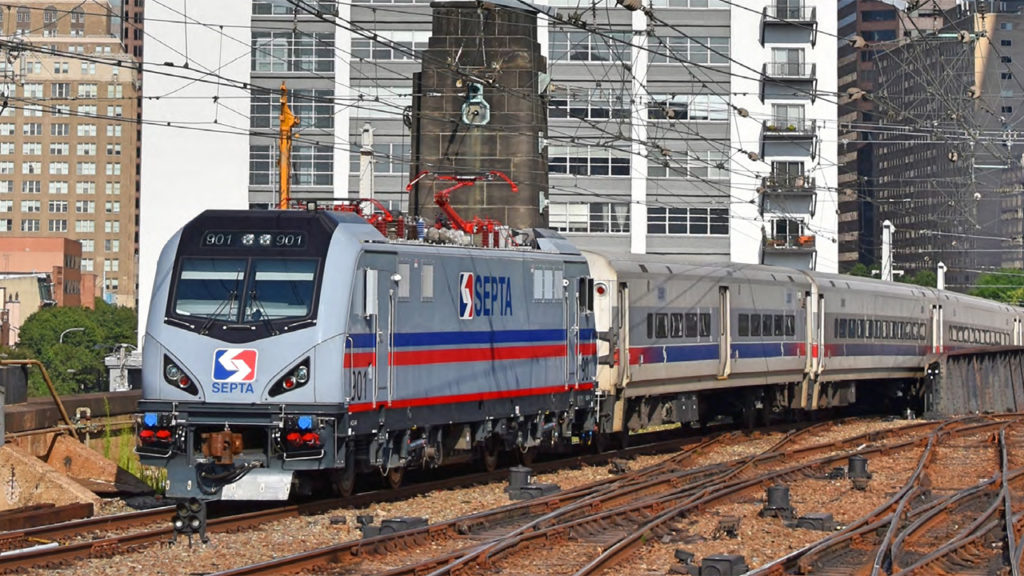
SEPTA
System-wide SEPTA ridership for October 2025 decreased 3% or 21,911 unlinked trips per weekday from October 2024. Ridership is down by approximately 1,748 trips on Metro and 6,395 trips on Regional Rail.
Average daily ridership was 779,701 unlinked passenger trips across all modes. Up 2% from 761,879 trips in September 2025.
Bus ridership declined 3% or approximately 13,686 unlinked trips relative to this time last year. Weekend and weekday ridership declined at the same rate.
Ridership on the L, B, and M declined by approximately 1% which is a decrease of 1,684 average weekday trips despite the fare increase implemented on September 14, 2025. Ridership on the T, G, and D has remained the same compared to October 2024. T, G, and D ridership increased 5% on Saturdays and 6% on Sundays with the G experiencing the most growth. The D and T experienced some service disruptions which impacted overall ridership.
Regional Rail ridership is down 7% or approximately 6,395 passenger trips relative to this time last year. Much of the ridership loss, the agency says, can be attributed to the SLIV FRA safety inspection mandate.
Baltimore Red Line
The Red Line, a $2.9 billion plan to build a 14-mile light rail line crossing Baltimore City’s east-west axis became a transportation priority for Governor Wes Moore but “progress has been slow,” according to a Bloomberg report.
Designed to connect economically hard-hit areas of the city with downtown and suburban job centers, the Red Line had been approved for $900 million in federal funding. But, according to the report, in 2025, then-Governor Larry Hogan, “declared the project a boondoggle and returned the federal money. The state funds were diverted to road projects far from Baltimore.”

“After winning the gubernatorial race, Moore promised to resurrect the transit line, in some form, during his administration. But as he gears up for reelection, the long-sought rail link remains little more than a distant hope,” Bloomberg reported.
According to the report, state and federal agencies overseeing the development of the project paused the permit review process in June, “casting further doubts on the future of the project. Restarting a major transit project that’s been dead for a decade is no simple matter: This version of the Red Line could cost $8 billion or more.”
Technical work and community hearings continue to go forward, according to the Bloomberg report. But Red Line spokesman Ken Melton said in an email that the Maryland Transit Administration (MTA) and the Federal Transit Administration (FTA) “mutually agreed to the break.”
“This pause does not delay any ongoing technical work,” Melton wrote. “It will allow time to revise the project schedule and determine the most effective path forward, rather than continuing to extend deadlines.”
The Moore administration’s current six-year blueprint for transportation funding in the state includes $128 million for Red Line planning and design work but nothing for construction, according to the report.
State delegate Regina T. Boyce, a Baltimore Democrat who is the vice chair of the chamber’s Environment and Transportation Committee, said that “federal layoffs and the prolonged federal government shutdown have had a profound impact on Maryland residents, and dealing with that has become a larger concern for state officials than transit improvements.”
Still, Boyce said that state transportation officials need to find ways to “inch forward” on the Red Line, according to the Bloomberg report. “In September, she was one of several state lawmakers and city councilmembers who urged the state to find funding to speed up the development of the Red Line as well as a planned overhaul of the city’s bus system.”
According to the report, “the rebooted Red Line boasts a new website, logo and project renderings, but other details—including alignment, station locations and whether sections would run in an underground tunnel—remain to be worked out. The original project faced resistance from some neighborhoods along the corridor, and development since has brought significant changes. But the biggest open question is cost.”
At the September hearing, a range of local lawmakers “mulled their options for moving ahead without federal support,” according to the report. “Even if we don’t have the partnership of the federal government, there is a version of the Red Line that we can do as a state, so do not let the perfect be the enemy of the good,” said Delegate Stephanie Smith, a Baltimore Democrat.
“What Baltimore really needs is a regional transit agency that focuses just on the metropolitan area, with a dedicated funding source, so planners can line up projects for delivery regardless of the changes in the political climate, argued Jet Weeks, the Executive Director and Policy Director for Bikemore, a Baltimore-based group that promotes cycling, noting how cities like Indianapolis had pushed bus rapid transit projects through state-level political opposition.”
“If you go to the Sun Belt or the Midwest and just see what they’re achieving, it’s pretty wild how far behind we are,” Weeks said. “The Red Line should be open now. If we had followed the 2002 regional rail plan, we’d have three or four lines open by now, and we haven’t built a single one.”
Metrolinx
Mount Dennis Station, the first station that will serve riders on the Eglinton Crosstown has opened, “though the opening date for the long-delayed rapid transit line remains unclear,” according to a CP24 report.
The new transit hub, near Eglinton Avenue and Black Creek Drive, will connect riders with the Kitchener GO, the Union-Pearson Express, and later the Eglinton Crosstown lines.
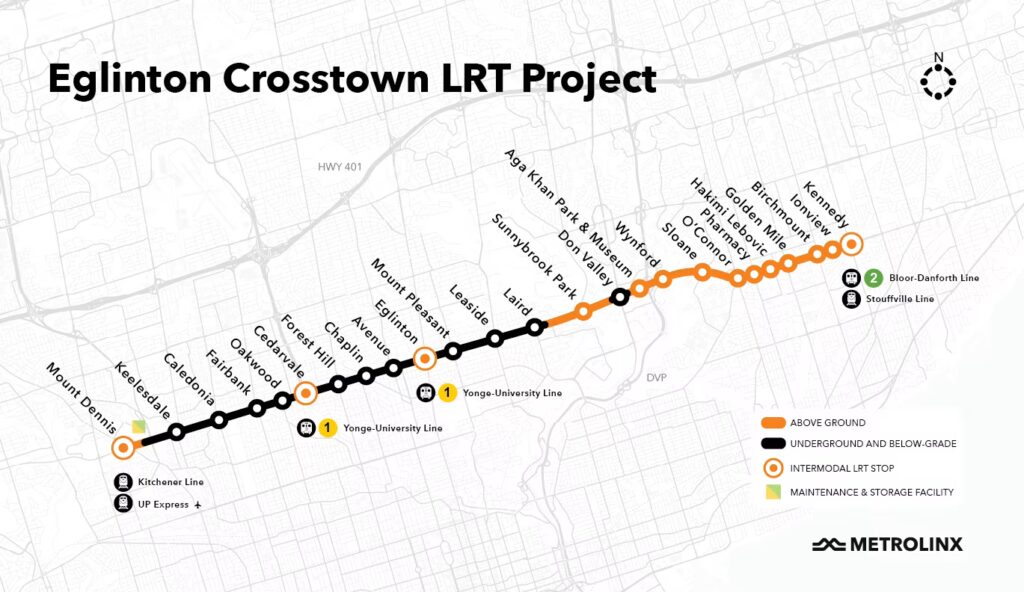
Mount Dennis is the first station to connect all three transit lines, according to a press release from Metrolinx.
“Customers can travel to Union Station in 16 minutes from Mount Dennis‚” Metrolinx said, adding that it’ll take 16 minutes to get to Pearson Airport as well.
The opening of the building, CP24 reports, comes as the final testing phase on the Eglinton Crosstown continues.
During a news conference on Monday, Metrolinx CEO Michael Lindsay said there is “absolutely a chance” the line opens by the end of 2025, though he refused to commit to any timeline, according to the report.
Premier Doug Ford said back in June that he was “hearing” the line would open by this past September.
“We are applying the most rigorous tests that have ever been applied to LRTs anywhere, we are doing that precisely because of the experience of the Ottawa LRT. All is subject to the system continuing to perform but the system is showing great stability even in the Canadian winter so there is a lot of promise,” Lindsay said on Monday.
DART
DART on Nov. 18 announced that it is launching a new touchscreen Ticket Vending Machines (TVMs) systemwide, making fare purchases faster and easier for riders.
With these upgraded machines, riders can:
- Access 11 languages.
- Purchase a Day Pass or 3 Hour Pass.
- Purchase and Reload their GoPass® app using cash.
- Check their GoPass® account balance and transaction history.
- Riders can pay with cash (coins and $1, $5, $10, and $20 bills), credit or debit cards, or mobile wallets such as Apple Pay, Google Wallet, and Samsung Wallet. If a machine cannot provide change for a cash transaction, it will issue a voucher with a QR code, which can be redeemed at any TVM.
The new TVMs will replace older machines through mid-2026, streamlining fare purchases, card reloads, and account monitoring, the agency noted. “DART is enhancing the rider experience, boosting efficiency, and moving toward more mobile, less cash-dependent payments.” During installation, customers can use another TVM or the GoPass® app if needed.
“DART’s new ticket vending machines make it easier for customers to pay—they’re designed to support multiple payment methods, connect to the GoPass app, dispense Tap cards, and operate in 11 different languages,” said Jamie Adelman, EVP and Chief Financial Officer. “These machines will visibly improve the rider experience and reduce fare evasion, all as part of a larger effort to modernize our fare collection system.”




