
Transit Briefs: Santa Clara VTA, Amtrak, WMATA, Caltrain/SMART/BART
Santa Clara VTA
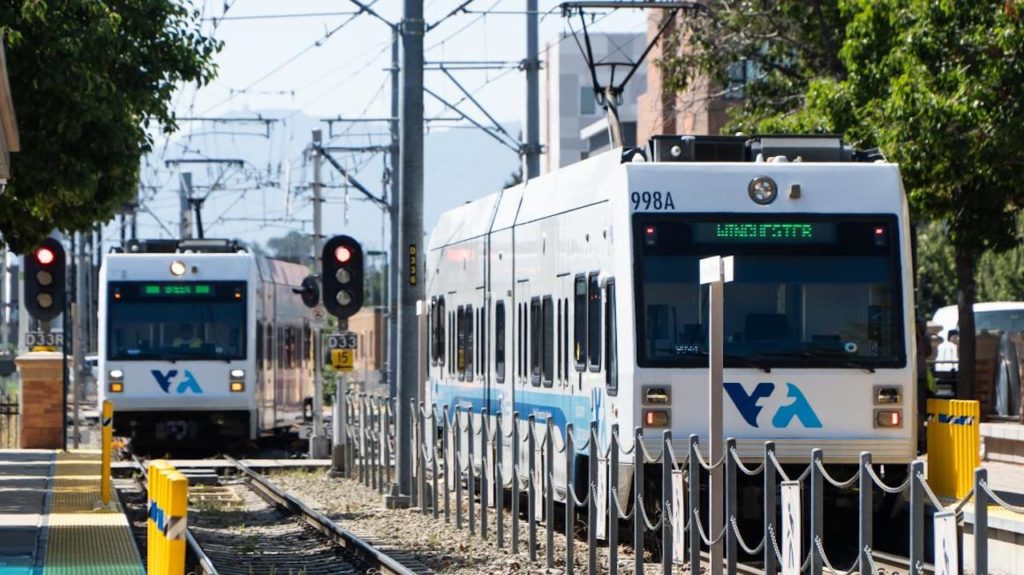
Santa Clara VTA recently announced that it has ratified new contracts with three of its four unions.
Service Employees International Union (SEIU) Local 521; American Federation of State, County, and Municipal Employees (AFSCME) Local 1101; and Transportation Authority Engineers and Architects (TAEA) Local 21, which represent about 575 workers combined, reached agreements with VTA as of April 17. The terms include a 14.5% wage increase over the next four years, better dental and vision coverage and “improved” workplace policies, according to a VTA statement.

VTA General Manager Carolyn Gonot said in the statement the contracts’ terms are both “competitive and plausible in the transit agency’s tight budget,” according to a San José Spotlight report.
The agency, however, has still not reached an agreement with its largest union—Amalgamated Transit Union (ATU) Local 265, which represents more than 1,500 frontline workers, including bus drivers and light rail operators, according to the report.
According to the San José Spotlight report, ATU Local 265 has been negotiating its new contract for the past eight months and went on strike from March 10-27, stopping bus and light rail services countywide. “After a county judge demanded striking union members return to work, negotiations slowed to a crawl.”
ATU Local 265 President Raj Singh told San José Spotlight that his union “was never presented an offer of 14.5% raises over four years.”
“He and the union’s negotiations team finally met with VTA representatives Monday after more than a week of radio silence, but VTA presented an offer union members already voted down,” according to the report.
Singh said the 14.5% offer “might be received more positively by his union’s membership, but VTA representatives said it was not on the table. The latest offer was for an 11% increase over the next three years with reduced overtime benefits.”
According to the San José Spotlight report, Singh said the union is “waiting to see what the agency does next, as the negotiators told him they need approval from the VTA Board of Directors on any new offers.”
The Board of Directors still needs to approve the three unions’ new contracts and is scheduled to vote May 1, according to the report.
Amtrak
Amtrak on April 21 announced that it is advancing critical improvements and repairs at Latrobe (LAB) and Greensburg (GNB), two historic train stations located in western Pennsylvania that date back to the early 1900s. Both stations are served daily by the Pennsylvanian train, which is financed primarily through funds made available by the Pennsylvania Department of Transportation (PennDOT).
According to Amtrak, both stations set five-year ridership records in Fiscal Year 2024, with nearly 12,000 travelers using Greensburg Station and 3,400 passengers at Latrobe Station. The Latrobe Station opened in 1903, and the Greensburg Station opened in 1910.
“Amtrak’s preservation and revitalization of these historic train stations will help better serve residents and visitors in Western Pennsylvania for decades to come,” said Amtrak Vice President, Accessibility, Stations and Facilities Dr. David Handera. “We are dedicated to working with our partners to restore and modernize the stations we serve both here in the Commonwealth and across America.”
Latrobe Station – Early Construction Phase
Final preparation is under way at LAB before formal construction work begins later this year. Improvements will bring the station up to code with the Americans with Disabilities Act (ADA) and include:
- Constructing a new concrete platform and encasing canopy bases in concrete.
- Installing new electrical service and lighting along the entire platform and ramp.
- Adding two sloped walkways to connect the shelter entrance and new platform.
- Building an accessible walkway from the public right-of-way to the accessible parking, station shelter, and platform.
- Designating accessible parking and an ADA compliant ramp with handrails and canopy to platform.
- Renovating entrance to shelter for accessible access.
- Providing new concrete stairs, foundations, and existing stair canopy foundations.
- Resurfacing, striping, and modifying the parking lot.
- Updating station signage.
Greensburg Station – Design Phase
Currently in the design phase, project renderings and specifications recently reached 100% completion, and GNB construction is anticipated to begin in 2026.
The project team is actively seeking design approval from external third-party stakeholders, including host railroad Norfolk Southern (NS), the Federal Railroad Administration (FRA), the State Historic Preservation Officers (SHPO), and the station building owner.
This project includes:
- Replacing the existing concrete low-level platform with two new concrete platforms.
- Removing and relocating existing platform canopy structures with new foundations and roofing, plus a new drainage system.
- Adding new stair and elevator platform enclosures.
- Relocating the existing wheelchair lift enclosure and constructing a new concrete sloped walkway and landing area.
- Designating two new ADA parking spaces.
- Installing new platform wiring and lighting.
- Constructing new concrete stairs from platform to tunnel level.
- Adding two new ADA compliant restrooms.
- Installing ADA compliant entrance automatic doors with new flooring at the existing tunnel hallway, utility room, and restrooms.
These improvements are being implemented by Amtrak in coordination with host railroad partner NS and state partner PennDOT. These upgrades, Amtrak says, are two essential components of the company’s infrastructure investments across the United States, “which play an important role in upgrading the future customer experience and delivering a new era of passenger rail in America.”
WMATA
WMATA announced April 21 that it has selected Northern Real Estate Urban Ventures (NREUV) and the Nix Development Company (NixDev) as the development team for the Deanwood joint development. The team also includes local architect Cunningham Quill, and general contractor, Bozzuto Construction Company.

The future development, WMATA says, will bring new housing and retail options to the community just steps away from the station entrance in Northeast D.C.
According to the agency, this milestone is the result of several years of planning and engagement with community leaders. To enable development at the Deanwood station, WMATA held a Compact Public Hearing and received Board approval in 2023 to close the surface parking lot, as well as rezoned the property from production, distribution, and repair to medium density mixed-use in September 2024.
The mixed-use development will be complemented by a new 20,000-square-foot DC Public Library, which WMATA’s Board approved in April 2024. The DC Public Library, which has allocated $24 million in funding for the project, is working with WMATA separately on developing an agreement.

“Deanwood station is a fantastic example of Metro working with the city and the local community to replace a mostly empty parking lot with a development that will enhance the neighborhood,” said WMATA General Manager and Chief Executive Officer Randy Clarke. “Transit-oriented development is a key component of Metro’s Regional Opportunity and Partnership strategic goal, and Metro remains a national leader in cultivating livable communities near our stations that create new transit users and connect people to economic opportunities.”
The NREUV and NixDev team was competitively selected based on their track record of completing mixed-income developments in the area and commitment to community engagement and economic empowerment, WMATA noted. The proposed development includes 169 mixed-income residential units (approximately 50% affordable), ground floor retail and services including a teen tech center. WMATA received proposals from three other development teams—Mosaic Development Partners JV LLC, Gragg Cardona Souadi, LLC-Foundation Housing Inc. and the NHP Foundation.
Staff will commence negotiations on the joint development agreement in anticipation of bringing it to WMATA’s Board of Directors later this year for approval to execute the agreement. Specific development timelines are still being determined and subject to obtaining financing; however, NREUV and NixDev proposed a closing and construction start by 2028.
Caltrain/SMART/BART
Bay Area transit agencies “rode a wave of increasing ridership in the first three months of the year that was felt across the region,” Bay Area Rapid Transit (BART) recently reported. Many agencies posted double digit gains in ridership compared with the same period last year.
Caltrain led the charge with a 50% ridership increase over the first three months of 2025 “fueled largely by the agency’s switch to an all-electric service.” The nine agencies reporting gains handled a combined total of 3.24 million more trips from January through March compared with the same period in 2024.
Caltrain was not alone in seeing a major ridership increase during the first three months of the year:
- Sonoma-Marin Area Rail Transit (SMART) saw a ridership bump of 38%. That increase means SMART’s ridership averaged 134% of pre-pandemic levels.
- Larger systems also saw significant ridership growth in the first three months of the year. BART ridership was up almost 6.5% from 2024 while Muni increased by 4%.
“This growth in ridership is happening as transit agencies make major investments in improving the rider experience with an emphasis on boosting safety, cleanliness, and reliability,” said BART General Manager Bob Powers. “BART hosts a weekly meeting with the transit leaders from each agency to coordinate on everything from preparing for Super Bowl 2026 and FIFA World Cup to better synching our schedules.”
These ridership gains, BART says, come as transit agencies are “still recovering from post-pandemic ridership declines and are about to run out of federal and state emergency funds. Agencies have used these funds to invest in quality service for the Bay Area as more people are making trips and choosing transit. Many face the potential of devastating cuts that will have serious impacts on the Bay Area’s quality of life.”
The Bay Area’s transit agencies, working with the Metropolitan Transportation Commission (MTC), say they are “prioritizing collaboration to make the rider experience more seamless.” The goal, they say, is to make transit “more connected, more efficient, and more user friendly.” These efforts include a regional mapping and wayfinding project to provide a unified look and feel for maps and directional signs. Transit agencies have also been working together to identify opportunities to reduce total travel times across services and coordinate schedule changes.
MTC and Bay Area transit agencies have a joint website to share the various projects they are coordinating on to improve transit. More information is available here.




