PRT
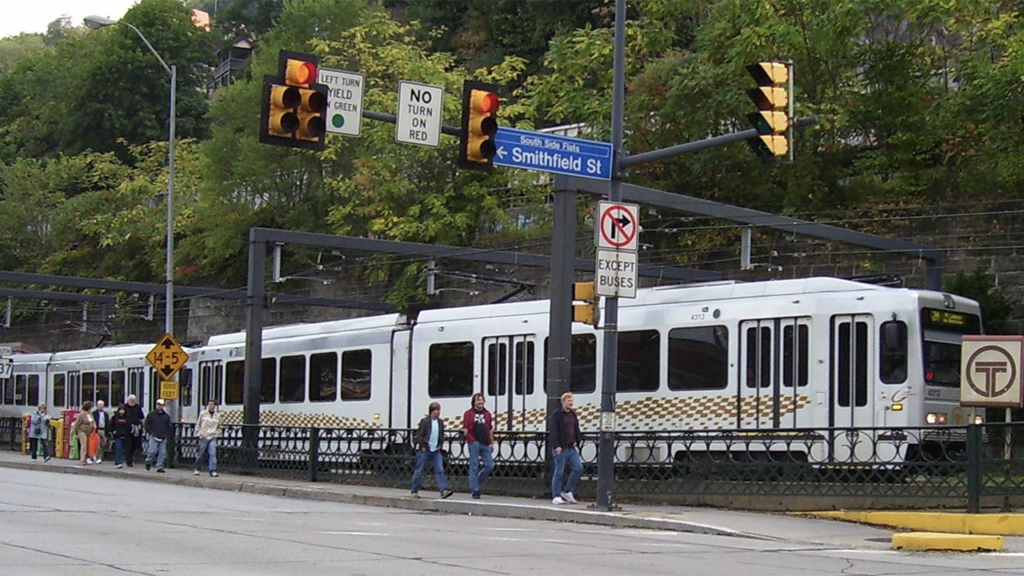
The PRT Board has taken the first step toward replacing its entire fleet of light rail vehicles (LRVs). It has approved a resolution authorizing the agency to submit a letter of interest to the Build America Bureau for the Transportation Infrastructure Finance and Investment Act program, PRT reported July 26. The program allows transit agencies to borrow up to 49% of the cost for eligible projects.
PRT has 81 LRVs—54 from Siemens and 27 from CAF—that operate along three lines, totaling 26.2 miles of track, and that serve 27 stations (see map below). The average LRV age is 33 years.
Fleet replacement is expected to cost about $750 million, it is anticipated to be 12 years before the new cars are in service.
The remainder of the funding would come from bond issuances, according to PRT, and the agency also plans to pursue other grant opportunities.
“Although our current fleet of railcars are in good condition for their age, it’s clear that modernization is necessary as we prepare for the future,” PRT CEO Katharine Kelleman was quoted as saying in a PRT press release. “This is a long process, but submitting this letter of interest is the first step that will allow us to move this vision to reality. A new fleet of railcars will ensure that we can have a future light rail network that is reliable and dependable, ensuring a smoother and more dependable transit experience for decades to come. It’s a lengthy journey but this is a crucial first step and I’m genuinely excited about the potential it holds for our transit system and the communities we serve.”
NJT
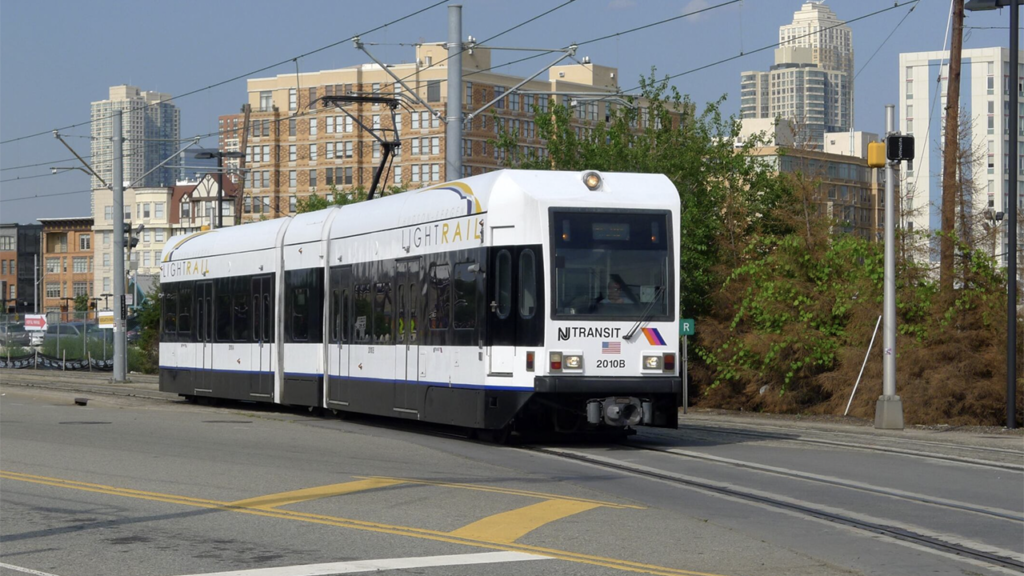
The 100 Transport Workers Union-represented train operators and maintenance workers at NJT’s Hudson-Bergen Light Rail system have voted to ratify a new three-year contract. The contract with Shimmick, which runs the 20.6-mile, 24-station system for NJT, includes raises that amount to 9% over three years; additional longevity bonuses of 75 cents per hour paid out when a worker reaches 20 and 25 years of service, respectively; and reductions in healthcare costs amounting to an average of $2,461, Transport Workers Union reported July 29. Vision coverage is also included, the union said, and a train operator will see their hourly wage increase to more than $36 per hour under the new agreement, which is retroactive to Dec. 1, 2023.
“The raises and healthcare cost reductions in the latest contract are crucial for hard-working NJT workers,” said Willie Brown, Transit, Universities, Utilities, and Services Division Director for the Transportation Workers Union. “This contract will improve the quality of life for Hudson-Bergen Light Rail workers and their families and also acknowledges our longest-serving workers for their years of service.”
“One of the biggest wins for us was lowering the cost of health insurance and having the employer pay a little bit more on their end,” said Duane Boone, Vice President of Transport Workers Union Local 229. “The longevity piece of an extra 75 cents per hour after 20 years and another 75 cents after 25 was also great. There’s a lot of good things for people to look forward to.”
Further Reading: Hudson-Bergen Light Rail: DBOM and More
TransLink
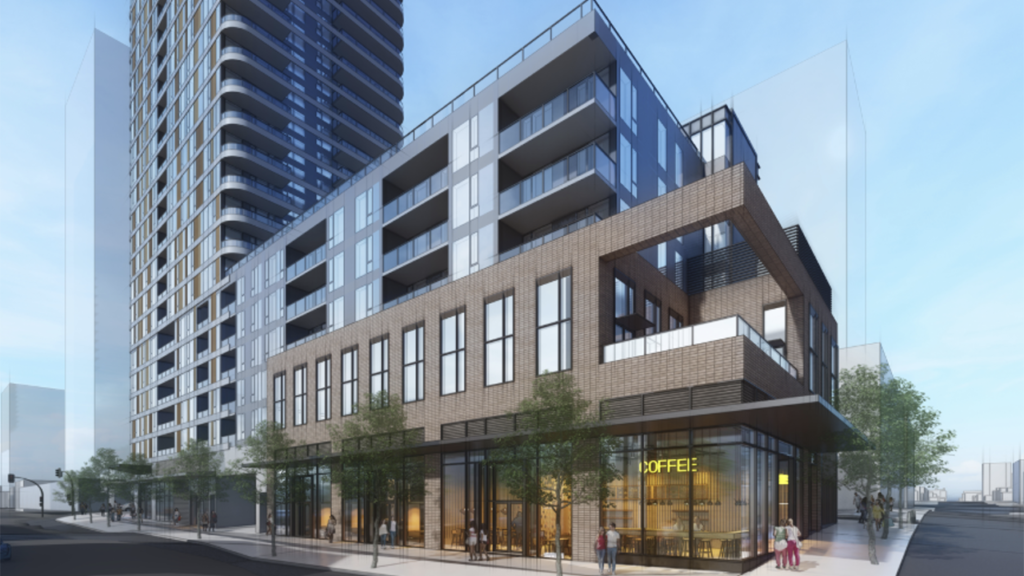
TransLink on July 29 reported that its mixed-used development project with PCI (PCI Developments) is one step closer to being built now that the Vancouver City Council has approved their re-zoning application. The development will be near the future Arbutus SkyTrain Station on West Broadway and Arbutus, as well as an incoming bus loop and the Arbutus Greenway mixed-use walking and cycling path.
TransLink said that it has formed a partnership with PCI to develop the land to include:
- 30 stories of mixed-use residential and commercial space.
- Street-level retail and more than 200 rental homes, 20% of which will be rented at below-market rates and secured for moderate-income households.
- Community space that will serve as the future home of the Ohel Ya’akov Community Kollel, a Jewish cultural, education, and neighborhood center.
The next step for the project is to finalize development and building permits before construction, which is projected to begin in late 2025. TransLink and PCI are targeting a 2029 launch.
Once complete, revenues from the development will be invested into metro Vancouver transit services, according to TransLink, which provides SkyTrain automated rapid transit, West Coast Express commuter rail, SeaBus ferry, and bus services.
This will be TransLink’s first development under its Real Estate Development Program, which the agency began planning for in 2022 to generate a new long-term revenue stream for transit services in metro Vancouver. However, TransLink noted that it is still seeking a new sustainable funding model to ensure transit services can expand as the population grows.
“TransLink’s Real Estate Development Program is part of our efforts to leave no stone unturned when it comes to generating new revenues,” TransLink CEO Kevin Quinn said. “I’m proud that this development will increase access to transit, generate much-needed revenue for transit services, and help increase the housing supply in our rapidly growing region.”
“With our project and community partners, including TransLink, PCI is dedicated to building more rental housing, including below-market rental, to proactively participate in addressing metro Vancouver’s rental housing shortage,” PCI President Tim Grant said. “This development builds on our company’s long-standing commitment to transit-oriented development, which helps to make urban communities more inclusive, livable and sustainable.”
This transit-oriented development will be in-line with the City of Vancouver’s Broadway Plan, the province of British Columbia’s goals for increased density around transit hubs, while helping to achieve targets outlined in Transport 2050 and Metro 2050, according to TransLink.
In a related development, the U.S. Federal Transit Administration earlier this year awarded $17.6 million in grants through the Pilot Program for Transit-Oriented Development Planning.
WMATA
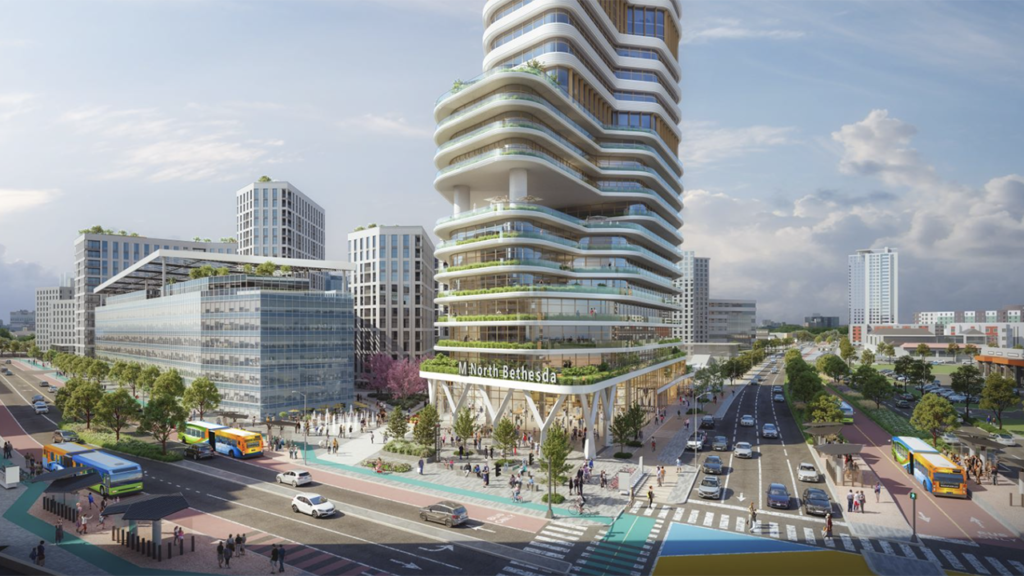
WMATA and Montgomery County, Md., officials are seeking an experienced developer to build a major transit-oriented life sciences center at the North Bethesda Metrorail Station, WMATA reported July 29. It will include housing, office, retail and public spaces.
Montgomery County Executive Marc Elrich and WMATA General Manager and CEO Randy Clarke have signed a Memorandum of Understanding, affirming the County’s and WMATA’s roles and commitments to the project.
WMATA has issued a Request for Qualifications and expects to select a developer later this year. The transit agency said it will negotiate a Joint Development Agreement, allowing the developer to develop the 13.9-acre site. The project is anticipated to include approximately 2 million to 3.7 million square feet of development.
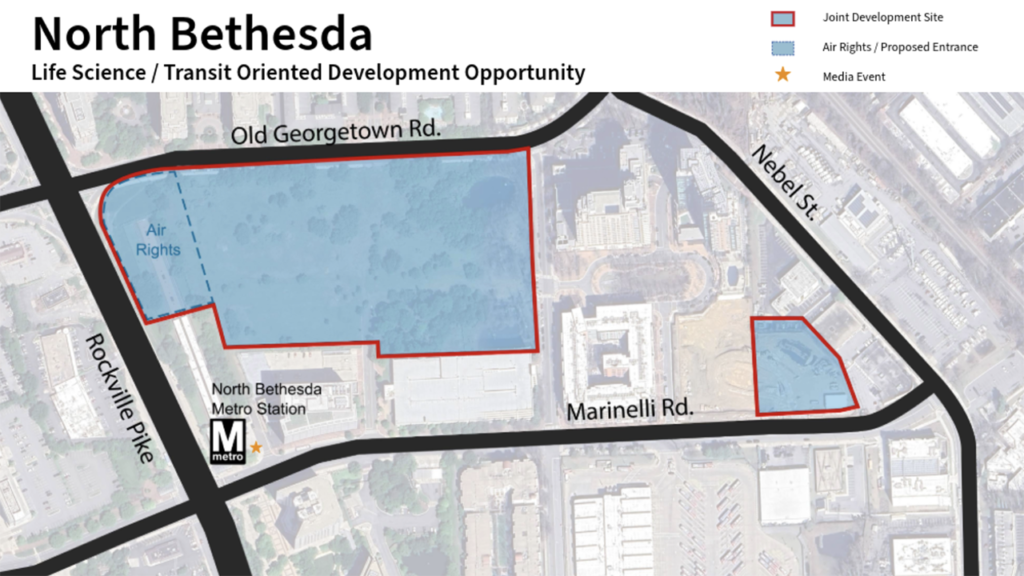
“This is a win for Metro [WMATA], a win for the County, and a win for the region,” WMATA General Manager and CEO Randy Clarke said. “Metro’s strategic plan calls for maximizing the use of our land for the benefit of the region, and to increase ridership with new transit-oriented development. This agreement is the first step to transform an empty field into a world-class life science-anchored community.”
The County, with the support of its Congressional and state delegations, is providing infrastructure funding and economic development incentives, WMATA reported. It has also helped establish a higher education-affiliated research institute to attract life science and technology businesses. So far, the county has secured $36.6 million in local, state, and federal funding for infrastructure supporting the project, including streets and utilities, public open spaces, and transit improvements. County officials are also seeking a $25 million USDOT Raise grant to help integrate a new north entrance to the Metrorail station into a building on site, according to WMATA. The state of Maryland will be providing assistance as well.
The University of Maryland’s Institute for Health Computing will anchor the future development. The newly formed research and technology institution is planning to locate its permanent headquarters on the site, which is expected to generate spin-off jobs.
“In just a few years, the North Bethesda Metro station will become the epicenter of the region’s life science community—rarely has our region seen such a valuable placemaking opportunity for development,” said County Executive Marc Elrich. “By transforming the North Bethesda Metro Station area into a premier life sciences and mixed-use development, we are creating jobs, stimulating our local economy, and fostering a vibrant community where people can live, work, learn, and innovate. As I have traveled around the world and throughout our nation targeting life science and other advanced technology companies, this property, anchored by the University of Maryland Institute for Health Computing, has generated an incredible amount of interest. I expect that we will see a lot of world-class development companies bidding to build this space into something that many others will try to replicate.”
“As a proud anchor of this transformative development, the University of Maryland’s Institute for Health Computing looks forward to pioneering advancements that will shape the future of health research and technology,” University of Maryland, Baltimore President Bruce E. Jarrell said. “This strategic partnership exemplifies our dedication to not only fostering cutting-edge discoveries but also driving economic development for Maryland.”