
Transit Briefs: NYMTA, PANYNJ, LA Metro, Ontario Government, SJJPA, Austin Light Rail

NYMTA
The New York MTA Construction & Development (C&D) on Dec. 1 announced that it has launched a beta version of the redesigned Capital Program Dashboard, offering the public an “easier and clearer” way to track construction projects across the entire transit system: New York City Transit, Long Island Rail Road, Metro-North Railroad, and Bridges and Tunnels. The dashboard allows users to monitor progress and see what is being built or replaced, where it is happening, what the budget is, how much has been spent, and when it will be completed.

First introduced in 2010, the Dashboard has been redeveloped with modern web technology “to better reflect how the MTA is rebuilding and modernizing the transit system—and how the Authority is using smart, innovative construction methods.” With improved navigation, search fields, and filtering tools, the new dashboard, MTA says, “empowers the public to better understand and engage with information surrounding the hundreds of transit construction projects throughout the New York region, including whether they are funded by the Congestion Relief Zone tolling program.”
The dashboard currently includes all accessibility projects active in construction, projects in the procurement pipeline, and candidate locations for projects in the 2025-2029 Capital Plan. Additional projects and information will be added as C&D continues to refine features and functionality.
Key upgrades to the dashboard include:
- “A new ‘Transit Service’ view. This simplifies finding a project by grouping infrastructure projects by the transit routes they affect and a redesigned map that clearly shows where work is happening across the system. Users can click on a specific line to see the multiple projects that have been completed, underway, and planned across the entire route—ranging from accessibility upgrades, Communications-Based Train Control (CBTC) installation, state-of-good-repair work and other station upgrades.
- “A new ‘Initiatives’ view. This allows users to see projects categorized by major priorities such as ‘Accessibility’ or ‘Resilience’. This also includes an initiative around Congestion Relief to allow users to see which projects have been enabled by the Central Business District Tolling Program.
- “Real-world projects focused. The updated dashboard shifts the focus from using internal budget codes as the primary reporting structure to a way that makes more sense to the public—by project bundles that better reflect how we actually coordinate construction tasks, and contract and execute projects.”
“We are showing our work like no other government agency out there—a testament to the new MTA’s commitment to transparency,” said MTA Chair and CEO Janno Lieber. “With a Capital Plan that prioritizes critical but sometimes hard-to-see infrastructure repairs, it is important that this dashboard highlight the massive number and scale of projects underway across the system.”
For detailed information about the Capital Program Dashboard including how it was developed, how to navigate all its features and more about the history of capital data reporting, see this three-part blog series, Behind the Capital Program. The MTA is also inviting users to provide feedback while the dashboard continues to be refined and uploaded with more projects.
PANYNJ
PANYNJ’s PATH commuter rail recorded its second-busiest month since the pandemic, reaching 75% of pre-pandemic ridership, the agency recently reported.

According to PANYNJ, October 2025 was PATH’s second-busiest month since the pandemic. The month’s passenger total of 5.7 million was only 0.1% below October 2024 (October 2024 was PATH’s busiest month since the pandemic). October 2025 ridership was 75.2% of pre-pandemic October 2019 ridership.
Average weekday ridership in October 2025 was 216,640 passengers. This was the second-highest average weekday figure since the pandemic, 0.5% behind September 2025. It was 2.4% above October 2024.
PATH welcomed 50.7 million riders over the first 10 months of the year. The total surpassed the same period of 2024 by 6.4%.
LA Metro
October weekend ridership on all five of LA Metro’s rail lines is up year over year, the agency recently reported.
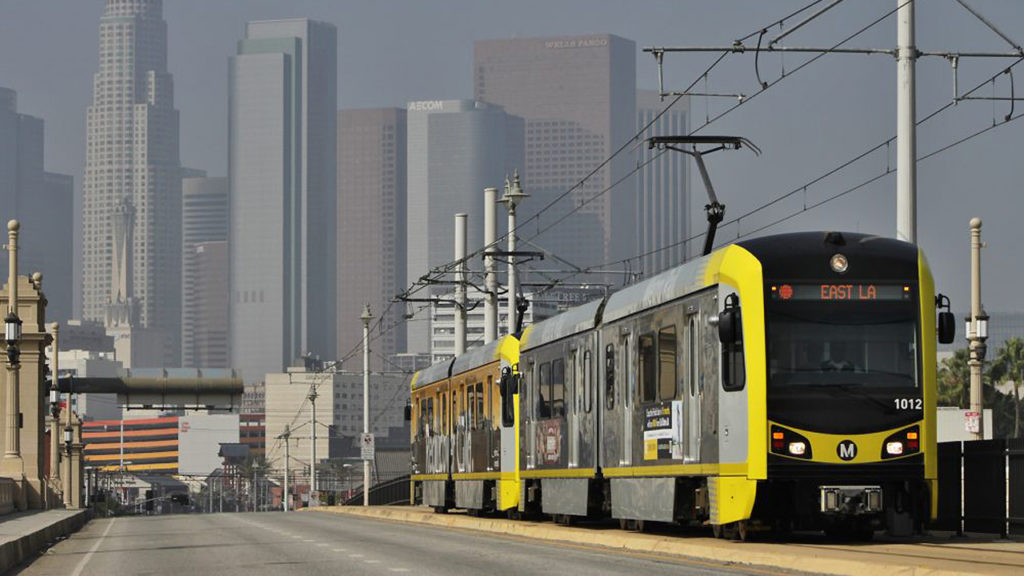
Gains on the Metro A, B, C, D and K Lines ranged from 5.9% to 12.8% over 2024 levels in October, and boardings at the three Metro K Line stations that served the Taste of Soul Family Festival surged up to 224.5% compared to a typical non-event day.
Overall, Metro Rail saw modest gains in ridership over 2024 levels, while federal law enforcement activity continues to affect ridership on Metro Bus, which is down slightly year over year. The results of the October quarterly customer experience survey, the agency says, “shows that more than half of all Metro riders believe that the customer experience has improved over last year, particularly as related to service, safety and security, and that satisfaction with Metro Rail rose for the third consecutive quarterly survey.”
More information is available here.
Ontario Government
Building on the success of One Fare, which is saving transit users in the Greater Toronto and Hamilton Area (GTHA) up to $1,600 per year, the Ontario government is extending the program for an additional two years to continue keeping transit costs down for riders. Since launching in 2024, One Fare has saved Ontarians nearly $200 million and enabled nearly 62 million free transfers across participating transit agencies.
The One Fare program lets transit riders pay only once when transferring between the Toronto Transit Commission (TTC) and GO Transit, Brampton Transit, Durham Region Transit, MiWay, Peel TransHelp and York Region Transit. Since inception, Ontario says, the program has made travel across the GTHA “more affordable and convenient, protecting Ontarians’ pocketbooks and helping build a more integrated transit network.”
“Under the leadership of Premier Ford, our government is delivering on our promise to protect the hardworking people of Ontario in the face of tariffs and economic uncertainty,” said Minister of Transportation Prabmeet Sarkaria. “We’re extending the elimination of double fares through One Fare to make transit more affordable and convenient, saving commuters up to $1,600 each year.”
The Ontario government is investing $70 billion in the largest transit expansion in North America, including the largest subway expansion in Canadian history. Through the GO Expansion program, the province is also delivering two-way, all-day service on GO Transit’s busiest rail routes. “Building a more integrated and regional transit system is a key action in the province’s Transportation Plan for the Greater Golden Horseshoe,” Ontario said.
SJJPA
SJJPA recently announced at its Nov. 21 Board Meeting that the seventh daily round trip of the Gold Runner will return on Dec. 8, marking the first time since early 2020 that the corridor will run its full pre-pandemic schedule. The restored trip expands travel options for riders moving between Bakersfield, the San Joaquin Valley, and Sacramento.
In March 2020, the onset of the COVID-19 pandemic caused a sharp 70% drop in ridership, leading to significant schedule reductions, SJJPA noted. Service was cut from seven to four daily round trips as travel across the state declined. As conditions improved and demand began to return, SJJPA gradually added back the fifth and sixth round trips.
With stronger equipment availability, Amtrak staffing in place, and final approvals from host railroads secured, SJJPA says it is now able to restore the seventh round trip. This return gives riders more ways to visit family, reach major destinations, and plan trips around the existing late-night 11:35 p.m. Sacramento arrival and early-morning 6:26 a.m. Sacramento departure.
“Bringing back the seventh daily round-trip marks an important milestone by restoring Gold Runner to full service,” said SJJPA Interim Executive Director David Lipari. “Thank you to the support of our passengers and the hard work of our staff, we’re excited to reintroduce this trip and bring the Sacramento train service back. This addition gives travelers greater flexibility and more convenient choices when planning their trips.”
The seventh round trip will operate as in 701 northbound and Train 704 southbound, terminating in Sacramento in the north and Bakersfield in the south.
In November, SJJPA introduced the new Gold Runner brand for the rail service and Thruway Bus network. Adopted after focused outreach and input from riders, the brand, the agency says, “supports a unified identity and highlights the broad reach of the Thruway Bus system, which plays a major part in connecting communities across the corridor.”
As SJJPA closes out the year, the return of the seventh daily round trip “reflects a steady rebuild of the service and strengthens access for communities from Bakersfield to Sacramento,” the agency noted.
The full schedule will be available prior to the launch of the seventh daily round-trip.
Austin Light Rail
In an annual funding recommendation report from the FTA, the Austin Light Rail project received an overall rating and local financial commitment summary rating of “medium-high,” according to a Spectrum News report. The project also received “medium” ratings for mobility improvement, land use and project justification summary.

According to the report, the line received a cost-effectiveness rating of “low,” which, Spectrum News says, “may reflect the problems the Austin Light Rail has faced since its 2020 voter approval as part of Project Connect.” The project included “a generational $7 billion transit overhaul and an ongoing 20% property tax increase,” the Austin American-Statesman reported, but the cost of the light rail has since increased.
The funding recommendation ratings, Spectrum News reports, “are set to allow the Austin Transit Partnership to compete for federal funding through the Capital Investment Grant.” The line’s overall rating also “signals that federal staff view the project as financially and technically viable,” according to the Statesman.
Austin Light Rail was 27 miles long at the time of Project Connect’s passing but has since been reduced to under 10 miles, according to the report. It would run north to south between 38th and Oltorf streets and include an eastern spur stretching from Lady Bird Lake area to near the inside of State Highway 71.




