Transit Briefs: NFTA-Metro, UTA, Sound Transit, Santa Clara VTA, SunRail
NFTA
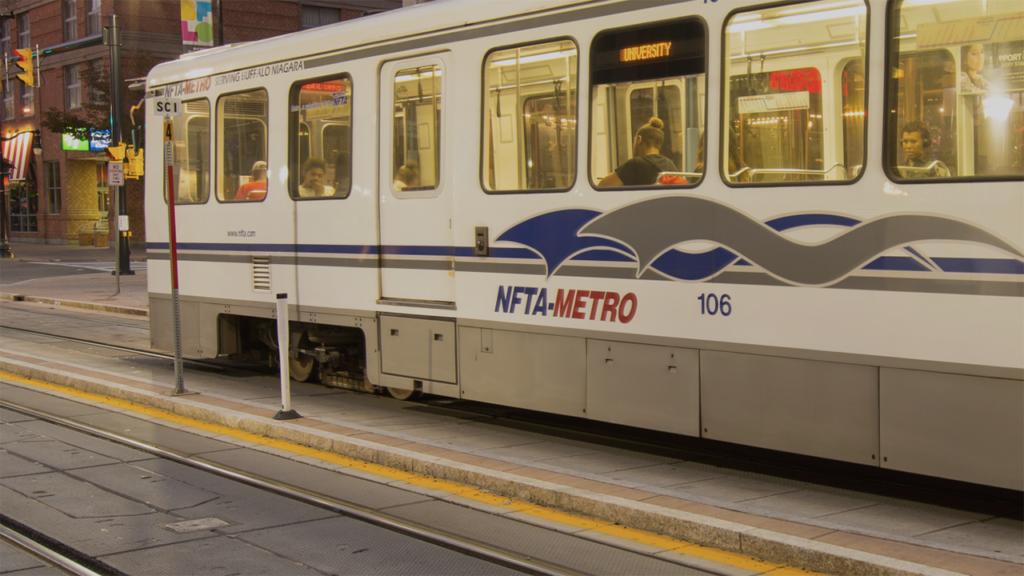
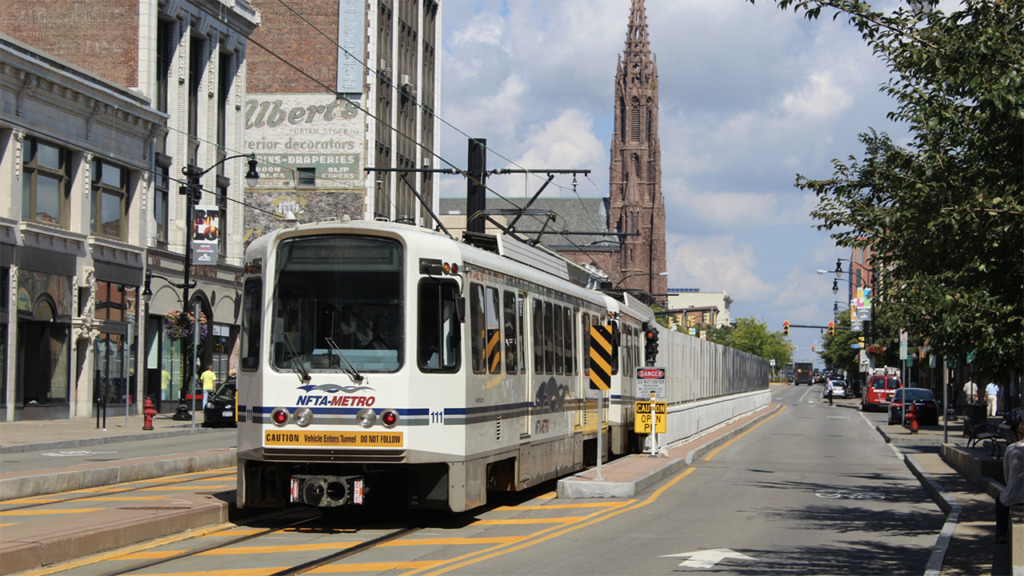
The Federal Transit Administration (FTA) has issued the Final Environmental Impact Statement (FEIS) and Record of Decision (ROD) for the NFTA-Metro Transit Expansion Project, “marking the conclusion of the federal environmental review process and a major milestone in advancing the project,” according to NFTA, which is responsible for airport and surface transportation in Erie and Niagara counties, including light rail, bus, ADA paratransit, two commercial airports, and transportation centers in Buffalo and Niagara Falls. (Download the abstract for the combined FEIS and ROD below.)
The planned project would expand light rail transit service approximately seven miles from the current terminus at the Metro Rail University Station on the University at Buffalo (UB) South Campus to Tonawanda and Amherst, N.Y., including connections to the UB North Campus (download map below). Through the environmental review process, a No Build Alternative and two Build Alternatives were analyzed, including a light rail transit (LRT) extension and a bus rapid transit (BRT) line, NFTA reported Feb. 10. Based on a comprehensive review of the environmental, social, and economic impacts of the alternatives, NFTA said the LRT Build Alternative was identified “as the option that best satisfies the purpose and need for the project, including the fastest travel time, highest ridership potential, and greatest economic impact compared to the other alternatives evaluated.”
The LRT extension will offer a “one-seat ride” between UB’s campuses. It will result in more than 11 million fewer automobile miles traveled annually, “improve regional transit system effectiveness, and support sustainable economic growth through increased transit-oriented development,” according to NFTA.
With the conclusion of the federal environmental review process, NFTA said the project will continue through the remaining federal and local approval processes “with construction, phasing, and funding strategies further refined as it advances toward implementation.”
“Completing the final environmental impact statement marks a pivotal moment in bringing the project vision closer to reality,” NFTA Executive Director Kimberly Minkel said. “It’s an exciting step forward that will support economic growth and improve transportation for generations to come.”
UTA
STV on Feb. 10 reported being selected to support the expansion of UTA’s FrontRunner system (watch video above; download fact sheet below). The nearly $1 billion FrontRunner 2X project will expand the 89-mile commuter rail corridor between Ogden and Provo. Led by the Utah Department of Transportation (UDOT) and in partnership with UTA and Union Pacific, it will add double track in 11 locations to ease bottlenecks and include 10 new trains, a new maintenance facility, signaling and infrastructure upgrades, targeted track realignments, and a new station in Bluffdale. Together, STV said, these improvements will raise system capacity by more than 50%, cut wait times in half to 15-minute peak service and 30-minute off-peak service, and increase travel time reliability.
Working as a subconsultant to Horrocks Engineers, the lead progressive design-build engineer, STV said it is heading up the double-track design for two corridor segments between the Vineyard, Provo, and Orem stations. The firm will also provide “detailed engineering and constructability-focused design solutions that support efficient project delivery.” According to STV, it was selected for “its deep rail engineering expertise and long-standing experience working with both UTA and Union Pacific.”
Horrocks is part of the progressive design-build team led by the joint venture of Stacy Witbeck and Ralph L. Wadsworth called FrontRunner Forward Partners, which is delivering the corridor-wide improvements for UTA.
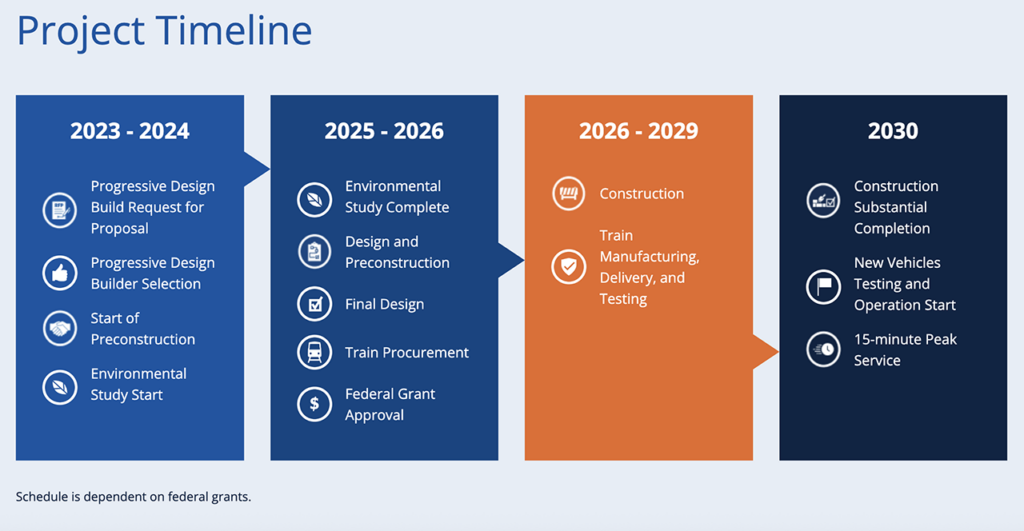
Construction is slated to proceed in phases through 2030, while maintaining FrontRunner service (see project timeline above).
“FrontRunner is the backbone of Utah’s regional transit network, and this expansion represents a generational investment in connecting communities along the Wasatch Front,” said Heath Therrien, Vice President and Regional Alternative Delivery Director at STV. “We are proud to bring our national rail expertise to the design-build team, supporting UTA and UDOT’s vision for more frequent, reliable and sustainable rail service for riders.”
Sound Transit

Starting Feb. 14, Link 2 Line test trains will begin simulated service, the final phase of testing ahead of the Crosslake Connection light rail launch next month, according to Sound Transit. During this time, passengers will be able to ride test trains between International District/Chinatown and Lynnwood City Center stations, it reported Feb. 10, and service hours on the existing 2 Line between Redmond and South Bellevue will be extended until midnight (see map below).
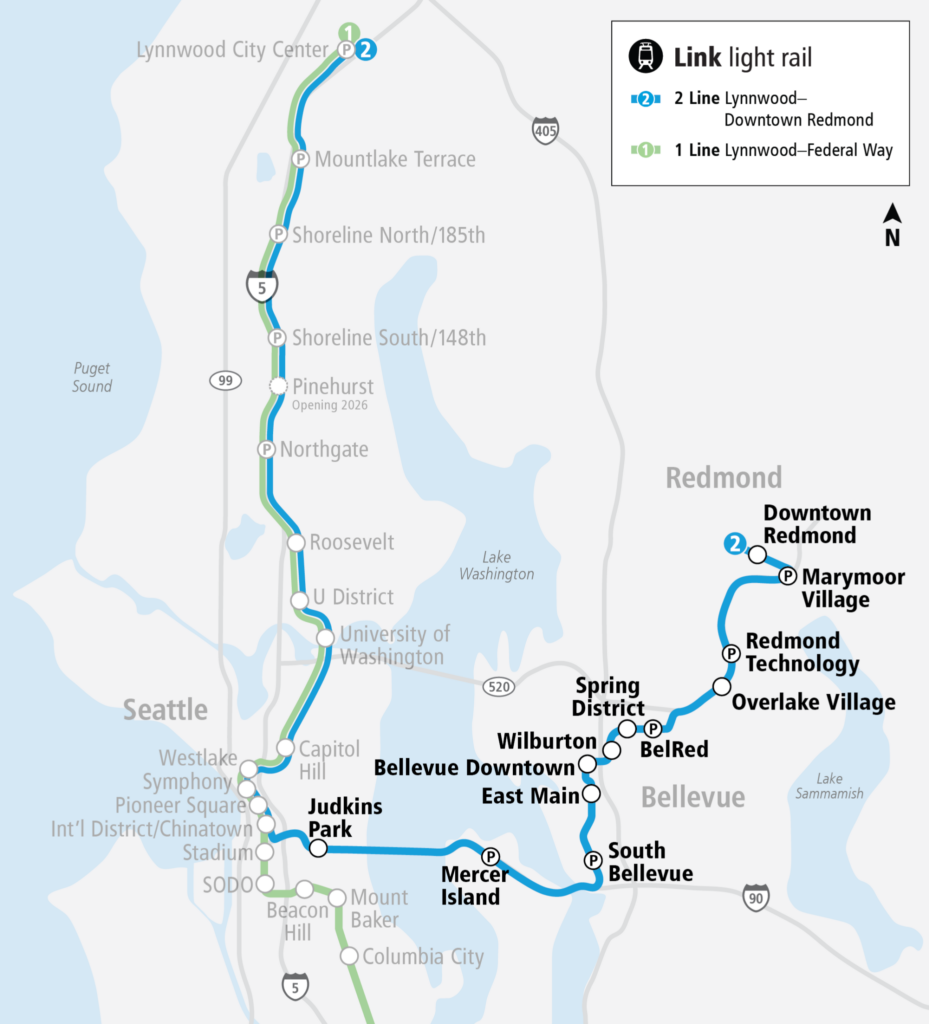
During simulated service, two-car 2 Line trains will run between normal four-car 1 Line trains from International District/Chinatown to Lynnwood and back. Trains will arrive every four minutes during weekday peak periods, and every 5 minutes throughout the day.
“The addition of 2 Line trains will significantly increase capacity through the busiest part of the Link system, with double the number of trains running through the downtown Seattle transit tunnel,” Sound Transit reported.
The Crosslake Connection is the final component of the 2 Line, and spans approximately seven miles and includes two new stations at Mercer Island and Judkins Park.
“To complete the 2 Line and connect to the Eastside, Sound Transit engineers had to do something that had never been done before—design light rail on a floating bridge,” according to the transit agency (see photograph, top). The Homer M. Hadley bridge supports both light rail and highway traffic.
Following the Crosslake Connection’s March 28 launch, the full, 35-plus-mile 2 Line will operate from downtown Redmond to Lynnwood and connect with the 1 Line in downtown Seattle at International District/Chinatown Station.
Sound Transit in five years has opened six light rail expansions: in 2023, the T Line service to Hilltop; in 2024, the 2 Line between South Bellevue and Redmond Technology stations and the Lynnwood extension into Snohomish County; and in 2025, the 2 Line extension to Downtown Redmond and the 1 Line extension between SeaTac and Federal Way. The Pinehurst Station at NE 130th Street in Seattle is expected to open later this year.
VTA
Fans traveling to Super Bowl LX rode VTA light rail and buses in record numbers, exceeding expectations, the transit agency reported Feb. 9. It carried more than 30,000 riders to and from Levi’s Stadium for the game, about 5,000 more than service planners anticipated and surpassing previous ridership records set during the 2023 Taylor Swift concerts.
VTA scheduled the operation of 22 light rail trains on top of regular service on Super Bowl Sunday.
The transit agency said it rolled out a comprehensive wayfinding and customer information program to support Super Bowl travel that included signage, real-time digital updates, consistent and frequent social media messaging, and news media coverage, and positioned transit ambassadors throughout the system (download map below).
VTA and its regional partners, including Caltrain and San Francisco Bay Area Rapid Transit (BART), worked to ensure seamless transfers for game-day riders. Service planning also emphasized “a family-friendly experience, with accessible routes, visible staff assistance and security presence, and amenities designed to help riders of all ages travel safely and comfortably,” VTA noted.
Approximately 40% of riders transferred from Caltrain to VTA at the Mountain View Transit Center, while about 60% took VTA light rail from Downtown San José or transferred from BART to VTA light rail at the Milpitas Transit Center.
After the game, VTA said it implemented a modified post-event service plan using two stations—Lick Mill and Great America—instead of the typical single-station configuration. The transit agency cleared more than 13,000 departing riders from light rail platforms in less than 90 minutes, beating the NFL’s two-hour crowd management benchmark, it reported.
SunRail
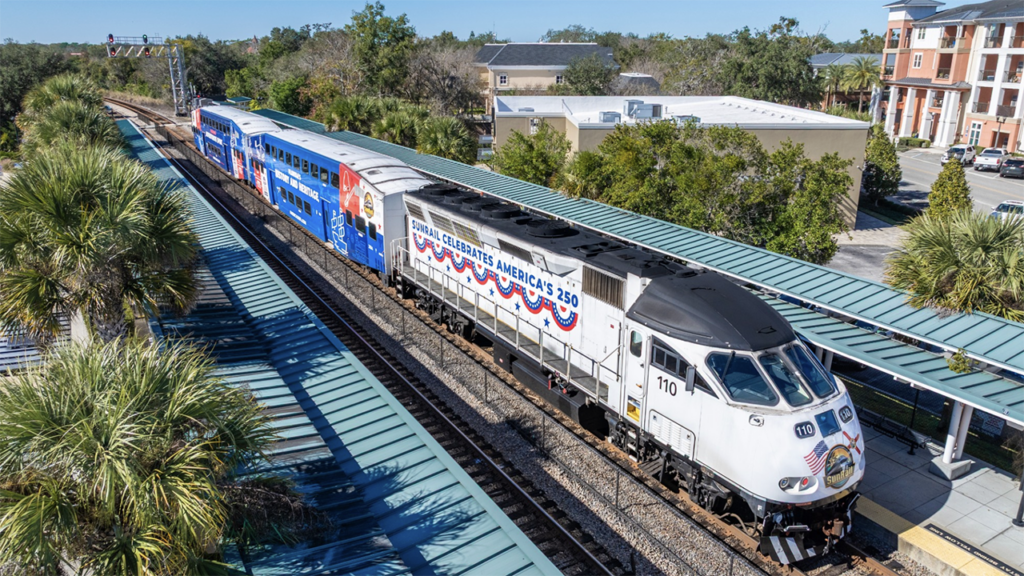
SunRail in Central Florida is paying tribute to the United States of America’s 250th anniversary this year with a special trainset, which it featured recently on social media (see above).
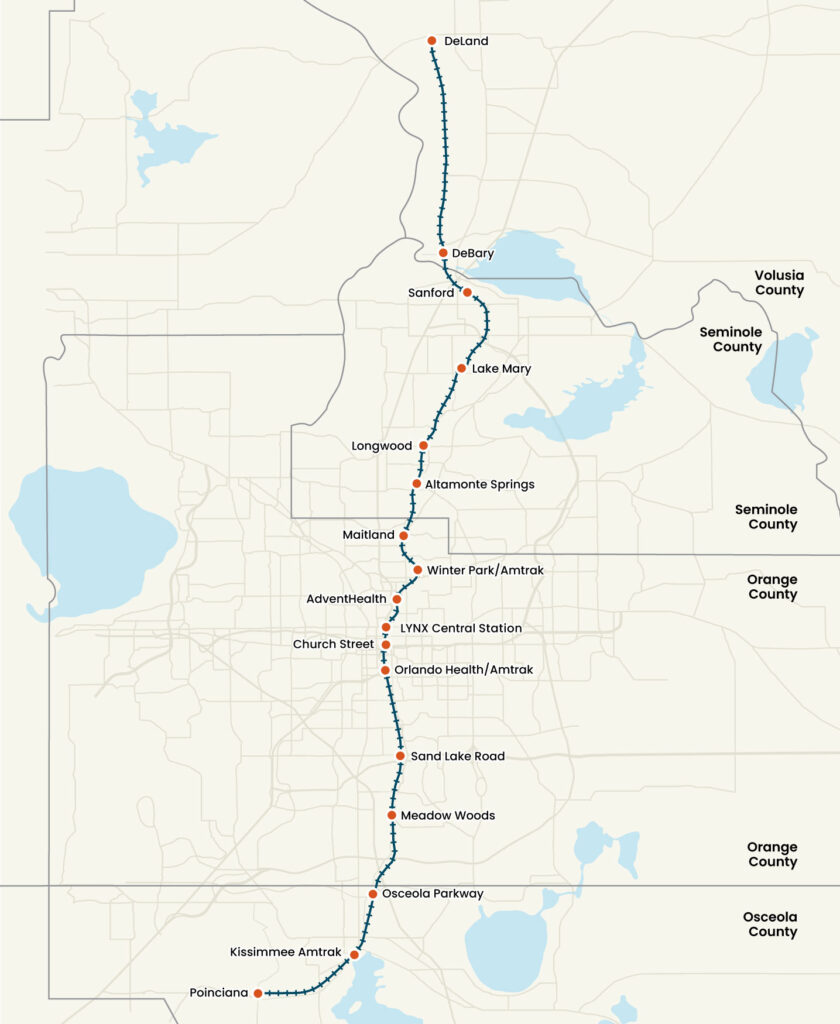
Over the past 12 years, in three phases (May 2014, July 2018, and August 2024), the Florida Department of Transportation has developed Central Florida’s commuter rail system, which currently operates over 61 miles with 17 stations through Volusia, Seminole, Orange, and Osceola counties (see map below).