MBTA
The MBTA on March 23 announced that Phases 1 and 2 of critical signal modernization work taking place on the Red Line at Columbia Junction have been completed ahead of schedule, and Phase 3 will begin on March 26 for approximately two weeks.
During Phase 3 of this critical signal work, beginning at approximately 8 PM through the end of service each day, northbound and southbound Braintree branch riders will need to transfer to an Alewife-Ashmont train at JFK/UMass for continued service beyond JFK/UMass.
Crews are completing the testing and cutover of the new, digital signaling system at Columbia Junction near JFK/UMass. This work, MBTA says, “brings important upgrades that will strengthen Red Line service reliability for riders, providing the ability to route trains more quickly, turn trains around faster, and recover from unplanned disruptions more efficiently.”
In order to test the new signal equipment and cutover to the new system, the remaining temporary service changes outlined here will be in place beginning at 8 PM through the end of service every day. Phases 3 and 4 are anticipated to last approximately two weeks each but may adjust slightly based on the work being completed. Any timing adjustments will be made public in advance on T-Alerts.
Columbia Junction is the complex area of track just north of JFK/UMass that merges the Ashmont and Braintree branches and connects the Red Line’s main passenger track to the Cabot Yard Maintenance Facility where the majority of the Red Line fleet is stored and maintained.
The signal system in this area was significantly damaged following the major derailment of a Red Line train in 2019. Initial repairs restored service at that time, but signal and switch operations have continued to be limited. The work taking place now, which could have been completed in 2019, fully corrects these issues, restoring full system functionality. Operations will have the ability to quickly reroute trains as needed, turn trains around faster, and quickly recover after unplanned service changes, ultimately providing a better transit experience for riders. The work, the agency says, also follows through on the MBTA’s commitment to complete major signal upgrades on the Orange and Red lines prior to the World Cup matches this summer.
Testing of the new system began in mid-February, and cutover and commissioning work began on Feb 28. More than 100 track circuits are within the Columbia Junction area, and most track circuits have 12 tests that need to be performed. With more than 1,200 tests to complete during this phase of the project, the MBTA is closely monitoring, analyzing, and documenting the results of each test, understanding that adjustments will need to be made as the work progresses.
The MBTA is also anticipating three-day Red Line service suspensions in late spring/early summer on weekends to complete final work.
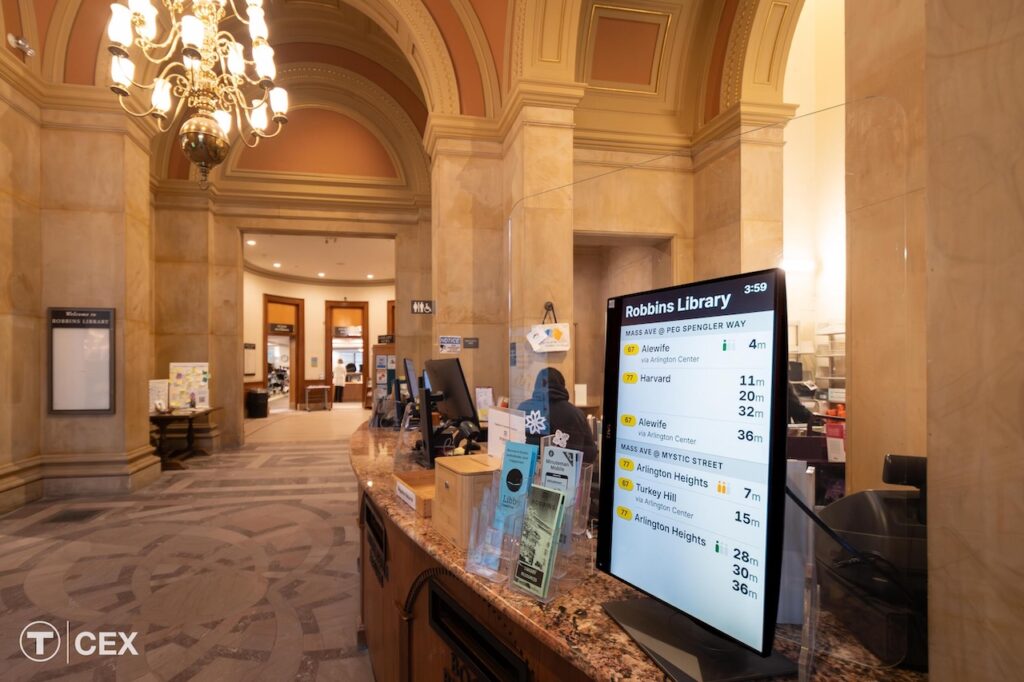
In related news, the MBTA is growing partnerships with community libraries as part of the Transit Screens @ Libraries initiative, which brings real-time transit information into local libraries. This initiative is expanding the reach of real-time information beyond stations and vehicles, making it easier for those who use community spaces to plan trips before they travel, the agency noted.
Community meetings and surveys hosted by the MBTA show that riders value accurate and reliable predictions, dedicated sources of real-time information, and clear current-trip details above all else. Transit Screens @ Libraries responds directly to those needs by providing live, location-specific updates in places riders already use every day.
Currently, Transit Screens @ Libraries is deployed at libraries across the greater Boston region; Berry Library at Salem State University, Brookline Public Library, Chelsea Public Library, Robbins (Arlington) Public Library, Thayer (Braintree) Public Library, Tufts (Weymouth) Public Library, Turner Free (Randolph) Public Library, Waltham Public Library, and Framingham State Library.
Metrolinx
Metrolinx announced March 24 that it has signed a five-year extension with Alstom to continue operating and maintaining the GO Transit and UP Express rail fleets, “ensuring consistent, reliable service for customers across the region.”
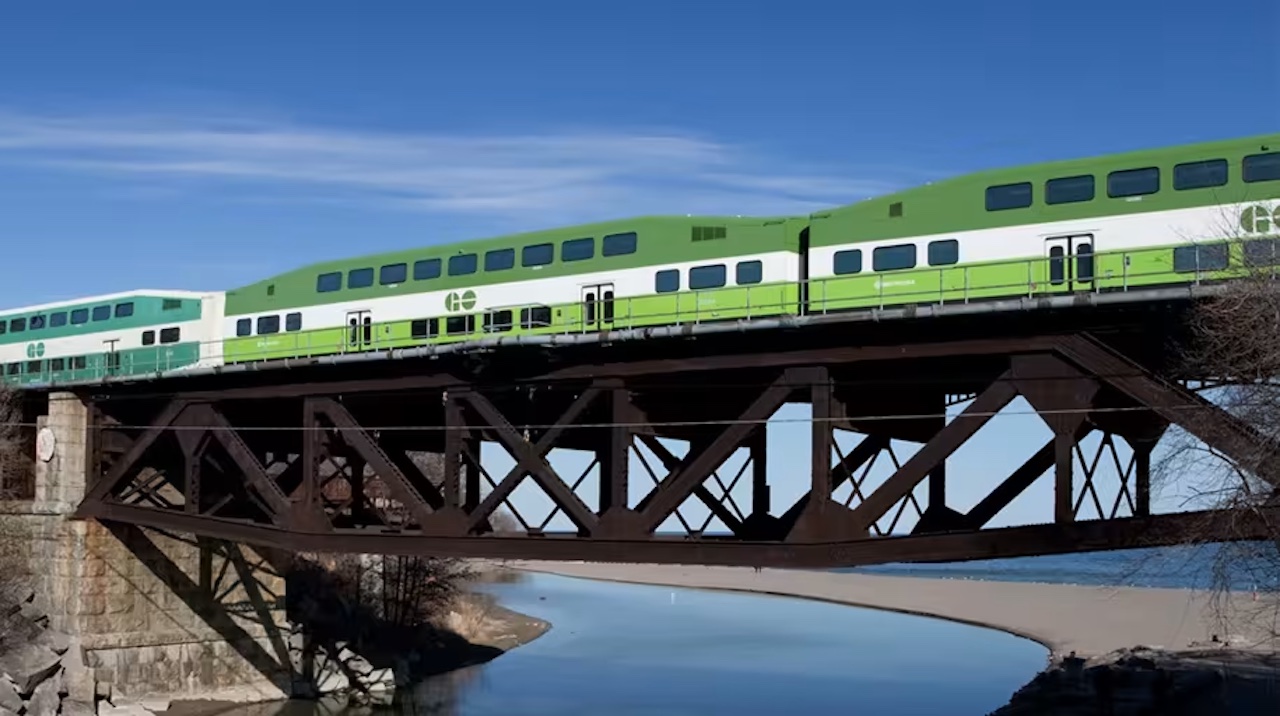
The $1.3‑billion agreement runs until 2031 and maintains more than 1,100 direct Alstom jobs across the Greater Toronto and Hamilton Area, including operations staff, crew members, customer service teams and maintenance personnel.
Alstom has been a longstanding partner in the delivery of GO rail and UP Express service. In 2024–25, the team operated more than 117,000 GO rail trips and more than 56,000 UP Express trips, while consistently achieving on‑time performance above 97% across a busy, mixed‑use rail corridor, according to Metrolinx.
“Customers count on GO Transit and UP Express every day, and partnership is essential to delivering the reliable service they expect and deserve,” said Metrolinx President and CEO Michael Lindsay. “This extension ensures continuity as we advance the modernization of the network to support faster, more frequent service as part of GO Expansion.”