
MBTA
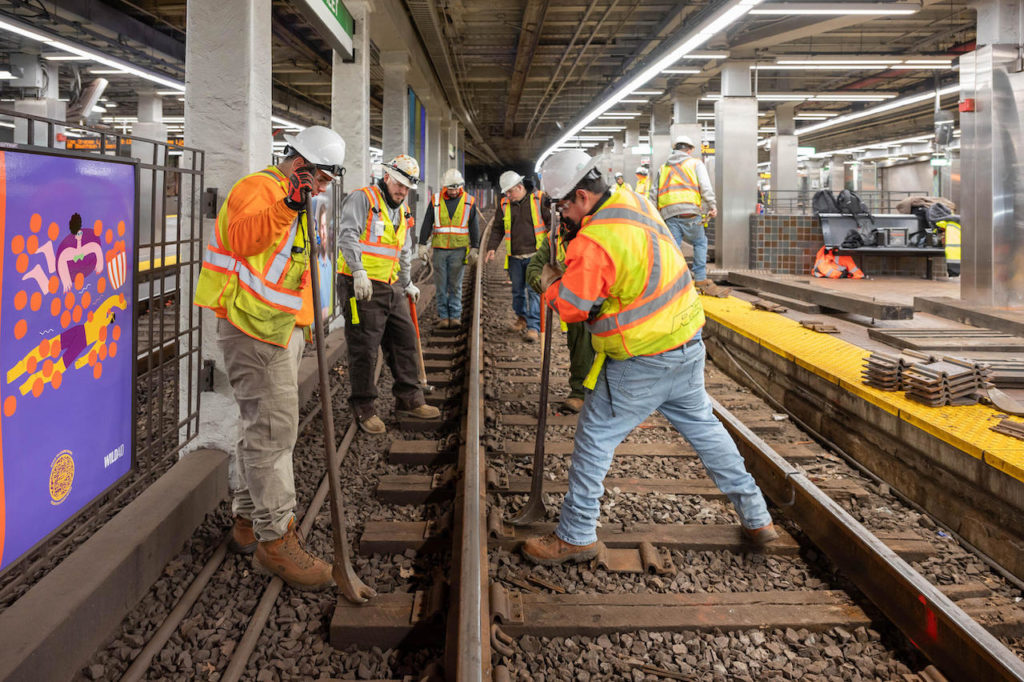
MBTA on July 18 announced its plans to accelerate major Track Improvement Program work on the Red Line Braintree branch during a 24-day service suspension from Sept. 6-29.
Between JFK/UMass and Braintree, MBTA crews will make repairs to 18 miles of track, resulting in the removal of more than 20 speed restrictions and improving round-trip Braintree branch travel times by as much as 24 minutes. This means there will be no Red Line trains servicing North Quincy, Wollaston, Quincy Center, Quincy Adams, and Braintree, though the MBTA says it is in the process of finalizing alternate shuttle bus plans that will be announced soon.
MBTA says it continues to “thoughtfully plan this service outage, incorporating important stakeholder feedback from impacted communities and lessons learned from previous Track Improvement Program suspensions this past year.” The agency’s Engineering, Maintenance of Way, Operations, Signals, and Stations teams have spent the last several months “carefully planning the upcoming outage to get as much work done as possible, maximizing every opportunity for track, signals, and station work, and have a clear set of goals to be accomplished when the outage ends,” MBTA noted.
The track work accomplished during these 24 days, MBTA says, allows the agency to run service up to the maximum allowable speed of 40 miles per hour, but also lays the groundwork for its goal of raising current Red Line train speeds above that. Other critical steps after this work is completed will need to be take place before train speeds are increased above 40 miles per hour, like additional Red Line motorperson training, further service and schedule planning, and more.
The agency says it is in the process of finalizing alternate service plans, including shuttle route stop locations and frequencies, and will provide more information in the coming weeks. Alternate service will be a combination of shuttle bus service replacement that serves all closed stations and adjacent Commuter Rail options. There will also be increased service on the Ashmont Branch in order to maintain train frequency through the Red Line core between JFK/UMass and Alewife. This information and more will be available soon at mbta.com/RedLine, as well as through in-station signage, public announcements, and more.
Following this important work, MBTA says riders will experience “a more reliable trip with fewer unplanned service disruptions related to older tracks, older infrastructure, signal issues, or power problems. Riders will also be provided with a safer ride as a result of this state of good repair work.”
“The work to take place on the Braintree branch in September is unprecedented but long needed,” said MBTA General Manager and CEO Phillip Eng. “The MBTA is committed to not only restoring our system to deliver safe and reliable service, but we are focused on building it back better. While each of these critical but necessary closures impacts your travels in the short term, the public will gain long-term benefits. Once complete, we estimate that our riders taking a round trip between Braintree and JFK/UMass stations will save 24 to 27 minutes a day. We’re committed to communicating our progress, listening to the public, and delivering on the promises we make to provide better service. I look forward to returning faster, safer, more reliable Braintree branch service to our riders on September 30.”
CTA
The Chat with CTA chatbot has seen positive results since its launch in late April on the agency’s website, CTA recently announced. Early data shows the communication tool has been successful and widely used, making it easier for customers to provide feedback and report issues in real-time.
According to CTA, since the launch on April 24, CTA customers have started more than 8,000 conversations. Twenty-eight percent of these were directly addressed by the chatbot, while others were sent to CTA staff for review. To date, CTA staff has reviewed, and when appropriate, acted on, more than 1,800 incidents.
“We’re pleased to see that the chatbot has received such a positive reaction thus far and we’re seeing an uptick in feedback as riders are taking advantage of utilizing the tool, which makes it easier than ever to report matters impacting the customer experience,” said CTA President Dorval R. Carter, Jr. “For our riders, the good news is that this tool is allowing us to move forward in a proactive way and addressing their needs on the system in a faster capacity.”
As the agency heads into the second half of 2024, CTA expects chatbot usage to grow. Since launching, Chat with CTA’s key metrics have seen growth and new, weekly peaks:
- Chat button clicks: up to 21% growth.
- Conversations started by customers: up to 12% growth.
- Conversations completed by customers: up to 16% growth.
- Incidents reviewed by CTA staff: up to 22% growth.
The chatbot was created through a partnership with Google Public Sector and incidents reported through the online tool have allowed CTA to respond to issues faster than ever, according to the agency.
The chatbot, CTA says, has been helpful in allowing riders to be additional eyes and ears for issues that arise during their use of the CTA system. As a result, staff have been alerted to, and been able to address things more quickly like the malfunctioning of air conditioning unit, a cleanliness issue, or reports of passengers smoking on a CTA vehicle or at a station, as well as issues with bus shelters which are then reported to the City’s Department of Transportation for repairs. Additionally, Chat with CTA has collected compliments about the exceptional service provided by several rail and bus operators.
CTA staff continuously monitors the chatbot’s performance. Since its launch, 12 Chat with CTA enhancements have been implemented. These changes, the agency says, “have streamlined the customer-facing conversation flows and increased the actionability of escalated incidents.”
CTA says it continues to invest in customer service and feedback, with expected future investments in the Chat with CTA chatbot, expanded surveys and research programs, and other digital tools.
San Diego MTS
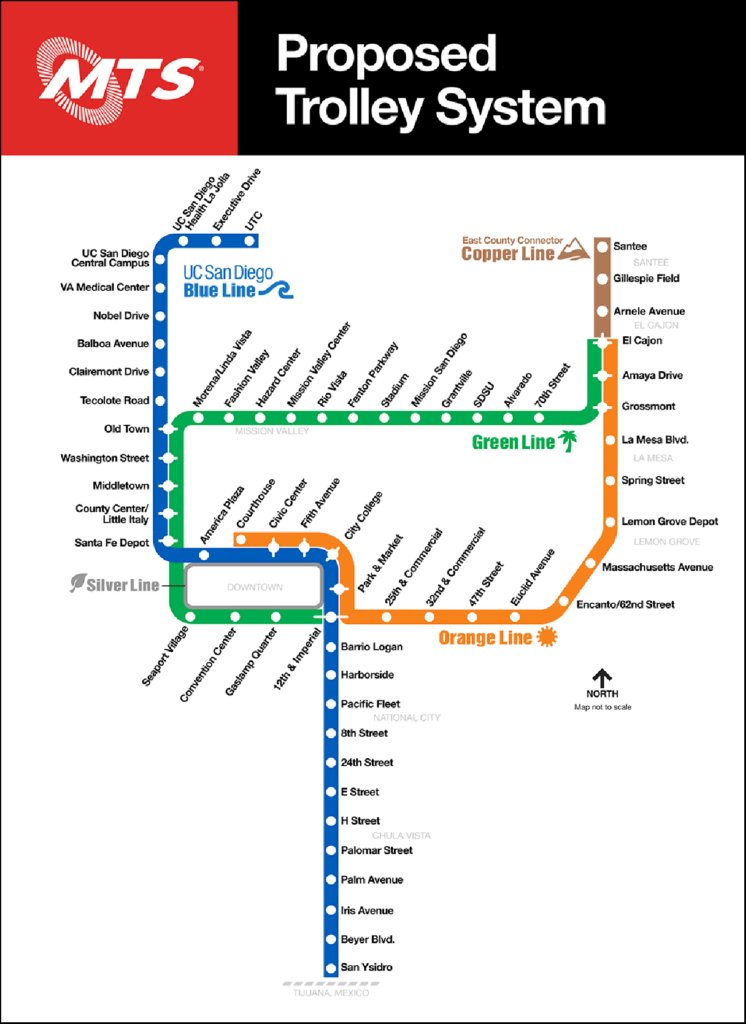
The San Diego MTS Board of Directors on July 18 unanimously approved plans to move forward with implementing a new Trolley Line segment called the Copper Line in East County. With this approval, service on the Copper Line – East County Connector is expected to begin as early as fall.
According to the agency, the Copper Line will serve four stations between El Cajon Transit Center and Santee Trolley Station every 15 minutes every day for most of the day. The new segment is set to replace the existing Green and Orange Line Trolley service north of El Cajon Transit Center. “The Copper Line will improve the reliability of Trolley service, not just in East County, but throughout the system,” MTS noted.
“Reliability of service and on-time performance are two key components of a dependable transit system, and the Copper Line is a great example of this,” said Stephen Whitburn, MTS Board Chair and San Diego City Councilmember, District 3. “As San Diego’s premier transit agency, MTS is always identifying solutions to make our system stronger for the next generation of riders. Many of the positive changes that are happening now will benefit future riders, help reduce air pollution, decrease traffic congestion, and stimulate economic activity near public transit.”
“Continuing to improve MTS’s reliability in East County is essential for riders who depend on timely service to get to work, school, health appointments and more,” said Steve Goble, MTS Board Vice Chair and City of El Cajon Councilmember. “The Copper Line is a great example of an efficient and effective solution that will bring long-term benefits to East County communities and beyond. In addition to the improved reliability, it is important to boost rider experience across the entire system by enhancing security and passenger safety.”
Earlier this year, MTS launched a new security initiative to boost the number of Code Compliance Inspectors patrolling the system, increase security officer visibility, and enhance the agency’s 24/7 security hotline. As part of the Copper Line implementation, MTS says it will add safety measures at El Cajon Transit Center—which will be the new terminus for the Green and Orange Lines—including more support staff, security personnel, and signage to “help ensure safe crossing of tracks for transferring passengers.”
“The Copper Line will provide better Trolley service reliability for Santee residents, and it will save MTS approximately $1 million in operational costs,” said Ronn Hall, MTS Board Member and City of Santee Councilmember. “In a time when the agency will need to address a significant budget deficit in the coming years, the Copper Line is a solution that balances cost savings with effectively realigning operational resources.”
A primary purpose of the Copper Line, MTS says, is to run dedicated Trolleys on the new line segment, which, in turn, will improve service reliability between El Cajon and Santee. Delays that may occur on the rest of the system will no longer impact service between the two cities.
When the new service plan goes into effect, Green Line service will terminate at El Cajon Transit Center, allowing Trolleys to avoid the single-track segment between Gillespie Field and Santee stations. This segment, MTS says, “has had a history of creating a ripple effect of delays for trains and missed transfers for riders coming in and out of Santee as only one train consist can enter or exit this segment at a time. Turning trains around at El Cajon Transit Center rather than Santee alleviates the system from this bottleneck.”
MTS anticipates Green Line on-time performance will improve, meaning riders have more reliable transfer times, and fewer delays. Furthermore, Green Line Trolley service will be extended later at night, and all Sunday service will continue to El Cajon Transit Center, instead of alternating trains stopping short at the SDSU Transit Center. Operating with shorter trains, the Copper Line “will reduce the wait times and lessen traffic at Santee intersections along Cuyamaca Street,” according to the agency.
It is estimated that approximately 8% of passenger trips on the Orange and Green Lines are expected to make a transfer to or from the Copper Line once the Trolley Line reconfiguration in East County is implemented this fall. Approximately 92% of passenger trips will not be impacted by this service change.




