
Transit Briefs: MARTA, Metro Transit, MBTA/Keolis, Caltrain

MARTA
MARTA announced July 31 that it has been awarded the Outstanding Public Transportation System Award by APTA in the “50 million or more annual passenger trips” category.
The 2024 APTA Honors Awards recognize those in the public transportation industry in North America who have “demonstrated significant leadership, are outstanding role models of excellence, and whose accomplishments and innovations have greatly advanced public transportation.”
APTA based their selection on criteria across multiple categories: infrastructure development, technology and innovation, sustainability, equity, customer service, and community engagement.
According to the agency, the COVID pandemic “fundamentally altered transit agency operations and the expectations of MARTA employees and the riding public, but MARTA rose to meet that challenge head on.” MARTA did not lay off a single employee during these challenging years and has “steadily regained ridership and trust throughout the Atlanta region.”
“As we emerged from the pandemic, MARTA strengthened its commitment to enhancing transportation services in Atlanta across many different areas,” said MARTA CEO and General Manager Collie Greenwood. “By improving our transit system and prioritizing the needs of passengers, MARTA continues to play a vital role in connecting communities and promoting economic development in the Atlanta region.”
Metro Transit
Work has begun on a $25 million renovation of the Mall of America transit station—the busiest transit hub in Minnesota, according to a Star Tribune report.
According to the report, the station serves as the terminus for the Blue Line light rail and Red Line bus-rapid transit service, as well as several bus lines. “It is the facility’s first major renovation in 25 years, although a more-modest upgrade was done in 2004 when the Blue Line began service.”
“This transit center is a critical hub for our entire region,” Metropolitan Council Chairwoman Alene Tchourumoff said at a groundbreaking ceremony Thursday. “Thousands of people come here every day, whether headed to work, to shop or take in entertainment, or simply a connection point as they head home for the day.”
A big part of the overhaul, Star Tribune reports, includes “creating a safer, bus-only entrance on the eastern side of the Bloomington megamall, which is now also used by employee, contractor and transit vehicles. Metro Transit says this will cut down on the time delay created by traffic backups. Buses will no longer cross the light-rail tracks, as well.”
The transit center will provide customers and employees with a direct connection to the mall’s east entrance. More than 5,600 boardings now occur at the station daily, according to the report.
According to the Star Tribune report, the station will also include better lighting, a family restroom, emergency telephones and real-time departure signs. A new police substation will be built along with a transit operator breakroom. Construction is expected to be completed in late 2019.
Funding for the project, Star Tribune reports, came from Bloomington, Metro Transit, state bonds, federal grants and the former Counties Transit Improvement Board, which raised money through a local sales tax for transit.
“Not only will this transit station offer the convenience that consumers have come to expect, but it will act as a beautiful pedestrian pathway from the Mall to the gateway of the south loop district of Bloomington,” said Mall of America Senior Vice President of Development Kurt Hagen.
MBTA/Keolis
MBTA on Aug. 2 announced that the dispatching responsibilities for the South Coast Rail territory has been transferred to MBTA’s Railroad Operations division and will now be performed by its operating partner Keolis Commuter Services, “marking a significant milestone in the project’s progress.”
“We remain committed to delivering long awaited rail service on the new South Coast Rail project to provide residents with reliable alternatives to driving,” said MBTA General Manager and CEO Phillip Eng. “With the completion of automatic train control testing and the support of our operating partner Keolis taking over dispatch, we’re excited to be one step closer to bringing safe and reliable service to more communities.”
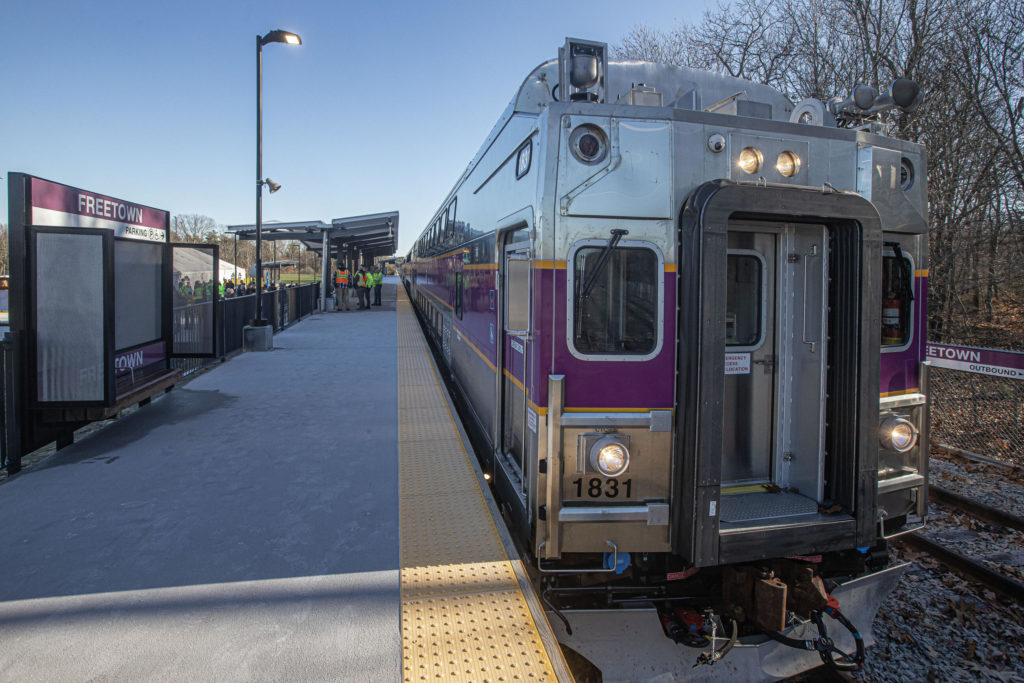
The upcoming transition includes preparations for Keolis to assume maintenance responsibilities, effective Feb. 1, 2025, further consolidating operational oversight under MBTA management.
Currently, Massachusetts Coastal Railroad manages dispatch operations and is actively facilitating the transition to Keolis, “ensuring a seamless integration into the Commuter Rail system,” the agency noted.
The shift to Keolis for dispatch operations, MBTA says, “underscores the project’s evolution and its alignment with established timelines.” Initiated in 2019, the South Coast Rail project aims to restore passenger rail service between Boston and Southeastern Massachusetts, after more than 65 years of hiatus.
“This transition is a pivotal step towards integrating the South Coast Rail project into our Commuter Rail system,” said MBTA South Coast Rail Program Executive Karen Antion. “With Keolis taking over dispatch duties, we are on track to meet our scheduled milestones and bring Commuter Rail service to the South Coast region.”
Passenger service is anticipated to commence in Spring 2025 and the fare structure for all South Coast Rail stations will align with Zone 8 pricing of the existing Commuter Rail fare structure.
Some trains may pass at speeds up to 79 miles per hour. The MBTA says it “emphasizes public safety, urging caution near rail tracks and underscoring the importance of avoiding trespassing.”
With Automatic Train Control (ATC) testing completed, additional testing is under way, including testing of more than 800 Positive Train Control (PTC) functions. Beginning in August, two test trains will be testing simultaneously.
Caltrain
The Caltrain Board of Directors voted to reduce fares for youth riders at their monthly Board Meeting.
As of Sunday, Sept.1, a $1 All Zone One-way youth fare will be available on all fare payment methods, a $2 All Zone Day Pass will be available on Caltrain Mobile (while available) and at Caltrain ticket vending machines. Upon the Clipper Next Generation launch, expected in 2025, a $24 All Zone Monthly pass will be available to anyone with a Youth Clipper Card.
Caltrain launched four fare promotions in September 2023, with the $1 One-way youth fare being the most successful at driving ridership increase, the agency noted. During the promotion, the fare only applied to Clipper users, and Clipper youth ticket sales was up 43% year over year, compared to 18% overall ticket sales increase during that period. “People who begin riding public transit in their youth are far more likely to continue to use it as adults, making increasing youth ridership vital for Caltrain in the long term,” the agency said.
“It’s now easier than ever for young riders to take advantage of Caltrain, embracing freedom and flexibility rather than traffic and gridlock,” said Caltrain Executive Director Michelle Bouchard. “Now young people can get up and down the peninsula with ease for less than the cost of a boba tea.”
Caltrain seeks to use this fare change to further bolster its ridership. The agency’s average weekday ridership (AWR) increased by approximately 19% in June 2024 compared to June 2023 as riders “continue to return to the Caltrain system for increased work and leisure travel.”
Caltrain also recently announced its Youth Rider Electric Train Contest, in which riders 18 and under can submit a video or short essay demonstrating their excitement around the upcoming launch of electrified service. All submissions must be uploaded here by 11:59 p.m. on Tuesday, August 6.




