LA Metro
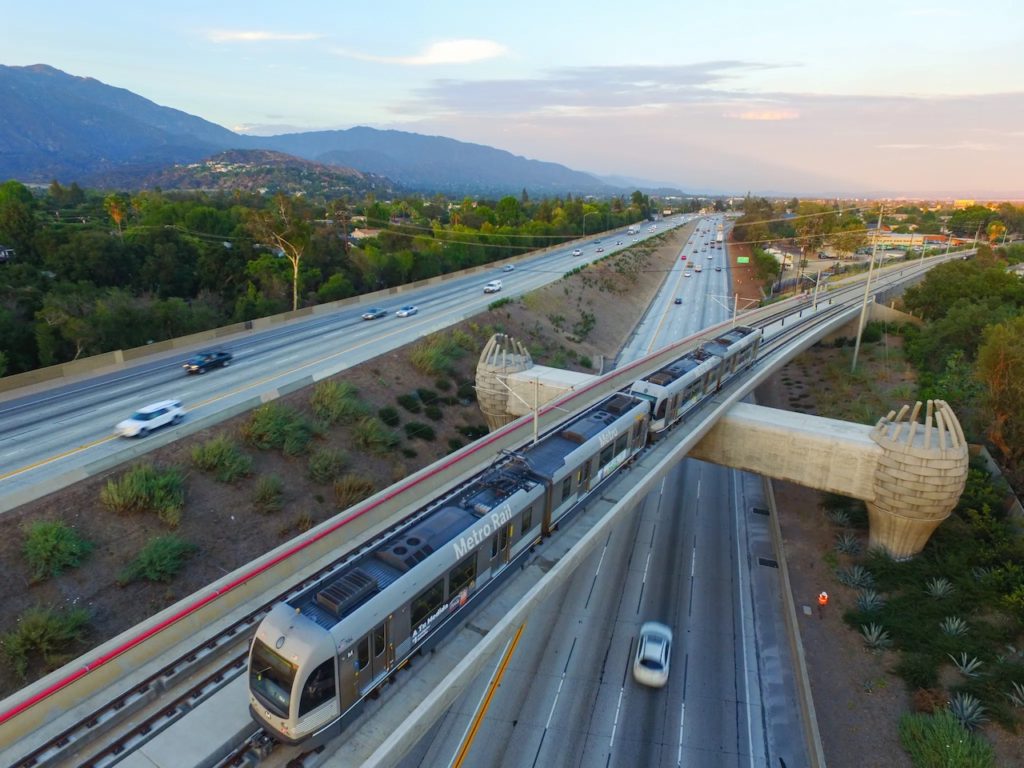
Metro ridership continues to strengthen, the agency recently reported, “driven by weekend and event travel and the opening of the Metro A Line extension to Pomona.”
In September 2025, LA Metro recorded 26,260,796 total boardings, down just 1.9% from September 2024. This, the agency says, “represents a significant improvement from the 6.0% year-over-year decline reported in June when federal law enforcement activity began impacting travel.” The data points to a steady recovery following 30 consecutive months of year-over-year ridership growth through May 2025, with overall ridership in the last 12-month period being up 1.1% over the previous 12-month period.
A Line Extension Adds New Riders
On Sept. 19, LA Metro opened the A Line extension from Azusa to Glendora, San Dimas, La Verne, and Pomona, reconnecting light rail service to the San Gabriel Valley for the first time since 1951. In its first 12 days of operations, the new stations saw nearly 3,000 boardings. The expansion extends service from Pomona to Long Beach, connecting even more communities ahead of major regional events such as the 2026 World Cup and 2028 Olympic and Paralympic Games.
E Line Sees Strong Growth
The E Line, the agency says, continues to be one of LA Metro’s strongest performing rail lines, with 1,508,087 million boardings in September—a 6.7% year-over-year increase. Weekday ridership rose 4.7%, Saturdays 3.5%, and Sundays 10.8%. Event and leisure travel remain key drivers, especially near major venues like Crypto.com Arena, the Los Angeles Convention Center, BMO Stadium and Exposition Park. During LA Comic Con, held Sept. 26–28 at the Los Angeles Convention Center, boardings at Pico Station jumped 65% compared to non-event days.
September Systemwide Trends
Metro Rail saw 5,960,493 boardings, up 1.7% year over year. Average weekday ridership decreased by 2.0% while weekend ridership rose sharply by 6.5% on Saturdays and 9.4% on Sundays. According to quarterly pulse survey, rail customer satisfaction climbed from 76% to 81% on the three most recent quarterly surveys, compared to the three previous.
STM
Last week, STM’s 2,400 maintenance workers launched a strike upending public transit in Montreal and “could be the first test of a new law that gives the Quebec government broad power to end labor disputes,” according to a report by The Canadian Press.
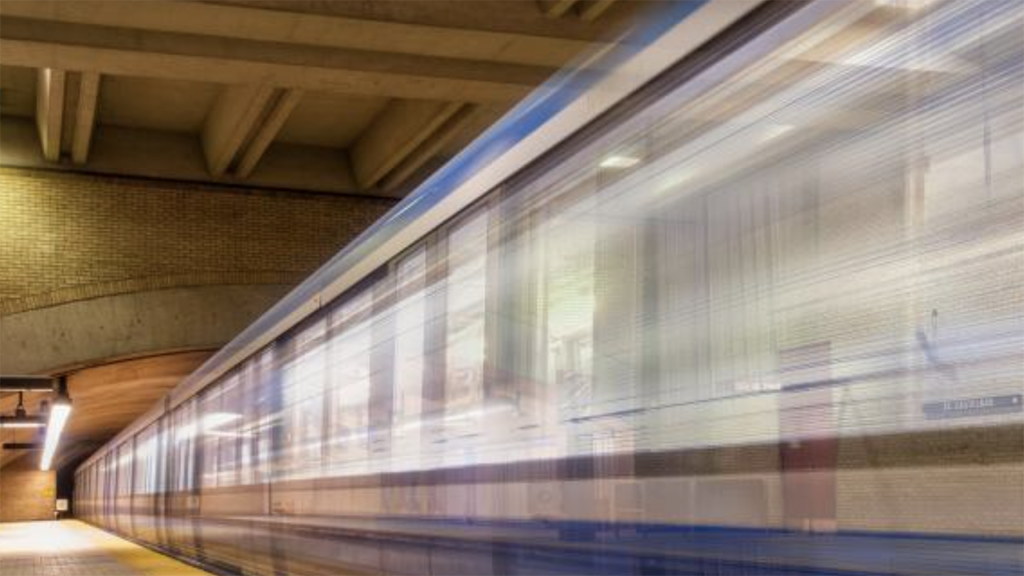
The work stoppage, which could last for most of November and is the third so far this year (nine days in June and 14 days in September and October), has limited subway and bus service in the city to peak hours, according to the report. The major sticking points in the talks are wage increases and the outsourcing of some maintenance work.
According to The Canadian Press, political leaders are “urging the two sides to resolve a dispute that has dragged on for months. But the workers union is accusing the transit agency of waiting out the clock until a new labor law, adopted in the spring, takes effect at the end of November.”
The law, The Canadian Press reports, “gives Quebec’s labor minister the power to end a dispute by imposing binding arbitration when a strike or lockout is deemed harmful to the public. It also expands the kinds of services that must be maintained during a labor dispute to include those that ensure ‘the well-being of the population.’”
Barry Eidlin, an associate professor of sociology at McGill University and an expert on labor movements, said the Quebec law is “an existential threat to unions,” according to the report. “He said it bears some similarity to a section of the Canada Labor Code that has been used repeatedly by the federal government in the last year to end strikes at ports, railway companies and Canada Post.”
Both laws give ministers “tremendous discretion” to intervene in labor disputes without “a lot of checks and balances in place,” Eidlin said.
STM, The Canadian Press reports, said the new Quebec law “will not affect its position at the bargaining table. It has said the workers’ salary demands far exceed its ability to pay.”
But Eidlin said employers will understand that the new law offers a kind of “escape hatch” that “reduces the incentive to actually come to an agreement at the bargaining table.” “He said the union likely announced the month-long strike — from Oct. 31 to Nov. 28—to put as much pressure as possible on the transit agency to reach a deal before the law takes effect on Nov. 30,” according to the report.
However, Michelle Llambías Meunier, President and CEO of the Quebec Employers Council, said Montrealers are “being held hostage” by the strike, which is preventing many people from getting to work. “The council is calling on the provincial government to implement the law earlier than planned if the two sides don’t reach an agreement soon,” according to The Canadian Press report.
Llambías Meunier said the purpose of the law “is not to limit the ability to strike.” “The idea here is that we are seeking to reconcile respect for workers’ rights with the continuity of services that are critical to the population and the Quebec economy,” she said.
In a statement on Monday, Quebec Labor Minister Jean Boulet, The Canadian Press reports, “said the dispute must be resolved as quickly as possible.” “This strike is once again causing serious harm to people who depend on public transit,” he said. “I remain extremely concerned about the progress of the negotiation process.”
Eidlin said Boulet would likely argue that the transit workers provide “services ensuring the well-being of the population.” But the law does not define which services fall under that definition, and the list could be “pretty infinite,” he said.
“The reason that strikes are effective, the reason they create pressure to compel employers to come to the table, is because they are disruptive to the day-to-day status quo,” Eidlin said.
In August, according to the report, “four McGill University faculty associations filed a court challenge of the new labor law, arguing it violates the constitutional right to strike. The union representing the maintenance workers has also promised to challenge the law once it takes effect.”
“The federal government’s use of Section 107 of the Canada Labor Code to end work stoppages is also facing legal challenges,” according to the report.
Eidlin said “it’s likely the matter will end up at the Supreme Court of Canada, which in 2015 recognized that the right to strike is constitutionally protected.”
RTA
RTA on Nov. 4 said it is no longer requiring the CTA, Metra and Pace to implement 10% fare increases next year, following the passage last week of a historic transit package in the General Assembly, according to a report by the Chicago Sun Times.

According to the report, the RTA, which must approve each of the agencies’ budgets by the end of the year, “had insisted they each include the fare hike—even if state lawmakers approved a $1.5 billion spending package.”
But lawmakers, the Chicago Sun Times reports, “did just that, passing a bill in the wee hours of Halloween at the end of the fall veto session. Gov. JB Pritzker says he plans to sign it.”
The transit bill prohibits fare hikes for the first year after the expected law goes into effect on June 1.
That caveat, the Chicago Sun Times reports, “meant the RTA’s planned Feb. 1 fare increases could still go live, which created some confusion about whether the hikes would be implemented until the RTA’s statement Tuesday.”
For now, the RTA is walking back its request for a fare hike, “following criticism from lawmakers instrumental to the bill’s passage,” according to the report.
“For 2026, transit riders and frontline employees can expect no service cuts, no fare increases pending RTA Board action this Thursday, and a renewed emphasis on operational improvements to service quality and experience,” RTA Director of Communications Tina Fassett Smith said in a statement.
In October, the CTA said the RTA required the fare hike, regardless of new funding, to address “inflationary cost growth,” according to the report. “That planned fare hike helped the agencies push back potential service cuts to the last half of 2026.”
Earlier Tuesday, state lawmakers “acknowledged the bill does not prohibit a fare increase before June 1. They also urged the transit agencies to leave fares alone until, as the bill calls for, the RTA is replaced by the Northern Illinois Transit Authority (NITA), according to the Chicago Sun Times report.
The CTA, according to the report, “had been preparing to implement a 25-cent fare increases on trains and buses, while Metra and Pace had plans to increase fares by 10% to 15%.”
The RTA plans to hold a special board meeting on Nov. 6 to address the transit bill.