
LA Metro
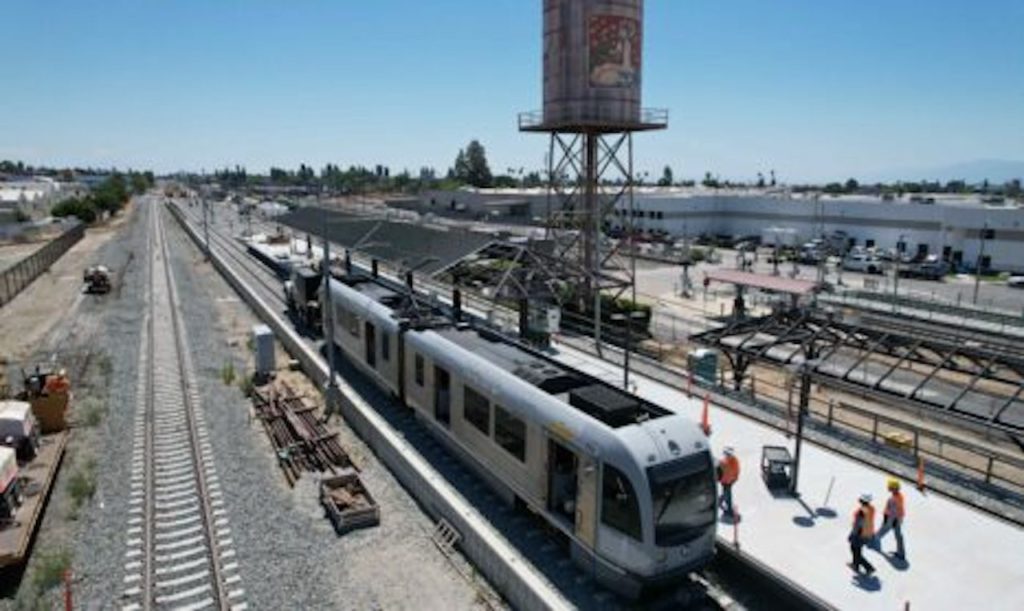
The LA Metro A-Line is now testing light rail on a 9.1-mile addition that will extend the line from Azusa to Pomona, with stops at Glendora, La Verne and San Dimas, according to a KABC report.
According to the report, daytime testing will continue through the end of this week, with nighttime testing scheduled to run through the end of 2024.
Foothill Gold Line CEO Habib Balian said if everything goes as planned, LA Metro “could begin passenger service on the extension sometime in summer of 2025.”
“The current line terminates at Citrus College, a great distance from here,” said Balian, according to the KABC report. “This extends the line 9.1 miles, providing four new stations, so folks coming from all different directions east of that now have the opportunity of getting on the line much closer than they would have.”
According to the report, Balian said residents and commuters “should expect additional law enforcement in the area to help people adjust to the new crossing gates along the tracks, which up until now have only been used for freight trains.”
By the time the project is completed, KABC reports, light rail trains will be passing through the area approximately every eight minutes.
Further extension of the Foothill Gold Line east to Montclair is currently being funded, with construction expected to begin sometime next year, according to the report.
San Diego MTS
San Diego MTS is now offering a solution for teens to explore hometown, according to a Times of San Diego report.
According to the report, the agency’s Youth Opportunity Pass offers free ridership to San Diegans under 18 on any MTS fixed-route buses, trolleys, and several North County Transit District services. To participate in the program, young riders must download the PRONTO ticketing app, create an account, and convert it to a youth account either online, over the phone, or in person.
Once they have created their youth PRONTO account, riders can opt to purchase a physical PRONTO card, if they prefer, or use their digital card on the app. Young riders must scan their physical or digital PRONTO card on every bus, trolley or train trip for it to qualify as a free ride.
To incentivize youth to apply for the pass and explore San Diego this summer, MTS created the Y$2K Summer Challenge, which is open to San Diego teens ages 13-18 who hold a youth pass, according to the Times of San Diego report. Participants must complete at least one of the following challenges and post it on their Instagram or TikTok accounts before July 31, 2024:
- “Use their pass to visit a clothing store of their choosing and assemble a fun and festive outfit.
- “Film a time-stamped video of themselves rushing to a library, park, and other significant community landmark using their pass.
- “Travel to their favorite taco shop using their pass and share their order.
- “Document how they personally use their pass over the summer.”
According to the report, participants must post evidence of their completed challenge, including an image of an MTS or NCTD vehicle and proof of their PRONTO account. Additionally, posts must tag @sdmts and use the hashtag #y2ktransit.
According to the Times of San Diego report, ten teens will walk away as winners of the 2024 Y$2K Summer Challenge in August. “There will be four winners whose posts garnered the most likes and six winners whose posts will be voted on and selected by MTS staff members. The four participants with the most-liked posts will have the first pick of prizes.”
Prizes include but are not limited to, a Nintendo Switch, Beats headphones, an electric scooter, a beach cruiser, and several different gift cards.
“The idea behind the program is to offer teens a unique opportunity to explore and learn about their hometown,” according to the report. “The passes also improve teens’ access to healthcare and potential job opportunities. By eliminating the cost of transportation for its youth and improving accessibility, San Diego is taking strides toward creating a more equitable community.”
FTA
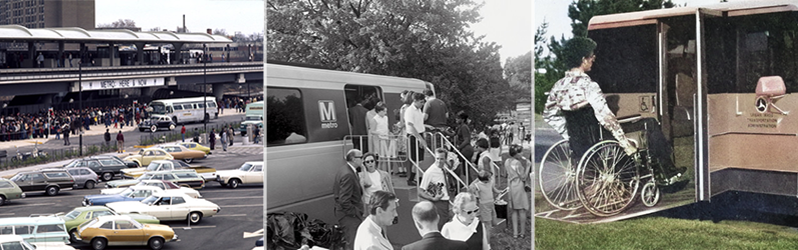
Sixty years ago this week, President Lyndon Johnson signed into law the Urban Mass Transportation Act of 1964 creating the Federal Transit Program, FTA reported on July 10. For the first time, the federal government took on a major role in supporting transit bus and rail systems across the U.S. This law was signed shortly after another landmark piece of legislation, the Civil Rights Act of 1964.
In those 60 years, the program, now managed by FTA, “has reshaped transit in America, helping it evolve from scattered, poorly funded bus systems and a few big-city subways to light rail, commuter rail, bus and bus rapid transit, ferry systems, rural transit, and services for seniors and people with disabilities in thousands of communities,” according to the agency. Today, FTA supports more than 3,500 transit agencies nationwide to “ensure everyone can fully participate in their community, riding to work, school, healthcare appointments, and to see family and friends.” The agency’s programs, FTA says, “are helping modernize transit, alleviate the climate crisis, improve access, advance research and innovation, promote civil rights, provide safety oversight, and create jobs.”
Under the Biden-Harris Administration, FTA says the federal government is making a historic investment in transit—$108 billion over five years—”to help transit providers increase service to reach more people, make communities safer, and reduce pollution, including carbon emissions.” That support, the agency says, is helping transit systems provide rides to nearly 21 million people every day in communities of all sizes, including large cities and in rural areas.
Six decades ago, the Federal Transit Program supported local governments and transit providers as they “built and improved their systems, funded research into cutting-edge transit technology and methods, and encouraged comprehensive transit planning.” The 1964 legislation allocated $375 million to support expansion projects for bus, rail and streetcar systems. The first grants included:
- $6 million to the Massachusetts Bay Transportation Authority (MBTA) in Boston to modernize rapid transit stations.
- $565,740 to the city of Minneapolis to build Nicollet Avenue Transit Mall, an eight-block downtown bus-only area.
- $77,000 to the city of Vallejo, California, to purchase new buses.
Four years later, the Federal Transit Program moved from its original home at the U.S. Department of Housing and Urban Development to the newly created U.S. Department of Transportation and was then administered by a new agency, the Urban Mass Transportation Administration (UMTA). One of UMTA’s first major projects was an $18 million grant to the city of Pittsburgh to develop the nation’s first federally supported rapid bus line. Pittsburgh’s innovative new system ran in a bus-only lane and connected riders with frequent service between downtown and the airport.
“Since our founding as the Urban Mass Transit Administration, we have been passionately committed to improving America’s communities through public transportation,” said FTA Acting Administrator Veronica Vanterpool. “We support more than 3,500 transit agencies and state Departments of Transportation to ensure all Americans can fully participate in public life, riding to work, to the doctor, to shop, and to see family and friends. Thanks to President Biden’s Bipartisan Infrastructure Law (BIL), we have an even bigger impact, helping transit agencies modernize and expand their systems.”
In 1971, UMTA awarded the first federal grant to support transit on an American Indian reservation. The $120,000 grant to the Mandan, Hidatsa, and Arikara Nation (the Three Affiliated Tribes) of the Fort Berthold Indian Reservation in North Dakota helped create a 650-square-mile transit network. The four routes connected tribal residents with jobs, schools, healthcare, and essential services. Today, FTA says its Tribal Transit Program awards millions of dollars a year to provide critical transportation services for American Indian and Alaska Native communities.
The Americans with Disabilities Act (ADA) of 1990 created new requirements for transit to be accessible to people with disabilities. FTA says it took a lead role in supporting the nation’s transit systems fulfilling the ADA. Today, every fixed-route bus fleet is accessible to all. To help make all rail stations accessible, including those from the pre-ADA era, the BIL provides $1.75 billion through 2026 for the All Stations Accessibility Program. “By improving pre-ADA stations to ensure people with disabilities can get on board with the same ease as anyone else, the program advances equity in transit,” FTA noted.
Following the September 11, 2001, terrorist attacks, FTA established the Lower Manhattan Recovery Office to coordinate transit recovery, including damage to the New York MTA’s subway system. FTA’s team administered $4.5 billion in projects to recover and revitalize Lower Manhattan.
“As part of an interest in making the safest mode of surface transportation even safer,” the Moving Ahead for Progress in the 21st Century Act (MAP-21) of 2012 made major changes to the rail transit state safety oversight program and provided FTA with expanded authority to ensure the safety of public transportation, the agency noted. Following a BIL requirement, FTA recently updated the Public Transportation Agency Safety Plans regulation to “lessen risk and promote systems-based approaches to protect transit riders and workers.”
In recent years, FTA supported public transit agencies with $69.5 billion to cover capital, operating, and other expenses to mitigate the effects of the COVID-19 pandemic.
Most recently, since November 2021, FTA has awarded $68.3 billion to more than 9,400 transit projects using combined funding from the BIL, prior authorizations, and annual appropriations.
“Building on the foundation of the 1964 law, the Federal Transit Program today is looking toward the future, with FTA continuing to administer the record funding under the BIL to better support transit providers and improve public transportation for people across America,” FTA said.




