Transit Briefs: Denver RTD, TriMet, TransLink, Santa Clara VTA

Denver RTD
Denver RTD recently launched a new personal safety and metrics webpage as part of the agency’s “continued commitment to enhancing customer and employee safety and transparency.”
The new online dashboard is updated monthly and includes activity reports with dozens of safety and security metrics, including security-related calls for service, systemwide incidents per customer boardings, the number of incidents reported via the Transit Watch app, criminal incidents and more.
The Security-Related Metrics webpage highlights the latest data for customers and stakeholders and includes month-over-month and year-over-year comparisons going back to 2022.
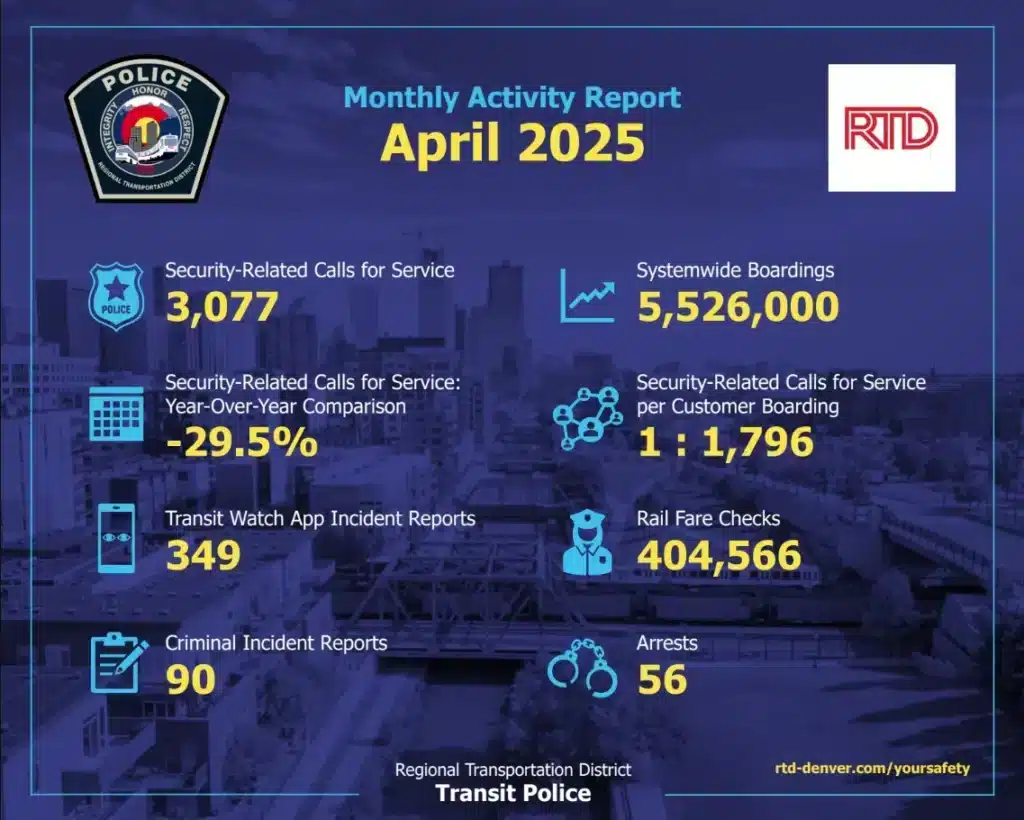
In April 2025, which is the most recent boardings available for comparison, RTD logged 3,077 security-related calls for service across 5.5 million boardings—the equivalent of one report for every 1,800 boardings, or 0.06%. Overall, year-over-year security-related calls dropped by 28%, while customer reports of illicit drug activity declined by nearly 73%. At RTD’s high-traffic locations, like Denver Union Station, calls for service dropped 43% compared to April 2022.
“The vast majority of trips on our system are completed without incident, but we know that perception matters,” said RTD Police and Emergency Management Chief Steve Martingano. “By sharing this data, we want to show our progress and reinforce that we’re listening to our customers and implementing positive changes.”
RTD counted more than 65 million boardings in 2024 and received about 43,000 security-related reports, an average of 118 reports per day. Reports include everything from graffiti and noise complaints to drug use and unattended bags.
These reports, whether made by phone, or via RTD’s Transit Watch mobile app, “help the agency deploy data-driven policing strategies and allocate resources more effectively,” RTD noted. The Transit Watch app allows customers to discreetly and anonymously report suspicious activities and concerns directly to RTD’s Transit Police dispatch center for immediate action.
The Transit Watch app is available in English and Spanish for iOS and Android. Customers may also call RTD’s police dispatchers directly at 303.299.2911 or text 303.434.9100.
TriMet
After more than 38 years of server and 2.2 million miles traveled, one of TriMet’s oldest MAX light rail vehicles is nearing its next stop—retirement.
The agency is donating its Type 1 vehicle “101” to the Oregon Electric Railway Museum, a move that, TriMet says, will preserve the first MAX train car ever manufactured. The vehicle will join the museum’s vast collection of electric trolleys and streetcars, but with a twist sure to delight TriMet diehards and rail fans across the state.
In recognition of the donation and the vehicle’s legacy, TriMet bid farewell to MAX car 101 at its Ruby Junction Rail Operating Facility on Tuesday, July 8. The car will be transported to the museum later this month. This, TriMet says, ensures the MAX car remains in the Willamette Valley, available for in-person experiences. The museum is located in Brooks, Ore., about 38 miles south of Portland via Interstate 5.
The donation also comes with a special goal in mind: to keep the car running. That’s the long-term mission of the museum, which features a mile-long track that runs through its property. This, TriMet says, ensures that a vital piece of Portland’s transit history continues to roll into the future.
The donation comes as the agency phases out its fleet of Type 1s and introduces the new Type 6s, TriMet’s most technologically advanced MAX trains yet. A few trains will continue serving riders through the start of 2026.
Most Type 1s are being sent to Radius Recycling, where they’re being turned into materials like rebar that will be used for local construction projects. “Preserving at least one of the cars will keep a vital piece of the state’s rail transit history in the region for generations to come,” TriMet said.
“This is a great opportunity to give back to the community and ensure the legacy and history of light rail is recognized,” TriMet’s Project Manager for Vehicle Engineering Joe Taylor said. “The Type 1s were designed and built in 1983 and went into service in 1986. They have been a fantastic workhorse for the agency, and we are excited to partner with the Oregon Electric Railway Museum to preserve one for future generations.”
The donation fulfills a longstanding goal that has been more than 30 years in the making, museum leadership said.
“This donation continues the story of Portland’s transit history at our museum for future generations to enjoy,” Oregon Electric Railway Heritage Society Secretary Mark Kavanagh said.
The Oregon Electric Railway Museum’s home is the 62-acre Powerland Heritage Park, a campus of 14 museums reflecting the preservation, restoration and operation of historic equipment. The museum has a collection of over 30 pieces, including streetcars, interurbans and electric freight locomotives, representing not just Portland but also other cities in the U.S., as well as Europe, Asia and Australia.
“As soon as the first Type 1 light rail vehicle started operation in 1986, we were making plans for the museum to acquire one upon retirement,” said Greg Bonn, the museum’s former director and son of its founder.
The museum plans to make modifications to its overhead trolley wire to allow the donated MAX car to operate. In the near term, the museum will display the vehicle near the museum’s trolley depot at Powerland Heritage Park during the Great Oregon Steam-up, scheduled for July 26-27 and August 2-3.
After Steam-up, it will be moved to the museum’s vehicle barn for occasional tours, where it will join two original 1904 Council Crest Portland Streetcars and the last streetcar purchased by the Portland Traction Company in 1932.
TransLink
TransLink has entered into an agreement with PATTISON Outdoor to deliver more real-time updates to riders, while generating more revenue to support transit services, the agency announced July 8.
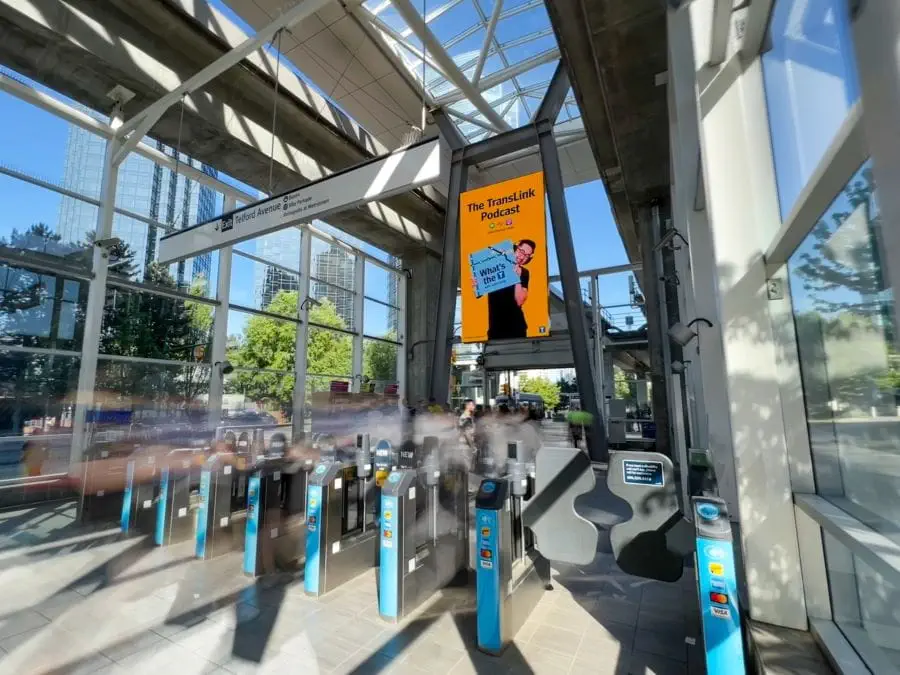
Beginning Aug. 1, PATTISON Outdoor will be the main provider of advertising across TransLink’s entire transit system, including on SkyTrain, SeaBus, and West Coast Express. This agreement, the agency says, will also roll out new digital tools to share service alerts, emergency messaging, and customer updates more quickly and clearly.
“This new agreement with PATTISON Outdoor will help generate vital revenue to support transit services across our region,” says TransLink CEO Kevin Quinn. “It will also effectively modernize our communication tools and deliver a better experience for our customers.”
What’s changing:
- Improved real-time customer information, plus dynamic brand and product ads.
- Replacing older overhead platform screens with high-definition motion displays.
- Less paper ads, reducing the need for on-site changes.
“This agreement will bring significant opportunities for growth and impact across the entire region,” says Jeff Richards, Vice President and General Manager, Pacific Region at PATTISON Outdoor. “We are incredibly proud of this milestone.”
These upgrades, the agency says, support TransLink’s efforts to improve efficiency and reduce operating costs. More digital advertising will reduce the need for physical ad replacements, allowing transit staff to focus on other system priorities.
Santa Clara VTA
Santa Clara VTA on July 8 announced that it has been recognized as a Certified Age-Friendly Employer by the Age-Friendly Institute, “making it the only transit agency in California, and one of only a few nationwide, to receive the designation,” according to VTA.

This certification, the agency says, “reflects VTA’s commitment to building an inclusive, multigenerational workforce where experience, knowledge, and leadership are valued at every level of the organization.” Today, more than 950 VTA employees, more than 40% of the agency’s workforce, are aged 50 or older, contributing across a wide range of roles, including Bus Operators, Engineers, Maintenance Technicians, Administrative Professionals, and Managers. Many also return to serve as retired annuitants, offering their expertise in part-time or advisory roles.
“At VTA, age-inclusive employment isn’t just the right thing to do, it’s a strategic advantage. A multigenerational workforce brings a diversity of perspectives, deep institutional knowledge, and workplace stability that directly supports our mission to deliver high-quality transit services and community-centered solutions,” the agency said.
Key practices that earned VTA the certification include:
- Age-neutral recruitment and hiring practices.
- Pay equity across all classifications.
- Ergonomic workplace adjustments and wellness support.
- Pre-retirement planning to support career transitions.
- Opportunities for retired annuitants to return in meaningful roles.
- Implicit bias training, including a focus on age diversity.
- Ongoing professional development available to all staff.
“While we do not offer programs exclusively for employees aged 50+, all VTA staff have access to a wide range of professional development opportunities, both in-person and online. We are also actively exploring multi-generational workforce training to promote collaboration and respect across age groups,” the agency noted.
This certification, the agency says, “underscores VTA’s core belief: experienced professionals are essential to our success. Their expertise strengthens transit operations, improves customer service, and helps us stay responsive to the evolving needs of the communities we serve.”
As a Certified Age-Friendly Employer, VTA says it is proud to set the standard for inclusive employment in the public transit industry and remains committed to policies and practices that reflect the agency’s values of opportunity, and respect for all employees.
More information is available here.