Denver RTD
RTD led the recovery of commuter rail ridership following the COVID-19 pandemic, according to a recently completed reported by the U.S. Government Accountability Office (GAO), which includes analysis of ridership data from 31 transit systems across the U.S. The results, published May 7, found that most commuter rail systems across the nation “have failed to regain all the ridership prior to March 2020.”
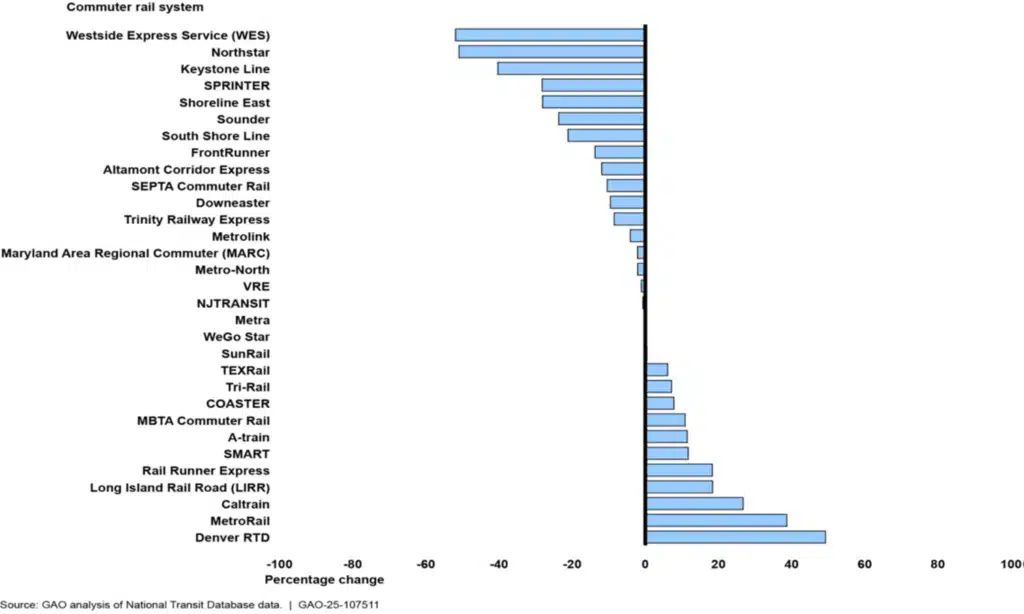
Despite commuter rail ridership numbers lagging nationwide, more than half of transit systems are providing commuter rail service near or above pre-pandemic levels, according to the report. A change in working environments and commuting trends, which includes hybrid and fully remote schedules, are contributing factors to the changes in customer boardings. In addition, officials from seven of the 31 systems said that commuting patterns have changed from the traditional peak periods of a 9 a.m. to 5 p.m. workday.
While most commuter rail systems are offering service from all the same stations as before the pandemic, some, including RTD, have pivoted to regain ridership through extending service hours, offering no-cost fares, or seeking other local and federal resources for additional funding. RTD, with its Zero Fare for Youth program, approved as a permanent fare change in 2024 following a one-year successful pilot, is one of five agencies in the study that now offer a no-cost youth fare program. RTD’s program, the agency says, “focuses on increasing access and ridership by directly engaging with and appealing to a new generation of transit customers.”
“We’re proud that the Denver metro area continues to support our commuter rail network,” Assistant General Manager, Rail Operations, Dave Jensen said. “RTD remains committed to providing the highest quality service possible for our rail services and customers. Since March 2020, we’ve focused on increasing access and enhancing the customer experience, and that work will continue.”
Ridership for all 31 of the systems evaluated has “increased steadily since the first half of 2020,” according to the report. Nationally, commuter rail service levels were approximately 2.7% higher for the last six months of 2024 than compared with the same period in 2019.
Commuter rail is an alternative to driving between suburbs and city centers, such as the lines that connect to downtown Denver. The agency’s four commuter rail lines largely provide service from Denver Union Station to areas north of I-70, including the A Line with service to the Denver International Airport. The A Line remains the agency’s most heavily used commuter rail line. In 2024, the A Line had approximately six million customer boardings.
The 31 agencies selected for the GAO’s evaluation were based on ridership levels and a criterion of whether the systems offered multiple modes of transit. Congress provided more than $69 billion in relief funding to the transit industry during the pandemic with the public health emergency ending in 2023.
TransLink
TransLink recently announced that it has entered into a new partnership with Patina Brewing to launch the “Platform Pilsner,” a limited-edition transit-inspired craft beer, now available at the Patina Brew House in Port Coquitlam and select Metro Vancouver liquor store.
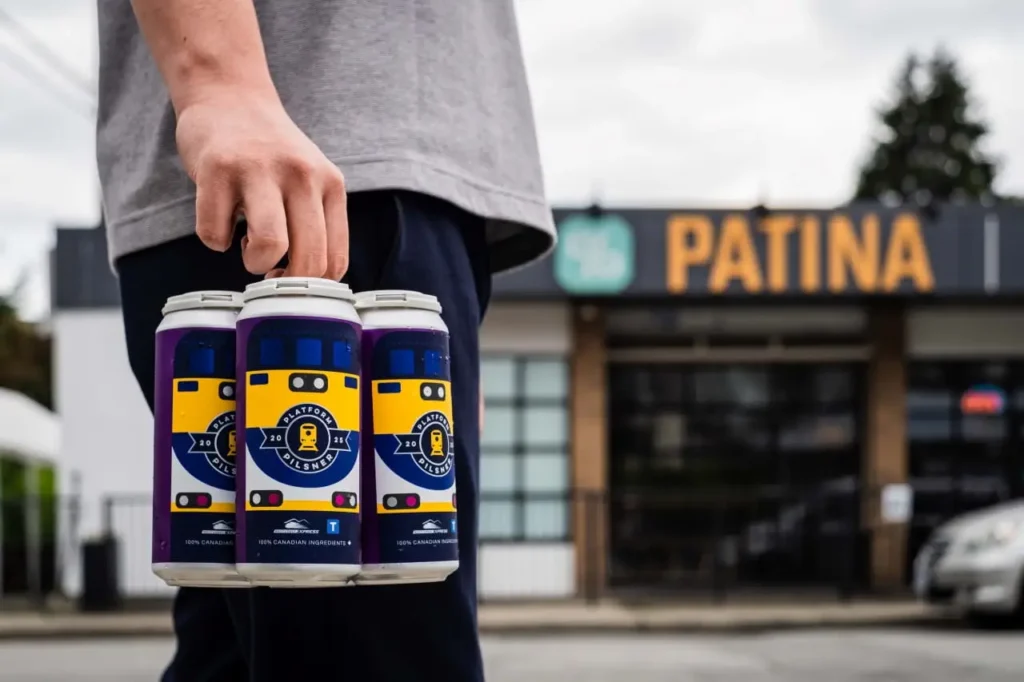
The collaboration, the agency says, is part of TransLink’s ongoing efforts to “explore innovative partnerships that promote transit, support local businesses, and generate new sources of revenue.” TransLink will receive a portion of every sale of the Platform Pilsner four-pack.
Inspired by the iconic West Coast Express livery, the can design was developed by TransLink’s in-house creative team. Brewed in Port Coquitlam using all-Canadian ingredients, Platform Pilsner offers a crisp, clean taste that highlights the region’s passion for craft beer and community connection, the agency noted.
“The Platform Pilsner is another example of how TransLink is thinking outside the box—or in this case, outside of the fare gate—to generate additional revenue, and support a local business,” says TransLink CEO Kevin Quinn. “I think both transit and craft beer enthusiasts will appreciate this fun and creative collaboration.”
Patina Brewing Co., located in the heart of downtown Port Coquitlam, opened its doors in 2020 and has become a community favorite, known for its small-batch beers and welcoming tasting room.
“Our brewery is just steps from major transit hubs, and many of our customers use transit to get here,” says Patina Brewing Co. Director of Operations Sarah Harbord. “This collaboration is a celebration of the people and communities we serve.”
The Platform Pilsner is available in limited quantities, with only 1,500 four-packs produced. Four-packs are available at Patina Brewing in Port Coquitlam and at select Metro Vancouver liquor stores.
Trinity Metro
Trinity Metro’s Board of Directors approved a 10-year extension of the agency’s TEXRail contract with railroad operator St. Joseph, Mo.-based Herzog Transit Services, Inc., according to the Fort Worth Report.
The extension, approved June 16, calls for Trinity Metro to pay Herzog about $324 million over 10 years that also includes operation of the Trinity Railway Express (TRE), according to the report.
Under the contract, Trinity Metro will pay about $224 million for operations and maintenance and about $99.9 million for fuel. The contract, according to the Fort Worth Report, which includes a 3% annual escalation limit for rising expenses, is capped at about $465 million. Capital improvements, including new railcars, are not included.
According to the report, seventy-four TEXRail trains run daily from the T&P Station in downtown Fort Worth to Dallas Fort Worth International Airport, resulting in 3.2 million trips annually. The 27-mile route has on-time performance of 98.36%, which puts it at the top of the industry, officials said.
Trinity Metro, according to the Fort Worth Report, initially contracted with Herzog in May 2015. Two years later, the board extended that contract eight more years with a 10-year extension option.
Herzog is contracted to handle general maintenance and train operations, including crews and dispatch personnel, as well as management of safety systems and documentation of railroad classifications. The company will also maintain TEXRail’s right-of-way corridor.