Transit Briefs: Denver RTD, SCVTA, NYMTA, Minn. Met Council, UTA, Stantec/PANYNJ
Denver RTD
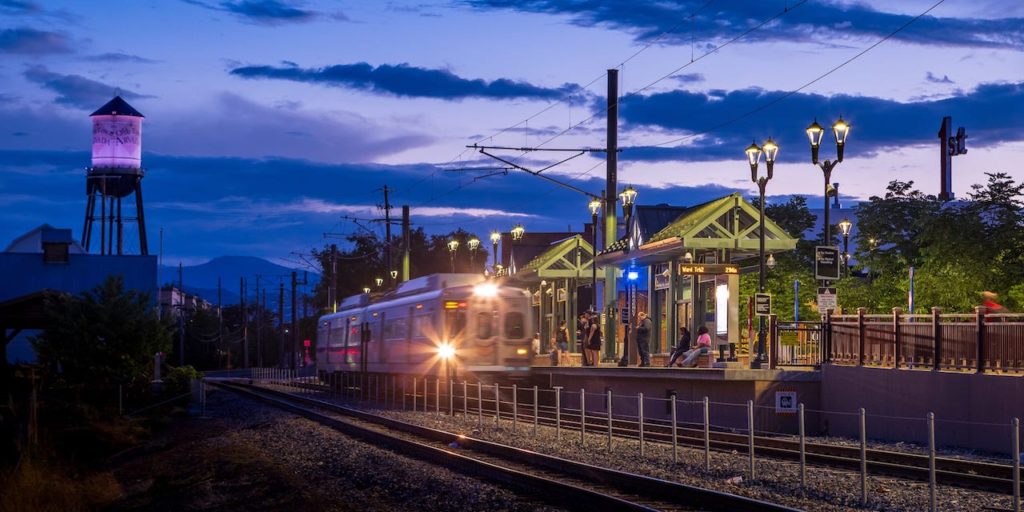
RTD is reporting multiple cases of copper wire theft near track signals, switches, and rail crossings.
According to the agency, there have been five instances of copper wire being stolen along light rail alignments over the last week alone. Most of the theft has taken place along the R Line, which runs between Peoria Station in Aurora and Lincoln Station in Lone Tree.
Each incident, RTD says, has resulted in significant impacts to light rail service, including train delays, crossing arms staying active in the down position, and the need for bus shuttles. RTD is also investigating multiple cases of thieves targeting copper wire along the A and G commuter rail lines. A wire theft on July 29 along the A Line has resulted in signal issues and the need for bus shuttles between Denver Union Station and Central Park Station.
RTD’s copper wires provide connections to a low-voltage system that powers signals at rail crossings, as well as high-voltage circuits that energizes trains through the overhead wires. Most of the recent thefts have happened overnight, and the thieves are striking at different locations across the system’s 120 miles of track.
According to the agency, the copper wire thefts resemble a similar trend that disrupted RTD’s rail services in 2022. Following a spike in copper wire thefts at that time, RTD implemented additional methods to discourage would-be thieves. The agency started embedding the copper wire in railroad ties, installing wooden covers, and greasing the wires to make them less valuable. RTD has also piloted adding tracking devices to copper wire coils across the system.
“The demand for copper has created a market for thieves to target critical infrastructure across the world,” RTD noted. “In the U.S. and Canada, multiple transit agencies have recently reported an increase in copper wire thefts.”
RTD is asking customers and the public to report any suspicious behavior that they may observe on or near the system’s tracks. The agency also warns thieves and would-be culprits that trespassing on RTD’s tracks is dangerous and deadly. Trains can approach from any direction at any time and are not able to quickly stop or slow down. Additionally, there is a real danger of electrocution from exposing and handling the system’s copper wires.
SCVTA
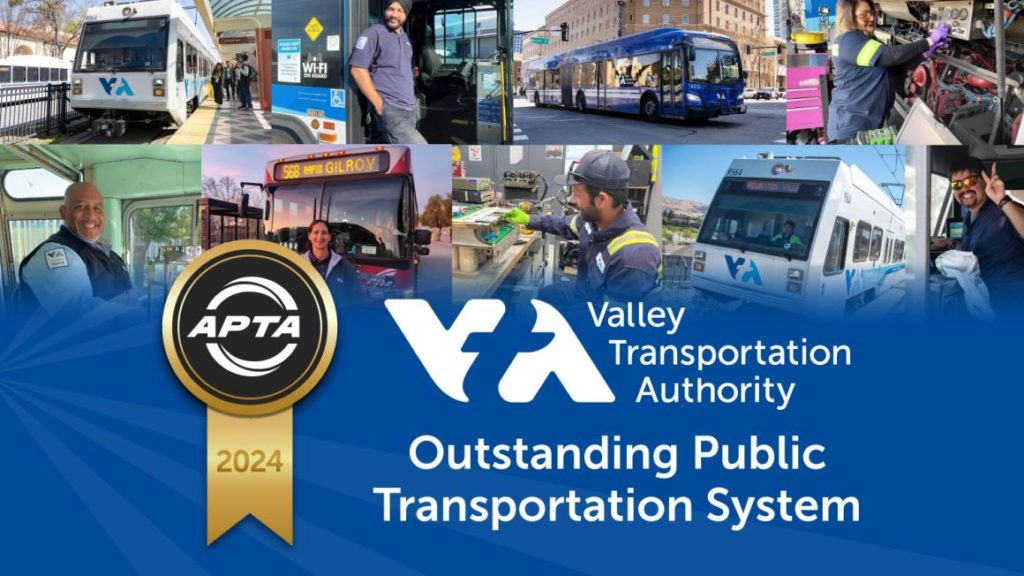
SCVTA has been named the Outstanding Public Transportation System among “large” transit agencies throughout North America. This top industry award from APTA honors a public transportation system member that has “demonstrated achievement in efficiency and effectiveness among agencies providing more than 15 million but fewer than 50 million annual passenger trips.” VTA provides more than 25 million trips annually for buses, light rail, and paratransit in Santa Clara County.
“Every employee at VTA, from our maintenance workers, bus and light rail operators, to middle managers, administrators, and executives, have worked extremely hard and been resilient over the past three years. We are immensely proud to receive this honor,” said SCVTA General Manager and CEO Carolyn Gonot.
The award, the agency says, “recognizes VTA’s excellence amid unprecedented challenges over 2021 and 2022, continuing to provide essential service during COVID-19 and making significant strides in restoring service to pre-pandemic levels, after emerging from a traumatic shooting attack and a crippling cyberattack in the Spring of 2021.”
VTA excelled in multiple categories measured for the award under Gonot’s leadership, which mirrors the timeframe of this award. By the end of 2021, pandemic-impacted bus service was restored to 91% of pre-pandemic levels, while light rail service was at 75%, the agency noted. Key milestones included the restoration of all suspended routes and increased frequency on high-demand routes. “Success is attributed to the network redesign, which focused on high-frequency service throughout the day,” SCVTA said. “Ridership growth is also a significant achievement, with steady major increases over the last three years, launching VTA into the top five agencies in the nation for ridership recovery.”
“VTA provides one of the most critical services our local government can offer, the ability to get people where they need to go,” said Board Chair and Santa Clara County Supervisor Cindy Chavez. “It is a privilege to help lead this agency and gratifying to see its hard work recognized on an international level.”
Chavez and Gonot will accept the award at a formal presentation at the APTA Annual Transform Conference to be held in Anaheim, Calif., this fall.
NYMTA
The New York MTA announced July 30 that New York State will provide the agency with $54 million in state resources to support the Second Avenue Subway expansion project, which will extend the Second Avenue line to 125th Street in East Harlem.
The capital funding provided to MTA will be “earmarked towards the utility relocation contract (“Contract 1”) for Phase 2 of the expansion project, which will deliver subway service to residents of East Harlem, one of the most transit-dependent neighborhoods in New York City,” the agency noted.
With this funding support from the State, MTA says it can “immediately proceed with the work to relocate utility lines along Second Avenue and nearby streets, putting the project in position to advance as scheduled while broader funding issues are resolved.” This action, the agency adds, will not impact MTA Capital Program State of Good Repair projects that are prioritized or currently under way.
Minn. Met Council
Minnesota’s Hennepin County and the four cities on the route of the proposed METRO Blue Line Extension are being asked to review the preliminary design plans of the light rail transit project.
On July 24, the Met Council voted to send the proposed project plans to the cities of Minneapolis, Crystal, Robbinsdale, and Brooklyn Park, which are all on the 13.4-mile route that will run from Target Field to Brooklyn Park. The cities will review preliminary designs for the tracks, stations, and structures that serve their neighborhoods.
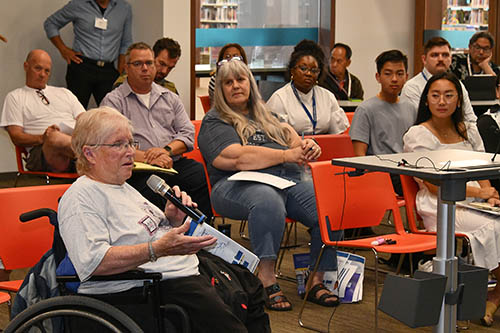
For light rail transit projects, state law requires the Met Council to send preliminary design plans to the cities on the route. They are required to review and approve the physical design components of the project in a process often referred to as “municipal consent.” If the city does not approve, they must submit an amendment or amendments to the plan with the changes they would like to see.
Each city will hold a public meeting before Oct. 10, 2024, to discuss the plans, and then vote on them. The Met Council reviews and analyzes any proposed changes, which may involve working with the city to develop a compromise design.
“This process gives people an opportunity to participate in the line through their elected officials,” said Met Council Chair Charlie Zelle. “This is a big investment that will serve our region for the next 100 years.”
UTA
The International Olympic Committee awarded Utah the 2034 Games on Pioneer Day and state organizations are already preparing, according to a KPCW report.
According to the report, UTA is making plans to expand public transit ahead of the 2034 Games. The FrontRunner train was built for the 2002 Games and UTA wants to expand operations before 2034.
The organization, KPCW reports, plans to have FrontRunner service on Sundays and have them run every 15 minutes. The train does not currently run on Sundays and only has hourly service with service every half hour during morning and evening commutes. To run on Sundays, UTA will need to complete double tracking.”
According to the report, UTA also plans to open a new Salt Lake City TRAX line. The orange line will run from the Salt Lake City International Airport to the University of Utah Research Park, where athlete and family housing will be.
UTA “aims to connect West Valley and Taylorsville to the existing transit system,” KPCW reported. Utah News Dispatch reports that “UTA will create the Mid-Valley Express bus rapid transit line to connect Murray Central Station to the two cities and potentially to Olympic venues.”
The future Davis-Salt Lake City Community Connector would also “help connect cities and make traveling to Olympic venues easier,” according to the KPCW report. The 26-mile bus rapid transit system will run between southern Davis County and northern Salt Lake County. Through a connection in Davis County, riders could travel to the Snowbasin resort, which will host Alpine skiing events for both Olympic and Paralympic athletes.
Gov. Spencer Cox previously said he would “love to build a passenger rail to Park City, but it’s likely not possible within the next 10 years,” according to the KPCW report.
Stantec/PANYNJ
Stantec announced July 30 that it has been selected by PANYNJ to lead preliminary and final design work for key elements of the planned $2 billion Newark AirTrain replacement, which, when complete, will “promote increased adoption of public transportation to Newark Liberty International Airport (EWR) and provide a stronger connection to two of New Jersey’s largest cities, Newark and Elizabeth.”
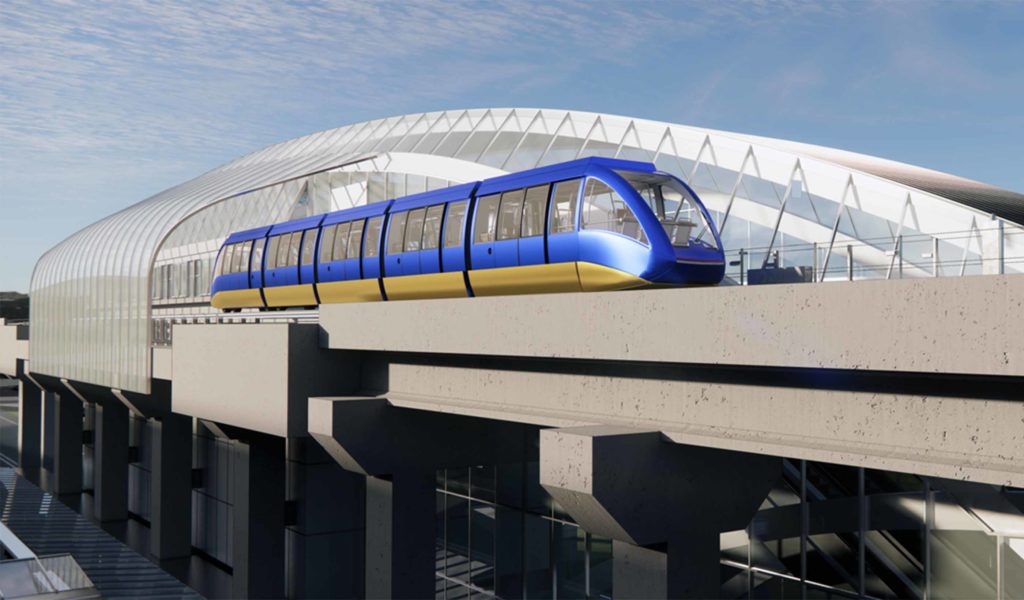
According to the company, Stantec will lead the design of a new Maintenance and Control Facility, pedestrian connectors between the new AirTrain and existing Terminals B and C, and, finally, the decommissioning of the existing AirTrain.
“The AirTrain Newark Replacement Program is critical to the operation at EWR,” Stantec said. The system carries on average 33,000 passengers per day or approximately 12 million passengers per year. It provides access to Newark Liberty International Airport Station and provides customers and employees with the ability to transfer between terminals, parking lots, and rental car facilities. The current AirTrain Newark, which has reached the end of its useful life, will be replaced with a new system to meet increasing passenger demands.
“Our transit design solutions will balance an efficient and welcoming rider experience with sustainable, durable facilities that are adaptable to EWR’s evolving needs,” said Stantec Vice President and Civic Sector Leader Ken Anderson. “We understand the need to provide safe, scalable, and inclusive services to make transit more accessible to all users as they navigate this busy system.”
Stantec’s scope will include structural design, building design, architecture, utilities, roadways, and maintenance and protection of traffic. Supplier diversity will be an important part of the project and will meet PANYNJ requirements, with 33% participation from diverse suppliers. Stantec says it has a “strong track record of meeting and exceeding supplier diversity goals, including on megaprojects like the Long Island Rail Road (LIRR) Third Track Expansion and Chicago Transit Authority’s (CTA) Red and Purple Modernization Program.”
“We welcome the opportunity to help improve the overall transit experience at EWR. Working on projects that better connect our communities is core to Stantec’s mission and goals,” said Stantec Vice President and U.S. Aviation Section Leader Kevin Doyle. “The AirTrain Newark Replacement Program is a testament to the importance of providing communities with safe and easy access to public transportation.”