DART
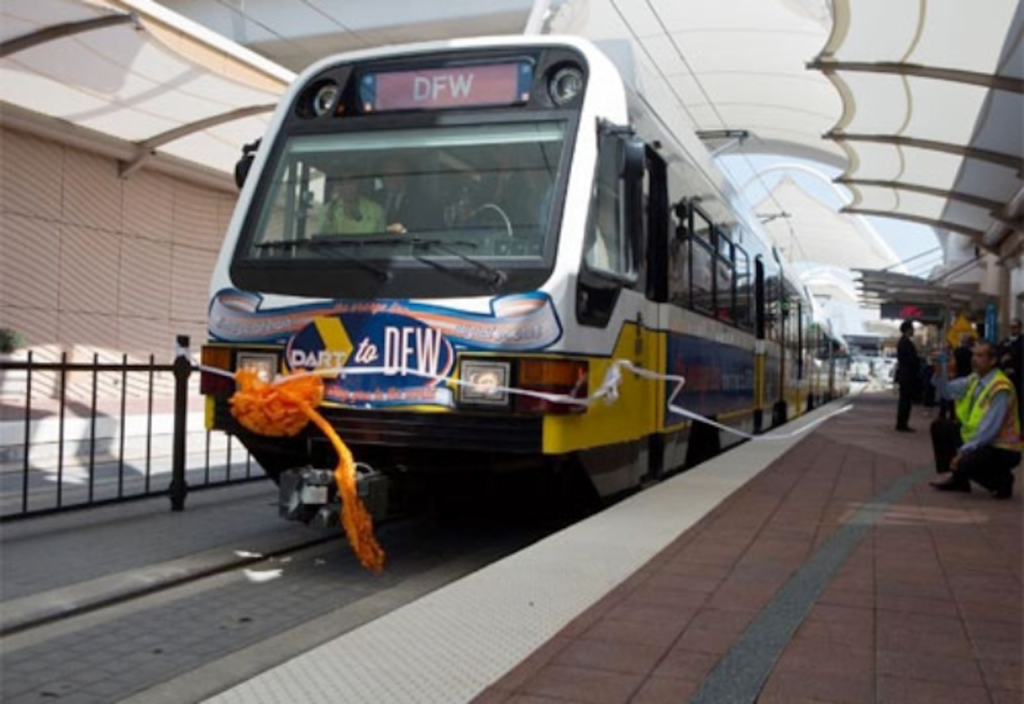
DART was the first transit agency in the southwestern U.S. to provide direct rail service—from station to terminal—to a regional or international airport. On Aug. 18, 2024, DART set that precedent with its initial voyage from Terminal A at DFW Airport to downtown Dallas.
“A transit connection to DFW International Airport has been a component of DART’s vision since its inception of the transit authority in 1983,” said John Hoppie, a project manager in DART’s development department who worked on the Orange Line extension to DFW Airport. “That was a milestone moment for us and the Dallas area.”
The Orange Line began service in 2010 and added stops in the City of Irving two years later, connecting riders to the University of Dallas, Las Colinas, Irving Convention Center, and Dallas College’s North Lake campus. The five-mile extension from Belt Line Station to DFW Airport brought DART’s light-rail system to the nation’s second-busiest airport (four months earlier than planned) and extended its service across 90 miles and 62 stations, according to the agency.
DART opened a deferred infill station in 2021, the Hidden Ridge Station, providing an additional rail stop for riders to access the various retail, entertainment, and business options in Las Colinas. Additional infill stations, which are planned stations that can be added to existing rail service during a later time, near Loop 12 and South Las Colinas would bring the total number of stations on the Orange Line to 15, keeping the trip between downtown Dallas (from the Pearl/Arts District Station) to DFW Airport under one hour.
There are currently more than 60 Orange Line trips scheduled from the Pearl/Arts District Station to DFW Airport during the week and 48 on the weekend. DART serves an average of 15,500 riders daily and 8,400 per weekend on the Orange Line, according to the agency.
Trinity Metro, which shares the operation of Trinity Railway Express (TRE) between Dallas and Fort Worth, became the second transit agency in the southwestern U.S. to offer direct rail to airport service when it began operation of the TexRail from downtown Fort Worth to DFW Airport in 2019. According to DART, the agency will share station space with TexRail at the DFW North Station in Grapevine once the Silver Line opens for revenue service, giving DFW Airport direct rail service originating from three of the 75 largest (according to 2020 U.S. Census) cities in the nation—Dallas, Fort Worth and Plano.
The addition of the Silver Line, DART says, will provide a second direct point of rail access to DFW Airport, connecting riders in the northern DART service area from its starting point in Plano with stops in Richardson, North Dallas, Addison, Carrollton and Grapevine. DART also provides service to Dallas Love Field Airport through the Green Line and a dedicated bus route from the Inwood/Love Field Station to the airport.
DART Chief Architect and Assistant Vice President David Ehrlicher, who was heavily involved with designing the Orange Line light-rail project, said getting the extension to DFW Airport 10 years ago was the “key to helping make everything else fall into place.”
“The Orange Line extension to DFW Airport is important because it offered airline passengers the opportunity to become DART customers with a single-seat ride to downtown Dallas and other destinations throughout the DART service area,” Ehrlicher said. “DFW Airport is a major access point for business and recreational travelers in the United States. By bringing direct rail service to DFW [Airport], we’ve been giving those same travelers an easy connection to all the Dallas area has to offer while also offering locals a convenient way to reach their business or vacation destination.”
SBCTA
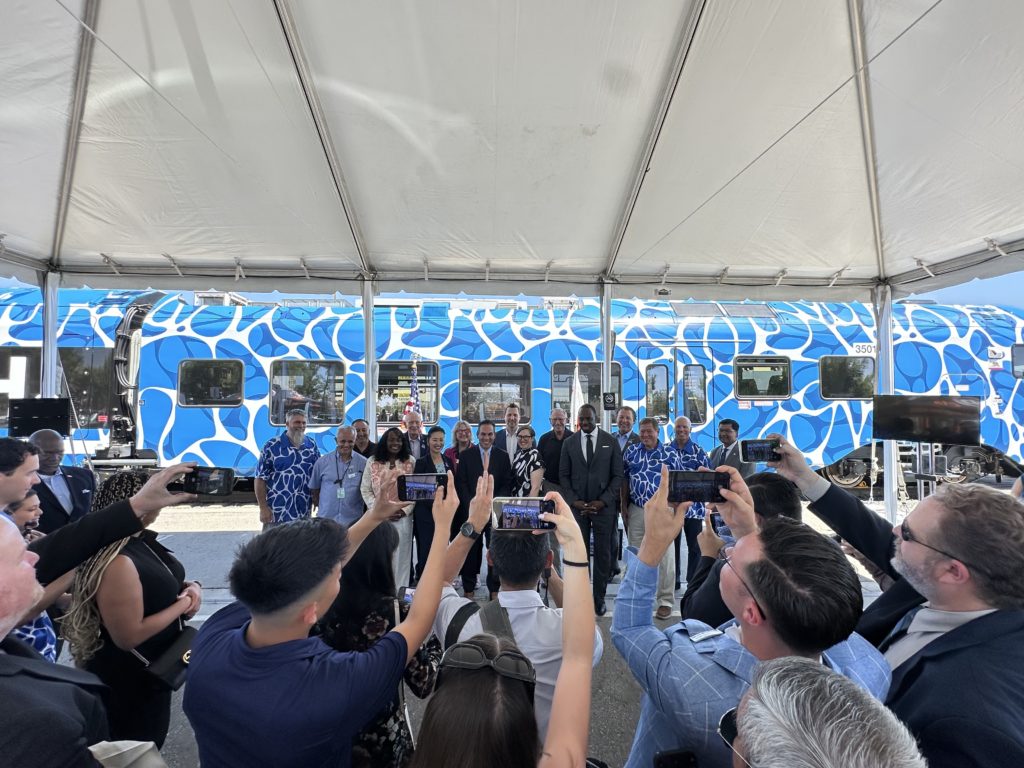
Leaders from the U.S. Congress, California State Transportation Agency (CalSTA), Federal Railroad Administration (FRA), Metrolink and Stadler US convened on Aug. 15 at the San Bernardino Depot train station for a first-hand look at SBCTA’s new ZEMU passenger train.
ZEMUis North America’s first self-powered, zero-emission passenger train that will meet FRA requirements, the agency noted. The train uses a hybrid hydrogen and battery technology to propel the train and power onboard electrical systems. “Water vapor is the only emission generated from the propulsion system, making this a clean transit alternative,” according to SBCTA.
“What we have done with ZEMU is transformational,” said SBCTA President Ray Marquez. “The development of the train has solidified SBCTA’s place as an innovator in clean passenger rail here in the Inland Empire, throughout the state and the nation.”
ZEMU was built by Swiss train manufacturer Stadler, who also built the three Diesel Multiple Unit trains that currently operate on the Arrow corridor. The diesel trains run on renewable fuel made from recycled natural fats and vegetable oils. Partnering with Stadler to develop the new ZEMU train was a “natural fit” for SBCTA, the agency noted.
“The FLIRT H2 hydrogen train is the product of a longstanding, collaborative, and successful partnership between Stadler and SBCTA,” said Stadler US CEO Martin Ritter. “We build trains for a wide variety of transit agencies, but developing this train has been especially meaningful because of the impact it will have on San Bernardino County and the way it will shape the future of passenger rail in California and across the U.S.”
When ZEMU enters service later this year, it will operate along Metrolink’s Arrow Corridor on the San Bernardino Line. Following ZEMU’s June 2024 arrival to San Bernardino, the train began its final phase of testing and integration with Metrolink’s operating systems.
In 2016, SBCTA received federal funding and support from U.S. Rep. Pete Aguilar to help build the infrastructure that supports the Arrow service along the San Bernardino Line.
For the better part of a year, ZEMU, SBCTA says, has undergone testing under FRA guidelines in Pueblo, Colo., at the Transportation Technology Center (TTC). “This is an important step to ensure the train safely enters service in San Bernardino County, while also creating a framework for other agencies to follow,” the agency said.
CalSTA, the agency says, “believed in SBCTA’s vision for a zero-emission passenger train because of its potential application to transit agencies throughout the state.” That belief led to CalSTA providing nearly $52 million in funding to support research, development, testing and analysis of ZEMU.
The ZEMU train is easy to spot with its signature blue and white water-vapor design wrapped around the train’s two passenger cars and center power pack where the hydrogen and battery propulsion system is located.
In the coming weeks, ZEMU will begin running test routes on Metrolink’s Arrow Corridor along the San Bernardino Line with a goal of “safe entry into service later this year,” according to SBCTA.