
CTA
CTA on Aug. 6 announced the reopening of the agency’s new Damen Green Line station at Lake Street and Damen Avenue. The state-of-the-art station, CTA says, “addresses a longstanding need for improved transit options on the Near West Side that benefits residents, supports local growth and job creation in the Kinzie Industrial Corridor, and accommodates large crowds attending events at the nearby United Center.”
“This new station is a transformational achievement for our City,” said Mayor Brandon Johnson, who joined 27th Ward Alderman Walter Burnett, CTA President Dorval Carter, Jr., Chicago Department of Transportation (CDOT) Commissioner Tom Carney and Near West Side stakeholders for the grand reopening on Tuesday. “The long-awaited Damen Green Line on the Near West Side of Chicago will have a multiplying effect on the neighborhood, attracting future investments for a vibrant hub of multi-use developments.”
The new Damen Green Line station fills a 1.5-mile service gap between Ashland and California stops, restoring rail service to the neighborhood for the first time since the original station was closed at this location in 1948.
The station serves the Kinzie Industrial Corridor, the United Center, Malcolm X College, and the surrounding residential area on the growing Near West Side. This includes the Chicago Housing Authority’s Westhaven Park IID, a $50 million, equitable transit-oriented development (eTOD) project adding 96 mixed-income apartments in the community.
Additionally, the station provides easy access to CTA buses, space for pedestrians to walk, and bikesharing options. CDOT announced the installation of the City’s 1,000th Divvy station at the Damen Green Line, “helping the station serve as a multi-modal facility to provide various sustainable and equitable transportation options for the neighborhood,” the agency noted.
The $80 million TIF-funded project was administered by CDOT in close collaboration with CTA. The construction contractor was F.H. Paschen and the station was designed by Perkins&Will, a Chicago-based global architecture and design firm known for innovative transit station projects from British Columbia to Chongqing City, China.
Station materials and design elements were chosen and arranged to create an “intuitive user experience and to allow for a long-lasting transit facility with low-maintenance requirements,” according to CTA. A grand stair and escalator, visible through the transparent glass façade, guide passengers to the platform level. A glass bridge connects the inbound and outbound train platforms, offering spectacular views of the Chicago skyline and orienting visitors to neighborhood destinations and attractions. The bridge’s visible structure references Chicago’s iconic steel bridges.
The new station also features a large mural by the noted artist, Folayemi Wilson, that highlights the rich history of various ethnic groups on the Near West Side. The mural depicts a scene on the prairie with images of young people taken from local photographic archives peering towards the horizon and imagining their future. Wilson was commissioned for the work by the City’s Department of Cultural Affairs and Special Events (DCASE). CTA says it includes artwork in its new stations to “not only further enhance the space, but also create a connection with the surrounding community and inspire those who travel through the facility.”
SFMTA
The results of SFMTA’s 2024 Muni Rider Survey are out and this year, 553 riders shared their thoughts between Feb. 12 and April 2, 2024.
The 2024 survey project used a hybrid approach, blending telephone interviews and online surveys to collect feedback from adult San Francisco residents. This survey, SFMTA says, was established to track the satisfaction levels of Muni riders with the agency’s service. This tool allows SFMTA to track its progress and measure the impacts of changes implemented to improve service.
Highlights:
- SFMTA received the highest satisfaction rating since it began surveying riders more than 20 years ago.
- Riders have noticed the work SFMTA is doing to make Muni fast, frequent and reliable.
- Rider satisfaction has improved most in the Downtown and Chinatown areas.
- 72% of riders surveyed this year rate Muni as “excellent” or “good.”
- The highest rating since SFMTA began surveying riders in 2001.
- An improvement from 2022, when 66% of riders rated Muni “excellent” or “good.”
“We continue to improve service. Our buses and trains arrive more often and on time these days,” SFMTA said. “More people are using our fast, frequent, reliable service to meet friends and family. They’re also riding Muni to experience all the city offers, from parks to restaurants and cultural events. Yes, people are going to the office a little less often since the pandemic. But they are exploring and relying on Muni beyond the work week.”
According to SFMTA, more San Franciscans are choosing to ride Muni regularly. The survey reflects the following:
- On-time performance has jumped from 47% to 60%.
- Accurate arrival times have improved from 49% to 64%.
- Muni also runs more often. Satisfaction with frequent service is up from 51% to 63%.
- Trip time satisfaction is up from 65% to 69%.
“Our riders see that Muni is getting better. And they see it whether they are commuting to work or heading out for a day in the city. People who take Muni for leisure trips like meeting friends or heading to a park are reporting high satisfaction levels.
“These changes are being felt across the entire city. Downtown and Chinatown have seen the biggest improvement, with rider satisfaction in these areas jumping from 69% to 78%.
“From more frequent service to better on-time performance, from correct arrival times to quicker trips, Muni has improved. The survey results show that riders are noticing these changes,” the agency concluded.
More information is available here.
MARTA
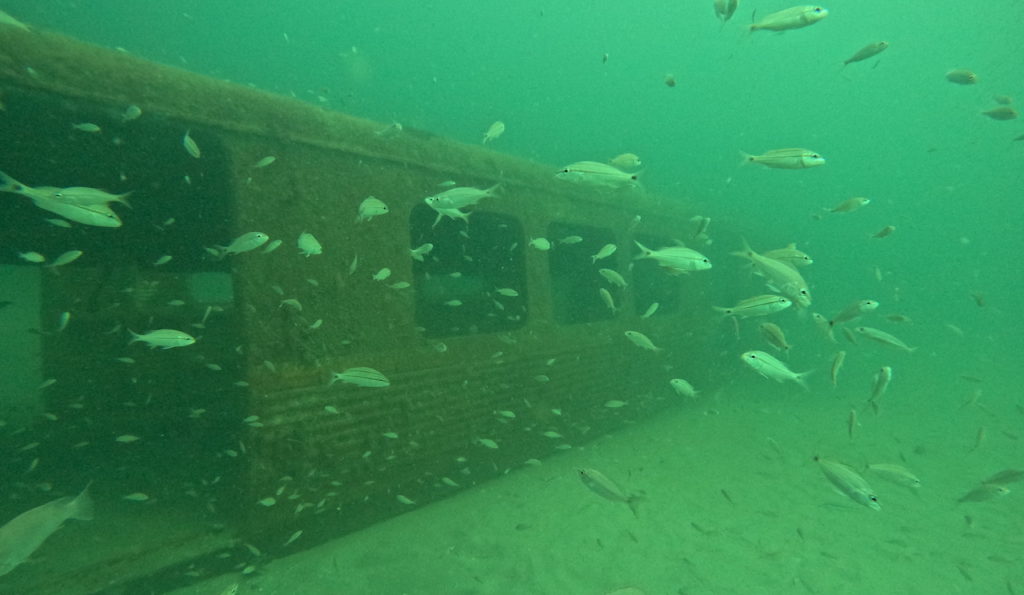
Two MARTA railcars deployed into the Atlantic Ocean seven months ago as part of the Georgia Department of Natural Resources (DNR) Reef Project are gradually developing into reef habitats for marine wildlife.
Last December, the decommissioned railcars were stripped of hazardous materials and inspected by the U.S. Coast Guard before being transported by barge to Artificial Reef L, an established reef about two square miles in size, located approximately 23 nautical miles east of Ossabaw Island and deployed in about 55 to 65 feet of water.
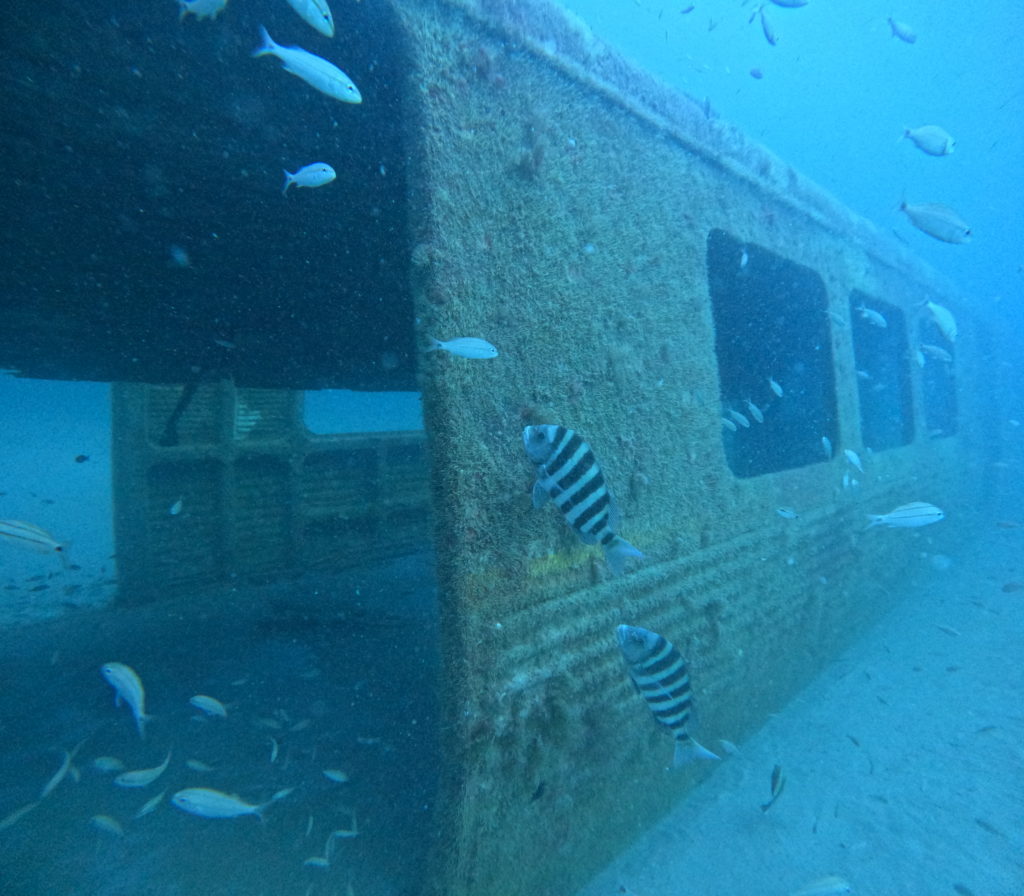
In the first dive since the deployment, the DNR Coastal Resources Division witnessed a good amount of soft coral beginning to grow on the railcars and nine species of game fish.
While the substrate for the reef is manmade, the organisms that grow on it are entirely “natural and beneficial for the environment,” the agency noted. Fish and other marine life, such as sea turtles, were likely the first to investigate the railcars when they were deployed. Corals, sponges, and other encrusting organisms are taking hold now and will continue to grow and improve the longer they are in the ocean. SCUBA divers and anglers have also been using the reef.
MARTA’s railcars join previously deployed materials, including U.S. Army M-60 battle tanks, barges, tugboats, New York City subway cars, and other manmade structures. Artificial Reef L was first created in 1976 as part of a network of 32 offshore reefs that the Coastal Resources Division has been building and improving for more than 40 years.
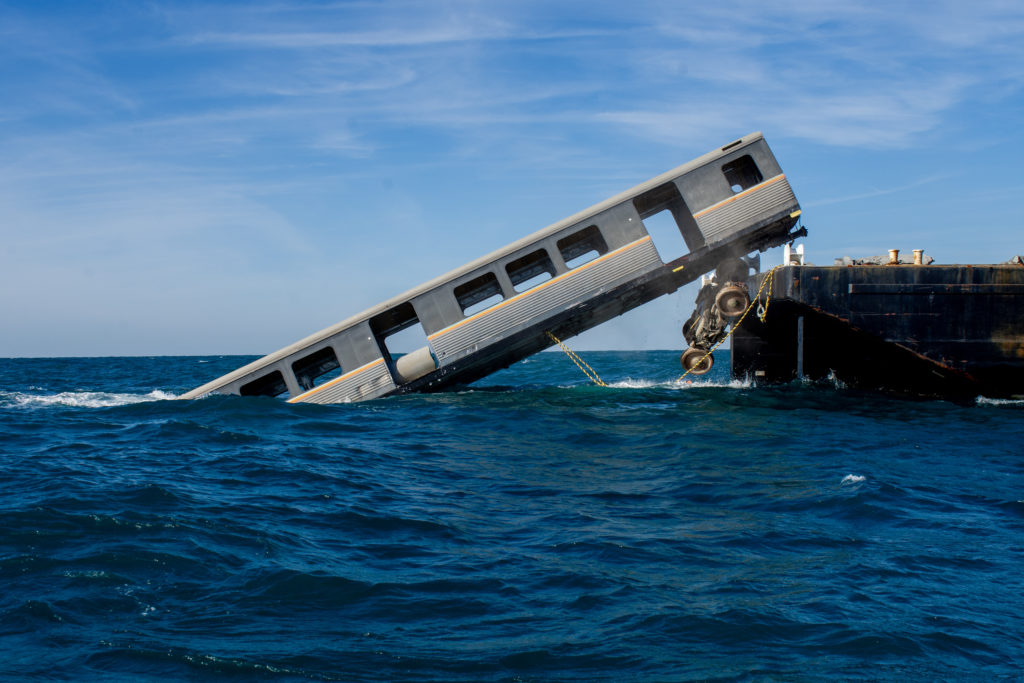
“MARTA is proud to be part of repurposing old railcars in this environmentally responsible way,” said MARTA General Manager and CEO Collie Greenwood. “It’s exciting to see this type of development on the railcars after only a few months and we hope to provide more retired railcars for reef deployment as we make room for our new trains.”
“The artificial reef is looking great, and we are encouraged by the amount of coral growth and marine wildlife activity,” said Cameron Brinton, a marine biologist with DNR’s Coastal Resources Division. “You’ll notice one of the railcar roofs has collapsed, which is typical, and we’ll see more changes to the railcars over time as they become part of the essential marine habitat for sea creatures, including popular sport fish and endangered sea turtles.”




