CTA
In celebration of National Engineers Week, CTA announced Feb. 18 that it is joining an initiative to bring CTA engineers into CPS classrooms to “ignite students’ enthusiasm for engineering.”
CTA is teaming up with E-Squared, a statewide speakers bureau that connects teachers and schools to practicing engineers, for this groundbreaking initiative, developed in partnership with the Illinois Engineering Initiative (IEI), the American Council of Engineering Companies Illinois (ACEC) and the Illinois Society of Professional Engineers (ISPE).
As an agency with a strong engineering focus with major upcoming and current capital construction infrastructure projects, including the Red Line Extension (RLE) and Red Purple Modernization (RPM), CTA says it “aims to inspire and connect CPS students with valuable engineering opportunities.” This initiative, the agency adds, “strives to foster enthusiasm for STEM careers and create meaningful pathways that introduce young minds to engineering in the transportation field.”
“By investing in the next generation of engineers, we are not only inspiring young minds but also strengthening our future workforce to ensure our city is in good hands with homegrown talent,” said CTA Acting President Nora Leerhsen. “We are excited to bring real-world engineering experiences into the classroom and empower students to explore STEM careers.”
Through this partnership, CTA and E-Squared will build a “powerful network” of agencies, engineering firms, and professional organizations that will engage with students, the agency said. CTA and its contractors will provide volunteers and project ideas, while CPS will offer access to students in schools in the Red Line Extension project area. Volunteers, including 13 from CTA and more than 50 from ACEC and CTA contractors, will participate in one-hour class sessions at each participating school, working with students on engaging engineering projects.
Twenty-three schools in the RLE area have already confirmed they are participating in the program with established volunteers. These schools include:
- Wendell Phillips Academy High School
- Walter Henri Dyett High School for the Arts
- Johnnie Colemon Elementary Academy
- Countee Cullen Elementary School
- Daniel Hale Williams Preparatory High School
- Douglas Taylor Elementary
- Jesse Owens Elementary Community Academy
- Neal F. Simeon Career Academy High School
- Dr. Martin Luther King Jr College Prep High School
- Edgar Allan Poe Elementary Classical School
- Bennett Elementary School
- Oriville T. Bright Elementary School
- Dunne STEM Academy
- Alex Haley Elementary Academy
- Ronald Brown Elementary Community Academy
- Edward E. Sadlowski Elementary School
- Edward H. White Elementary Career Academy
- George M. Pullman Elementary School
- Henry Clay Elementary School
- Marcus Moziah Garvey Elementary School
- Paul Laurence Dunbar Career Academy High School
- Chicago Vocational Career Academy
- Baker College Preparatory High School
Volunteers are confirmed at these schools and paired with a participating engineer. Additional schools are in the process of recruiting volunteers to expand the program’s reach even further.
E-Squared, CTA says, has already laid the groundwork for this program by developing age-appropriate materials and templates for classroom visits. To date, the program has been successfully implemented in a half dozen schools across Illinois, and efforts are under way to expand its reach to broader audiences.
“Illinois’ next generation of leaders, innovators and problem-solvers are in our schools right now and we are excited to help support and encourage them,” said ACEC Illinois President and CEO Kevin Artl. “We are thrilled to collaborate with CTA and leverage their expertise to inspire this next generation of Illinois engineers.”
“This partnership is a great example of the innovative programs that connect CPS students to real world opportunities in the community, hopefully inspiring them along their successful career paths,” said CPS CEO Pedro Martinez. “Our budding learners will now have even more exposure to hands-on experiences and mentorship from practicing engineers. We are excited to see the impact of this collaboration on our students and their future aspirations.”
MTA
Greater Washington Partnership (the Partnership), in collaboration with EY, on Jan. 28 released a report analyzing the “economic ripple effects” of the MTA’s capital and operating expenditures. Titled, “The Economic Impact of the Maryland Transportation Administration’s Capital and Operating Expenditures,” the report highlights the agency’s “significant combined direct, indirect and induced impact on jobs and economic output across the state.”
Based on MTA’s FY2020-2024 average annual capital expenditures and FY24 operating expenditures, the report (download below) reveals that during a typical year the agency supports $2.7 billion in total economic output, $1.7 billion in total GDP, $930 million in total labor income and 9,660 total jobs statewide. This data is also broken out across three regions within the state.
Unveiled to state policymakers at a Jan. 22 Partnership-hosted reception in Annapolis joined by Maryland Governor Wes Moore, Secretary of Transportation Paul Wiedefeld and MTA Administrator Holly Arnold, the study is “a tool to inform a holistic analysis of the impact of transit investments—not just for riders, but for the broader economy,” according to the Partnership.
“This report affirms a simple but powerful idea our constituents know through lived experience— you cannot have economic mobility without physical mobility,” said Governor Wes Moore. “In order to create jobs and build communities that are thriving and winning, we need to move in partnership to invest in transit. The Moore-Miller administration’s vision for transit is just one piece of our broader mission to invest in transportation that keeps people safe and grows the economy.”
“The Maryland Transit Administration is more than just a transportation provider—it’s an economic engine,” said Kathy Hollinger, CEO of Greater Washington Partnership. “By delivering critical services, supporting businesses and creating jobs, MTA is at the center of efforts to build a thriving, connected Maryland. This report provides policymakers with the data they need to support sustainable investments in our transit infrastructure.”
Key findings from the report:
- Over the past five years (FY20-FY24), MTA’s annual capital expenditures averaged.
- $580 million, with 71% ($410 million) spent within Maryland. This spending supported $610 million in economic output and created 2,920 average jobs over the five-year period.
- In FY24, MTA’s direct operating expenditure totaled $1.1 billion, with 81% ($920 million) spent locally. These funds supported $2 billion in economic output and helped create 6,130 jobs statewide.
“From creating jobs to generating business for local suppliers, MTA’s procurement and operations deliver broad benefits to communities throughout the state,” the Partnership noted.
“We are committed to creating data-driven tools to support development of solutions on
transportation and other investments that foster economic growth,” added Hollinger. “We thank our partners at EY and in the Moore-Miller Administration for being part of this effort to make our region more competitive and prosperous.”
Metra
The Metra Board of Directors on Feb. 19 approved a $8.69 million contract to renovate the 115th Street/Morgan Park Station on the Rock Island Line.

Work is expected to begin later this year at the station to replace the existing platform shelters, create a new plaza and sidewalks, and address stormwater management needs. The project will also include resurfacing the station’s two parking areas and new lighting.
IHC Construction Companies LLC of Elgin was awarded the contract after submitting the lowest responsive and responsible bid for the work. Metra has set a goal for the project to expend 25% of the contract total using Disadvantage Business Enterprises (DBE) firms. IHC has committed to meeting this goal by using the following subcontractors: Araiza Corporation, Brandenburger Plumbing, Inc., EOS Mechanical, Inc., Pinto Construction Group, Inc., and Sanchez Paving Company.
SacRT
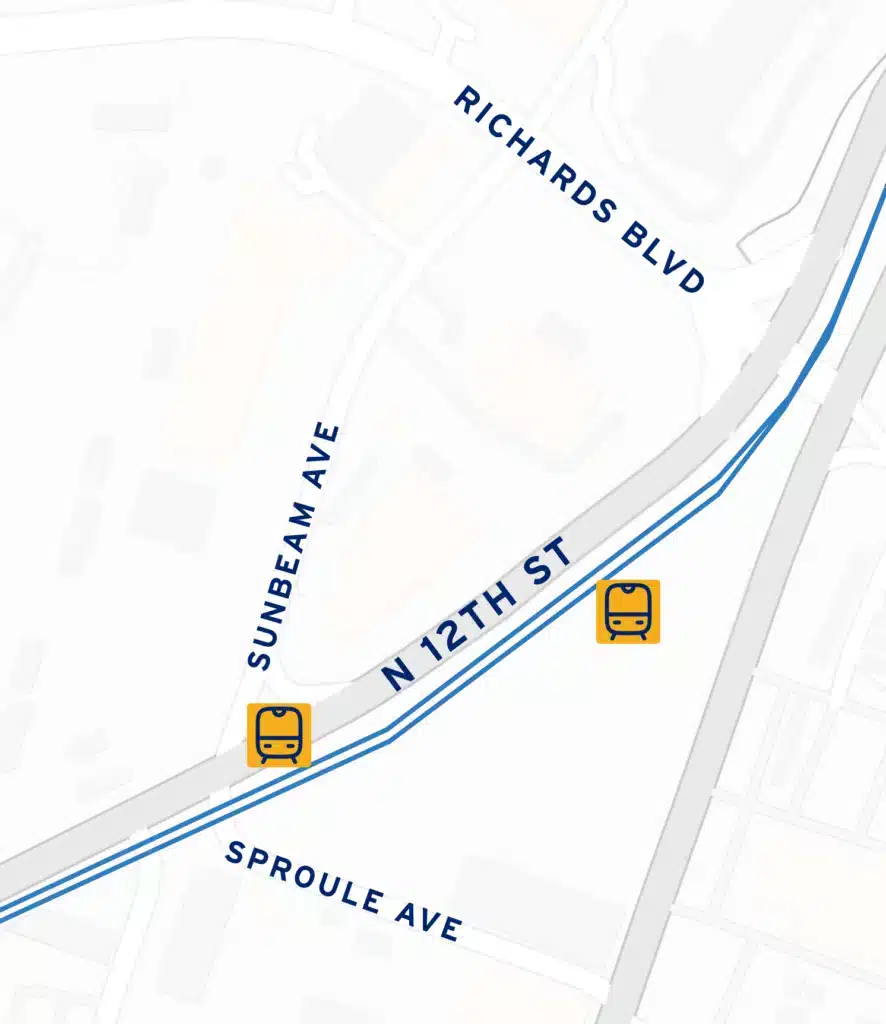
SacRT, in partnership with local, state, and federal leaders, on Feb. 19 celebrated a major milestone with the groundbreaking of the future Dos Rios Station on the Blue Line. The new light rail station, located on North 12th Street between Richards Boulevard and Sunbeam Avenue, will provide “a crucial connection for the growing River District and the Mirasol Village housing community,” according to the agency.
This transformative project was made possible through a combination of funding sources, including $17.6 million in Transformative Climate Communities (TCC) Program, $10 million in Senate Bill 125 (SB125) Funds, $2.5 million in TIRCP Cycle 7, $1 million Congressional Directed Spending Request (Rep. Matsui), and a recently awarded $9.5 million RAISE grant from the U.S. Department of Transportation. The grant completed the necessary financing for the $43 million station, ensuring its timely construction. With site preparation work already under way, major construction will begin this summer, and the station is expected to open by the end of 2026, according to SacRT.
The Dos Rios Station, the agency says, is part of SacRT’s broader efforts to enhance the light rail network and improve service for riders across the region. By providing a direct transit connection in the River District, the station will support economic growth, reduce greenhouse gas emissions, and promote equitable access to public transportation, SacRT noted.
“The groundbreaking of Dos Rios Station marks a significant step forward in our mission to enhance mobility and accessibility for all,” said SacRT General Manager/CEO Henry Li. “This station will not only connect residents to jobs, education, and essential services but will also serve as a catalyst for economic development in the River District. We are grateful for the support of our federal, state, and local partners who helped make this vision a reality.”