

ATP
ATP on Jan. 16 reported that the Federal Transit Administration (FTA) has issued a Record of Decision for Austin Light Rail’s Final Environmental Impact Statement (FEIS). (See above.) This federal action officially affirms compliance with the National Environmental Policy Act (NEPA); signifies that the federal government has formally accepted the project’s environmental analysis, community engagement, and technical planning to date, “demonstrating project readiness, strong federal partnership, and continued progress toward federal funding”; and allows ATP to continue in the federal funding process, as well as progress with more detailed project work, such as advanced design and early construction activity for utilities.
The FEIS confirms recommendations for the project previously shared during a formal review period of the Draft Environmental Impact Statement, according to ATP. These include a new downtown station near Wooldridge Square, a bridge across Lady Bird Lake incorporating a bike and pedestrian connection, and an elevated Waterfront Station to improve system reliability and rider experience. On East Riverside, refined station locations are located within an urban greenway. (Download FEIS Appendix C below for project maps.)
According to ATP, the Record of Decision milestone was reached in less than two years, “aligning with the current FTA administration’s goal to streamline and improve how large public infrastructure projects are delivered.” Other “mega projects” in comparison have often taken between five and seven years to advance through the NEPA process with FTA, it said, with some requiring more than a decade.
“Completing the FEIS and earning the FTA’s Record of Decision in under two years is a major achievement for ATP and the community we serve,” ATP CEO Greg Canally said. “We’re grateful for the FTA’s partnership and guidance throughout this process and proud of the work our team has done to deliver a thorough environmental review on an accelerated timeline. This has established a best practice that can be replicated for other mega projects.”
“This is a big, important step for Austin and our city’s future affordability and mobility,” Austin Mayor Kirk Watson said. “I deeply appreciate the FTA’s work and partnership. I also want to recognize the work ATP and our community have done to move this project ahead. This milestone keeps the voter-mandated Austin Light Rail moving forward and will strengthen our economy, create more jobs for Texas, and deliver safer, more reliable transit for our community.”
ATP reported that it is set to reach “another critical milestone” with the scheduled award next month of the Austin Light Rail construction contract, which will cover the transitway, tracks, systems, stations, bridges, traffic signals, utilities, drainage structures and streetscape.
BART
San Francisco Bay Area riders can now plan and book short Uber trips—ranging from two to seven miles—to and from BART stations within the BART App.
The transit agency on Jan. 20 reported partnering with Uber Transit to “fully integrate seamless end-to-end journey planning and payment all within the BART app.” Riders will no longer need to use multiple apps to plan their BART trip and plan and pay for an Uber ride.
Uber Transit will help riders whose starting location or destination is too far to comfortably walk to a BART station or bus stop or is underserved by frequent rail or bus service.

“Embracing technology to help people leave their cars at home and reduce congestion is a shared value within the Bay Area,” BART General Manager Bob Powers said. “Collaborating with Uber will help attract new riders and will simplify the process for those who take Uber to and from BART stations. This partnership will also expand access options as we build more housing in place of parking lots at stations.”
“Uber Transit is proud to partner with BART to bridge the crucial first/last mile challenge, helping transit agencies close gaps that too often keep people from getting where they need to go,” added Chris Margaronis, Head of Transit Partnerships at Uber. “By integrating Uber rides directly into the BART app, we’re simplifying travel, expanding access, and making public transit a more flexible, reliable option for everyone—especially those in underserved areas. Together, we’re reimagining how people move across the Bay Area.”
“No longer having to use multiple platforms to plan, book, and pay for a trip involving BART and Uber is a game changer for our riders,” BART Chief Information Officer Ravi Misra commented. “Providing this simple option on the BART app shows how innovation can improve access to BART and increase ridership.”
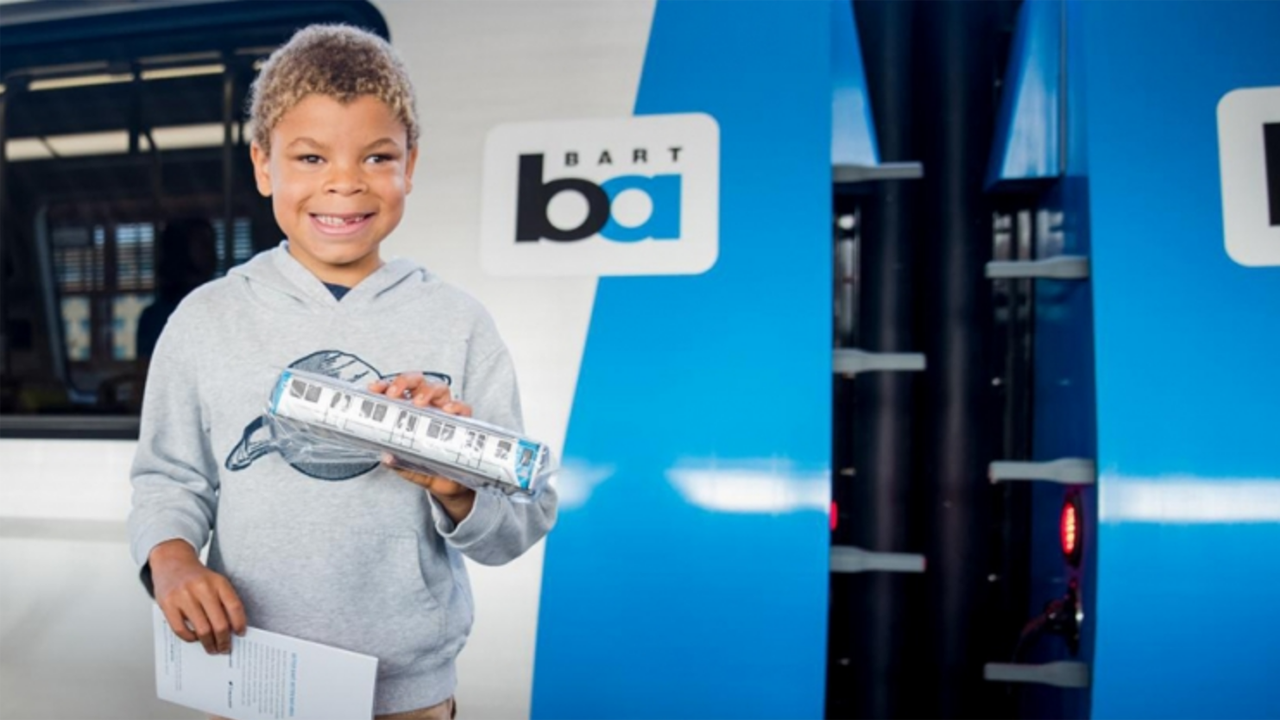
The BART and Uber partnership includes a special, limited time $5 Uber trip discount at the launch of the program for trips starting or ending at the following 10 BART stations:
- Antioch
- Bay Fair
- Concord
- Daly City
- Fruitvale
- Lake Merritt
- MacArthur
- Richmond
- Walnut Creek
- West Oakland
Riders can take advantage of the special $5 discount up to six times over seven calendar days.
According to BART, these stations were selected “based on locations where people may not live on a bus line and in a way to ensure bus ridership is not significantly impacted.”
In addition to Uber trips, BART’s multimodal Trip Planner continues to include walking and biking options, as well as other transit, bike-share, and scooter-share options for getting to and from BART stations. Riders can also customize preferences such as walking and biking speeds for planning their trips. To improve regional transit coordination, BART’s Trip Planner includes the schedules for regional rail service, such as Caltrain, Capitol Corridor, and ACE, as well as buses, ferries, and cable cars. During times when BART is experiencing major service disruptions, transit riders can plan itineraries that don’t include BART as an option to help them get around.
Separately, BART and 23 regional transit partners launched an electronic fare payment system in December.
Further Reading:
Denver RTD
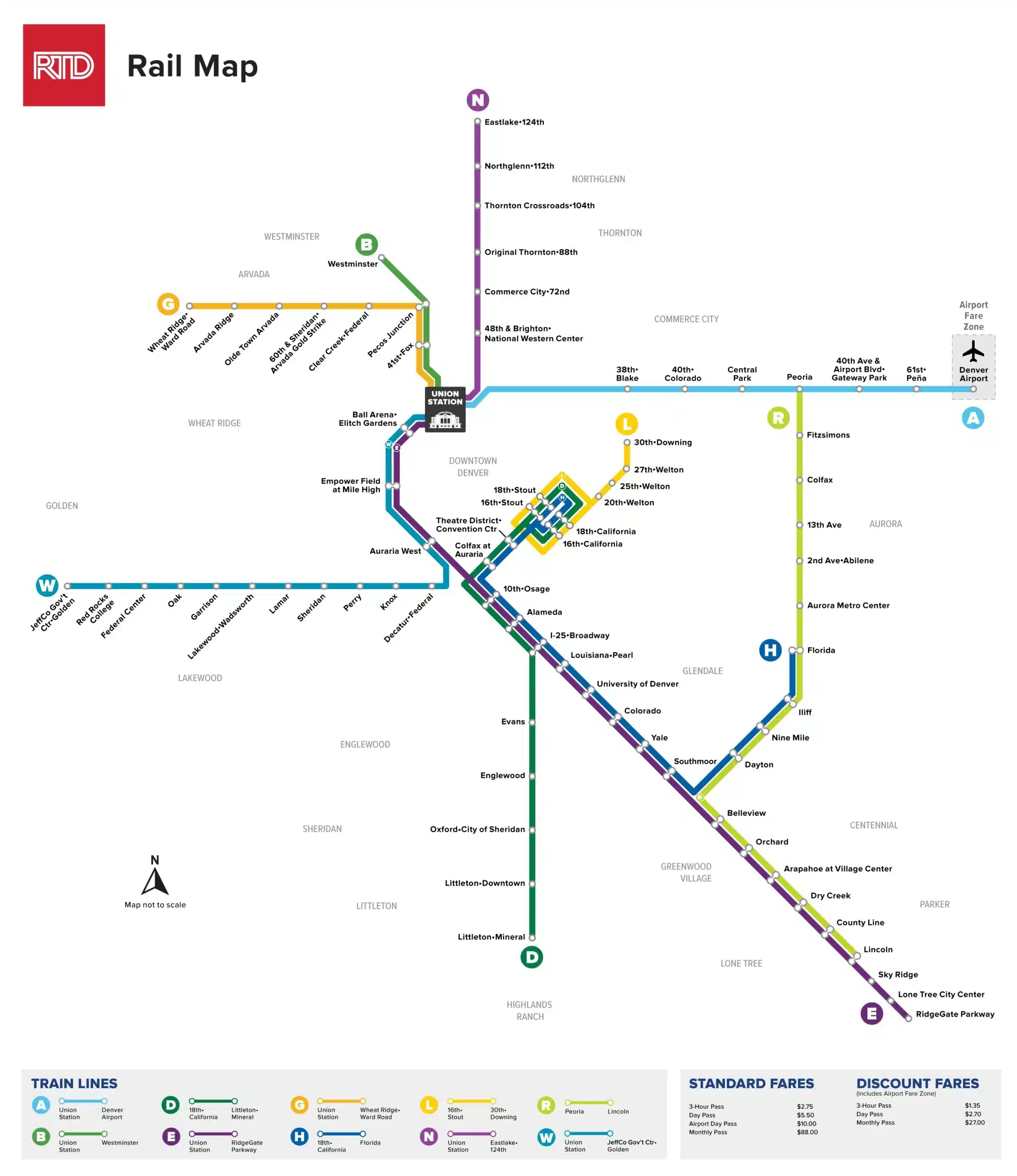
The RTD’s “strong credit ratings” have been affirmed by Moody’s, S&P Global Ratings, and Fitch Ratings, according to the transit agency, which provides light rail, commuter rail, bus, on-demand, paratransit, airport, and special event services in eight Colorado counties. These ratings, it reported Jan. 20, “reflect confidence in RTD’s proactive financial management and recognize the need for its essential role as a transit provider across the Denver metro area.”
On Jan. 15, Fitch Ratings reported that RTD maintained its AA+ rating on RTD’s FasTracks revenue bonds and AA on certificates of participation (COPs) with stable outlooks across all categories. Similarly, on Dec. 17, 2025, Moody’s affirmed that RTD maintained its ratings of Aa2 on FasTracks revenue bonds and A1 on COPs with a “stable outlook.” On Feb. 24, 2025, S&P Global Ratings affirmed its AA+ rating on RTD COPs with a “stable outlook.”
“The credit rating agencies recognize RTD’s proactive and conservative financial management and policies and RTD’s support from voter-approved sales and use taxes that enable RTD to provide transit services for 3.1 million customers across the 2,345 square-mile district,” RTD said. “The sales and use tax also enabled RTD to maintain a healthy financial position during and after the COVID-19 pandemic.”
Voters approved a ballot measure in November 2024 for RTD’s sales and use tax to remain exempt from TABOR limits, signifying community recognition of RTD services being essential, according to RTD, which provides transit service in an area that represents more than 50% of Colorado’s total population.

“RTD’s strong credit profile is bolstered by its adequate liquidity position, strong debt service coverage on FasTracks bonds, and direct payment of pledged sales and use tax revenue,” RTD said. “The agency defeased certain debt before fiscal 2026, reducing debt service payments by approximately $57 million to provide additional expenditure flexibility. While RTD is operating at a deficit, a challenge facing transit agencies nationwide, RTD maintains sufficient reserves and is addressing the structural imbalance for long-term financial sustainability. Credit agencies expect RTD’s disciplined approach to financial management will maintain adequate reserves by strengthening revenue and adjusting expenditures to provide sufficient debt service coverage.”
Heading into 2026, RTD said it will continue to focus on “maintaining adequate reserves and judiciously managing operating costs while conducting planned and necessary maintenance to protect the long-term integrity of the system.”
For more information about RTD’s financials and investor information, including budget documents, bond issuances and disclosure statements, visit the RTD’s website at Financial Performance | RTD-Denver.
Further Reading:
Alto
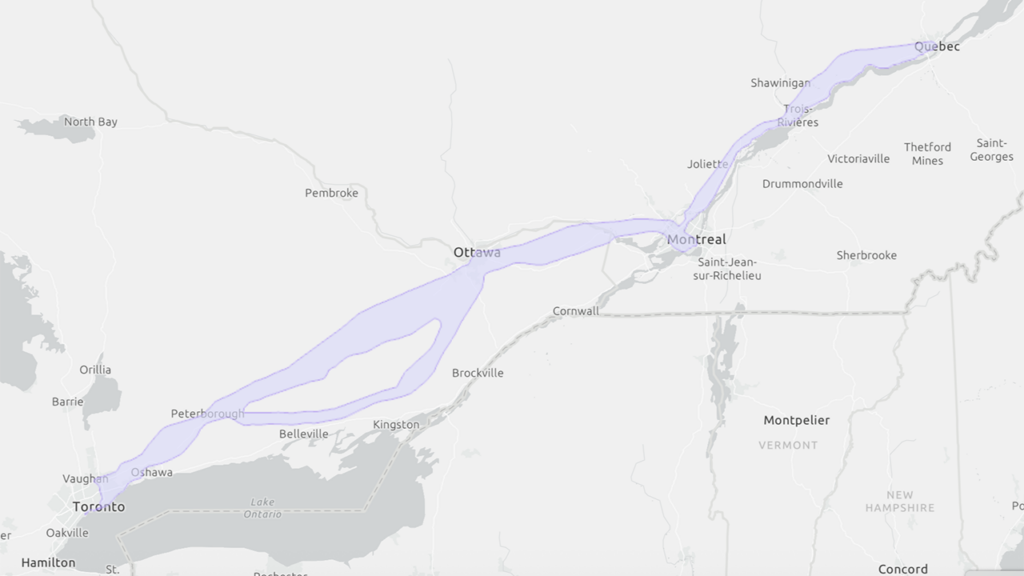
The planned 621-mile (1,000-kilometer)Toronto-Québec City HSR (high-speed rail) project, dubbed Alto, “will include tunnels in Montreal and possibly Toronto,” according to a Jan 20 report by The Canadian Press.
In a website update, Alto reported that “it plans to burrow from just north of the river that rims Montreal’s north side to downtown in a north-south corridor that would exceed 10 kilometres,” Canada’s national news agency said.
“‘To reach Montreal, the current hypothesis involves building a tunnel under the Rivière des Prairies and Mount Royal to access downtown directly, reducing integration challenges in a dense urban setting,’ states Alto’s preamble to an online survey about the proposed railroad,” according to The Canadian Press. Additionally, Alto is “considering tunnels or elevated tracks to reach downtown Toronto ‘from the north or the east,’ terminating at either Union Station or a nearby location.”
Benoit Bourdeau, an Alto spokesman, “stressed [to The Canadian Press] that while a tunnel demands a bigger investment up front, it can prove cheaper over its life cycle.”
“A surface alignment in a dense urban area like Montréal would require costly expropriations, relocations, utility diversions and long‑term operational constraints — all of which accumulate into substantial recurring costs over decades,” Bourdeau said in an email to the news agency. “A tunnel, by contrast, provides a protected, unconstrained corridor with a lifespan exceeding 100 years, offering predictable maintenance costs, high performance and the ability to scale service without triggering new surface impacts or political resistance.”
“The tunnel would also allow for a more direct route that would shave 30 minutes off of a trip to or from Montreal, he said,” according to The Canadian Press.
While the Canadian “government has not yet made a final decision approving funding for the entire rail line,” according to The Canadian Press, construction of the approximately 124-mile (200-kilometer) first segment between Ottawa and Montreal is slated to begin in 2029.
Alto also reported on its website that “it is weighing two possible corridors between Ottawa and Peterborough, Ont.,” according to The Canadian Press. “One is a more direct line between the two cities and the other curves south, closer to Lake Ontario.”
The planned HSR network would offer stops in Québec, Trois-Rivières, Laval, Montréal, Ottawa, Peterborough and Toronto (see map, top). Alto, a Crown Corporation, said in December that it is “weighing several options for the location of a future HSR station in Toronto [including Union Station],” according to a TorontoToday report.
Alto and Cadence in March 2025 signed a development agreement that includes detailed design work, land acquisition, environmental assessments, and consultations with nearby residents, including Indigenous communities.
Instead of VIA Rail Canada’s HFR (High-Frequency Rail) service revealed first by Railway Age Canadian Contributing Editor David Thomas in 2016, outgoing Canadian Prime Minister Justin Trudeau in early 2025 said Alto would be dedicated electrified HSR, with trains running up to 186 mph (300 kph); it would be implemented as a DBFOM (design-build-finance-operate-maintain) project.
The project is slated to create more than 50,000 jobs during construction, “generate productivity gains that could reach up to C$35 billion annually,” and contribute to cutting greenhouse gas emissions, according to Alto and Cadence, the consortium of Quebec pension fund’s CDPQ Infra, AtkinsRéalis (formerly SNC Lavalin), Keolis, SYSTRA Canada, Air Canada, and SNCF Voyageurs.
On Nov. 18, Alto and Cadence reported that outreach to the steel industry was expected “in the coming weeks.” The goal: “to shape a procurement approach that prioritizes Canadian suppliers.”
Guided by the government’s intent to Buy Canadian, the partners said that key components of the future rail network—including “several hundred thousand tons of steel for high-speed [track], structures, facilities and electric infrastructure”—will be sourced from Canadian suppliers “to the greatest extent possible.”
Alto and Cadence said they would meet with leaders across the Canadian steel industry “to better understand current production capabilities, scaling potential, and opportunities for modernization.”
“Building Canada’s first high-speed rail network will require more than 4,000 kilometers [2,485 miles] of steel rails in addition to massive quantities of structural beams, catenaries, and other core materials,” the partners reported in November. “Few infrastructure projects in modern Canadian history have generated an industrial demand of this magnitude. This scale of procurement presents a rare opportunity for Canada’s steel and manufacturing sectors to expand capacity, accelerate investment, and innovate to position themselves for the opportunities ahead. By sourcing locally where possible, Alto aims to strengthen domestic supply chains, support Canadian jobs, and ensure that the economic ripple effects of this nation-building project are felt across the country.”
Alto and Cadence said the government of Canada has identified the project as “a transformative strategy for the country” that will receive support from the Major Projects Office, enabling the start of construction in four years; pre-procurement activities for project components will commence in 2026.




