
Transit Briefs: APTA, CTA, NYMTA, TransLink, SacRT, Metrolinx

APTA
On Nov. 5, voters voiced their overwhelming support for public transit by approving transit ballot measures across the country, according to APTA.
As of Nov. 6, there have been a total of 46 wins out of 53 measures for public transit in 2024, an 86.7%-win rate, noted APTA, which has results thus far for 25 out of 26 measures in the general election supporting public transit, adding to the 27 public transit measures already passed by voters this year. Results for ballot measures can be found on APTA’s 2024 election scorecard, which has the most up-to-date information.
According to APTA, 2024 transit ballot initiative wins include the Denver Regional Transportation District (RTD), which, with 7A approved, is allowed keep between $50 million to $60 million annually instead of refunding that to taxpayers. In Fairfax County, Va., $180 million in bonds would be used to finance the County’s share, under the Washington Metropolitan Area Transit Authority (WMATA) Regional Compact, of the cost of constructing, reconstructing, improving and acquiring transportation improvements and facilities, including capital costs of land, transit facilities, rolling stock and equipment in the Washington metropolitan area.
More information is available here.
CTA
The CTA on Nov. 4 announced details of the fall rail service schedule, which will result in added services along all eight rail lines, across all days of the week—the equivalent of a 20% increase in scheduled weekly roundtrips.
The news, the agency says, delivers on CTA President Dorval R. Carter, Jr.’s commitment to provide pre-pandemic levels of rail service by end of year. With this new schedule, CTA is adding more than 1,200 weekly rail trips when compared to the Spring 2024 schedule.
This rail schedule returns to pre-covid service levels with some strategic adjustments to better meet current ridership patterns, CTA noted. Current ridership retention across all rail lines compared to 2019 is highest on Saturdays and Sundays. This schedule reduces some rush hour weekday service to allow CTA to deliver more weekend service, especially on Sundays. CTA says it will continue to “analyze ridership trends and mobility patterns to determine additional service adjustments that can better meet evolving ridership.”
In 2024, CTA committed to training up to 200 new rail operators, double the amount from the previous year. CTA has trained and qualified more than 150 rail operators who have since been added into service, with the remaining cohorts of employees currently in training and expected to begin qualifying for rail operator status before the end of the year. CTA’s rail operator training courses allow for at least 20 participants per class, with up to three classes in training at a given time.
As part of the agency’s proposed 2025 operating budget, additional bus and rail services are planned for the year ahead. As such, the agency says it will continue with its “rigorous training efforts” to qualify more bus and rail personnel to meet these needs.
Improving service frequency is helping to drive CTA’s ongoing ridership growth, according to the agency, which is currently second among peer transit agencies across the nation in year-over-year ridership growth.
“As a result of our efforts, I am pleased to share that as promised, CTA has returned to pre-pandemic scheduled levels across all rail lines before the end of the year,” Carter said. “To our loyal riders, we thank you for your patience. Hundreds of dedicated personnel throughout our agency worked tirelessly over the last couple years to recruit, hire, and train the unprecedented number of employees needed to strengthen our workforce and get us where we are today. And I look forward to building on our success next year with more rail service improvements planned for 2025.”
NYMTA
The New York MTA announced Nov. 4 that it has hit one billion trips on the New York City subway in 2024.
The billionth customer was identified as Sir Michael Carrasquillo from Prospect Heights, Brooklyn, who tapped into the subway system at Atlantic Avenue–Barclays Center Station at 1:45 p.m. Carrasquillo received four weeks of unlimited rides on an OMNY card, and an OMNY hat and T-shirt. This milestone, NYMTA says, follows the busiest Sunday since the pandemic with the subway carrying 2.6 million riders during the New York City Marathon and comes nearly two months earlier than in 2022. October was the busiest October for New York City Transit (NYCT) since the pandemic, with nearly 114 million subway rides and more than 40 million bus rides, 10 million more subway rides and 3 million more bus rides than the previous year.
Metro-North Railroad and Long Island Rail Road (LIRR) also experienced record-breaking Octobers, the agency noted. Metro-North had an average of 230,400 weekday trips and LIRR had an average of 261,900 weekday trips, representing a post-pandemic record. Both railroads exceeded pre-pandemic weekend ridership. LIRR averaged nearly 135,000 trips per day on weekends, equaling 132% of Oct. 2019 weekend ridership. Metro-North averaged nearly 132,000 trips per weekend day, equaling 102% of Oct. 2019 weekend ridership.
TransLink
TransLink announced Nov. 1 that it is seeking innovative ideas and proposals from organizations who would like to make use of some of the roughly 150 retiring Mark I SkyTrain cars, the first vehicles in the SkyTrain fleet.
TransLink is looking for proposals for the relocation and repurposing of the historic vehicles, which are reaching the end of their lifespan and being replaced by Mark V vehicles through 2026.
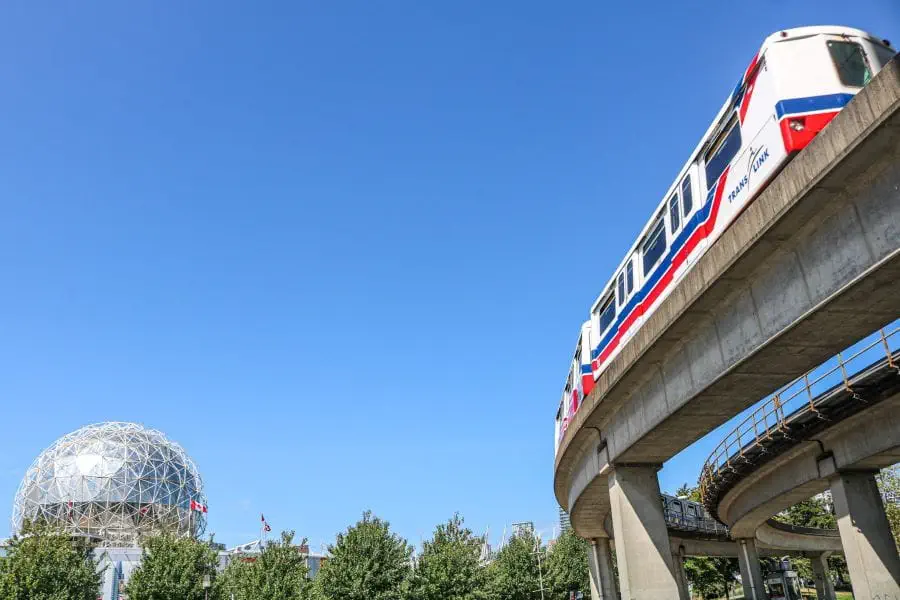
Since they were introduced during Expo 86, the Mark I SkyTrain cars have served millions of transit riders for nearly 40 years and have become an iconic symbol of Metro Vancouver. Relocation of the original fleet presents a unique opportunity to celebrate the region’s transit history, the agency noted.
Interested community organizations, municipalities, developers, and individuals are encouraged to submit their proposals for the retiring Mark I trains through a new Request for Information (RFI). Successful bidders would be responsible for funding the transport of the retired SkyTrain cars from the BC Rapid Transit Company (BCRTC) storage facility and covering the costs of repurposing the cars.
Proposals for the first set of cars can be submitted here and will be accepted until December 6, 2024. Applications will reopen at a later date, as more vehicles are retired from service.
SacRT
SacRT on Nov. 7 announced a new initiative aimed at giving back to those who have served in the military. Starting in early 2025, SacRT will introduce its first-ever discount fare program for veterans as part of a new “Tap2Ride” Digital Identity service in partnership with the California Department of Technology (CDT) and the California Integrated Travel Project (Cal-ITP).
SacRT’s six-month pilot program will provide discount fares for up to 60,000 eligible military veterans residing in the Sacramento region. The discount aims to recognize and support those who have served our country.
While the program will officially launch early next year when all the new tap devices are installed onboard buses and at light rail stations, military veterans can begin the pre-registration process now at the state website benefits.calitp.org, which is connected to the federal Department of Veterans Affairs database for easy eligibility verification.
Starting next year when SacRT has the “Tap2Ride” system in place, seniors aged 65 and older will also benefit from the inclusion of a digital identification framework when they register their credit or debit card. Although seniors aged 62 and older are eligible to receive discount fare under SacRT’s approved fare structure, the age qualification for senior citizenship in the State of California is 65. That system taps into the federal Social Security Administration database to confirm eligibility and provides greater security while protecting the personal information of those using the system.
Once launched, the discount program will serve as a trial period, during which SacRT will conduct a Title VI analysis to ensure the program benefits low-income and minority riders. Feedback will be gathered from participating military veterans to assess the program’s impact and viability for long-term implementation.
The new “Tap2Ride” program, SacRT says, aims to make fare payment easier, faster, and more accessible for all riders, allowing them to pay for bus and light rail fares with just a tap of their credit or debit cards that are pre-registered through the Digital ID Framework. SacRT riders who prefer to continue using their existing fare payment methods such as Connect Card or ZipPass will have that option as well.
SacRT’s partnership with CDT and Cal-ITP “represents a significant step forward in making transit more convenient for riders,” according to the agency.
As part of this initiative, SacRT is also planning to integrate all fare payment methods into a single unified system over the next year, providing a streamlined experience for all passengers. This, the agency says, will allow passengers to benefit from features like “fare capping,” which automatically calculates the lowest fare based on the number of rides taken in a day.
Metrolinx
On Nov. 6, Metrolinx released the RFQ for the civil and utilities contract for the Hamilton LRT, marking the first step in the procurement process to select a team to deliver the first package of work for the project.
The project is being procured in multiple packages of work—with this first RFQ for civil works including utilities, roads and structures.
Metrolinx says ir will evaluate various submissions to shortlist teams with the relevant experience and financial capacity to deliver a project of this type, size and complexity. Following the RFQ, those shortlisted teams would submit proposals in response to a Request for Proposals (RFP). The proposals will outline how they would deliver the first package of work. Once all proposals have been thoroughly evaluated, an alliance partner will be selected to proceed into the Alliance Development Phase (ADA) where detailed designs, schedule and costs will be prepared. The alliance model is a form of contract where project delivery risks are shared by the owner and non-owner and allow all parties to reach the best solutions for the project.

The future Parkdale Avenue stop is an at-grade open air stop on the future Hamilton LRT. The stop will be steps away from Parkdale Park, Pat Quinn Arena and facilitate connection to HSR buses.

The future King Street East underpass will allow the light rail vehicles (LRVs) to travel under the existing CPKC rail line. Separating the two lines will ensure reliable, continuous movement along the LRT route and a smooth convenient journey for customers.
With enabling works and procurement now under way, Metrolinx says it is one step closer to bringing 14 kilometers (8.7 miles) of fast, frequent light rail transit through Hamilton’s downtown core, connecting passengers from Eastgate to McMaster and everywhere in between.




