Transit Briefs: Amtrak, SEPTA, CDOT/FRPR District, Santa Clara VTA
Amtrak
Amtrak on May 14 provided an update on critical improvements and repairs under way and planned at the historic Lancaster Station (LNC). The enhancements include many safety and efficiency upgrades advancing in coordination with the Pennsylvania Department of Transportation (PennDOT).
Some of the major station improvements include:
- Replacing existing platforms and foundations.
- Rehabilitating platform canopies.
- Insulating the pedestrian overpass.
- Resurfacing floors.
- Replacing windows with historically accurate fenestrations.
- Rehabilitating the historic baggage lift enclosure.
- Repairing station windows and replacing door closers.
- Replacing HVAC mechanical equipment.
The south platform reconstruction was completed and returned to service in November 2024. The reconstruction of the north platform is ongoing, including the demolition of the existing structure and installation of foundations for the new platform. The new north platform is anticipated to return to service in January 2026, while all state of good repair work to the existing pedestrian overpass and station building will be complete by March 2026.
“Amtrak is currently progressing several vital construction projects at Lancaster Station, including work to ensure the facility is in a state of good repair,” said Amtrak Vice President, Accessibility, Stations and Facilities Dr. David Handera. “We are working closely with our partners at PennDOT to modernize this iconic Lancaster landmark and enhance the overall customer travel experience.”
Amtrak is coordinating this work in tandem with PennDOT’s ongoing pedestrian bridge extension project designed to provide connector access to a new parking lot on the north side of the station. This project is anticipated to be completed in fall 2026.
Additionally, as part of Amtrak’s “ongoing focus to provide a safe and secure experience for guests and employees,” the Amtrak Police Department facilities at Lancaster Station are also being renovated. The work includes an upgraded processing area, evidence storage, and canine room, as well as a refurbished historic storefront utilizing salvaged materials. This renovation will be completed this summer.
The Lancaster Station is the second busiest Amtrak station in Pennsylvania and the 25th busiest in the U.S., serving 464,190 riders in FY24, a 22% increase from the prior year. Lancaster Station opened in 1929 and today it is served by Keystone Service and Pennsylvanian trains, which are financed primarily through funds made available by PennDOT.
SEPTA
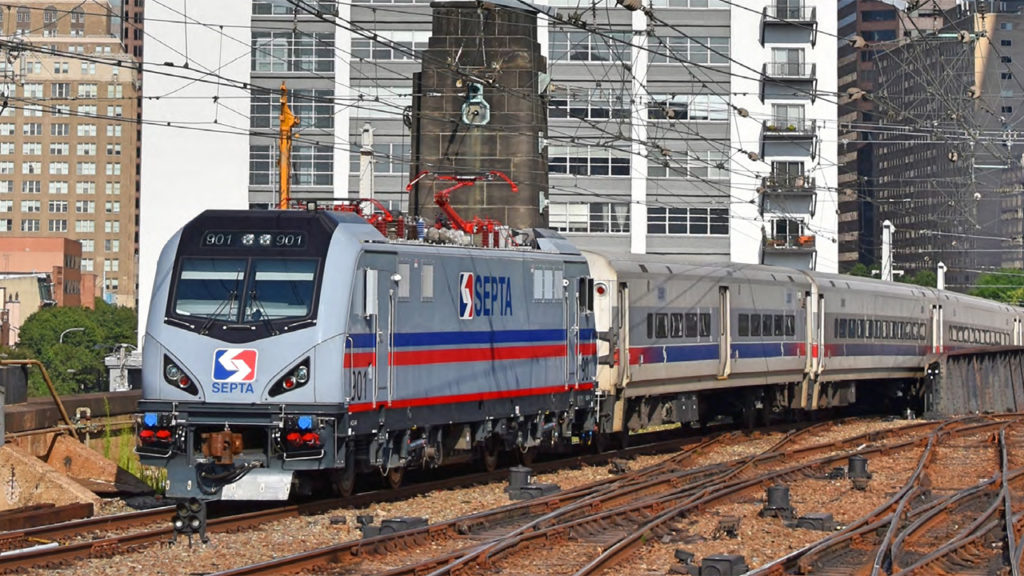
Average daily SEPTA ridership in April 2025 was 750,678 unlinked passenger trips across all modes, the agency recently reported.
Systemwide ridership increased 6% from April 2024. On average there were 44,320 more trips per day in April 2025 compared to April 2024.
All modes experienced an increase in ridership relative to this time last year.
SEPTA Metro ridership expanded by 10% relative to April 2024. Metro includes all heavy rail (B, L, and M) and all trolley routes. The B and the L continue to experience strong year over year growth and are a driving factor in systemwide growth. Ridership increased 10% relative to April 2024—an increase of 19,491 average weekday trips.
Trolley ridership increased by 11% or 5,735 unlinked trips per weekday relative to April 2024. Ridership increased 11% on Saturdays and increased 17% on Sundays.
Regional Rail ridership has grown by 6% or approximately 5,053 unlinked passenger trips relative to this time last year.
Additionally, SEPTA recently announced that its E&A Program has recognized $91.4 million in annual recurring new revenue and cost savings.
The agency says it is doubling down on this progress by launching its next phase of E&A that is expected to generate $76 million. This new plan will be implemented over the next three years and will focus on strategic areas like safety, fare evasion, and joint development.
“As we continue to make the case for funding transit, we understand that self-help must be part of the solution to put SEPTA in the best financial position possible,” said SEPTA Board Chair Kenneth E. Lawrence Jr.
Since 2021, employees from across the organization have created and implemented 140 cost-saving initiatives to make SEPTA even more efficient, according to the agency. This program, combined with a series of austerity measures—including a hiring and pay freeze for management; reductions in consultant contracts; and a ban on travel and all discretionary expenses—reduced SEPTA’s structural deficit from $240 million to $213 million, the agency noted.
“While we cannot cut our way out of this funding crisis, engaging our employees to help identify opportunities for improved performance demonstrates that we are good stewards of public funds,” said SEPTA Interim General Manager Scott A. Sauer.
Examples of SEPTA’s past and future E&A initiatives include:
- “Deter & Decrease Fare Evasion ($4 million in potential new revenue): SEPTA is combating fare evasion through enhanced policing and new technology and infrastructure. As part of this effort, SEPTA Transit Police are conducting new Fare Evasion Enforcement Blitzes at select stations across the system, leading to an increase in fare evasion citations and fare revenue.
- “Maximize Railroad Crewing ($11.3 million in savings): SEPTA’s Regional Rail Engineer and Conductor Training Program is addressing critical staffing shortages by replenishing engineer numbers, reducing overtime costs, and enhancing work-life balance.
- “Maximize Value of Real Estate Assets ($9 million in potential new revenue): SEPTA is building on the success of its Transit Oriented Communities Program by pursuing joint development opportunities to secure better returns on its real estate assets. Building housing and commercial space near SEPTA’s stations will encourage ridership and bring economic activity to the communities that SEPTA serves.”
The full Transformation Office Annual Progress Report is available for download below.
CDOT/FRPR District
CDOT and the FRPR District have announced a recommended alternative for future build out of FRPR. FRPR’s Alternatives Analysis is a component of the project’s Service Development Plan, a Federal Railroad Administration (FRA) requirement to advance service planning.
Identifying a recommended alternative to advance in the planning process marks a key milestone for FRPR, as it establishes the service frequency, travel time and maximum train speed needed to guide the planning and design of the ultimate service projected for 2045, CDOT noted in a press release.
From Monday, May 12 to Sunday, June 15, 2025, the public can visit www.frpropenhouse.com to learn about the progress being made to advance FRPR, including the recommended alternative for the full build-out in 2045 and the near-term efforts to launch starter service by 2029. In this self-guided opportunity, the public can also provide comments that help shape future planning decisions.
“This is an opportunity to better understand the recommended alternative and ask questions about the Service Development Plan,” said Chrissy Breit, Interim General Manager, Front Range Passenger Rail District. “Community input is vital to shaping a transportation solution that reflects the region’s needs and priorities. Your voice will help pave the way for a faster, more connected future.”
FRPR focuses on introducing “safe, efficient and reliable travel” through intercity passenger rail service along a 180-mile rail corridor between Fort Collins and Pueblo. FRPR is a collaborative effort between CDOT, the District, the FRA, the Denver Regional Transportation District (RTD) and state and local agencies, with close coordination with BNSF and Union Pacific (UP), the freight railroads that own the rail infrastructure. To minimize costs and expedite the service start date, FRPR plans to operate predominantly on existing freight railroad tracks.
The project, CDOT says, is part of Colorado’s broader multimodal transportation vision. Passenger trains connecting Coloradans along the fast-growing Front Range “will help reduce traffic congestion, support air quality goals, increase job growth, spur economic development and provide a safe, convenient and reliable transportation option for Coloradans,” according to the agency.
Santa Clara VTA
Santa Clara VTA on May 12 launched a six-month Veteran’s Fare Pilot Program to make public transit more affordable.
This initiative introduces the Veteran Single Ride ticket, priced at $1.00. This discounted fare, offering more than 50% savings from the standard adult single ride, will be exclusively available through the Token Transit Mobile App. Each purchased ticket includes unlimited free transfers within the VTA system for two hours once activated. The activated digital ticket will clearly display its expiration time within the app.
To be eligible for this program, U.S. military veterans will need to show valid proof of their veteran status if requested by a VTA Operator or Fare Inspector. Accepted identification includes:
- Veteran Health Identification Card (VHIC)
- Veteran ID Card (VIC)
- Department of Defense (DoD) Identification Card
- State-issued driver’s license or ID with a Veteran’s designation
Discounted fares are valid only during the six-month pilot period, and any unused tickets will expire at the program’s conclusion.
VTA says it will be carefully evaluating the success of this pilot by monitoring ticket purchases and usage, estimating the number of veteran riders, and assessing the financial impact. Future decisions regarding permanent fare changes will involve a comprehensive process, including public engagement, a Title VI Fare Equity analysis, and a Fare Revenue Impact Budget Assessment.
This pilot program, the agency says, “underscores VTA’s dedication to supporting our veterans and exploring innovative ways to enhance the accessibility of public transportation for everyone in Santa Clara County.”