
Amtrak
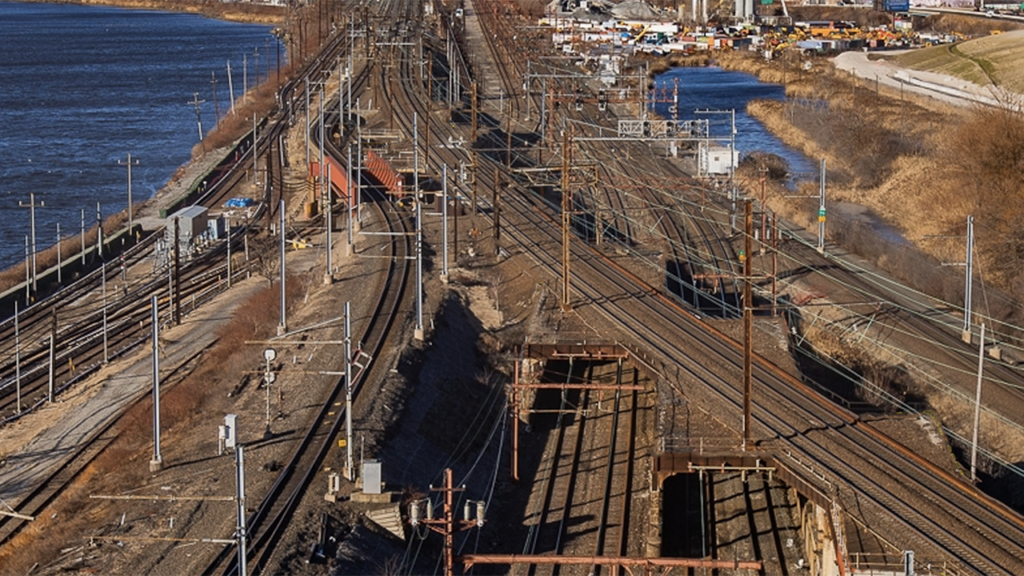
To fix problems that “constantly delay commuters” along the Northeast Corridor (NEC) in New Jersey, Amtrak has applied for four Consolidated Rail Infrastructure and Safety Improvements program grants, totaling $299.7 million, through the Federal Railroad Administration, according to an Aug. 1 report by NJ.com.
The grants include $13.4 million to replace catenary between North Brunswick and Newark, “with an award announcement expected in the fall, said Jason Abrams, an Amtrak spokesman”; $18.6 million to upgrade signal systems between New Brunswick and Elizabeth; $80.277 million to replace electrical substation 41 in Kearny; and $187.5 million to replace the Sawtooth Bridges in Kearny, the media outlet said.
“‘This funding would enable Amtrak to modernize essential infrastructure along a 23-mile stretch of Amtrak track in northern New Jersey over the coming years,’ Abrams said,” according to NJ.com. “Grant funding is split with 80% of the total project cost from the federal government and a 20% local match, meaning NJ Transit would pay 10% and Amtrak 10%.”
The state congressional delegation, NJ.com said, has urged Transportation Secretary Pete Buttigieg “to support the grants and allocate additional funding for Amtrak State of Good Repair work.”
According to NJ.com, “NEC infrastructure has been scrutinized during the past three months, when wire and signal problems, and rail equipment breakdowns, led to delays and crippling service suspensions as the region withered under intense heat waves.”
The agencies said that this will be a “holistic effort” focused on both Amtrak infrastructure—including the electric traction system, catenary, signals, and switches—and NJ Transit equipment, including the pantograph system.
The execution of the joint action plan follows several major service disruptions in recent months, together with a variety of smaller incidents that have reduced reliability on this key travel corridor. The two companies are working together to investigate the causes of each of these events and to improve service for riders.
Immediate actions as part of the joint plan include:
- Additional extensive and frequent catenary and track inspections of the approximately 170 track miles between Trenton and New York City to identify any catenary issues that could cause pantograph damage.
- NJ Transit with Amtrak assistance is undertaking visual inspections of all pantographs at key stations and NJ Transit has installed high-resolution cameras to inspect pantographs.
- Externally supported reviews with industry experts to assist root cause analysis and development of solutions.
- Expansion of the helicopter catenary inspection and repair program, which involves taking high-resolution photos of the system, each catenary structure, and their components. The photos are inspected offline to identify priority items for repair.
- A joint review of Amtrak and NJ Transit delays and items impacting reliability, which will result in a prioritized set of investments to address sources of chronic delays.
- Additional longer-term actions to address state of good repair of Amtrak infrastructure, including added resources to expedite testing of transformers in substations; pursuing additional grants to replace catenary, substations, and transmission and signal lines, as well as support capital renewal; and evaluating methods to expand overnight work windows with service adjustments to accelerate renewal and repairs.
Amtrak and NJ Transit said that they will issue regular reports including details of their efforts and progress to date, as well as information regarding root causes as they are identified.
Further research and development will continue as Amtrak and NJ Transit evaluate other methods to identify conditions and make repairs before service disruptions occur. Once the root causes are identified, the agencies said they will “identify or seek additional resources, if necessary, to address issues that are uncovered, while continuing to advance major projects,” such as Portal North Bridge and the Hudson Tunnel Project.
CATS
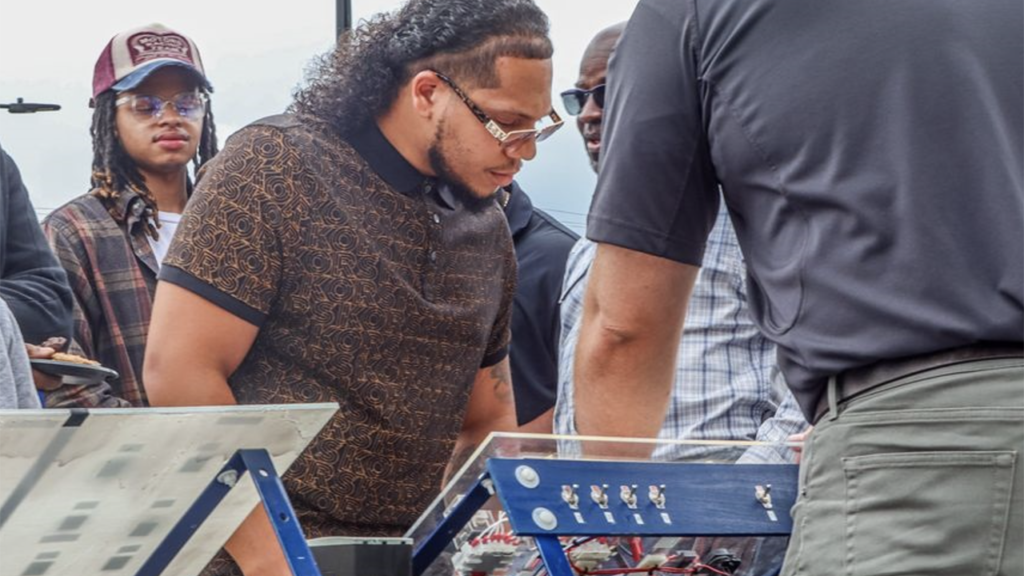
CATS has introduced a Rail Vehicle Maintenance Apprenticeship program, as part of the Electronic Sustainable Environmentally Reliable Vehicle Education Academy (eSERVE Academy) that it launched with Central Piedmont Community College (CPCC) to address workforce shortages.
The Apprenticeship prepares chosen candidates to become railcar maintenance technicians, according to CATS, a transit agency that offers the LYNX Blue Line; CityLYNX Gold Line; 69 local, express and regional bus routes; vanpools; and paratransit services. Apprentices will undergo classroom and hands-on training for up to 24 months, working directly with a designated, experienced mentor. Through the program, participants will develop skills for “high-demand, technical roles,” CATS reported Aug. 5.
Dr. Tina Hall created the CATS/CPCC eSERVE Academy. “I want this program to shine a light on what matters most in our organization,” Hall said. “We want to add this culture of inclusion and belonging, and so I thought, ‘Why not do it by preparing a place where apprentices can receive the training necessary to strive and succeed?’”
CATS recently welcomed the inaugural class of four apprentices—Regina King, Ja’Kiya Brown, Luke Sutton and Aiasha McGlothen. They will not only train in-house with CATS, but also attend prerequisite classes at CPCC this fall, according to the transit agency.
Denver RTD
A recently completed performance audit conducted by the Colorado Office of the State Auditor (OSA) found that Denver RTD has met all nine of the state’s financial health ratios as of calendar year 2022, the transit agency reported Aug. 5. “The comprehensive audit, which was conducted over multiple months between June 2023 and July 2024, also reviewed RTD’s cost efficiency metrics, capital asset projects, budget filing requirements, strategic plan updates, and the onboarding of new Board members,” according to Denver RTD. “Additionally, the audit examined the agency’s progress on implementing recommendations from the 2021 RTD Accountability Committee.”
A final 100-page report (view, top) was presented to the Legislative Audit Committee, and Denver RTD’s General Manager and CEO Debra A. Johnson, Chief Financial Officer Doug MacLeod, and Board Chair Erik J. Davidson answered follow-up questions and outlined next steps for the agency.
“RTD has been firmly committed to being good stewards of taxpayers’ money,” Chair Davidson said. “The RTD Board of Directors and staff take this fiduciary responsibility very seriously, and we are pleased to see that RTD met all financial health ratios with no warning indicators. The findings of this audit emphasize that RTD’s efforts are working, and the agency is operating more cost efficiently than many of its peers across the country.”
According to Denver RTD, between 2019 and 2023, the transit agency improved its available fund balances to approximately $1.1 billion, reduced debt and pension obligations, improved liquid assets, and had its credit ratings improved to the highest level of AAA from S&P Global. The agency also said it maintained its per-boarding expenses—a metric used to measure cost efficiency—during “historic inflation and market uncertainty” following the COVID-19 pandemic.
In the final report presented to legislators, Denver RTD indicated that it “agrees or partially agrees” with 21 of the audit’s 24 recommendations. In addition to the transit agency’s current approach to reporting fare recovery ratios in its monthly financial statements posted online, it said it will begin reporting cost efficiency ratios; it will provide cost efficiency ratios against past performance and include a comparison to peer agencies. In May, Denver RTD said it launched an online performance dashboard to begin sharing reports and metrics in a “prominent and easy-to-understand manner.”
Other recommendations already under way, Denver RTD said, include annually presenting the agency’s Transit Asset Management (TAM) Plan to its Board of Directors and updating fiscal policy to align the TAM Plan to financial forecasts. Efforts are also under way to “bolster the materials and information included in the agency’s annual budget,” so they will be part of the 2025 proposed budget that is publicly made available in October, according to Denver RTD.
The transit agency said the audit also examined its participation in Colorado’s Ozone Season Transit Grant Program in 2022 and 2023. Dubbed “Zero Fare for Better Air” by the agency, “no problems” were found with Denver RTD’s use of the state-appropriated grant funds aligning with statute or applicable grant agreements. According to Denver RTD, the report did identify ways to improve the appropriation of funds in the future and reporting of grant program impacts. The transit agency said it disagreed with the report’s two recommendations, responding that all state requirements were met, and that the agency closely collaborated with the Colorado Energy Office to establish parameters.
“RTD recognizes that there is great interest in its operations and a desire to support the agency’s continued success,” Debra Johnson said. “Audits ensure the agency is following all laws, policies, and procedures, and RTD welcomed the increased scrutiny and examination. The agency is committed to transparency and will implement recommendations focused on ensuring stakeholders and the public have access to information. RTD looks forward to adopting recommendations that support its customers and the agency’s continued financial health.”
State statute requires a performance audit at least once every five years to determine whether the transit agency “is effectively and efficiently fulfilling its statutory obligations,” according to Denver RTD, whose last audit was conducted in 2021. The 2024 performance audit cost the transit agency approximately $435,000.
Separately, Denver RTD recently made permanent its Zero Fare for Youth program.
NYMTA
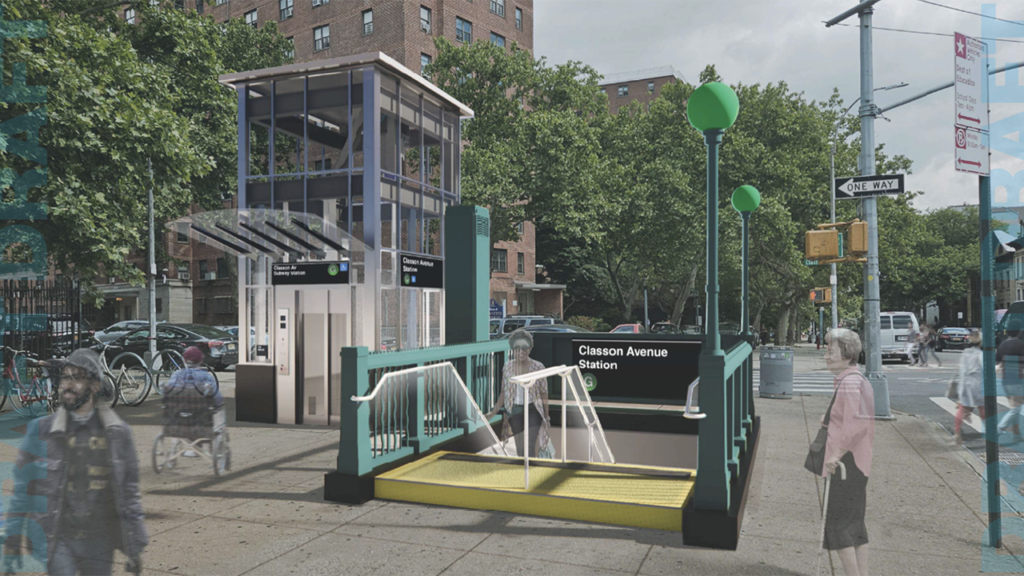
MTA on Aug. 5 held a groundbreaking to make fully accessible the Classon Avenue subway station on the G line in Clinton Hill, Brooklyn. Among the station upgrades:
- Three new elevators will be added; one connecting the street level to the mezzanine and two connecting the mezzanine to the platforms serving both directions.
- Four new raised boarding areas—compliant with the Americans with Disabilities Act (ADA) with new platform edge tactile strips—will be included.
- Staircases will be refurbished to ADA standards, receiving new stair treads, new handrails, and related repairs. The staircase connecting the mezzanine to street level will be relocated to accommodate the new street-to-mezzanine elevator and widened to improve passenger circulation. Two currently closed mezzanine-to-platform staircases will be reopened, increasing the total number of mezzanine-to-platform staircases from four to six.
- One new curb ramp will be added at the northwest corner of the plaza where the new street elevator is located.
- New turnstiles equipped with OMNY readers, including an automated wide-aisle fare gate, will be added to create an ADA-accessible path from the mezzanine to the mezzanine-to-platform elevators.
- Communications and public announcement systems will be replaced; this includes upgrades to customer information screens.
The station will also receive upgrades to fire alarms, sprinklers, and lighting, as well as targeted structural repairs and painting.
“Funds from the federal government cover accessibility improvements and related improvements to passenger circulation through the reactivation of approximately 3,500 square feet of public mezzanine space and two mezzanine-to-platform stairwells,” MTA reported. “Classon Avenue is one of 13 stations in the MTA’s largest design-build bundle of accessibility upgrades awarded to date. The total package spans all five boroughs with a construction budget of approximately $850 million. Approximately $500 million is covered by federal funding, including $360 million from the Bipartisan Infrastructure Law [also known as the Infrastructure Investment and Jobs Act].”
“The accessibility and station renovation work at the Classon Avenue station will be complemented by the signal modernization work currently under way for the G line to deliver a more reliable ride for customers,” New York City Transit Interim President Demetrius Crichlow said. “The G line has historically had less accessible stations than other lines but this past April, we completed two ADA projects—the Metropolitan Avenue which directly serves the G line and the Lorimer Street station which connects to it, so progress is surely under way and with support from our federal leaders, we hope to continue this momentum to build a transit system everyone can use.”
“Everyone should be able to use our subway stations—whether you have a disability, a child in a stroller, or just can’t always use the stairs,” MTA Chief Accessibility Officer Quemuel Arroyo said. “I’m so excited to kick off the elevator construction at Classon Avenue and ensure anyone travelling to Clinton Hill or Pratt Institute has an accessible transit option.”
The anticipated completion date for Classon Avenue station project is fourth-quarter 2026.
As of Aug. 5, MTA said, there are 38 stations under construction for accessibility upgrades; 151 of the 472 subway stations are accessible.
Separately, MTA recently received $54 million in state funding to support the Second Avenue Subway expansion project.




