Amtrak
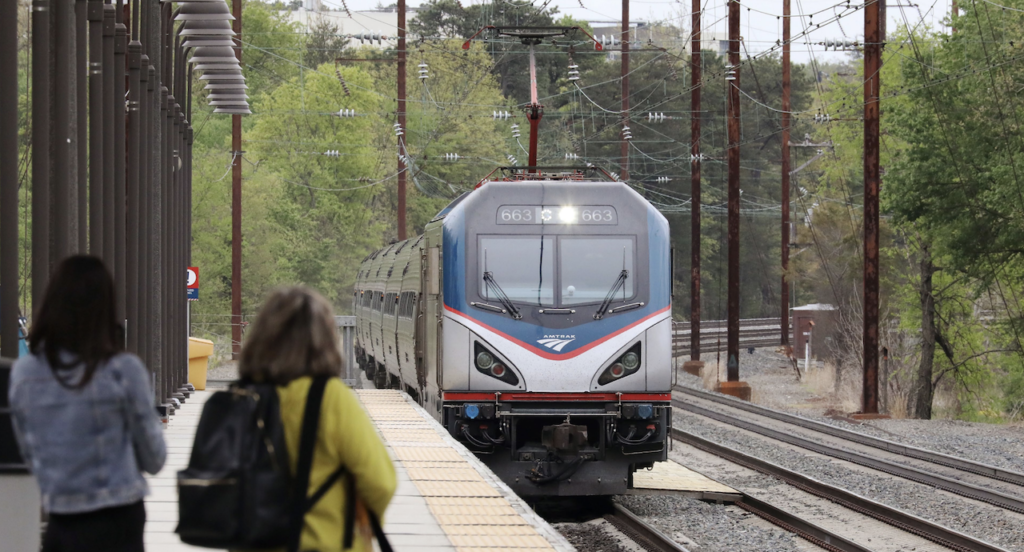
Amtrak carried its 250,000th guest on state-sponsored Borealis trains between the Twin Cities and Chicago over the Independence Day 2025 holiday weekend.
Operated daily by Amtrak under contracts with the Minnesota, Wisconsin and Illinois state transportation departments, “guests and officials have been celebrating a comfortable and reliable service that has routinely exceeded expectations since the daily service began in May 2024,” the company said.
“Thanks to the support of our partners, we’re honored to have more than a quarter-million customers, and counting, travel on the Borealis train this past year,” said Amtrak President Roger Harris. “Some of these guests have never before used Amtrak. Now all of them can enjoy the benefits of train travel while avoiding the long drive on Interstate 94.”
Borealis trains originate from St. Paul at midday and Chicago in the late morning with Amtrak everyday discounts for children ages 2-12, students, seniors, veterans, military personnel and families, groups, and others. The trains offer café service featuring regional items and views of the Mississippi River between St. Paul and La Crosse, Wisc.
Amtrak OIG
Amtrak OIG, in a new report, assessed the company’s efforts to provide high-quality customer service to passengers with disabilities.
According to the report (download below), Amtrak OIG “found that although the company has ongoing efforts to improve the service it provides to these customers, it faces challenges in two key areas. First, it does not have an overarching strategy with goals, metrics, and priorities to guide its efforts to improve customer service to passengers with disabilities. Second, it does not have full visibility over the quality of service it provides to passengers with disabilities because it does not regularly analyze key data that could provide insights.”
Without a strategy informed by relevant data, Amtrak OIG says “the company may not be focusing its resources on improvement initiatives with the highest potential impact. Further, it could be exposed to unnecessary financial, reputational, and legal risks from service that does not consistently meet its standards.” Given the company’s limited visibility over the service it provides to passengers with disabilities, Amtrak OIG assessed the customer experience and identified three areas where it has opportunities to improve. These include:
- “Interactions withcustomer-facing employees.
- “Communication of essential travel information.
- “Access to onboard amenities.”
“We recommended that the company develop an overarching strategy and analyze the data necessary to measure its service quality. It should also implement plans and processes to address challenges in the three improvement areas we identified,” Amtrak OIG concluded.
SEPTA
Serious crimes have continued to drop in most categories while enforcement of fare evasion, smoking, and other quality-of-ride offenses has increased significantly, according to the first-half 2025 crime report from the SEPTA Transit Police Department.
Following a record-setting annual crime reduction of 33% in 2024, SEPTA Transit Police have continued to implement new data-driven deployment strategies. These efforts, the agency says, are helping keep serious crime rates low, with reductions in seven of eight categories over the first six months of 2025.
“We are continuing to see great results from the SEPTA Transit Police Department, thanks to efforts to bolster staffing and the implementation of innovative enforcement strategies,” said SEPTA General Manager Scott A. Sauer. “Despite an imminent fiscal crisis that could result in massive service cuts, we will continue to support the critical work that our police force does to ensure SEPTA is safe and secure for customers and employees.”
In addition to the historic progress on serious crimes, the focus on fare evasion and quality-of-ride offenses by Transit Police is also showing significant progress, according to the report (download below). Overall enforcement of these incidents increased by 27% compared to the first quarter of 2024.
For the first half of 2025, SEPTA Transit Police issued 4,366 citations for fare evasion, a 74% increase over the same six months in 2024. In addition, 1,189 tickets were issued for smoking—a 6% increase—and 253 for marijuana use, up 19%. Meanwhile, reports by customers to the SEPTA Transit Watch App over fare evasion declined 46.7%, and reports of smoking declined 13.6%.
SEPTA Transit Police Chief Chuck Lawson said increased fare enforcement “has a direct impact on serious crime and other offenses.”
“When we increase our enforcement of fare evasion, we consistently see lower rates of crime and disorder on the system,” Lawson said. “We are committed to a three-pronged approach to combatting fare evasion through deterrence, enforcement and education.”
For deterrence, SEPTA says police will continue to enhance visible patrols and use new technology, including full-length fare gates that will soon begin expanding to nine additional stations. The first full-length gates at 69th Street Transportation Center have reduced fare evasion by approximately 20%, according to the agency. Enforcement includes regular patrols and using data to deploy officers to fare-evasion hot spots. These are complemented by educational efforts, such as recent fare enforcement blitzes at stations and on buses and new signage that clearly spells out the criminal penalties for fare evasion.
Caltrans
Caltrans awarded the Fresno Council of Governments $700,000 earlier this month for the “Fresno Metropolitan Light Rail Feasibility Study,” according to a YourCentralValley.com report.
According to the report, the study “aims to evaluate the economic, social, and environmental benefits that the zero-emission light rail could bring to the city.” The study will also plan for “connectivity and accessibility of sustainable, quality transportation for underserved communities.”
If it’s determined that a light rail is beneficial to the city, the zero-emission train would use the San Joaquin Valley Railroad (SJVR) to connect Fresno, Firebaugh, Kerman, Mendota, Reedley, San Joaquin, Fowler, Selma, Kingsburg, Sanger and Dinuba, according to the YourCentralValley.com report. This, the report says, “would be done after the plan is reviewed and agreed upon by the railroad.”
“We look forward to working with our public agency partners and the selected consultant to outline the importance of freight rail and our plans for future growth. Any future plans to utilize SJVR right-of-way must be reviewed and agreed upon by the railroad to ensure that we can continue moving existing customers’ freight safely and efficiently while also safeguarding our own ability to grow,” Tom Ciuba, a spokesperson for SJVR, told YourCentralValley.com.