
Alto HSR
A HSR development contract was signed March 21 by Crown corporation Alto (formerly VIA HFR) and the Cadence consortium of CDPQ Infra, AtkinsRéalis, Keolis, SYSTRA Canada, Air Canada, and SNCF Voyageurs. This step, the partners reported, marks the beginning of the design and development phase of the project, which was announced Feb. 19.
The nearly 660-mile line, dubbed “Alto,” will be dedicated electrified HSR, with trains running up to 186 mph between Toronto and Quebec City, with stops at Peterborough, Ottawa, Montréal, Laval, and Trois-Rivières (see map below). It will be implemented as a DBFOM (design-build-finance-operate-maintain) project.
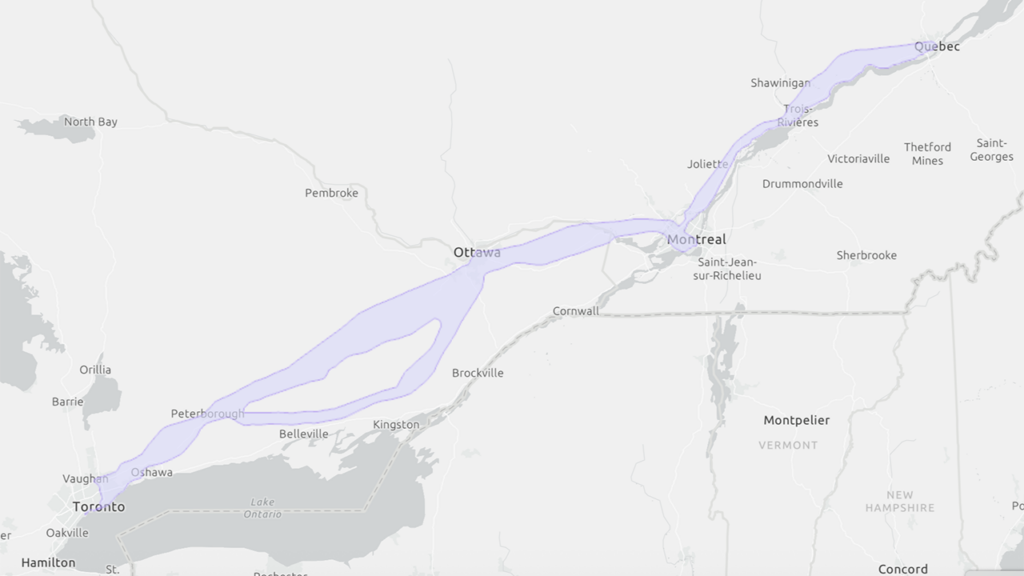
According to the partners, the phase now beginning will confirm the route, obtain the necessary environmental permits, and acquire the necessary land. It will also include pursuing more concrete discussions with First Nations representatives and host communities. All this work will help establish the cost, financial structure and timetable for the project.
“The way in which a project is developed is as crucial as the project itself,” Alto President and CEO Martin Imbleau said. “In collaboration with Cadence, we are bringing together a unique group of experts, combining the expertise of a Crown corporation with the experience of a team of world-class private partners. The signing of the contract demonstrates our shared commitment to develop a high-speed rail network that will exceed Canadians’ highest expectations.”
“The members of Cadence are extremely proud to be working with Alto on this transformative project for the country’s economy and communities,” commented Daniel Farina, General Manager of Cadence. “Our team brings unparalleled expertise in designing, building, financing, operating and maintaining complex rail projects around the world. We are committed to delivering a high-speed rail system that will redefine rail transportation in Canada and change the lives of millions of Canadians.”
“As Canada’s largest-ever infrastructure project, Alto will connect more communities and Canadians and grow our economy,” said Chrystia Freeland, who earlier this month was sworn in as Minister of Transport and Internal Trade. “This is an exciting next step in the high-speed rail project, which will boost GDP by up to C$35 billion annually, create more than 51,000 good-paying jobs during construction, and unlock enhanced productivity for decades to come.”
Metrolinx
The government of Canada on March 21 announced its intention to support the Hazel McCallion LRT Extension in Brampton as part of the Metro-Region Agreement (MRA) stream of the Canada Public Transit Fund.
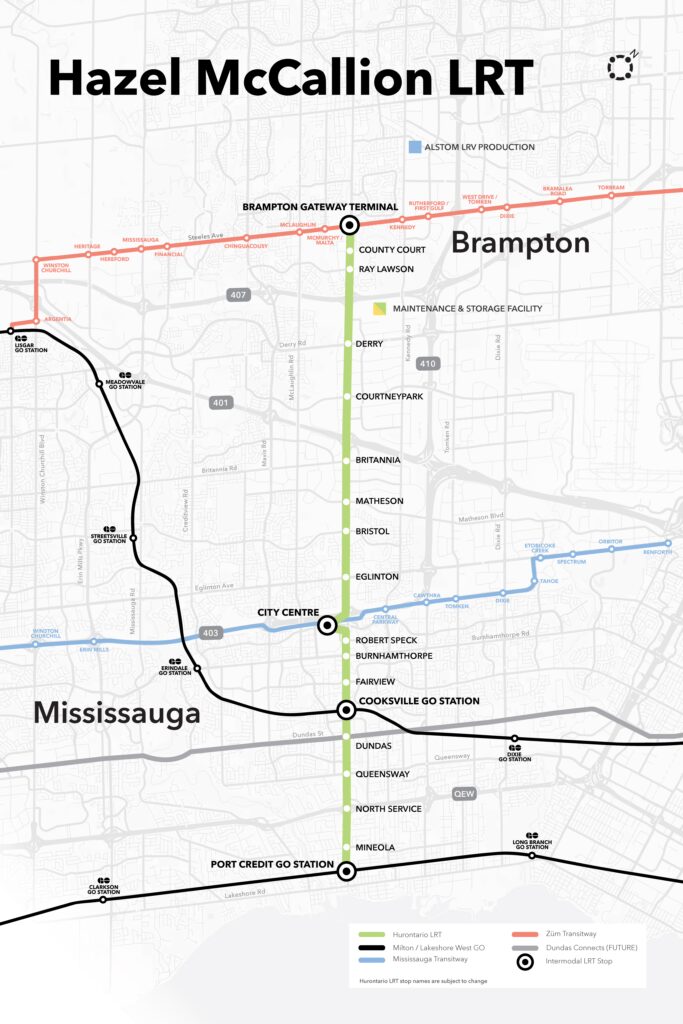
The Hazel McCallion LRT (formerly known as the Hurontario LRT project) is an 11-mile (18-kilometer), 19-stop light rail transit project currently under construction from Port Credit GO station in Mississauga to Brampton’s Gateway Terminal (see map, right). By extending this LRT by approximately 2.5 miles (4 kilometers), the government said the project will provide better transit options to residents and connect more people to downtown Brampton.
Funding will be conditional on meeting the requirements of the MRA stream, including the development of an Integrated Regional Plan and the signing of a Metro Region Agreement for the Greater Golden Horseshoe, meeting all housing conditionality requirements, receiving a completed project business case from the Province of Ontario, and approval by the federal government.
“As Brampton grows, Premier Ford and our government have a plan to get residents the world-class transit they deserve, which is why we announced the extension of the Hazel McCallion Line into the downtown with a new tunnel that will benefit tens of thousands of riders every day,” Ontario Minister of Transport Prabmeet Sarkaria said. “We will continue to work with our federal and municipal partners, as we expand public transit and GO service and build generational projects like Highway 413 to get families in Brampton where they need to go.”
Premier of Ontario Doug Ford in February 2024 first confirmed the government’s plan to extend the line by building the Mississauga loop and bringing the line into downtown Brampton.
According to the City, key benefits for Brampton include:
- “Enhanced connectivity: The extension will connect downtown Brampton with major transit systems across the Greater Toronto and Hamilton Area (GTHA).
- “Reduced congestion: By encouraging transit use, the project will ease traffic on Brampton’s busiest roads.
- “Environmental sustainability: Clean, electrically powered light rail vehicles will produce near-zero emissions, promoting greener transportation.
- Economic growth: The improved transit infrastructure will attract businesses, residents and investment to the city’s core.”
TransLink

A C$32 million upgrade project at TransLink’s Brentwood Town Center SkyTrain Station was completed and ready for riders on March 24. Improvements include a new street-level elevator and two new escalators; an expanded mezzanine for more space and three new fare gates for improved customer flow; two enhanced stairwells with enclosed glass to provide weather protection; and updated lighting. The station also features new permanent wayfinding, including additional maps and transit information panels.
The project was part of the Investing in Canada Infrastructure Program, with contributions from the government of Canada and TransLink.
Brentwood Town Center Station is the first Millennium Line station to receive upgrades since the line opened in 2002. According to TransLink, it is one of the busiest stations on the Line, the only SkyTrain station built on a roadway median, and a transfer point for seven bus routes (25, 123, 130, 134, 136, 222, and N9). In recent years, it noted, the area surrounding the station has been transitioning into a densified, mixed-use neighborhood with increased transit needs.
“Completion of the Brentwood Town Center Station upgrades mark a major milestone in enhancing accessibility, safety and comfort for our customers,” said Kevin Quinn, CEO of TransLink. “These improvements will ensure we continue providing efficient and reliable transit services as the Brentwood community grows. We’re proud to deliver this project, in partnership with the government of Canada, to meet the needs of transit users for years to come.”