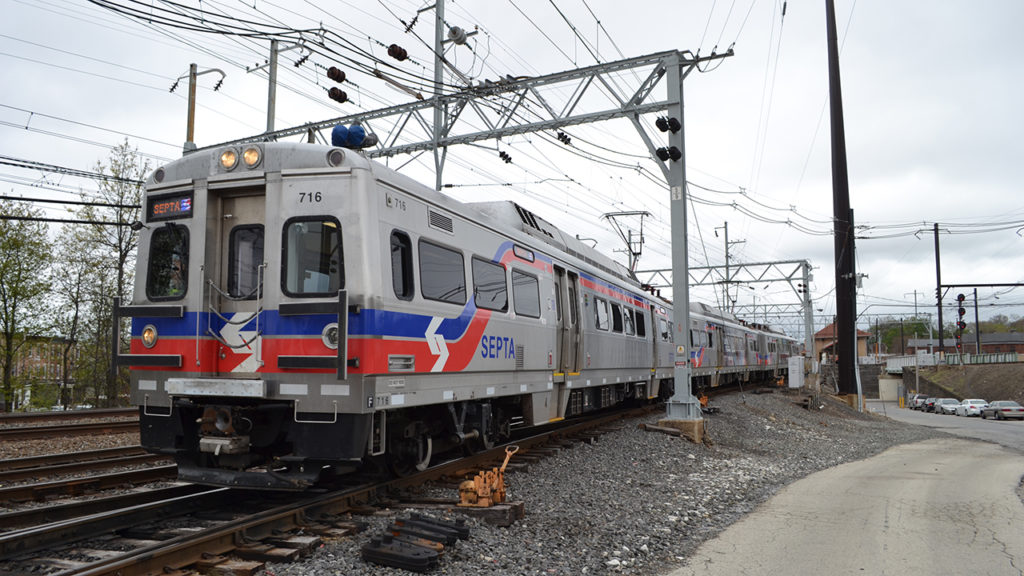
Philadelphia’s SEPTA (Southeastern Pennsylvania Transportation Authority) is again operating its former level of service, despite recent threats of severe cutbacks. Riders are paying significantly more, but they are not forced to accept significantly less service for the money. A deal that prevented the cuts allows money previously dedicated to capital funding to be used for operations.
There could be long-term consequences from such a spending shift, but SEPTA did not appear to have a choice. With the fiscal cliff that many transit providers are facing today, the potentially Faustian bargain that SEPTA made to keep going at current service levels could become the industry standard, whether anybody likes it or not.
Higher Fares, Same Service
Railway Age has been covering the SEPTA story in depth lately, and several reporters have pitched in. The Fiscal Cliff that has been haunting the transit industry in the wake of the COVID-19 pandemic and changes in ridership and revenue that it caused has placed SEPTA and many other providers in difficult financial straits, which threatened a large increase in fares on top of historically deep service cuts. They began on Aug. 24. At that time (updated immediately after Labor Day), I reported the first set of bus-service cuts and impending drastic rail service cuts. Dozens of bus routes were eliminated, and service was reduced on many others. There was also a plan to reduce local rail service by 20% and cut regional rail service in half. That was to be only the beginning. After the New Year, five regional rail lines, two trolley routes and a subway line would be eliminated entirely, along with more reduction in bus service. To add insult to injury for many riders, fares were slated to rise by more than 20% (21.5% in many instances). For example, the base fare would increase from $2.50 to $2.90 per ride.
According to SEPTA, the agency faced a $213 million deficit, believing that only a steep fare increase and drastic service cuts could fill the gap. On July 21, Railway Age Senior Editor Carolina Worrell reported ridership increases on the system, and that SEPTA had instituted cost-cutting measures. These factors reduced the deficit somewhat, but they weren’t enough.
Meanwhile, advocates for riders sued SEPTA to stop the fare increase and service reductions. As we reported on Sept. 2, Judge Sierra Thomas-Street of the Court of Common Pleas (Pennsylvania’s name for a court of general jurisdiction) granted temporary relief that the plaintiffs had requested. The fare increase and the service cuts (including on rail) that were supposed to take effect after Labor Day were put on hold. A hearing regarding permanent relief was held on Sept. 4. Executive Editor Marybeth Luczak reported on Sept. 8 that the judge had issued a ruling after the hearing. Service would be restored to the level that had run before the first cuts were made Aug. 24, but the 21.5% fare increase, as SEPTA had requested, would take effect Sept. 14. According to SEPTA, it would take until then to reassemble train crews, bus drivers and other employees for the return of the previous level of service.
Capital Dollars to Operations
Transferring funds originally earmarked for capital spending over to the operating side is a practice that managers do not like, and neither does the Federal Transit Administration (FTA). Yet it has become a relatively widespread practice among transit agencies. In SEPTA’s case, it was the practice that allows the agency to keep offering the level of service to which the riders have become accustomed, for the next two years anyway. Luczak reported: “According to CBS, Gov. [Josh] Shapiro ‘directed PennDOT Secretary Mike Carroll to flex $394 million’ from the Public Transit Trust Fund and directed SEPTA ‘to address its structural challenges and report to PennDOT every 120 days the steps taken and progress made to increase efficiencies within the system.’ ‘This is not a solution,’ said [SEPTA General Manager Scott] Sauer, according to 6ABC. ‘This is a band-aid that will get us through a couple of years, but at the expense of future capital programming.’”
The request was necessary because of ‘the ongoing state budget impasse,’ according to 6ABC.” Shapiro, a Democrat, supported a deal that would fund transit, as did the Pennsylvania House, where Democrats hold a slim majority. Republicans hold a more substantial majority in the Pennsylvania Senate, and they balked at funding transit instead of increasing the highway appropriation. So, there was no funding deal.
Developing Problem
SEPTA’s situation is not unique. Many transit agencies, including the ones that operate sizeable rail networks, are facing financial woes as time moves them closer to the Fiscal Cliff. In the summer of 2024, I reported on the impending fiscal crunch that many providers were about to face, considering the recent COVID-19 pandemic and changes in commuting and other riding patterns. While local media reported on the plight of local agencies, this remains an underreported story at the national level.
On Dec. 5, 2024, I reported on SEPTA’s woes at the time, and on a 7.5% fare increase that had gone into effect. The agency’s money problems were serious then and held the likely prospect of getting worse. At that time, I reported: “So, at the very least, a fare increase became necessary, with the possibility of severe service cuts, too.” Luczak reported the story as it unfolded through the fall. On Sept. 6, she reported that the agency was considering a fare increase. It would be a relatively mild one, with the base fare staying at $2.50, the cash price at the time, but eliminating discounts for using a stored-value card and other changes. It was slated to take effect Dec. 1 and raise $14.4 million in annual revenue.
Before that increase could be approved by the SEPTA Board and before hearings were held (they were scheduled for Dec.13), Luczak reported 30 days earlier, on Nov. 13, that “SEPTA had a bigger shock in mind for its riders. Fares would rise by 21.5% on top of the previously proposed 7.5%, and service cuts of 20% across all modes (including regional rail and streetcars both in the city and interurban-style lines in nearby suburbs) that would take effect early in 2025, after the required hearings had been held.” Thus, the SEPTA story has been developing for more than a year, the large fare increase is now in effect, and the reprieve that riders got last year ended up lasting for about nine months.
Did SEPTA Have a Choice?
In a statement concerning this year’s fare hike and the restoration of service, both scheduled for Sept. 14, SEPTA General Manager Scott A. Sauer thanked the riders for their understanding and said that the fight for long-term funding continues: “While we restored full service, I want to be clear that we still don’t have a long-term solution to the funding crisis that’s at the heart of it all. For the short term, we’ve received permission to transfer funds that were set aside to replace or upgrade aging equipment and infrastructure. But to guarantee the future of public transit in our region, we will continue the fight to secure the resources our system needs to meet those expectations.”
Many major transit providers are facing similar problems (not to mention smaller agencies that only run buses) and face a hard choice. Get the money from somewhere or cut service drastically and make the riders pay much more money for much less mobility. But is that really a choice, or is the course of action determined by circumstances beyond the transit agencies’ control, or even the control of elected officials, many of whom do not ride transit and do not necessarily understand the needs of the riders who depend on it?
Some places, like New Jersey and the New York City area, have raised some taxes and fees to help pay for transit, at least for the next three or four years. Other places made attempts to reach similar deals, but they fell through (Pennsylvania is an example). The analogous situation is a family that has been saving money to make major improvements on their house (a capital investment), but the family income has decreased, and they need to use that money for food, heat and other necessities. The home improvements will just have to wait, and the folks facing such a situation can only hope that the emergency will be over before too long. It appears that transit providers must act similarly during the current emergency. They know that people need to get to their jobs and to other places, and not everybody has a private vehicle available for the purpose. They also know (or should know) that the local economy in many places, especially in the larger cities, depends on having viable transit.
Government agencies like the FTA disfavor using capital dollars for operating purposes, because the practice detracts from efforts to keep the systems in a state of good repair. Managers don’t like the idea, either, and some rider-advocates are concerned about the same issues. The situations that transit providers are now facing can also damage those providers’ financial ratings. Luczak reported on the SEPTA situation on Sept. 8: “In a related development, SEPTA on Sept. 4 reported that Moody’s Ratings had revised its outlook from stable to negative for the transit agency but did not change any of its ‘currently positive ratings for SEPTA’s debt.’”
The memorandum from Moody’s attached to the report explained the downgrade “SEPTA is currently under significant operating stress linked to uncertainty around increased state transit funding and an Aug. 29 court ruling that prevented the agency from implementing a 21% fare increase and further service cuts. These changes were part of SEPTA’s plan to balance an estimated 13% ($213 million) budget gap left unfilled by the Commonwealth’s budget impasse. If the injunction becomes permanent and the commonwealth does not provide additional funding, then SEPTA would have to rely on reserves to balance its budget, resulting in a stark decline in liquidity.”
The Moody’s report also summarized the Ratings Outlook: “The negative outlook reflects SEPTA’s sizeable structural budget gap that will be difficult to resolve without further financial support from the Commonwealth or significant adjustments to operations. In the event the court ruling is reversed and SEPTA enacts fare increases and service cuts, the resulting ridership losses could create persistent budget gaps that weaken operations, asset quality and metrics over time.” Moody’s also mentioned factors that could lead to future upgrades, or to more downgrades in the future.
Whither (Wither) Transit?
It appears that the transit agencies are between the proverbial rock and a hard place. Rriders, especially those who depend on transit and whose jobs help keep the local economy going, are in an even worse position. Worse yet, the federal government does not appear supportive of transit, which increases the pressure on transit providers and local and state-level elected officials to come up with a means to keep the local transit going with a reasonable level of service.
If a “good result” for the agencies and for the riders means a strong level of service without requiring those riders to pay significantly more for their transit, we can’t look forward to many “good results,” possibly not any. The question then becomes how to mitigate the damage to the greatest extent possible. “Flexing” capital dollars over to the operating side has its difficulties, but at least it can allow the riders to have as much mobility as possible. If that’s not the bottom line for transit everywhere, it probably should be.
Gov. Shapiro’s act of releasing the capital funds for SEPTA’s operations will have some negative consequences, but probably not as severe as the repercussions that drastic service cuts would have brought to Philadelphia and its surrounding area. It’s not easy for many transit riders to withstand such a large fare increase, but at least they still have their transit. They would have been much worse off without it. Similar dramas will play out in other cities soon, and we’ll be here to report on them.