STCP Selects Stadler, Siemens for Sepulveda Transit Corridor Project Proposal

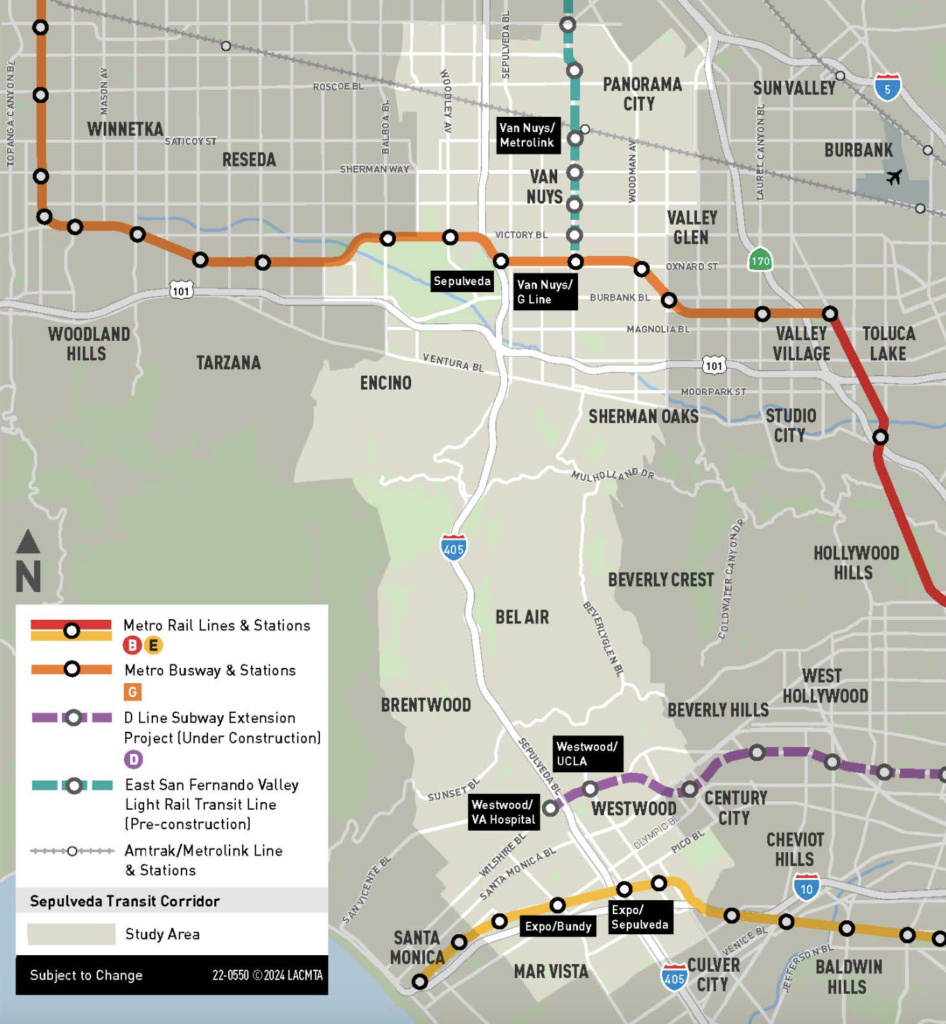
Los Angeles County Metropolitan Transportation Authority (Metro) is working with private-sector design teams STCP (including Bechtel Development Company, Meridiam Sepulveda and American Triple I/ATI, Bechtel Infrastructure, Mott Macdonald, T.Y. Lin, and Systra) and LA SkyRail Express (including John Laing, BYD, Skanska, ACI, HDR, Gensler and Innova) under a “first-of-its-kind” pre-development agreement (PDA) to plan alternatives for the Sepulveda Transit Corridor Project (see map of the area below).
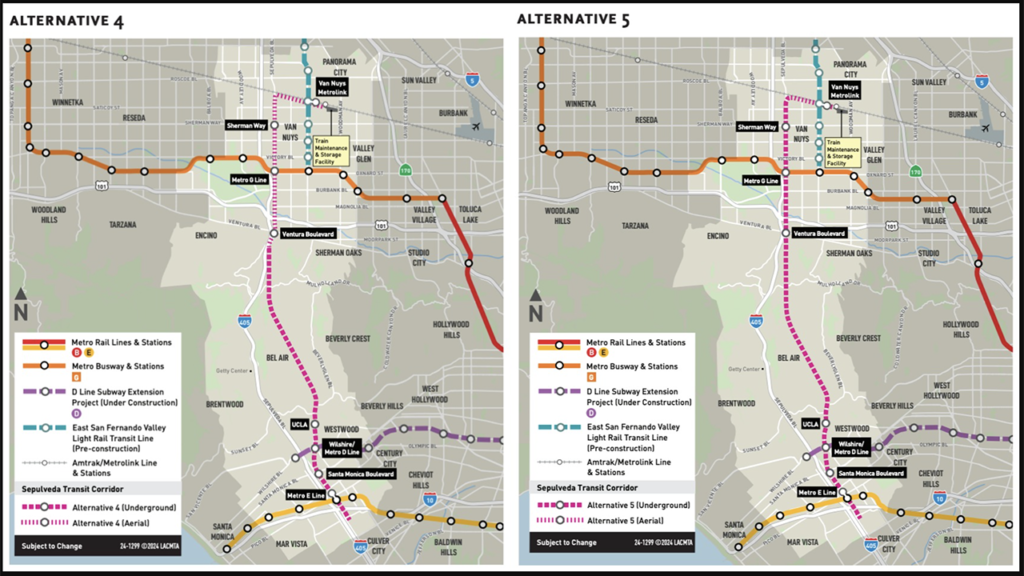
STCP is developing what Metro refers to as Alternatives 4 and 5 (see maps below and scroll down to download a fact sheet). “These are high-capacity rail lines that would provide fast, green and connected transit taking riders between the Valley and the Westside, including a station in the heart of the UCLA campus, in less than 20 minutes,” according to STCP. “Alternatives 4 and 5 are both within the same travel corridor. Alternative 4 would run above ground between the Van Nuys/Metrolink station and the proposed station at Sepulveda and Ventura. Alternative 5 is entirely below ground except for the northern terminus of the line at the existing above ground Van Nuys/Metrolink Station … The decision on whether to pursue Alternative 4 or 5 or another option is Metro’s. Alternatives 4 and 5 would be integrated with Metro’s current and future transit system, with direct connections to the D, E, G Lines (previously known as the Purple, Expo and Orange Lines), Metrolink, Amtrak and multiple bus lines.”
STCP said its proposal would reduce travel time from Ventura Boulevard to Westwood to 6.5 minutes, and from the Valley to the Westside to less than 20 minutes, and provide “a single-seat ride, with minimum transfers, and increased user convenience with stations located next to work centers.” A rail line, it noted, is expected to “spur new developments both in terms of affordable housing and commercial economic development.”
“Our selection of Stadler and Siemens Mobility goes beyond our Buy America commitment,” said Meridiam Americas CEO Nicolas Rubio, on behalf of the STCP partner group on July 31. “For a project with such profound impact, we wanted to make sure that we are assembling an infrastructure ‘Dream Team’ when it comes to operating swift and safe rail service that allows commuters to avoid the 405. We are committed to a project that will make life better for Angelenos and visitors by easing congestion, reducing pollution, boosting commerce, and improving connections between affordable homes and good jobs.”
“Stadler brings to this partnership more than 80 years of experience building the highest quality passenger trains,” said Martin Ritter, CEO of Stadler US, Inc. and one of Railway Age’s 25 under 40 honorees for 2024. “We are excited to have been selected by STCP as their passenger rail vehicle partner. Stadler proposes a state-of-the-art, energy efficient and sustainable metro solution for the Sepulveda Corridor that will have a massive impact on how people move in LA.”
“We would like to thank STCP for selecting Siemens Mobility as a partner in this game-changing project,” said Marc Buncher, CEO of Siemens Mobility North America and one of Railway Age readers’ selections in the 2023 Most Influential Leader program. “We’re confident that our Siemens CBTC and GoA4 solutions will contribute to the increased availability and sustainability of public transit along the I-405 (Sepulveda) corridor between San Fernando Valley and Westside. Siemens Mobility’s experience with Stadler, RATP Dev and members of STCP in delivering automated metro lines will enhance this modern transit technology currently being developed for Angelenos by the STCP team.”
“Recognizing the critical role of the RSS partner plays a critical role in the successful delivery of a project like Sepulveda Transit Corridor in this project, Stadler and Siemens Mobility not only stood out to us because of their long-standing individual track records and their having already successfully partnered based on their individual achievements, but also based on their multiple joint successes together in various transit projects globally,” added ATI Managing Partner David J. Cibrian, on behalf of the STCP partner group.
“Bechtel is proud to participate in delivering valuable transit options for those traveling the Sepulveda corridor,” Bechtel Enterprises President Mark Campbell said.
Metro is currently in the environmental review phase of the Sepulveda Transit Corridor Project, which began with scoping meetings held in late 2021/early 2022. It is also advancing technical studies in support of the development of a Draft Environmental Impact Report (DEIR), pursuant to the California Environmental Quality Act (CEQA), to evaluate project alternatives that address the transportation needs of the Sepulveda Corridor. According to Metro, the Draft EIR release is anticipated for early 2025, “assuming receipt of all technical documents from the design teams.” Additionally, Metro said it is developing a Planning and Environmental Linkages (PEL) study “as a collaborative approach” with the Federal Transit Administration “to engage federal agencies early in the environmental process and identify potential issues that will be further studied during the development of the project’s Environmental Impact Statement (EIS) pursuant to the National Environmental Policy Act (NEPA).”
Metro said it held community meetings in spring 2024 that focused on the monorail alternatives. Based on LA SkyRail Express’ request, Metro’s independent review, and public input, Metro said it has finalized the decision to remove Alternative 2 from the Sepulveda Transit Corridor Project.