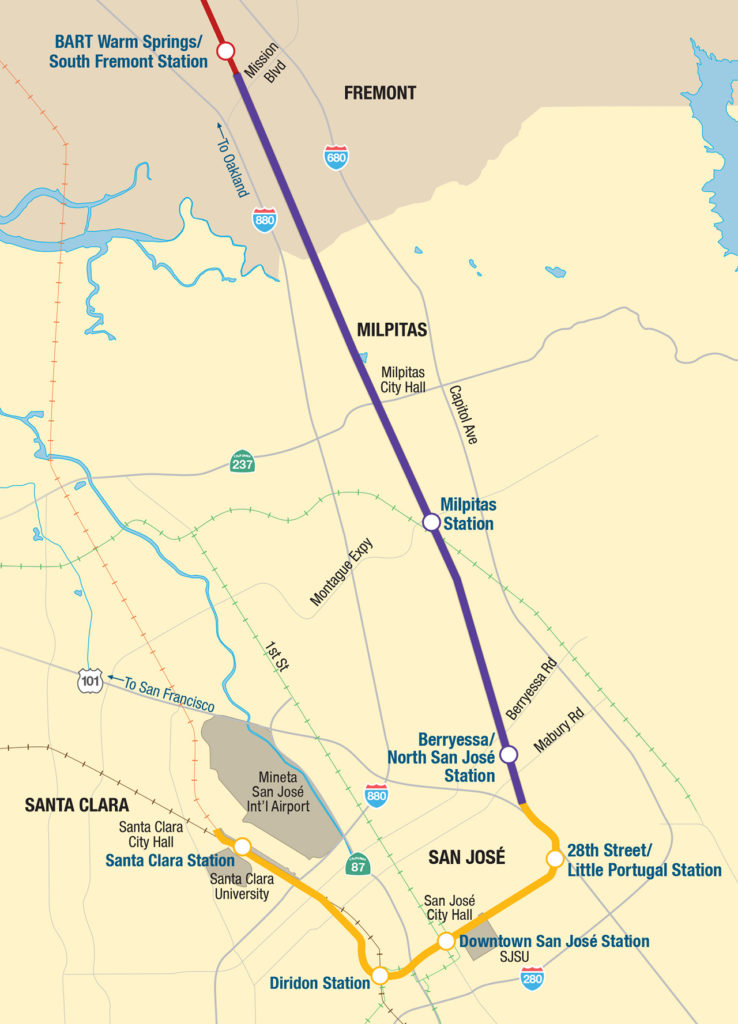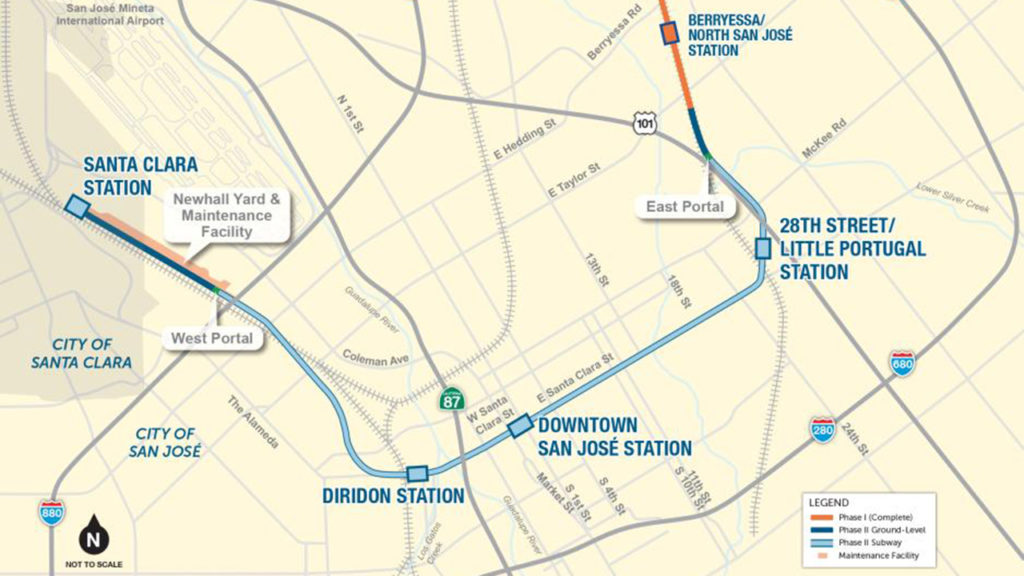
The Federal Transit Administration (FTA) has committed more than $5 billion to the $12.7 billion Phase II portion of the 16-mile BART Silicon Valley Extension Project, contingent upon the Valley Transportation Authority (VTA) closing a funding gap before applying for an FTA Full Funding Grant Agreement (FFGA).
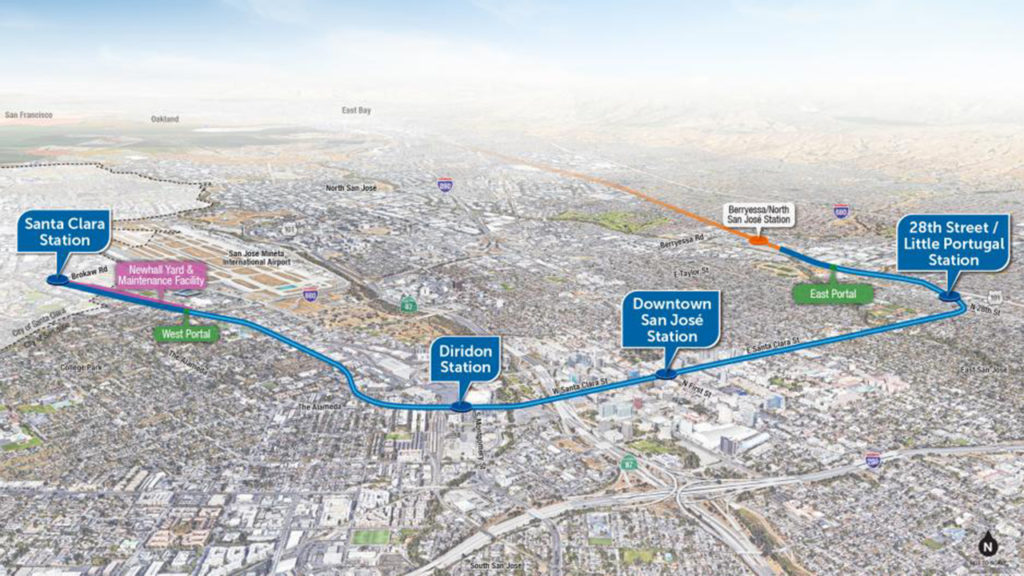
Described by VTA as “the largest single public infrastructure project ever constructed in Santa Clara County,” BART Silicon Valley Phase II, estimated in November 2022 by FTA’s New Starts Project Development process to cost $9.32 billion (download report below), will extend BART service six miles beyond Phase I’s 10 miles from the Berryessa Transit Center into downtown San José and ending in the City of Santa Clara. Phase II is estimated to carry 54,600 passengers each weekday to destinations throughout the Bay Area by 2040. Completion “will finally ‘ring the bay’ with frequent rail service,” VTA said.
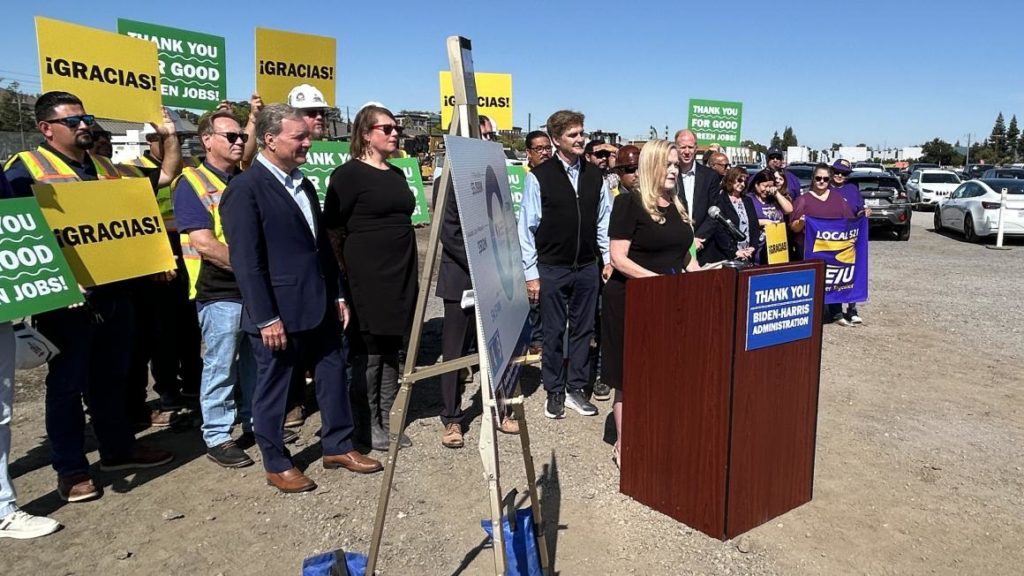
“This is very big news, not just for VTA, not just for the project, but for the entire community, the entire valley, the entire Bay Area region,” said VTA General Manager and CEO Carolyn Gonot. FTA’s commitment letter “talked about their belief that VTA has the ability to deliver this $12.7 billion project. Not every agency gets that letter.”
VTA said staff will “begin immediate work” to identify how to close the funding gap to secure an FFGA. For starters, the agency said it will “freeze new spending for a 60-day period” and “plans to renegotiate existing contracts to help cover the shortfall.”
“In recent months, project leadership and its design, engineering and construction contractors have been looking at scenarios to be ready for a moment like this,” VTA explained. “Those scenarios address both design and construction, to save time and money while still maintaining the integrity of the project, and delivering the service this community is counting on. This includes looking at design efficiencies, contracting options, review of materials, innovative construction methods and other key project elements. In the next few months, VTA will bring forward the most promising options along with their potential savings.
“Strategic contract negotiations can also help bridge this funding gap, reviewing existing professional service consultant contracts and staffing levels with the opportunity to reduce project overhead as the work advances. So far, only the initial design phase and early construction work for the tunnel and track-work contract has been awarded. VTA has further negotiation opportunities for the heavy construction work related to the tunnel and will continue to solicit open competition for the stations, rail yard and operational systems. This means further opportunities to save money.
“Over the next several months, VTA will continue working closely with the FTA and its project management oversight consultant, which has guided this effort all along. A new project funding plan will emerge, taking into consideration potential savings and any new identified funding sources, all in pursuit of arriving at a place that will allow this critically important transit investment to continue moving forward.”
Phase I, completed in 2020 at a $2.3 billion cost, begins south of BART’s Warm Springs Station in Fremont, proceeds through Milpitas and ends in the Berryessa area of north San José. It includes two new BART stations that are each part of two larger, new transit centers: the Milpitas Transit Center and the Berryessa Transit Center.