Amtrak
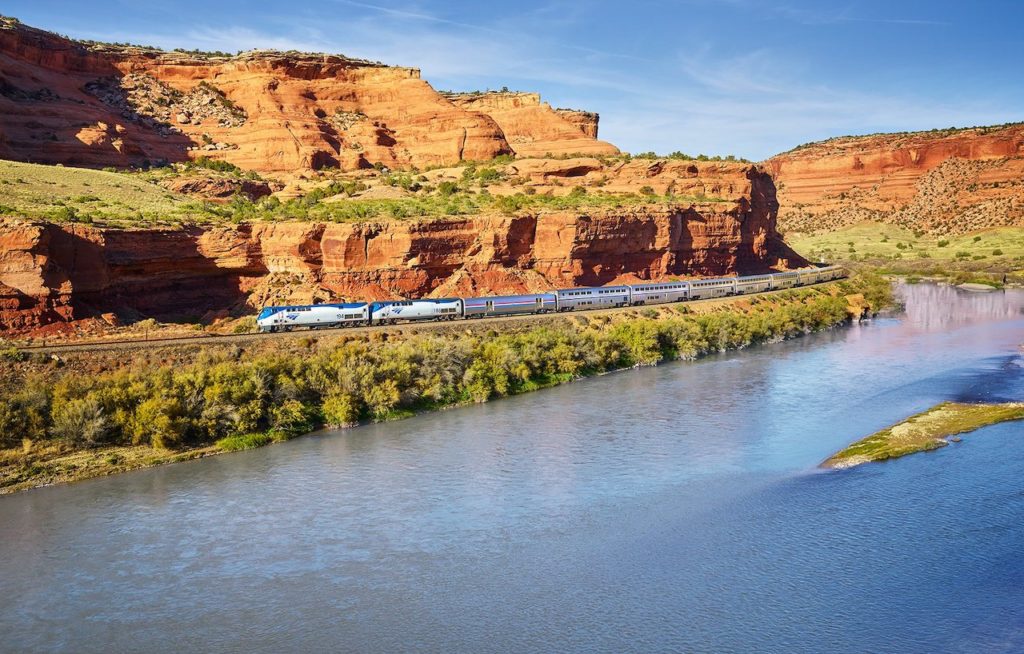
Amtrak on Feb. 26 announced a revised long-distance fleet replacement strategy that “prioritizes fleet standardization, broadens competition among potential carbuilders, reduces program risk, and accelerates the replacement of its aging passenger cars.” All long-distance routes will transition to a “universal single-level fleet,” replacing today’s mix of bi-level and single-level equipment, according to “America’s Railroad.”
“Today’s announcement reflects extensive analysis of the challenges associated with operating a hybrid fleet,” Amtrak said. “It also incorporates industry feedback received during the previous request for proposals on new bi-level trains, along with findings from a joint Amtrak-Federal Railroad Administration review that identified the most effective path forward.”
Amtrak said it will soon issue a formal request for suppliers to bid on the new long-distance fleet replacement contract and cancel the bi-level procurement. Once a selection is made, Amtrak said it will work with the selected car builder to finalize the delivery schedule to replace its aging long-distance fleet.
Amtrak in late 2022 sent a Request For Information to potential suppliers “defining and describing the scope of the railroad’s overnight train fleet,” including Superliner I and II, Viewliner I and II and Amfleet II railcars, and solicited input from manufacturers regarding the replacement of this equipment. Multiple suppliers responded in early 2023. Later that year, the railroad issued a Request for Proposals, and projected that fleet deliveries would begin in the early 2030s.
Many of Amtrak’s current long-distance railcars were delivered more than 40 years ago. The railroad said on Feb. 26 that it will continue to evaluate the condition of the existing fleet, assess the remaining service life, and “determine any life extension measures necessary to ensure safe and reliable operations until the new long-distance fleet enters service.”
“This new approach will deliver a more consistent and accessible customer experience across the Amtrak network while maintaining our commitment to introduce the first new long-distance cars in the early 2030s,” Amtrak President Roger Harris said. “Thanks to support from FRA Administrator David Fink and the entire Federal Railroad Administration team, Amtrak’s long-distance fleet replacement is moving forward more effectively and efficiently than originally planned.”
“With these new cars, Amtrak will finally replace its aging fleet and provide American travelers with the world class rail service they deserve, helping usher in Secretary [Sean] Duffy’s vision for a new Golden Age of travel,” U.S. Deputy Transportation Secretary Steve Bradbury said. “These new cars won’t just benefit American train passengers, but workers too by supporting good paying domestic manufacturing jobs.”
“The FRA stands ready to work with Amtrak on behalf of [POTUS 47] and Transportation Secretary Duffy to update Amtrak’s aging passenger rail fleet with modern American made cars,” FRA Administrator David Fink said.
“These cars have carried the country for more than 40 years,” Rail Passengers Association President and CEO Jim Mathews added. “It’s long-past time to replace them. Issuing this new Request for Proposals is about not only reliability for passengers but about continuing the steady rebuilding of America’s passenger-rail manufacturing base that we’ve seen with the Airo fleet and the NextGen Acela. When we maintain that momentum, we don’t just buy trains: we rebuild capability and set the stage for creating the world-class service all of us want and that American passengers deserve.”
The new strategy for procuring new long-distance passenger cars follows a 2024 report by Amtrak’s internal yet independent Office of Inspector General on Phase 1 (of four) of the railroad’s Long Distance Fleet Replacement program, defining the $7 billion initiative as “high risk” and identifying “shortcomings” that could create additional delays and cost increases.
According to Amtrak, its new strategy represents one piece of its broader systemwide fleet modernization program. It continues to receive new Siemens ALC-42 locomotives for long-distance service, with 79 of 125 units delivered to date. Also, new NextGen Acela trains from Alstom launched last fall, and the new Airo fleet from Siemens Mobility will begin service on Amtrak Cascades this year, followed by the Northeast Regional and other short- and mid-distance routes in the coming years.
Further Reading:
- Amtrak 2025: The Rest of the Story
- Multiple Factors Impacting Amtrak Long-Distance Trains
- Amtrak Cancellations: More Than Just ‘Weather’
- Amtrak ‘High Risk’ Long Distance Fleet Replacement Program: Off the Rails?
- Amtrak OIG: Long Distance Fleet Replacement Program ‘High Risk’
- Amtrak Takes First Step to Re-Equip Long-Distance Network
- Amtrak Issues RFP to Replace Long-Distance Fleet
- Ending a 50-Year Embargo in the FRA Amtrak Long-Distance Study
- Amtrak Applies for FRA Grants to Upgrade Long-Distance Network, NEC Infrastructure
- Amtrak Takes First Step to Re-Equip Long-Distance Network
- FRA Kicks Off Amtrak Daily Long-Distance Service Study
- Amtrak Debuts Long-Distance Train Improvements
SEPTA

SEPTA on Feb. 24 rolled out its newest CBTC digital signaling system upgrade on the Media–Sharon Hill Line, according to Hitachi Rail, which provided the system that will help modernize one of the last remaining interurban trolley systems in the United States.
The upgrade will serve approximately 11.9 miles of light‑rail trolley service from the 69th Street Transportation Center to communities in Media and Sharon Hill. The system will utilize overhead electrification and trolley‑gauge tracks, while also replacing aging signal systems, Hitachi Rail said. The supplier in May 2024 completed its $1.8 billion acquisition of Thales’ Ground Transportation Systems business, which included the SelTrac CBTC system. Hitachi Rail systems also include those of such predecessor companies as Union Switch & Signal and Ansaldo STS.
According to Hitachi Rail, the upgraded SelTrac™ technology used on the Media–Sharon Hill Line:
- Provides “higher system capacity with improved performance state-of-the art data analytics, lower capital investment and lifecycle costs, and flexible and scalable architecture.”
- Offers “new automatic train protection and automatic train supervision technology, designed to enforce operational speed limits and prevent unsafe train movements for real‑time monitoring.”
- Offers built-in wayside transponders and onboard sensors that are equipped with “high‑resolution vehicle location, supporting vital processes and ensuring reliable on-board operations.”
“This modern upgrade to SEPTA’s trolley system is a testament to Pennsylvania’s continued investment in transportation revitalization,” said Joseph Pozza, President of Hitachi Rail in the USA. “Our advanced technology will help to deliver modern and reliable onboard operations, that will meet passenger needs for decades to come. Our partnership with SEPTA and the state of Pennsylvania is yet another example of Hitachi Rail’s commitment to advancing transportation across the United States.”
Massimo Esposito, Senior Director, Technology Management at Hitachi Rail in North America, added: “Hitachi’s state-of-the-art SelTrac™ technology will truly aid in revolutionizing operations for SEPTA’s Media -Sharon Hill line – enhancing passenger experience, ensuring reliable journeys for daily passengers from start to finish.”
Further Reading:
- Hitachi Rail Invests C$30MM in New Canadian Headquarters
- From Expo 86 to Everyday Essential: SkyTrain Marks 40 Years
- Hitachi Rail Releases 2025 Sustainability Statement
- Hitachi Rail Adopts New NVIDIA IGX Thor Solution for Real-Time AI
- Hitachi Opens $100MM ‘Digital’ Hagerstown Plant
- Hitachi Rail Acquires Omnicom
- SFMTA Taps WSP-PGH Wong JV for CBTC
- SelTrac™ G9 Development Under Way