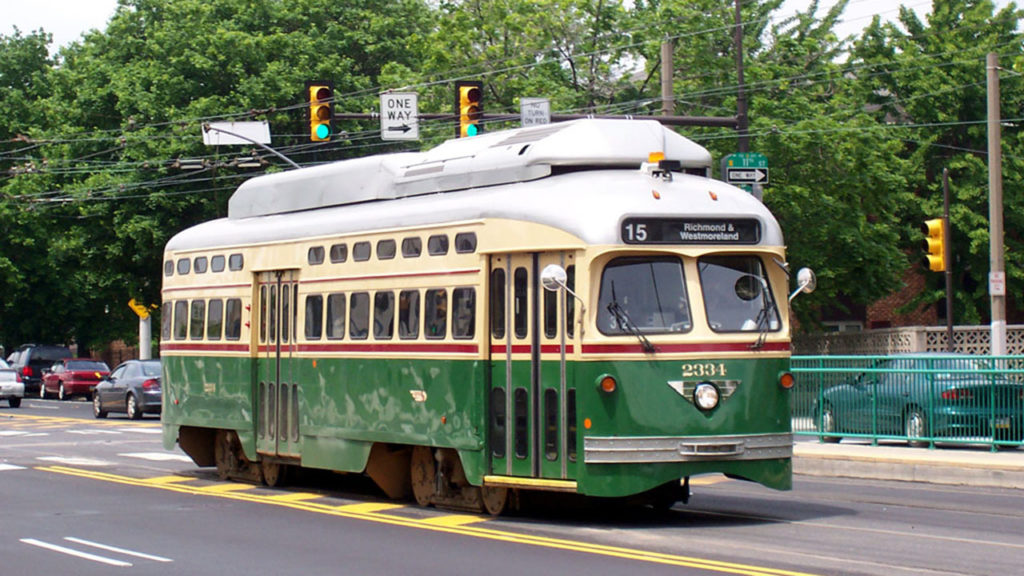
Friday, Jan. 24, 2020 was a sad day on Girard Avenue in Philadelphia. It was the last day of service for the Presidents’ Conference Committee (PCC) streetcars that had run for so long on the east-west thoroughfare in North Philadelphia. At that time, nobody expected the misery that would sweep the country, and the rest of the world, six weeks later, as the COVID-19 virus struck and much of life abruptly shut down. Still, Philadelphians and advocates for transit riders knew what the city was losing.
The Route 15 streetcar line was shutting down that day. Philadelphians and streetcar aficionados from elsewhere knew the line was going away, and everybody I interviewed expected that the relatively mild winter Friday would be the last day ever for streetcar service on a line that began running back in 1859, as the Richmond & Schuylkill River Passenger Railway. Even the Southeastern Pennsylvania Transportation Authority (SEPTA) was so low-key about the end of service that the agency was not clearly specific about the date. Some potential riders thought Saturday would be the last day but, unless they rode on Friday anyway, they were out of luck.
The agency predicted the cars would be back in service in 12 to 18 months, but it few believed them. As I reported here in Railway Age the following week, I had interviewed active and retired transit managers, along with advocates from the local area and elsewhere. Not one of them believed that the old cars with the art deco body style, which once rolled on hundreds of streets and avenues in the United States and Canada, would ever be seen again in Philly. It was my assignment to report that opinion as I heard it and not to comment on it, but it seemed difficult to believe that the PCC cars (called “PCC II” after they were refurbished and modernized by Brookville Equipment Corp.) would ever come back, especially in light of SEPTA’s record of staunch opposition to operating rail transit lines that could be replaced with buses.
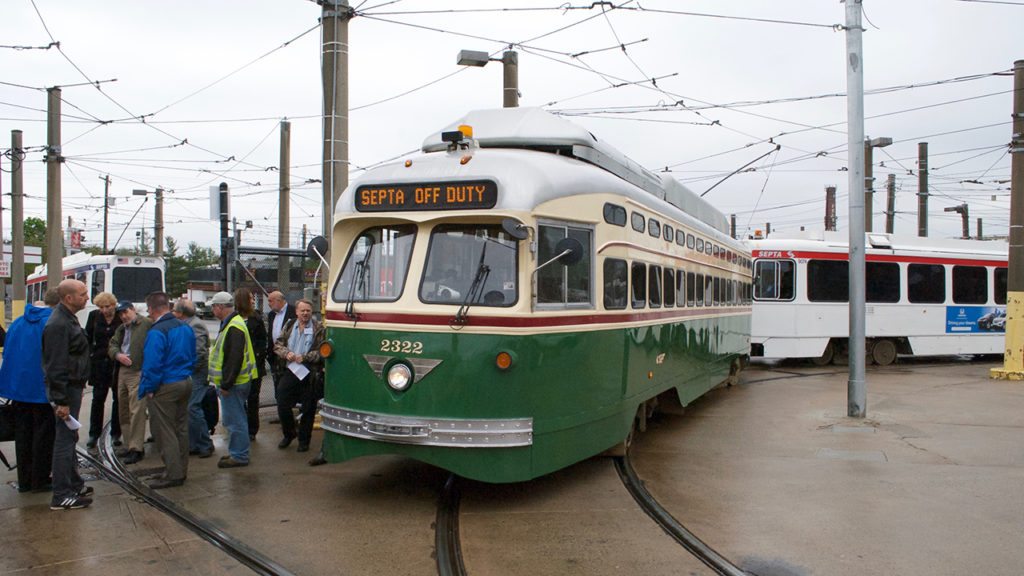
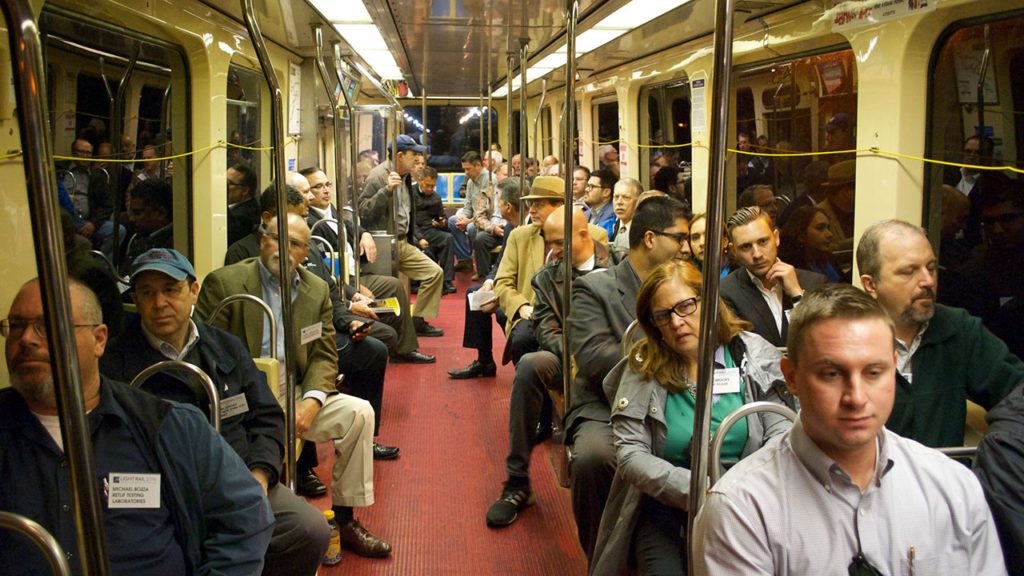
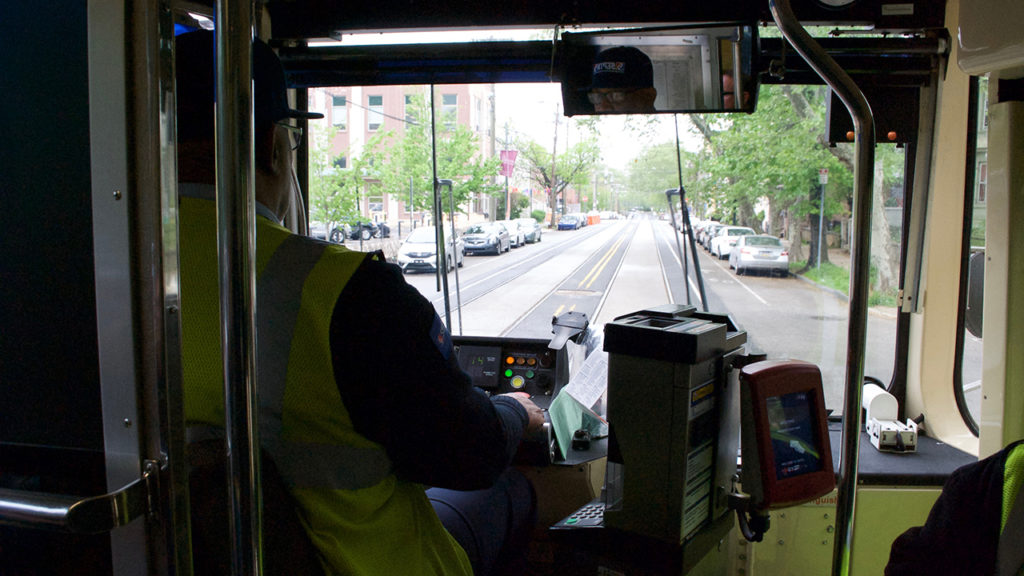
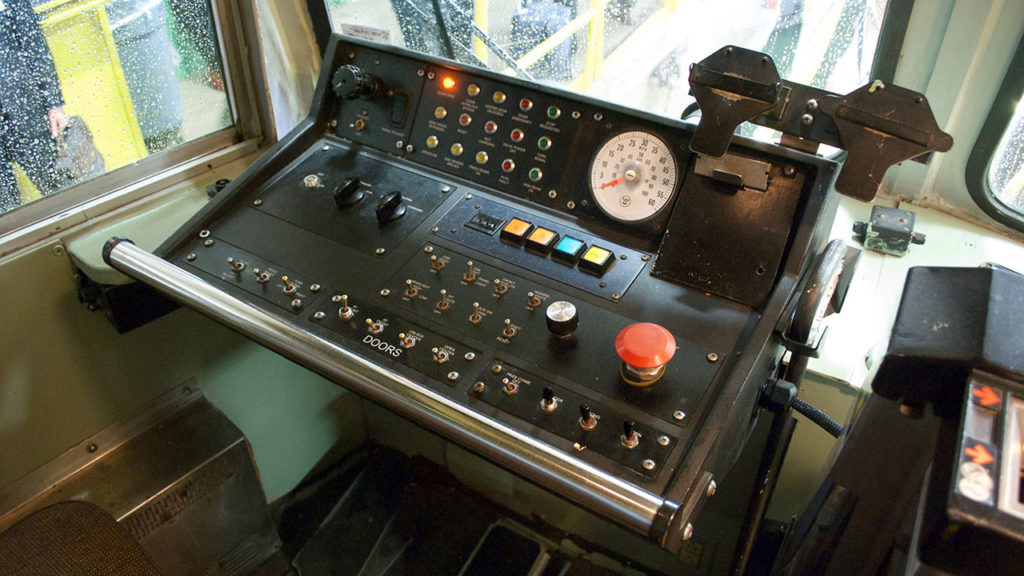
This time, at least, SEPTA proved the skeptics wrong. On Sunday, June 16, 2024 (Fathers’ Day), the PCC IIs returned to Girard Avenue, much to the surprise and delight of both locals and streetcar fans (also called “trolley jollies”). It was not a full return of the line to PCCs, as only 6 of the 18 that are slated to operate the service were running at first; the other runs were still made by buses. According to SEPTA, there are eight cars on the line at this writing, but a July 17 ride did not give the impression of that many.
In another departure from the situation 54 months before, the agency announced June 17 that the cars would return: “The iconic green-and-cream 1940s-era streetcars are a link to Philadelphia’s rich history. SEPTA is excited to announce that some streetcars returned to service on Girard Avenue’s Route 15 [G] line. Buses also operate along the route until the full fleet has been restored. All service operates between Girard Ave. & 63rd St. and Richmond St. and Westmoreland St. Loop. Select bus trips operate via Frankford Ave. and Delaware Ave. Loop.” The announcement also contained a new logo for the “PCC Historic Route 15 Trolley” and the stylized wings on the sides of a PCC car’s headlight, along with the message: “I’M BACK!” The announcement went on to say: “In 2020, with major PennDOT construction scheduled for I-95 and I-76, SEPTA temporarily suspended streetcar service on the Route 15 Trolley [G] line and substituted it with bus service. During this time, SEPTA implemented a project to fully restore 18 of the 1947 PCC streetcars that service the Route 15. Repair work included full body and frame restoration of the streetcars, as well as streetcar loop and track improvements on the eastern portion of the Route 15. All streetcars that service the Route 15 are ADA accessible and updated with new frames, floors, windows, wheelchair lifts and HVAC units.”
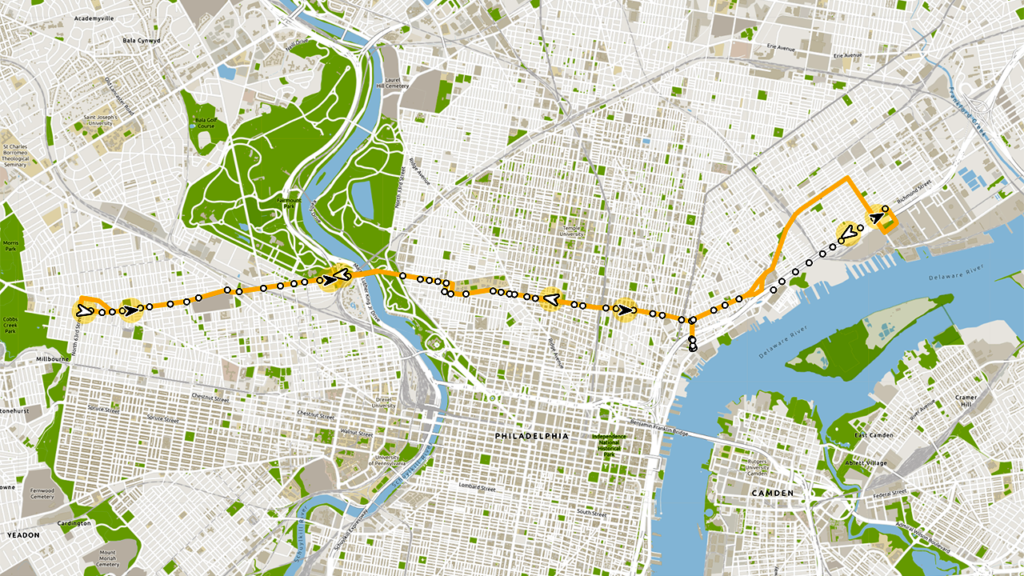
Girard Avenue is a major street, running mostly on an east-west alignment in North Philadelphia, about 1.3 miles (four stops on the Broad Street Subway) north of City Hall and Market Street. It was named after Stephen Girard, a banker who helped finance the American Revolution and later founded Girard College, which started as a trade school for orphaned boys. The line begins at 63rd Street in West Philadelphia and continues east for 6.8 miles to Frankford Avenue. On the east end, the street changes to a northeasterly alignment for one more mile, and the line ends at Richmond Street in the Fishtown neighborhood. It takes about 45 minutes to ride the line from end to end on a streetcar; somewhat longer on a bus. The Girard Avenue line connects with the Broad Street Subway and Market-Frankford subway/elevated lines.
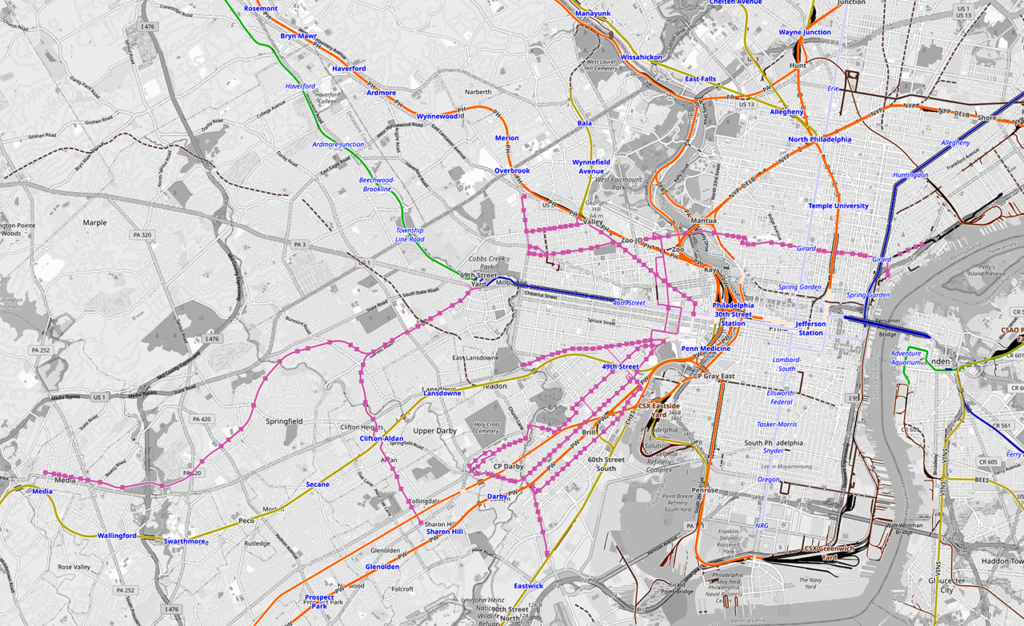
According to the current schedule, service runs about every 15 minutes, every ten during peak-commuting times and half-hourly in the middle of the night. That service now runs with SEPTA’s choice of vehicle, so riders who come to town to ride a streetcar might have to wait while one or more buses leave first. On my most recent ride, with a group that included some retired railroaders and a fellow transportation journalist, we would have had to wait for 35 minutes at the west end of the line, while the operator had a layover. There were two buses scheduled to leave sooner, so it was the consensus of the group to get on the bus and make our way to the Reading Terminal Market for lunch. The Philadelphia Trolley Coalition reports that there is no operating track on the spur between Girard Avenue and the loop at Frankford and Delaware Avenues. Any run noted on the agency’s timetable as stopping there is being made with a bus, including evening and overnight service. Runs not scheduled for Frankford and Delaware could be operated with either a streetcar or a bus.
I could not be present to ride on opening day, so I took my rides on “ordinary” weekdays. Those rides were uneventful, mostly with local residents taking the car to their usual destinations, as they had taken the bus for 54 months and further back, during a previous suspension that lasted from 1992 until 2005. As noted, sometimes those riders must still take a bus on the route, as SEPTA continues to work on the cars to prepare them to re-enter service. SEPTA is rebranding its rail lines as “Metro” with letter designations. The Girard Avenue line is currently known as the “G” as well as the “15” line.
Most people who commented in our January 2020 coverage of the line’s discontinuance did not choose to comment for this story, and the comments we received were not universally enthusiastic. Russ Jackson complained that he is not taking the restoration seriously, and alleged that SEPTA is not consistent about how many cars how many buses it runs to operate the service.
Longtime SEPTA advocate Jeff Marinoff, who lives near Atlantic City, had more praise for SEPTA. He told Railway Age, “There’s been a remarkable change of attitude at SEPTA regarding streetcars. I’m happy to see it, but I didn’t expect it. They had a ceremony and a tour of the shop before they brought the cars back.” He added: “The excellent condition of the rail and the speed of the cars are impressive. They’re flying in the wide part of the street. Not only am I amazed that they brought back the PCCs, but the Trolley Modernization Program is amazing, too.” I can confirm that the track was generally smooth, and the cars rode well. Marinoff also expressed some complaints. He said, apparently of SEPTA generally, “They have a long way to go before the make the system accessible.”
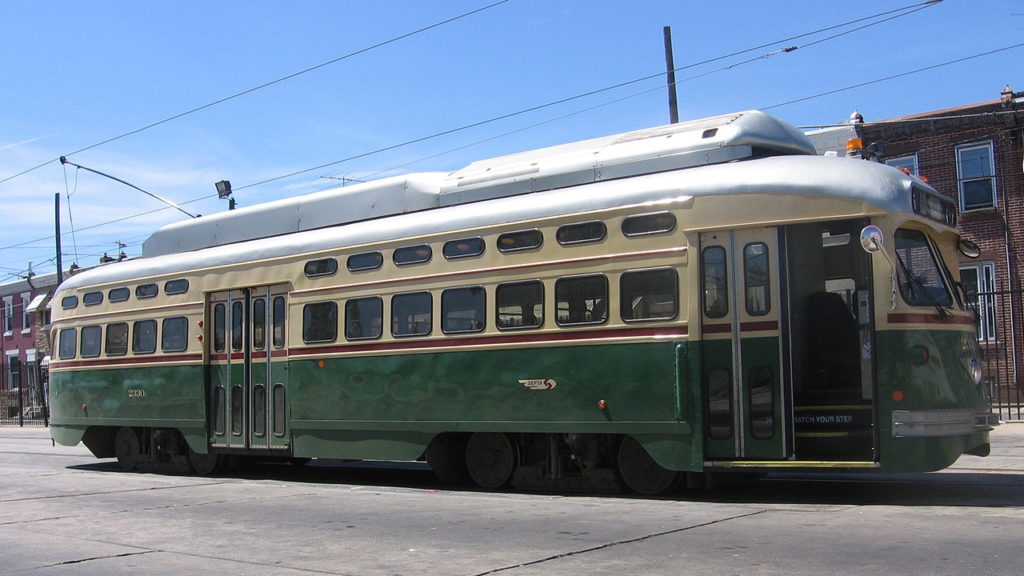
Marinoff also criticized the physical rebuild of the cars, which SEPTA did in-house. He preferred the job that Brookville had done previously, especially concerning their historic appearance. He compared SEPTA unfavorably with San Francisco’s Muni in that regard, but he was still glad that the cars with the green bodies, cream color around the windows and a maroon accent stripe between them had returned to service. He said again that SEPTA had displayed “a remarkable change of attitude by bringing the cars back.”
The cars might not be as iconic as cheesesteaks, the Reading Terminal Market (which remains, though the train station is long gone) or buying a meatball sandwich from a stand in Center City, but they do remind visitors that they are in Philadelphia, even if they run on a street where few tourists venture. Girard Avenue is not one of the city’s iconic streets. Much of it remains run down, although some of the old buildings now appear to be better kept than they were when the streetcars last ran by them. There have been stories of other streets whose condition improved because of a streetcar or light rail line. Perhaps Girard Avenue will become one of those streets someday. The line does go past some interesting places, including Girard College and the entrance to the Philadelphia Zoo. According to Marinoff, there were once cars on the line that specifically promoted the zoo with pictures of animals.
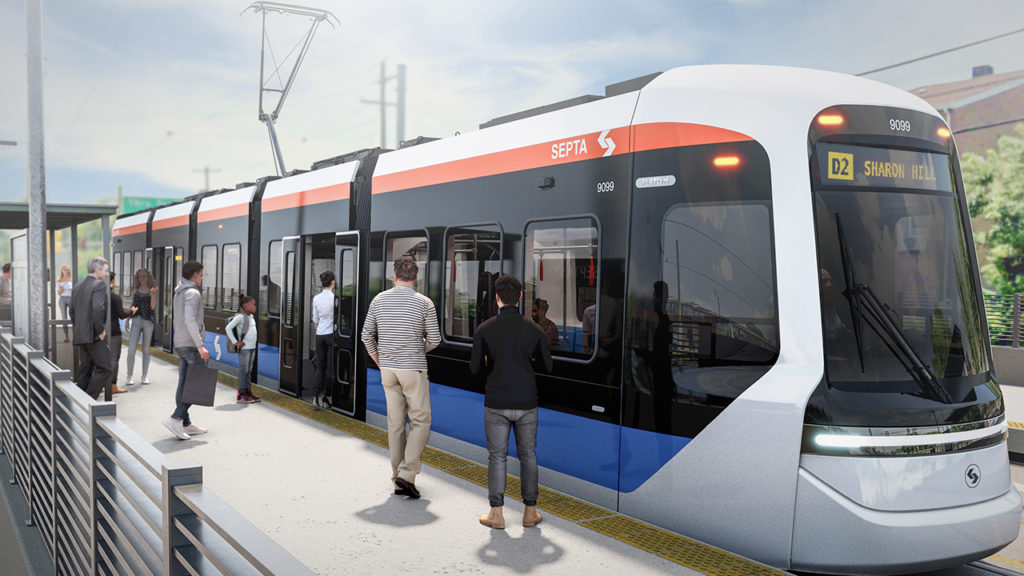
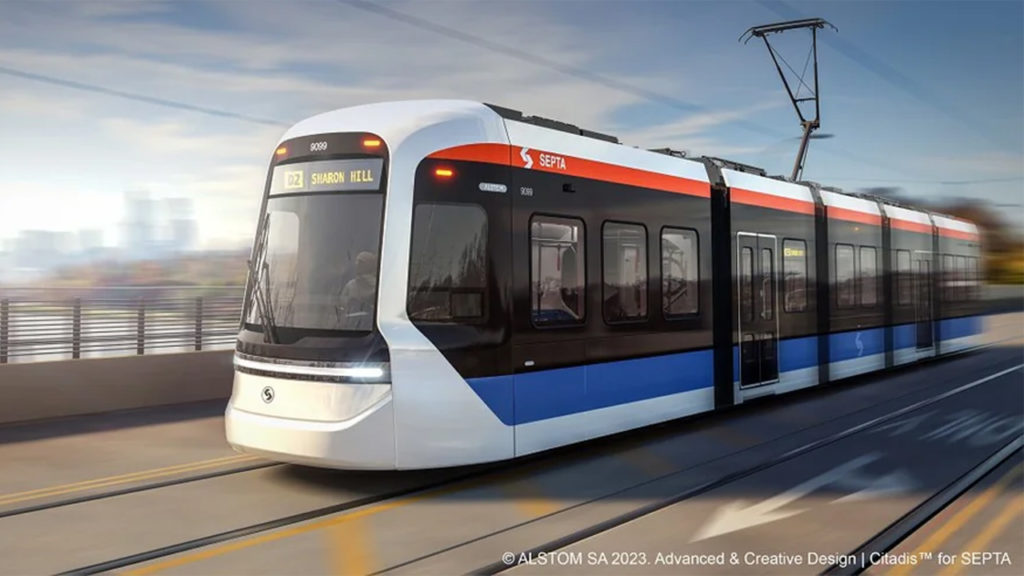
It appears that PCCs will run on Girard Avenue for some time to come, although the agency has announced its $1.98 billion Trolley Modernization Program and awarded a contract to Alstom for new low-floor LRVs. According to SEPTA, which recently announced the agency’s $2.6 billion FY2025 budget, the money will be used for “vehicle acquisition, infrastructure upgrades, and a new signal system.” SEPTA issued a 175-page RFP for the program in April, and some of the subway-surface lines are slated to receive new cars within the next few years.
That might not occur on Route 15 (or the G-Line, if you prefer) until the early 2040s. In the meantime, bits of Philadelphia’s history will continue to roll on Girard Avenue, at least for some time to come. Nobody expected that more than four years ago, when we reported that the cars were coming off, but it happened anyway.

David Peter Alan is one of North America’s most experienced transit users and advocates, having ridden every rail transit line in the U.S., and most Canadian systems. He has also ridden the entire Amtrak and VIA Rail network. His advocacy on the national scene focuses on the Rail Users’ Network (RUN), where he has been a Board member since 2005. Locally in New Jersey, he served as Chair of the Lackawanna Coalition for 21 years and remains a member. He is also a member of NJ Transit’s Senior Citizens and Disabled Residents Transportation Advisory Committee (SCDRTAC). When not writing or traveling, he practices law in the fields of Intellectual Property (Patents, Trademarks and Copyright) and business law. Opinions expressed here are his own.