LIRR
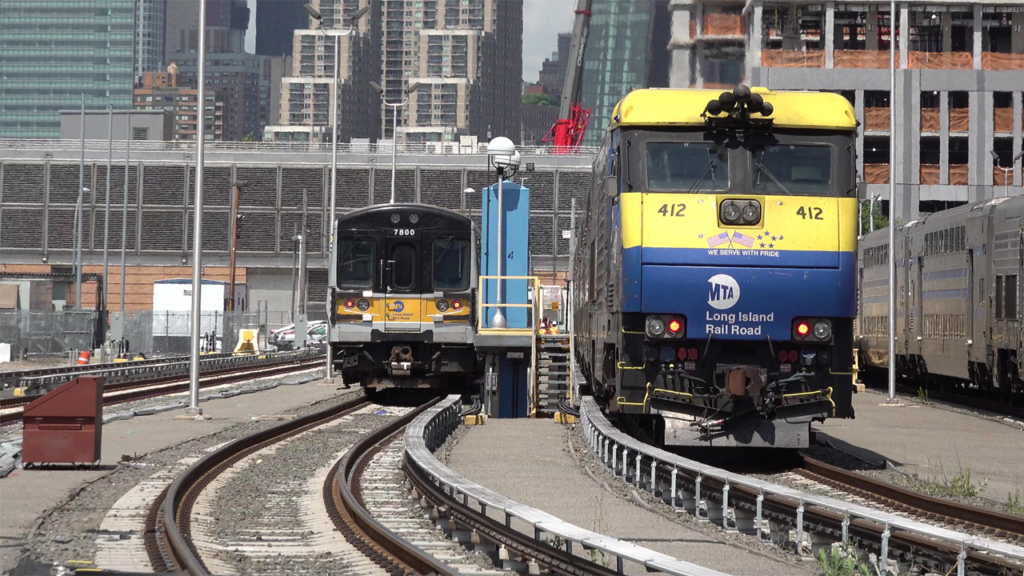
On March 16, PEB 254, the second POTUS 47-appointed board assigned to the long-running contract dispute between a coalition of five unions and LIRR, “like an earlier appointed board of experts, recommended raises and retroactive pay for rail workers,” reported the Brotherhood of Locomotive Engineers and Trainmen (BLET), which is part of the coalition, along with the Transportation Communications Union; Brotherhood of Railroad Signalmen; International Association of Machinists and Aerospace Workers; and International Brotherhood of Electrical Workers.
According to BLET, the Board wrote in its report: “Based on the foregoing analysis of both the respective wage offers and the Carriers work rule proposals, we find that the Organizations’ (the unions) Final Offer is the most reasonable offer.” The Board noted, the union said, that “…the Carrier’s insistence on all of its work rule changes, in our view, makes its Final Offer the less reasonable of the two, regardless of the respective GWIs.”
The five-union coalition on Jan. 12 reported requesting the second PEB, noting that members “have been without a pay raise” since April 2022.
“Although more than half all LIRR union workers have already settled a contract that guaranteed 9.5% in wage increases over three years, the five remaining unions have held out for more, arguing that their raises should be more in line with what other railroads in the United States have offered workers in recent years, including Amtrak and Philadelphia’s Southeastern Pennsylvania Transportation Authority, or SEPTA,” according to an Aug. 19, 2025 Newsday report.
The LIRR-labor coalition contract dispute began National Mediation Board-sponsored mediation in February 2024. The NMB on Aug. 18, 2025, released the parties from mediation, triggering a 30-day cooling off period under the Railway Labor Act (RLA), ending at 12:01 a.m. on Sept. 18. The labor coalition requested the first PEB at that time.
The first PEB “recommended raises of 14% over four years along with other improvements,” according to the coalition.
That recommendation, Newsday reported Jan. 9, 2026, “was closer to the 16%, four-year contract sought by the unions than it was to the 9.5%, three-year deal offered by the MTA.”
“We felt compelled to request a second PEB because of LIRR and the MTA’s refusal to bargain in good faith,” said Gilman Lang, the General Chairman for the Brotherhood of Locomotive Engineers & Trainmen at LIRR, at that time.
Under the rules of the RLA, the PEB “was charged with selecting the most reasonable last offer; either the last offer of the unions in its entirety, or the last offer of the Long Island Rail Road, which is owned and operated by the Metropolitan Transportation Authority,” BLET reported March 17. “After comparing the two offers, the board selected the offer presented by the unions.”
Now, if no agreement is reached in the next 60 days, the unions would be allowed to strike as soon as May 16 under RLA rules or the MTA could lock out its rail labor workforce on that date, according to BLET.
The labor coalition on March 16 sent a letter to MTA urging it “to return to the bargaining table to reach a voluntary agreement using the PEB’s recommendations as a foundation for a settlement,” according to BLET.
“Let’s get back to the bargaining table and agree to a fair settlement that takes away the threat of a disruption in service,” said BLET Vice President Kevin Sexton speaking on behalf of the labor coalition.
MTA Chief Labor and Employee Relations Officer Anita Miller told Long Island Life & Politics: “We are disappointed, but not surprised, that this [POTUS 47]-appointed Board rejected the MTA’s common-sense proposal for a new LIRR labor contract. These unions have hidden from the normal give and take of collective bargaining. They are the highest-paid railroad workers in the nation but have refused the same significant wage increases the vast majority of their colleagues accepted – and repeatedly refused to negotiate.”
According to the media outlet, “Miller said the MTA could initiate a ‘needless’ work stoppage if the coalition does not begin to negotiate in good faith, which would ‘only hurt both riders and workers. In the meantime, we will take every available step to mitigate the impact of a potential strike on LIRR customers. And should these unions decide to come to the table in good faith, we have been, and are, ready to go.’”
“What we’ve been asking for since negotiations commenced more than two years ago is exceedingly reasonable, essentially the status quo,” said Mike Sullivan, General Chairman of the Brotherhood of Railroad Signalman. “In stark contrast, the employer has been seeking a concessionary contract that doesn’t keep pace with the high cost of living in our metropolitan area.”
“This outcome confirms that our fight has been grounded in facts, equity, and the best interests of our members,” noted Shaun O’Connor, General Chairman of the International Association of Machinists and Aerospace Workers.
“The Board’s report confirms that labor acted responsibly throughout this process and deserves a fair contract,” added Jeffrey Klein, General Chairman of the International Brotherhood of Electrical Workers.
“Our labor coalition and management both made presentations to the Board,” said Nick Peluso, National Vice President of the Transportation Communications Union. “The Board members reviewed the facts, and the facts supported labor. It’s now the time for our employer and [New York] Governor [Kathy] Hochul to show some support for the workers and the commuters that rely on the LIRR. Let’s get this done and keep the trains running.”
Railway Age Capitol Hill Contributing Editor Frank N. Wilner provided the following explanation of the commuter rail provisions of the RLA:
“Major Disputes on commuter railroads, including Amtrak commuter operations, are resolved under distinct procedures. Amtrak intercity passenger operations are subject to the RLA’s freight-railroad provisions.
“The NMB, a commuter rail authority, labor union, or a governor of a state through which the commuter railroad operates may request creation of a PEB. If appointed, there is imposed a 120-day status quo (no strikes; no lockouts) requirement.
“If, within the first 60 days, there is no resolution, the NMB must conduct a public hearing at which parties to the dispute testify.
“If a voluntary agreement is not reached by the end of the second 60-day period, the commuter authority, labor union, or governor may request a second PEB be created.
“If a second PEB is created, a new 30-day status quo period commences. If, by the end of that period, a voluntary settlement is not reached, the parties present to the second PEB a ‘last, best and final offer,’ with the PEB selecting, without modification, the one it finds most reasonable. The PEB’s selection is not binding. If a settlement still is not reached based upon the second PEB’s non-binding recommendations, a strike, unilateral promulgation of carrier-desired changes, or an employer lockout may commence. As with Major Disputes on freight railroads, the RLA at that point has run its course. Congress then may legislate settlement terms.
“Should labor commence a work stoppage, striking employees are denied, for the duration of the strike, unemployment benefits payable under the Railroad Unemployment Insurance Act (RUIA). Should the commuter railroad reject the non-binding recommendations, precipitating a work stoppage, the commuter railroad may not take advantage of a carrier strike insurance plan.”
Click here for a mediation overview and FAQ from the NMB.
Further Reading:
- BLET Givebacks to NJT a “New Normal” for Labor?
- NJT BLET Rank-and-File Ratify Deal
- Biden Orders Second PEB in NJ Transit-BLET Contract Dispute
- PEB 251 Established, Recommendations Released to Settle NJ Transit-BLET Dispute
- BLET Forks $50K Over to NJT for ‘Illegal Job Action’
- President Biden Signs H.J. Res. 100 Into Law
TTC
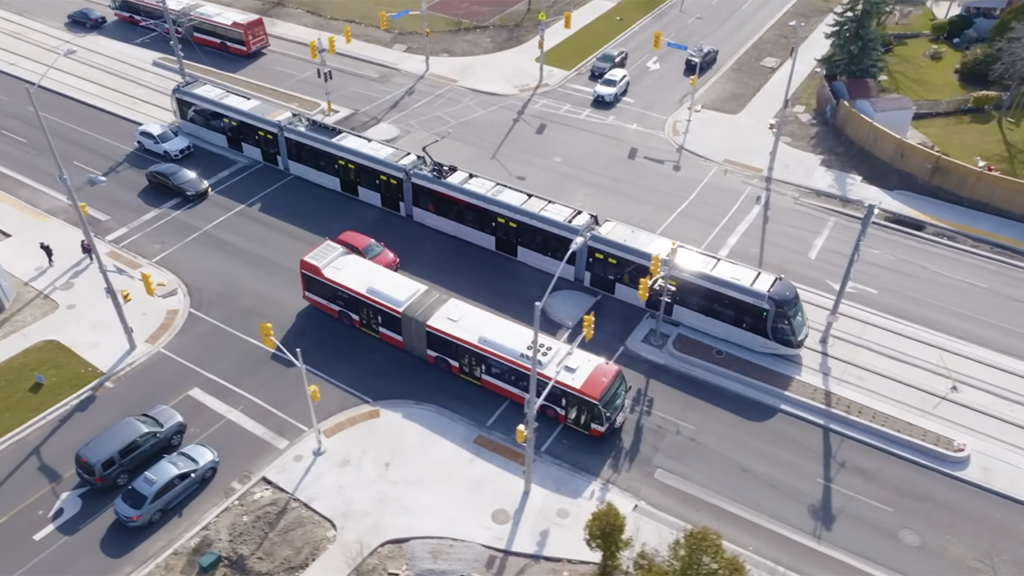
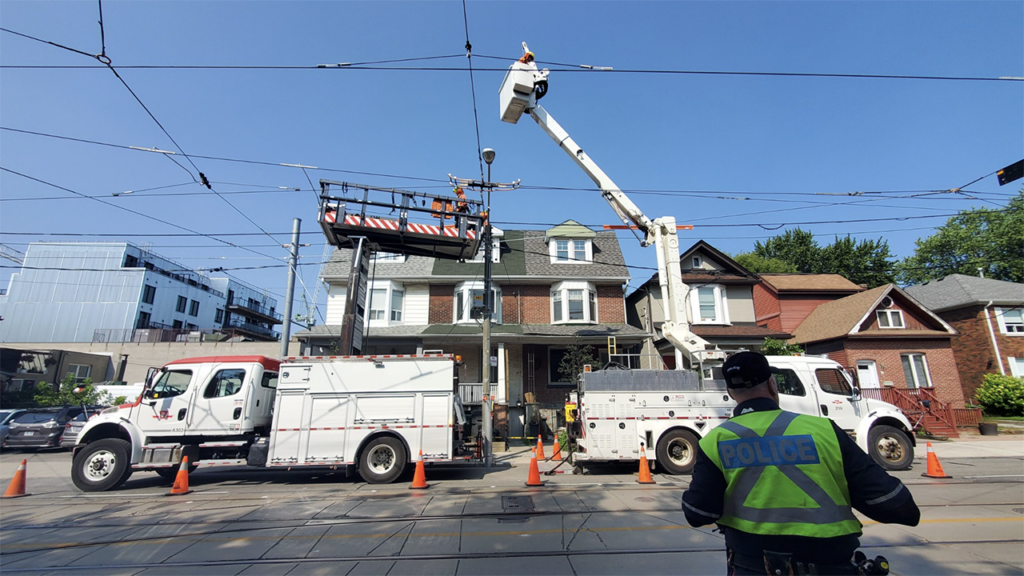
TTC CEO Mandeep S. Lali on March 17 reported that the agency has formally filed for conciliation with CUPE Local 2 through Ontario’s Minister of Labor, Immigration, Training and Skills Development. The union members, who are responsible for installing and maintaining critical subway, streetcar, and bus systems at TTC, include electricians, substations electricians, radio technicians, cable technicians, signal technicians, relay technicians, transit control technicians, SCADA technicians, overhead linespersons, and power systems controllers.
“While the current collective agreement with this bargaining unit does not expire until the end of the month, entering conciliation at this stage is intended to support a timely and constructive resolution to negotiations,” Lali said. “There is no impact on customers, service, or safety as a result of this step. Transit operations continue as normal.”
Conciliation, he noted, provides an opportunity for TTC and the union to work with an independent third party “to advance collective bargaining in a fair and efficient manner.”
“TTC remains focused on achieving an agreement that is fair to employees, reflects fiscal realities, and maintains operational continuity,” said Lali, noting that “[c]onstructive dialogue through conciliation is viewed as the most effective path to a mutually acceptable outcome.”
According to the Ministry of Labor, Immigration, Training and Skills Development, if conciliation results in an agreement—meaning if the employer and the union settle their differences concerning the terms of the collective agreement during conciliation—the conciliation officer reports the results to the Minister of Labor, Immigration, Training and Skills Development. A ratification vote needs to be held before the new agreement can have effect, it noted. The union and the employer must also file a copy of the agreement with the Minister of Labor, Immigration, Training and Skills Development, as required by the Labor Relations Act.
If the union and the employer don’t reach an agreement during conciliation, the conciliation officer will report the outcome to the Minister of Labor, Immigration, Training and Skills Development, and the Minister will send a written notice to the union and the employer. “Typically, this notice will inform the parties that a board of conciliation will not be appointed,” according to the Ministry of Labor, Immigration, Training and Skills Development. “This is commonly known as a ‘no-board.’ Less commonly, the notice will inform the parties that the process to appoint a board of conciliation (a three-person panel that attempts to help the parties agree on the matters referred to the board of conciliation) has been started.
“After the minister sends the notice, the union and the employer continue to have a duty to bargain in good faith and attempt to reach an agreement. Until a collective agreement has been concluded, the union and the employer have different options depending on the circumstances, including the following:
- “If the parties are able to engage in a legal strike or lock-out, the release of the ‘no-board’ notice begins the countdown to the date on which either the employer or the union could begin a legal work stoppage. See sections 79 and 122 of the LRA for rules related to the release of no-board notices, conciliation board reports, and communication by the minister.
- “If the parties are negotiating their first collective agreement, the union or the employer can apply to the Ontario Labor Relations Board to direct them to interest arbitration to settle the collective agreement in certain circumstances. The Board will determine whether to make that direction.
- “If the parties are not able, or have a limited ability, to strike or lock out, the release of the ‘no-board’ notice in a compulsory interest arbitration or essential services framework generally enables them to proceed to interest arbitration to resolve the dispute, where applicable.
- “Parties may agree to participate in voluntary interest arbitration. Employers may request a last-offer vote.”
For more details, click here.