
VIA Rail Plots a Path for Transformation
When IRJ dialed in for a video call with VIA Rail’s President and CEO, Mario Péloquin, his laptop’s camera wasn’t working, so he used an avatar to keep his side of the call animated. Although conversing with a cartoon character was both amusing and slightly disconcerting, there is nothing comical about Péloquin’s ambitions for VIA Rail.
Since launching the company’s 2030 strategic plan earlier this summer, he has been focused on turning the Canadian state-owned passenger business into a best-in-class operator in North America.
VIA Rail’s key objectives between now and 2030 are:
- Boost capacity by 18% through increased frequencies on the Windsor – Toronto – Montreal – Quebec City corridor and on long-distance, remote and regional services.
- Transform the company through innovation to drive growth and make savings equivalent to 15% of the operating deficit to secure long-term financial sustainability—subsidies for the operator totaled $C381 million ($279 million) in 2023, suggesting a savings target of over $C50 million.
- Uphold the highest environmental standards and implement initiatives to cut greenhouse gas emissions by 50% compared with 2005; more energy-efficient diesel locomotives and improved driving techniques are key to achieving this goal.
- Foster a high-performance culture to ensure leadership continuity and organizational resilience.
- Make safety and security VIA Rail’s top priority.
Ambitious and Efficient
“My goal is to be ambitious,” Péloquin says. “VIA Rail has done roughly the same thing for the last 50 years. That needs to change. I want to push the whole organization to become more efficient. A good example of how we can do this is to fill more of the seats that are currently running empty for parts of long-distances services.”
He adds that efficiencies, rather than wage cuts and job losses, will drive savings. “At 3,600 employees we’re already a pretty lean organization,” he says. And while the operator has few surplus coaches, it will look to increase train lengths where possible. “If we can add cars, we’ll add them,” Péloquin promises.
One of the biggest and outwardly most visible changes at VIA Rail has already started. Péloquin is aiming to dramatically cut the average age of the company’s fleet. “At the moment we must have one of the oldest fleets in the developed world and I’m not sure for how long we can keep some vehicles running safely,” he admits.
With an average vehicle age of 77 years, some of the coaches operating daily across the country were built in 1947. It’s not a statistic Péloquin is proud of, so his ambitious solution is to persuade the Canadian government to replace the entire fleet and reduce the average vehicle age to just three or four years.
Confirmation last month that the federal government will make good on a funding commitment, first outlined in its 2024 budget statement in April, to provide new trains suggests that Péloquin will achieve his fleet renewal goal.
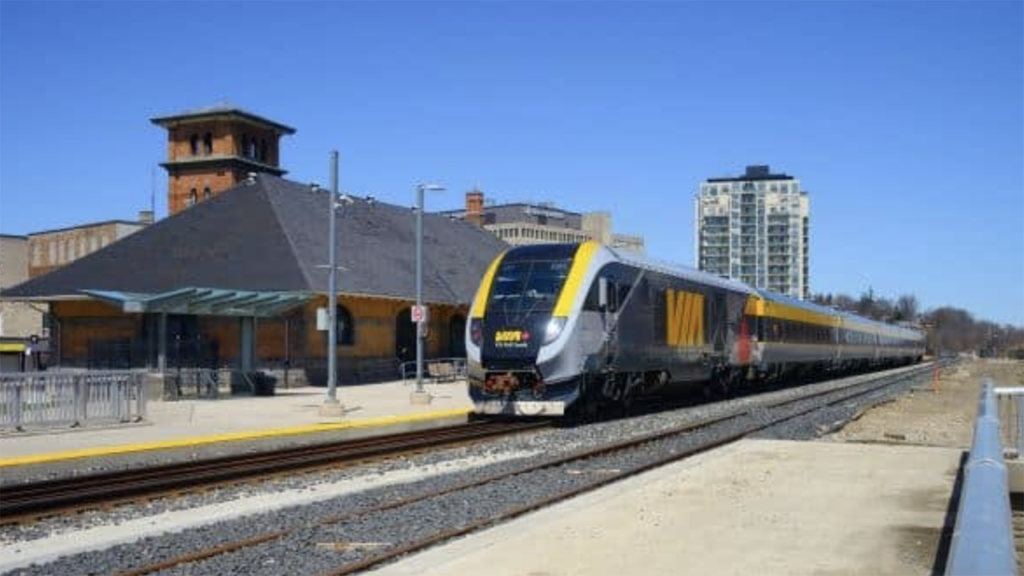
The government has already invested more than $C3 billion over the last five years in fleet modernization, including the replacement of the Windsor – Quebec City corridor fleet where a new Venture train is now being delivered by Siemens every month (see panel below).
The latest government funding pledge will replace the remainder of Via Rail’s long-distance and regional fleet, deployed on the Ocean, the Canadian and Winnipeg – Churchill services, as well as remote routes across the country.
The government said on July 11 that it “is committed to strengthening passenger rail across the country to keep all Canadians connected and to provide them with an environmentally-friendly way to travel.” The precise amount allocated to Via Rail has not yet been revealed to protect the government’s negotiating position ahead of the procurement process. But the Venture fleet deal agreed with Siemens in 2018 gives a good indication of the scale of the investment: $C989 million for 32 trains, including Charger locomotives.
“Budget 2024 investments in Via Rail’s fleet renewal will enhance the passenger experience, promote environmentally-friendly travel options, and bring communities and local economies together,” says Canada’s minister of transport, Mr Pablo Rodriguez.
Government Commitment
Péloquin is understandably delighted by the news. “We are very pleased with this important commitment from the government, which is the latest in a series of significant investments supporting VIA Rail’s transformation,” he says.
“By renewing our fleet, we will be able to maintain our coast-to-coast services, continue to connect a multitude of communities, and encourage more Canadians to choose rail. These new trains will support our vision of offering a modern, comfortable, accessible, and sustainable experience to our passengers in every region of Canada.”
As well as investing in rolling stock, the government has allocated $C462.4 million toward the operation of the VIA Rail network over five years, starting in 2024-25. Although VIA Rail posted on social media in July that it expects to start the procurement process for its new trains “soon,” Péloquin expects to issue a Request for Proposals (RFP) in the fourth quarter of this year for approximately 40 locomotives and 300 coaches.
“I want manufacturers to be creative; if they can go cheaper and faster, we’re open to progressive ideas,” —Mario Péloquin, VIA Rail President and CEO
And he has no plans to show potential bidders his hand on the estimated value of an eventual contract. “I want manufacturers to be creative; if they can go cheaper and faster, we’re open to progressive ideas,” he says.
Even if a deal is signed in the near future, Péloquin says that the first next-generation rolling stock is probably at least five years away and it could take a decade before the whole fleet is replaced. “Typically, we can’t buy off-the-shelf rolling stock as we require a mix of special coaches, including dome cars, driving trailers and proper sleeping cars,” he explains. “North American crashworthiness standards are generally higher than those in Europe, so we are talking about conceiving vehicles from scratch, a process that can take around two years.”
As impressive as the total renewal of VIA Rail’s fleet is, it doesn’t allow for significant service expansion and reintroduction of passenger services to parts of the country that lost their rail service when the network contracted from 2004 onwards. VIA Rail’s 2030 strategic plan doesn’t include serving places such as Calgary and Regina. “I want to go there,” stresses Péloquin, “but I need more trains.”
He describes the aims of the 2030 strategic plan, including fleet replacement, as the first phase of Via Rail’s transformation, with a future second phase including extra trains to provide more services.
New rolling stock isn’t the only thing on Péloquin’s mind. He is committed to achieving a zero-waste policy for the Windsor – Quebec City corridor, which is likely to include a push to use more biodegradable materials. “We have to change the way we think,” he says, “especially in how we supply food and drink on trains. Not just what we offer, but how we offer it.”
Refreshingly, Péloquin is a hands-on CEO, whose idea of a working life doesn’t involve sitting in a bunker devising esoteric policies. Instead, he has been travelling around the country talking to major employers since the launch of the 2030 strategic plan.
“I’ve seen it as an opportunity to raise awareness among major decision-makers,” he says. “Their internal policies have a real impact. Encouraging their employees to take the train for business travel sends a strong signal that they are making a sustainable and responsible choice.”
And he reckons that the entry into service of the new Venture trains has come at just the right time: “With improved ergonomics, greater brightness and better connectivity, these trains offer a high level of productivity on the move, as well as being the best choice for the environment.”
New Siemens Fleet is More Than 50% Complete
AT the end of June, the 18th Siemens Venture trainset was delivered to VIA Rail’s maintenance centre in Montreal. The new trains are being built in Sacramento, Calif., and move by rail to Canada, with Union Pacific (UP) responsible for the first leg to Chicago, where CN takes them onwards and across the border.
On June 27, VIA Rail announced that the new trains will operate in southwestern Ontario, extending the Quebec City – Toronto service to include the London and Windsor corridors and both southwestern Ontario lines, the Brantford and Kitchener routes.

“The achievement of this major modernization milestone means that by the summer of 2025, the entire Quebec City – Windsor corridor will be served by modern, accessible and environmentally-friendly trains,” Péloquin says. “The new trains will progressively replace the old fleet starting this summer, completely transforming the quality of service on VIA Rail trains for the coming decades. Our full roster of 32 new trains will be in service by the summer of 2025, which will mark the completion of this game-changing project for passenger rail in the corridor.”
The 18th Siemens Venture train has been outshopped in a special livery, branded Lumi. VIA Rail says it “wants to make a strong gesture by differentiating one train with a special exterior design.” The yellow and blue colour scheme is, according to VIA Rail, “a nod to the past and a look to the future, incorporating the monochrome yellow of Via’s current branding, and keeping the signature lines of the new trains.”
Lumi has begun testing and approval runs on VIA Rail’s Montreal – Ottawa corridor and is expected to enter revenue service by the end of August.




