
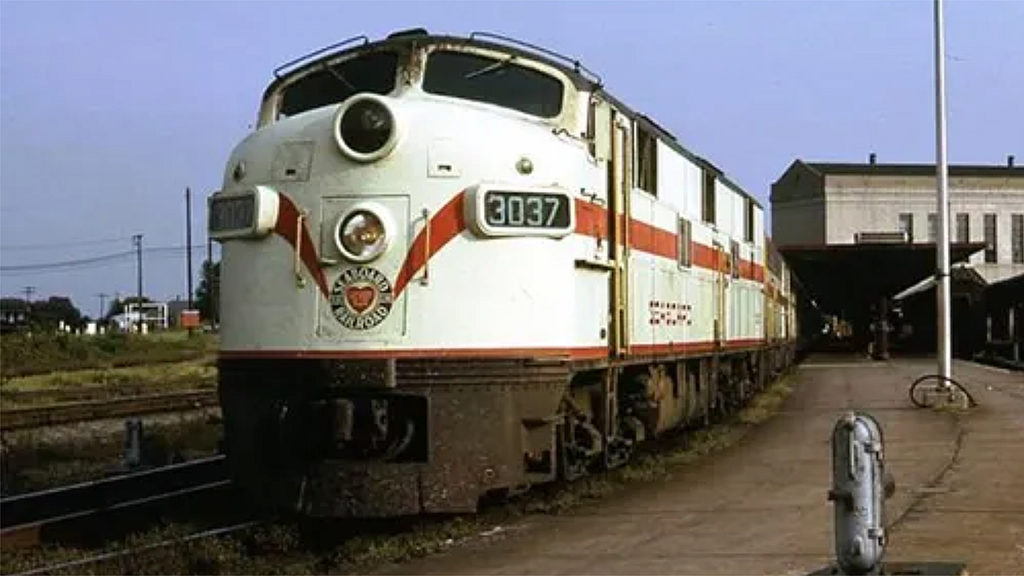
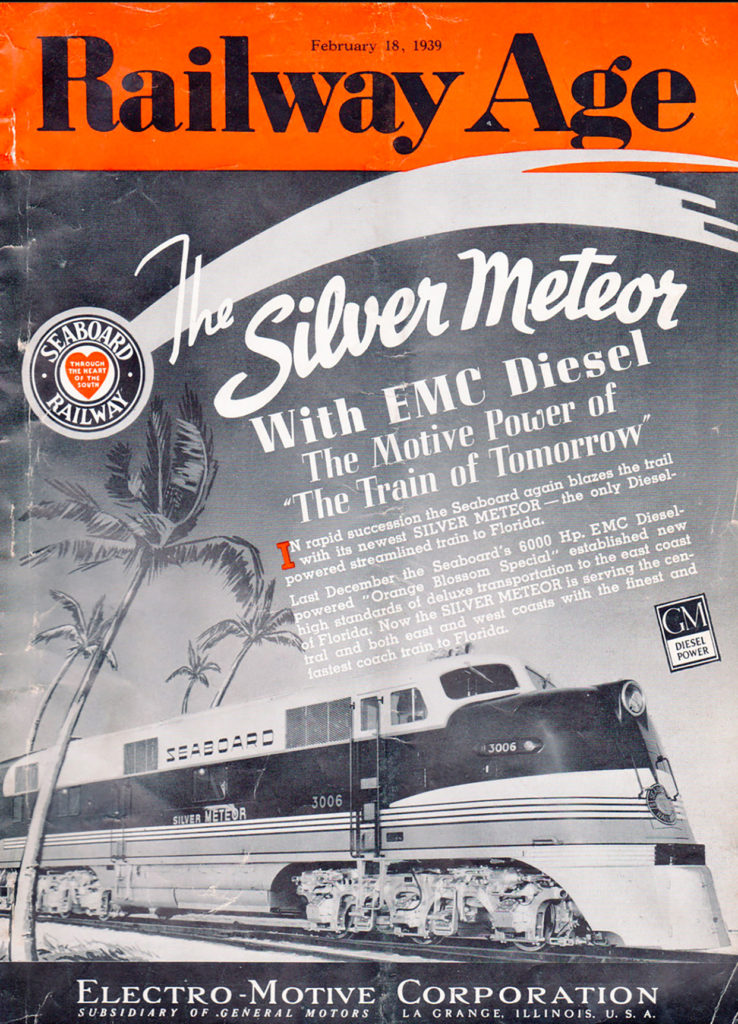
The Silver Star was once part of the Seaboard Air Line Railroad’s fleet of crack streamlined trains between New York and the South that ran with stainless steel equipment, starting in 1947. While the Silver Meteor was the prime train on the route, the Star was not far behind, both running long consists and featuring delicious food, including some Southern dishes, on the train’s two dining cars.
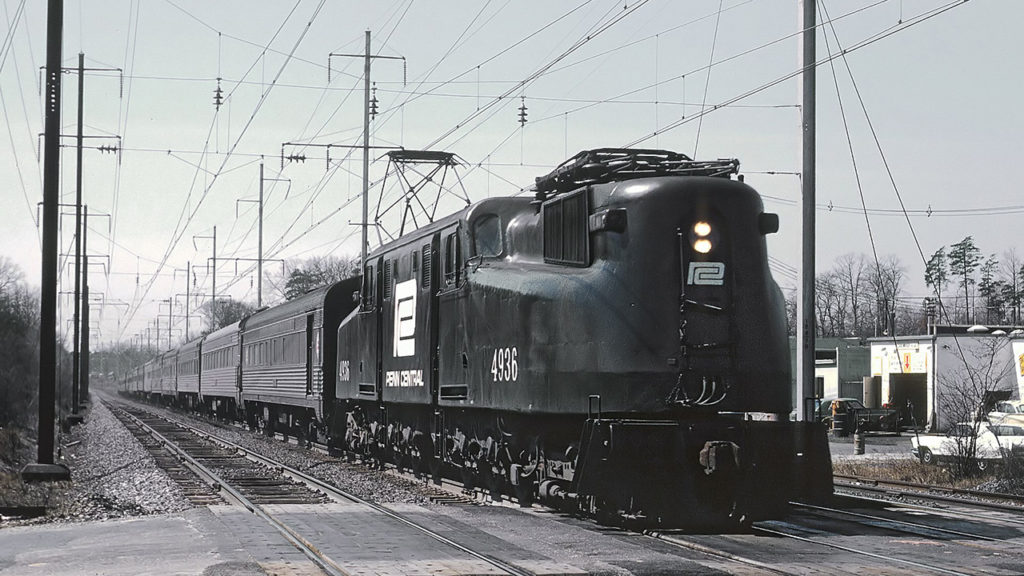
There was also the Silver Comet, which went to Atlanta and Birmingham, but that train did not survive the start of Amtrak. Today both the Star and the Meteor run between New York and Miami as Amtrak trains, but their consists have been reduced, their services downgraded, and their schedules lengthened. At this writing, though, that situation might only exist for a few more months. While Amtrak is not talking about it at this writing, the “reservations” section of Amtrak’s website tells a story that could lead to the beginning of the end of one for the nation’s longest-serving and popular trains.
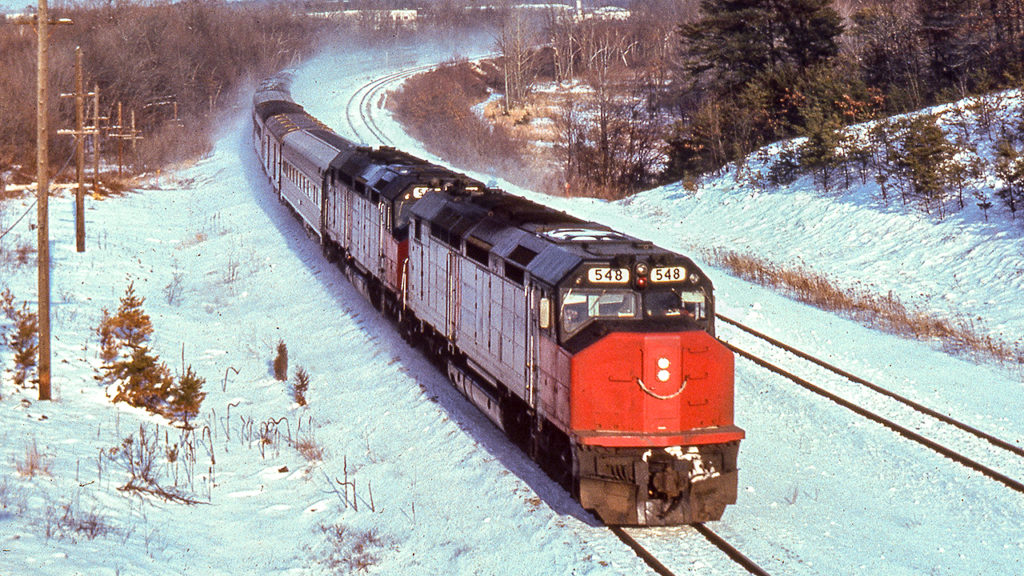
Amtrak’s Capitol Limited between Chicago and Washington, D.C. is part of the story. Last spring there was talk among crew members that the Capitol, now running a short consist of Superliner cars (it was down to one sleeping car, one coach, and a lounge car in April 2023), would be converted to single-level Amfleet II cars, which are used on long-distance trains that serve New York. Superliners can’t get there because they are too tall to fit through the North River Tunnels into Penn Station. The move could have been explained by a simple shift to single-level cars to make more Superliner equipment available for use on other long-distance trains. Many of them have been running consists that are shorter than usual, while 14 of the Superliner sleeping cars and coaches are being used to carry passengers or as deadhead equipment to satisfy CN’s demand that only Superliners be used on the trains between Chicago and Carbondale, Ill., on the Illini and Saluki trains.
Today’s Silver Star is very different from the train that ran under the Seaboard Airline, Seaboard Coast Line (following a merger with Seaboard’s rival, the Atlantic Coast Line), and Amtrak (during its early days with an 18-car consist that included coaches, sleeping cars, two dining cars and lounge cars, including a rear-end observation car). For several years, the only food available was lounge-car snacks (the train was dubbed the Silver Starve or Silver Starvation, until pre-plated microwaved meals were made available to sleeping car passengers. Today, the two Florida trains feature dining car meals, but only sleeping car passengers are allowed to eat them. Coach passengers are still restricted to the lounge car.
The route is different. Only the 340-mile stretch between Raleigh and Savannah runs on the original SAL, now known as CSX’s S-Line. That part of the route includes the capitals of both Carolinas, Raleigh and Columbia, with stations located within walking distance of the downtown areas. The Florida portion of the route, which ran through Ocala, has been rerouted onto the former ACL route, now known as CSX’s A-Line, and replaced by a bus between Jacksonville and Lakeland. The Seaboard trains once ran between Richmond and Raleigh on the S-Line through Henderson, N.C., but that stretch of rail has been downgraded and the trains now run on the A-Line through Rocky Mount, with running time increased by almost two hours. There appears to be some hope for passenger trains to return to the S-Line someday. Virginia and North Carolina are planning purchases of right-of-way and upgrades for passenger service, but that won’t happen soon.
Website Tells Different Story
When I asked Amtrak for a statement, I received this reply on July 15 from Kimberly Woods, Washington-based Senior Public Relations Manager: “Following up on your request for information in regards to Trains 29 and 30 and Trains 91 and 92. Amtrak periodically reviews service plans, and we’ll provide more information when we are ready to do so.” I followed up with specific citations from the website and questions, but at this writing on July 30, I have heard nothing further from any official source at Amtrak. I will update this story—if and when I do.
Nonetheless, efforts to determine fares and schedules from mid-November demonstrate that Amtrak probably intends to run the Silver Star only south from Washington, D.C., starting on Monday, Nov. 11. The effect would be that the Silver Star will no longer offer direct service to or from points on the Northeast Corridor. Reports indicate that, instead, the same single-level consists now used on Trains 91 and 92 will also be used on Trains 29 and 30 between Washington, D.C. and Chicago.
This change would result in a diminution of service for riders on the NEC traveling south (and vice versa), especially to points not served by Trains 97 and 98. The current schedule calls for an 11:02 AM departure from New York, and 29 minutes of standing time in Washington, D.C. According to the reservations section of the Amtrak website, this schedule is only available through Nov. 10.
Effective Nov. 11, Train 91 from New York is reported as “sold out” and riders must leave New York’s Penn Station on Train 151, which leaves at 9:25 AM and requires a layover of two hours and twelve minutes while waiting for the truncated Train 91. The listed fare ($168.00) is also $30.00 higher than for Train 97, which has a total running time five hours and 26 minutes faster, and not reported as “sold out.” Unless there is a surge of riders to Tampa and points in the Carolinas like Raleigh and Columbia, that scenario does not appear to make sense.
I checked the next few days and some in December, and the results were the same, so this is not an anomaly. The northbound situation with Train 92 is comparable, effective Nov. 9. Silver Star passengers will arrive in New York at 9:26 PM under the new schedule; 2:14 later than the current arrival time of 7:10 PM, paying a $30 higher fare. The current schedule takes the Star 4:22 longer than the Meteor end to end, which will increase to 6:38.
Also, the website does not show connections from Train 91 to Train 29, or from Train 92 to Train 30 before or after the change. This would not make any sense if the same train set is used for both trains a fact that renders this scenario confusing. Will those trains use the same physical consists, effective on or about Nov. 10, 2024? I asked Amtrak that question and continue to wait for an official answer.
It would also be good to know if this change slated to be permanent. If it is scheduled to be in effect for a limited time, I would like to report the duration. The change could be a temporary measure to improve equipment allocation while the crews at Amtrak’s shops repair bad-ordered or wreck-damaged equipment to bring it back into service. I also understand that the apprehension that accompanies any downgrade in service can be abated when customers know the downgrade is temporary, especially when they know how long the temporary situation will last.
Sliding Down a Slippery Slope?
For a while, during the COVID-19 pandemic, only the Silver Star ran and the Silver Meteor was suspended, but the Meteor later came back on its current schedule. If the portion of its route along the NEC is eliminated, it will mark the first time in its history that the train would not serve any point north of Washington, D.C. directly. It might not be too much a hardship for Baltimorians to take a MARC train to connect with it, but the large markets of Philadelphia and New York and New Jersey in between will be required to pay more than they do today, and take about two hours longer for the trip than the present schedule requires. For riders between NEC points and South Florida, the trip already takes about four hours longer on the Silver Star than a trip between the same endpoints on the Silver Meteor, with the Star adding the miles between Auburndale Junction and Tampa in both directions to serve that city and stop at Lakeland, both on the way to Tampa and back to Orlando.
In short, the trip on the Silver Star will take longer and cost more than a comparable trip on the Silver Meteor for trips that can be made on either train. Trains 91 and 97 arrive at South Florida points within roughly one half-hour of each other, if they both run on schedule (Miami arrival times are scheduled 24 minutes apart). Riders gong to or from the portion of the route that still runs on the CSX S-Line, or riders going to or from Lakeland or Tampa, would still ride the Star because they would have no other choice, but that option does not seem to make sense for riders who can travel between NEC points and places served by both trains.
While Amtrak has not yet commented on the potential through-running operation with the same consist, the only advantage for anyone would be that it would be possible to book a trip between a point on the Capitol Limited route and one on the Silver Star route. Those trains are scheduled to connect at Washington, D.C. under the present schedule, and the trip would not necessarily be faster if both were to use the same trainset. It takes a certain amount of time to turn a consist, and trains running separate consists could connect quickly if the first train arrives at the transfer point (Washington D.C. in this case) behind schedule. Still, that argument is moot, because Amtrak does not recognize that connection either way.
I checked the availability for a trip between Pittsburgh (in the middle of the Capitol Limited route), and Columbia, S.C. (in the middle of the Silver Star route) for Aug. 7 (on the present schedule) and Nov. 20 (with the proposed change). In both cases, the reservations function on the website says: “This trip cannot be booked. We do not have any travel options between the stations entered.” So, even with the same trainset used on both trains, Amtrak still does not recognize any same-day connection between them!
Saving the Silver Star
It seems clear that, without the opportunity to travel between points on the NEC and places in Florida and the Carolinas served by the Silver Star, that train could lose many of its riders to the faster and less-expensive Silver Meteor, which also does not require a change of trains at Washington, D.C. Would its consist dwindle to one or two coaches, one or two sleeping cars and a food service car? That is not beyond the realm of possibility. Years ago, Amtrak discontinued service on the S-Line in Florida and replaced it with a bus. Could the same thing happen for the 340 miles between Richmond and Savannah, requiring passengers going to or from places like Raleigh and Columbia to take a bus?
That almost happened to the Southwest Chief during the Trump Administration, when Amtrak proposed cutting out the middle of the route and running a bus bridge between Albuquerque and Dodge City, Kan., instead—a distance that would take a bus nearly twelve hours to cover. The outcry from riders and elected officials in Kansas, Colorado and New Mexico stopped that proposal and brought upgrades to BNSF’s Raton Pass route, but it’s difficult to fathom how long two disjointed rail services with a long bus ride in between would have survived. Similarly, truncating the Silver Star on a permanent basis could serve as the beginning of the end for the train itself.
Even if that is the plan, there is still a means for saving the train. Even if a section of it originates in New York with a short consist like two coaches, a lounge car and a sleeping car, it could offer rooms and seats between NEC points and places south of Washington, D.C.. That equipment could be joined with the part of the consist coming from Chicago as the Capitol Limited. Both trains would run together on the part of the route between Washington, D.C. and Florida. There is switching capacity at Washington Union Station, and the integrity of the Silver Star would be preserved, along with current fares and without unduly lengthening the schedule. That operation would not be very different from the switching operations on today’s Lake Shore Limited at Albany or the Empire Builder at Spokane.
Amtrak’s long-distance network is tiny: only 14 routes (not counting the Auto Train, which is available only to motorists who are bringing their vehicles along), the same size it was when Amtrak began in 1971. Given the current equipment shortage and the difficulty that Amtrak had in complying with the post-COVID statute that directed “America’s Railroad” to restore the trains that had been reduced to tri-weekly operation in 2020 back to daily service, the prospect of any of those trains dying by attrition raises the proverbial red flags.
Can Amtrak be convinced to support the goal of returning the Silver Star to its appropriate northern terminal of New York as quickly as possible, even if it is truncated to Washington, D.C. temporarily? That remains to be seen, but it appears clear that the Star could be in serious trouble if steps are not taken to make sure that its coming route cutback will not only be temporary, but short-lived.

David Peter Alan is one of North America’s most experienced transit users and advocates, having ridden every rail transit line in the U.S., and most Canadian systems. He has also ridden the entire Amtrak and VIA Rail network. His advocacy on the national scene focuses on the Rail Users’ Network (RUN), where he has been a Board member since 2005. Locally in New Jersey, he served as Chair of the Lackawanna Coalition for 21 years and remains a member. He is also a member of NJ Transit’s Senior Citizens and Disabled Residents Transportation Advisory Committee (SCDRTAC). When not writing or traveling, he practices law in the fields of Intellectual Property (Patents, Trademarks and Copyright) and business law. Opinions expressed here are his own.




