FINANCIAL EDGE, RAILWAY AGE MAY 2025 ISSUE: Who doesn’t need a break from government these days? If the tariff instigated stock market rollercoaster isn’t nightmarish enough, the $200 million ad campaign of the Department of Homeland Security should make anyone wonder why “Chainsaw” Musk hasn’t reclaimed some of that cash for the taxpayer. (I’m not even going to touch the Easter weekend purse and security badge snatching from DHS Secretary Noem at a D.C. restaurant.)
Unfortunately, this column is all about the government—but due to tariff induced nausea, railcar and locomotive tariffs can wait until next month. Instead, let’s talk about high-speed rail. Railway Age’s David Peter Alan has been doing the yeoman’s work of covering the government’s flim-flam judgements on grants issued and revoked for high-speed rail investment in the U.S.
There are four major high-speed rail projects discussed or operating in the U.S. right now: Brightline Florida (operating), Brightline West between Los Angeles and Las Vegas (about to break ground), Texas Central Railway (TCR), Houston to Dallas—not yet broken ground, and California High Speed Rail (CHSR), Los Angeles to San Francisco—ground broken. How are they doing?
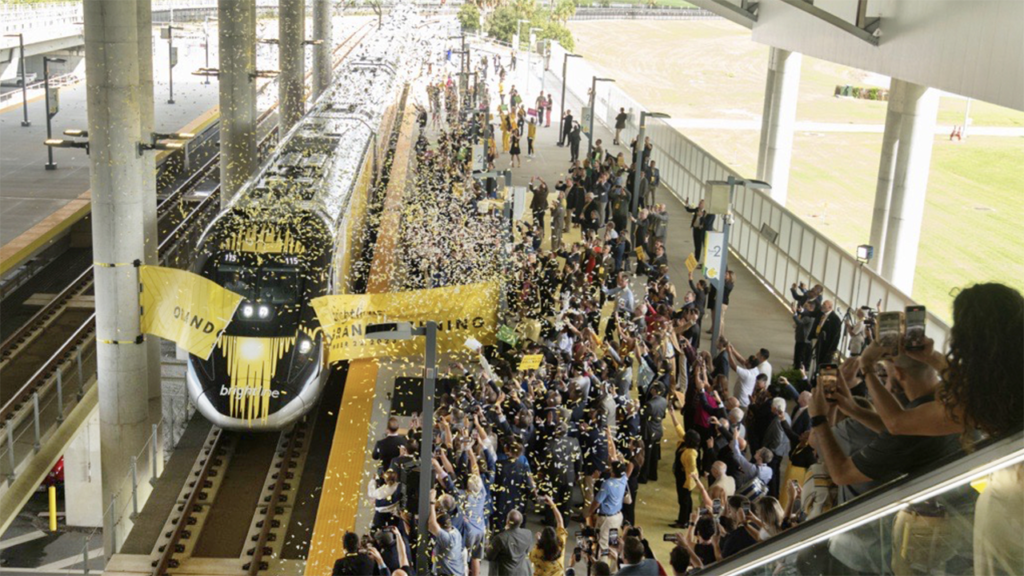
- Brightline Florida is a feel-good story as long as profitability is not the happy ending. It lost $493 million, and that was after a 211% increase in YOY revenue (cost $6 billion, with further buildouts to come).
- Brightline West is expecting to begin heavy construction and recently completed a $2.5 billion bond offering (unrated) for yields around 10% (estimated cost $6 billion).
- TCR has lost some federal funding and is now working with a private equity investor (estimated cost $40 billion).
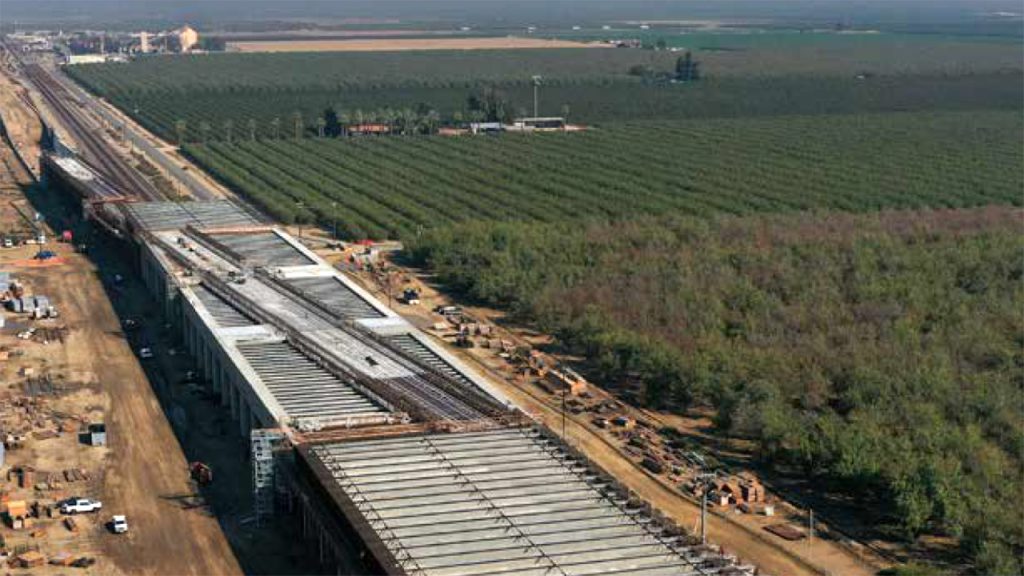
- CHSR’s federal funds are under evaluation for proper use, and project costs are off the chart with Dave Alan noting that costs could go as high as $100 billion.
Government funding and/or intervention under POTUS 45, 46 and 47 has been an odd mixed bag. The DOT has applied a slightly mini version of Musk’s chainsaw on the TCR and on CHSR while praising Brightline West. This follows the pace and enthusiasm for high-speed rail and passenger rail in general. While Amtrak ex-CEO Stephen Gardener (who pre-emptively resigned on March 19) deserves his “props” for building ridership, Amtrak still recorded a $635 million operating loss in 2024. A self-aware Amtrak publicly and bluntly acknowledges that profitability is not its objective.
Each of these projects shows one part of the problem with high-speed rail in general. Brightline Florida continues to require federal funding due to its large operating losses (didn’t see any news clawing back those funds anywhere). TCR is a great idea: Almost anyone who has arduously driven between Houston and Dallas would gladly confirm that Houston and Dallas are sprawling, massive cities lacking commuter infrastructure. It eliminates one part of the car problem, but it does not eliminate the car problem. Even if Californians want CHSR to get built, Los Angeles has the same sprawl problem (not so much in San Francisco). Brightline West may seem to make more sense. After all, who needs a car in Vegas? But how can the economics of a $6 billion high-speed train at $100 a ticket make sense for something that feels like a one-way ticket? Are that many Los Angelenos really holding back attending shows at the Sphere over traffic delays?
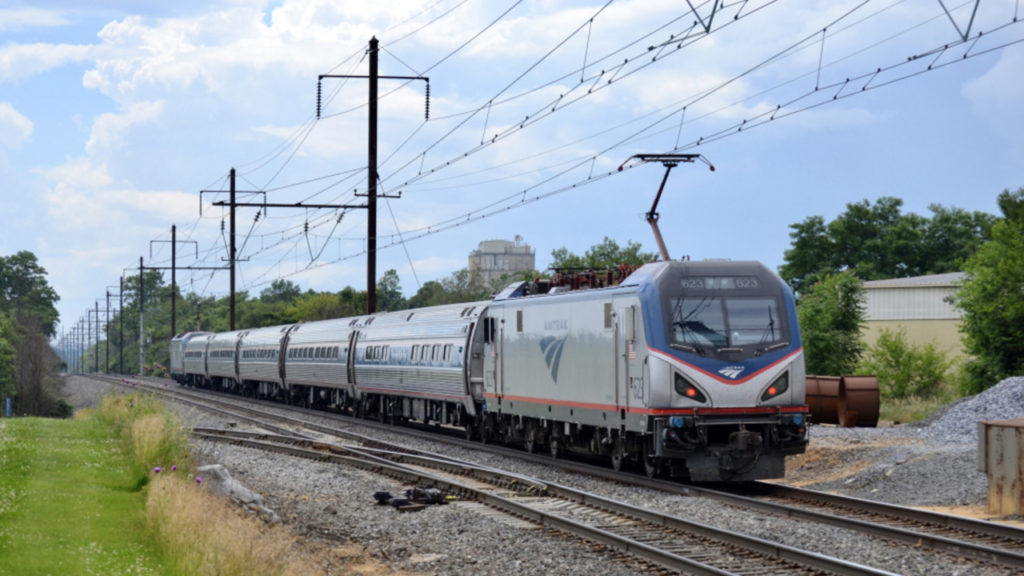
One reason the Northeast Corridor remains profitable above the rail (operationally profitable, capex and SOGR are huge costs) is that New York City, Boston, Philadelphia and D.C. are easier to get around when the train drops passengers in a center city train station.
Outside of the Northeast, the U.S. has a car culture, and as one friend has put it, getting momentum behind the use of high-speed rail would require a significant cultural shift in the West Coast mindset.
Passenger rail remains a divisive political football that is more about opposition than about rhyme or reason. Rail funding/support is either a “your tax dollars” or “my tax dollars” issue.
High-speed rail is the perfect political football. One side claims the other has misappropriated funds. Another side claims that the project approved by a previous Administration is not taxpayer worthy. Someone else claims the project not approved by the previous Administration is taxpayer worthy. It’s a game of hot potato played with billions of taxpayer dollars. Using redirection and obfuscation, it shields the participants from accountability for money spent.
What is the net result? Special interests run clandestine ops to undercut or support projects for their own benefit. No local politician wants to be accused of not supporting local infrastructure, so they spend more money and kick the can down the road. It is headache-inducing.
Maybe discussing tariffs isn’t so bad after all?