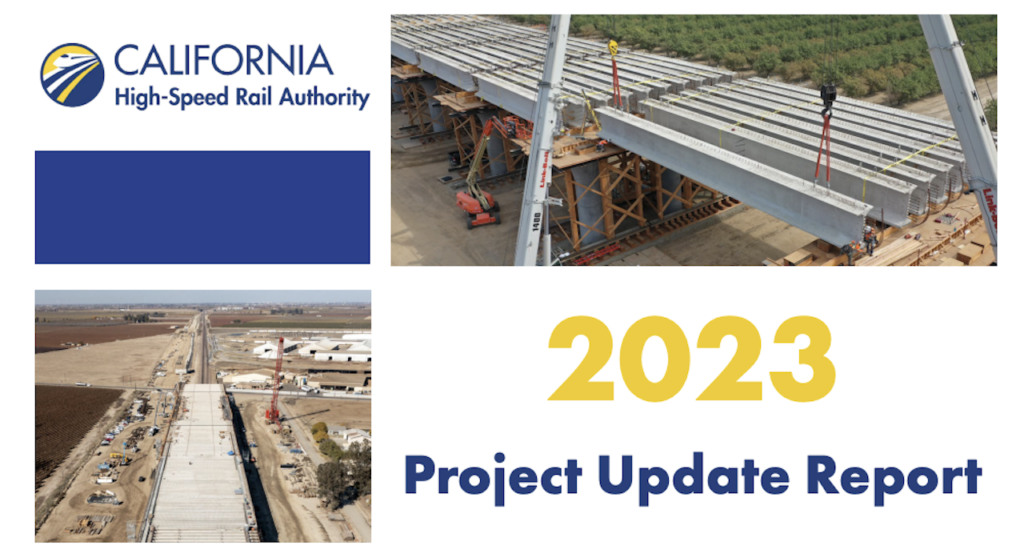
The Report (download below), issued on March 1, also fulfills the CHSRA’s commitments made in its 2022 Business Plan to provide the following updates:
- Baseline budget and schedule.
- Capital cost estimates.
- Funding strategy.
- Ridership forecasts.
- Environmental clearance.
- Steps to advance design on extensions to Merced and Bakersfield and Central Valley stations.
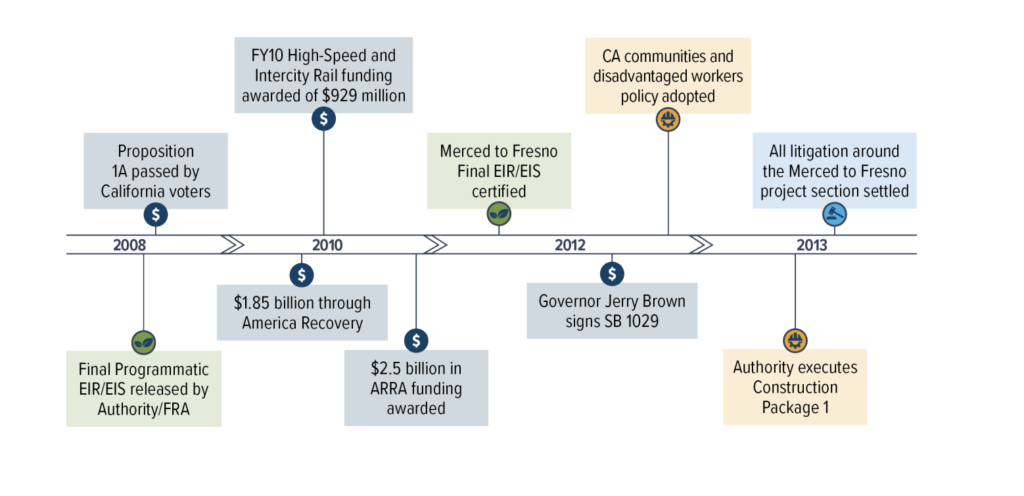
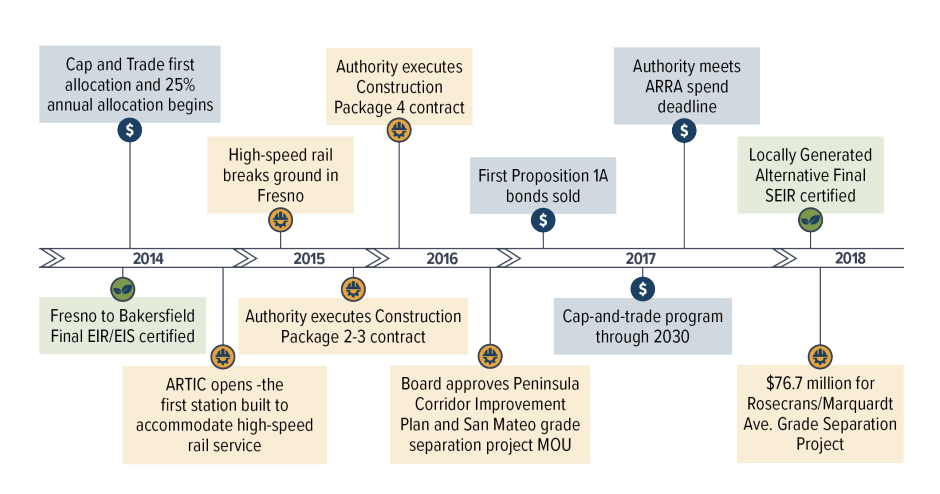
According to the Report the Authority, whose mission is to “deliver an electrified high-speed rail system that will carry passengers between San Francisco and Los Angeles in under three hours,” has secured $3.5 billion in federal funds since California voters first approved an initial down payment of $9 billion in 2008 to build the system. Additionally, the State has provided annual appropriations of Cap-and-Trade Program funds, a program which expires in 2030.
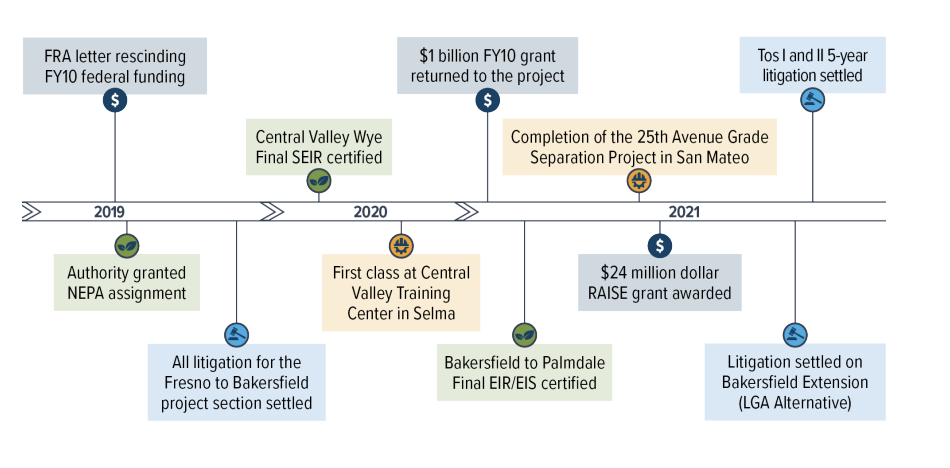
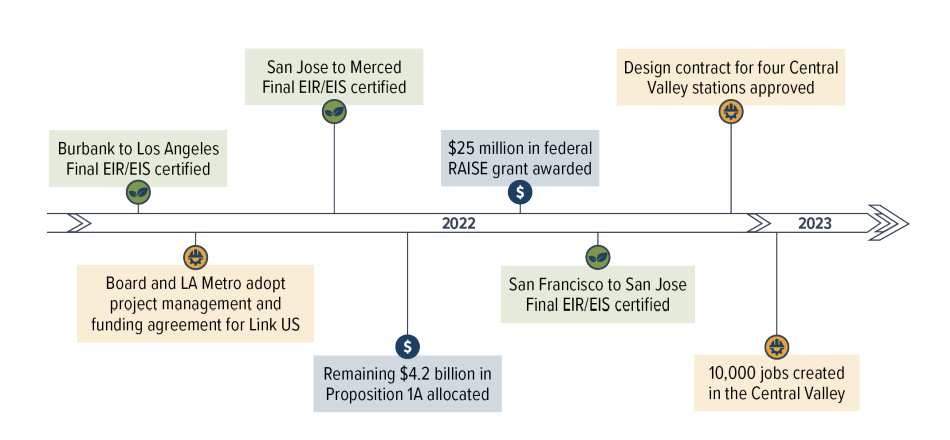
According to the Report, major accomplishments in 2022 include:
- Environmental clearance for all segments between San Francisco and Palmdale (Los Angeles County) and between Burbank and Los Angeles– 422 miles.
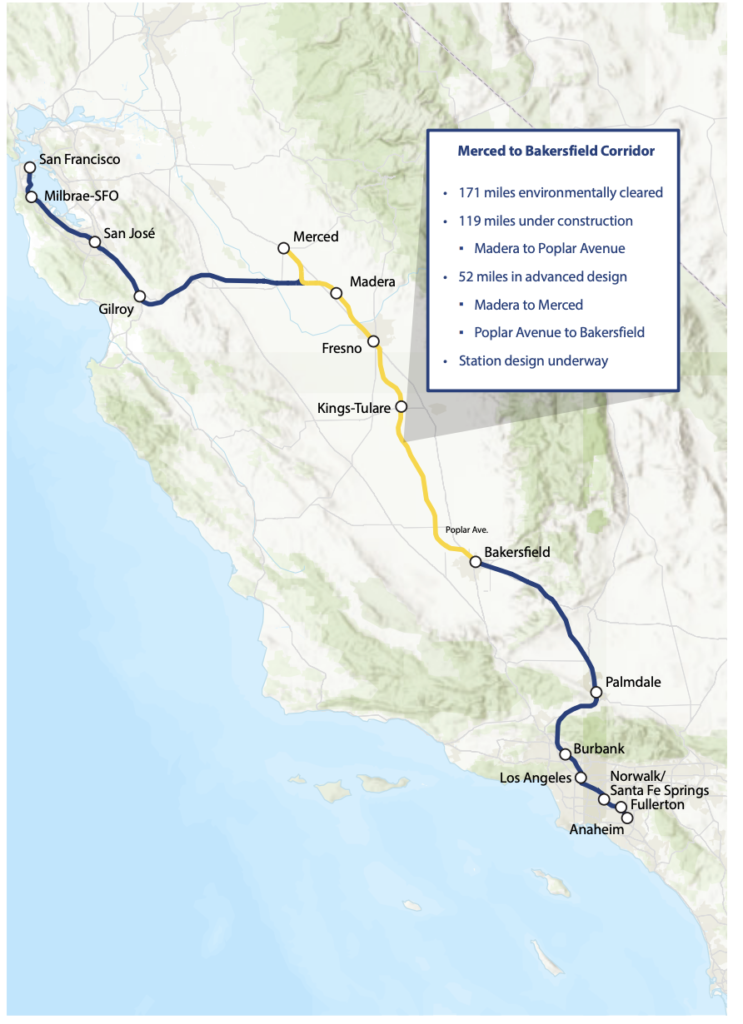
- On the 119-mile Central Valley Segment under construction:
- 100% of the design work on the civil infrastructure has been completed.
- 71% of all utility relocations were complete in progress.
- 96% of the right-of-way was delivered to contractors.
- The federal American Recovery and Reinvestment Act (ARRA) grant agreement was amended, aligning CHSRA’s revised schedule with its federal partner’s expectations.
- Contracts were awarded to begin advanced design work on the extensions to Bakersfield and to Merced.
- Contract was awarded to begin design work on the four Central Valley stations delivered by the Authority–Merced, Fresno, Kings/Tulare and Bakersfield.
Upcoming milestones in 2023 include:
- More than 10,000 jobs created since construction commenced.
- Construction Package 4 will reach substantial completion by summer.
- Palmdale to Burbank environmental document to be certified in the fourth quarter.
- Design for the Bakersfield and Merced extensions to reach draft configuration footprint (30% design) by the fourth quarter–with a right-of-way acquisition plan, utility relocation plan and third-party agreements identified.
- New strategy for procuring the track and systems completed and Request for Qualifications (RFQ) to the Board of Directors.
Additionally, the report includes new cost figures for the 171-mile initial segment, which has shot up to a high of $35 billion, exceeding secured funding by $10 billion.
According to a KVPR report, the cost of that partial system is “now higher than the $33 billion estimate for the entire 500-mile Los Angeles to San Francisco system when voters approved a bond in 2008,” and the full system cost is set at up to $128 billion in the update, “leaving a funding gap of more than $100 billion for politicians to ponder.”
DOWNLOAD THE FULL REPORT BELOW: