Election Night 2025 was a good one for Democrats. Although there were some local elections earlier this year, the first multi-state set of contests since POTUS 47 returned to office (after having been POTUS 45 earlier) has resulted in the Democrats taking back some or all the ground they lost to him last year. They won statewide offices in New Jersey and Virginia, won in New York City with one of the most unusual candidates to run for major office lately, and approved Gov. Gavin Newsom’s plan to change Congressional apportionment in California to fight what Republicans are doing in Texas and other states. There were also two questions about transit, one of which will improve it in the region where the vote was taken, the other producing a negative result that probably won’t matter.
In this article, I will report the results first, then we’ll look at how those results might affect transit and Amtrak in the states where they occurred. I will conclude with a brief look at the big picture.
The Results
Due to accidents of history, statewide elections in New Jersey and Virginia are held the year after presidential contests. So is the election for Mayor and other officials in New York City. These elections are often considered a bellwether toward next year’s Midterm elections for members of Congress and many statewide contests, as well as a referendum on how the voters believe the current Administration is doing. This year, the voters where new officers were elected don’t think it’s doing very well for them.
For the first time in New Jersey since 1961, the same party has kept the governorship for a third consecutive term. That office usually flips after one or two terms, and Phil Murphy held it for the eight-year term limit. Democrat Rebecca Michelle “Mikey” Sherrill defeated Republican Giacchino Michael “Jack” Ciattarelli by a decisive margin of 13.2%: 56.6% to 42.8%, with minor candidates getting the rest of the votes. It was Ciatterelli’s third failed try for the office, and Murphy defeated him by only 3.2% four years ago. He campaigned on a MAGA agenda with POTUS 47’s endorsement. He carried only seven of the state’s 21 counties, mostly in Republican strongholds in West Jersey and at the Shore. He carried only one county elsewhere in South Jersey, where Republicans are usually strong. Sherrill has been a House member for several years, and is known in the State, especially among Democrats. That party has controlled both houses of the state legislature for decades, and it appears that they have increased their lead. In the Senate (40 seats), the lineup is 25-15. Senators serve four-year terms, and the next election will take place in 2027. In the Assembly (80 seats), the current count is 52 Democrats and 28 Republicans. Some races were reported too close to call on Nov. 5, but Democrats appear to have captured at least 53 seats when this story was originally filed. More-recent reports indicate that Democrats have won at least 55 seats, expanding their majority.
Democrats also swept the state-level races in Virginia: Governor, Lieutenant Governor, and Attorney General, all elected separately. Virginians elected Abagail Spanberger over Republican incumbent Lieutenant Governor Winsome Earle-Sears by almost 15%: 57.2% to 42.6%. Like Sherrill, Spanberger had also been a House member. The governor of Virginia is not allowed to run for re-election. As in New Jersey, Senate elections will take place two years from now. In the 2024-25 House of Delegates, Democrats held a three-seat majority but, according to Virginia Public Media, they swept the chamber for the upcoming session, capturing 64 seats to 35 for the Republicans, with one seat not yet called.
The most dramatic race occurred in New York City, where Democrat Zohran Mamdani was elected Mayor with 50.4% of the vote, to 41.6% for former Governor Andrew Cuomo and 7.1% for Republican Curtis Sliwa, a radio talk show host who is best known for founding the Guardian Angels, a vigilante group formed in 1979 to fight crime in the city’s subway system. Mamdani considers himself a “Democratic Socialist” and focused much of his campaign effort on making the city more affordable. In an upset that startled the party establishment, he defeated Cuomo in the primary, although Cuomo continued to run as in independent candidate. POTUS 47 gave him a last-minute endorsement, and he also picked up votes from incumbent mayor Eric Adams, who withdrew from the race. Mamdani’s background is unusual: a Muslim of South Asian heritage who lives in Queens, was born in Uganda, and immigrated to the United States from there. He is 34 and has been serving in the State Assembly. He made several campaign pledges, including making the city’s buses “fast and free.”
There was a special election in California. Gov. Gavin Newsom has been pushing Proposition 50, which calls for a temporary realignment of the state’s Congressional districts until the next census in 2030. The move was prompted by efforts in Texas to change the electoral map to create five more districts in which Republicans are expected to win. The California plan, which voters approved by 63.9% to 36.1% (almost 2 to 1), would give Democrats a comparable advantage in five districts.
Transit on the Ballot
Mecklenberg County, N.C. voted 52% to 48% for a 1% sales tax increase for transportation, including transit in the Charlotte area. The new tax will be 8.25%, which is expected to generate $19.4 billion over the next 30 years. Some of that money is slated to be used to build the Red Line, a proposed regional rail line running north of Charlotte to Davidson on a branch of Norfolk Southern (historic Southern Railway). A new Metropolitan Public Transit Authority will be formed to approve projects. According to the City of Charlotte, 40% of the money will be spent on road and pedestrian improvements, 20% on bus system modernization and microtransit, and the other 40% to expand rail service. The City said that projects will include “construction of the long-awaited Red Line commuter rail, connecting Uptown Charlotte to Huntersville and Davidson. Additional projects include the Silver Line light rail from CLT Airport to Bojangles Coliseum, Blue Line extension to Pineville, and Gold Line streetcar expansion.”
In a related development, in Plano, Tex., the City Council approved a special election in May 2026 to let voters decide whether the city should withdraw from DART (Dallas Area Rapid Transit) services. The vote followed a Council meeting where more than 100 people spoke in opposition, “emphasizing their reliance on DART for work and medical needs,” according to FOX 4 News. “If voters choose to leave, the city plans to implement alternative microtransit and paratransit options in early 2026, though the city would still owe DART debt obligations.”
The Meaning of the “Blues”
The New Jersey results could be decisive in allowing the Garden State to keep much of the transit it currently has beyond the next three years. New Jersey Transit faced challenges under former Gov. Chris Christie, a Republican who held the office from 2009 until early 2017. Trains were annulled, canceled, or delayed, and incumbent Gov. Phil Murphy, a Democrat, pledged to fix the agency’s problems, but trains are still being annulled, canceled or delayed. One area where Murphy did better was getting funding for operations. As the COVID-19 relief money ran out, Murphy requested and Democrats in the legislature passed a surcharge on the largest businesses in the state that has kept transit going, with only minor service cuts.
Ciatterelli had said that he wanted the transit agency to be run like a business, implying that he would oppose renewing the tax surcharge when it expires at the end of 2028. With Democrats so strong in state government and many of the party’s voters depending on transit, especially in cities, it appears more likely that transit funding and service will continue at or near current levels in the Sherrill Administration than if Ciatterelli had been elected.
There is not much rail transit in Virginia: only some of the lines coming from Washington, DC on the Metrorail system, commuter trains during peak-commuting hours on Virginia Railway Express (VRE), and the Tide, a light rail line in Norfolk. As we have reported before, the passenger rail action in Virginia is about infrastructure projects that would enhance service on corridor-length segments of rail purchased from CSX and NS. The Virginia Passenger Rail Authority (VPRA) started these projects under former Gov. Ralph Northam (a Democrat) and continued them under incumbent Glenn Youngkin (a Republican). It is reasonable to expect that the Spanberger Administration and a strong majority in the legislature would continue those projects, and perhaps even work to expand rail transit elsewhere.
Given the political realities in New York, the best of intentions by Mayor-elect Mamdani might fall short when it comes to performance. The State has more political power than the City in many areas of city life, including transit. Gov. Kathy Hochul, who succeeded rival candidate Cuomo, got onto the Mamdani bandwagon late in the campaign, but that alone is not enough to ensure strong cooperation or stronger funding for urban necessities like transit. The State controls the Metropolitan Transportation Authority (MTA), which runs the transit system in the City and New York suburbs surrounding it.
Mamdani believes in transit, to the point of arriving at campaign rallies by riding a bus and emerging from it at the event. Can he convince Albany to share his belief? That is the question. One of his major campaign planks is “fast and free” buses in the City. Nobody disputes that New York City buses are slow, although the new Congestion Pricing toll has resulted in somwhat faster travel south of 60th Street in Manhattan, where the toll is in effect. There might be measures that NYC DOT can take regarding street design and traffic patterns, but POTUS 47 has criticized Mamdani severely and has threatened to punish the city if he is elected. Does that mean New York City will lose federal funds? Time will tell.
Regarding the “free” part, that won’t be easy, and it might even be impossible, despite Mamdani’s best hopes and efforts. Gubernatorial appointees outnumber mayoral appointees on the MTA Board and among senior MTA managers. It is unclear, and it appears unlikely from here, that the MTA would give up the revenue that it now collects from bus riders. Other cities, including Richmond and Kansas City, have implemented fare-free bus systems, as have some smaller bus providers, but it is not easy to fathom that New York City would also go that route. In addition, Mamdani has not mentioned the subway system going fare-free. Even in the unlikely event that money could be found from other sources to pay for operating fare-free buses, a system where riders must pay a fare on one mode but are not required to do so on the other mode would be extremely complicated, especially on a system as massive as New York’s. We don’t know the details about how Mamdani would implement a plan to eliminate bus fares, but it will be interesting to find out what he has in mind, once he takes office.
Change for Democrats Generally?
There is no question that this year’s election results will help the Democrats. They are now more confident about next year’s elections than they had been, and at least some of their success can be attributed to POTUS 47’s policies, the longest federal shutdown in history, skyrocketing health insurance costs, layoffs (especially in northern Virginia), and the loss of SNAP food benefits.
In a way, it is scary that California Democrats are gerrymandering to combat the same abhorrent practice in Texas. It might be necessary from their viewpoint, but that does not make it any less repugnant, at least to this writer, who believes in democracy. Still, it shows that Californians under Gov. Gavin Newsom are fighting back against POTUS 47, his Republican cronies and their policies. New Yorkers elected Zohran Mamdani to fight back, too. We don’t know how this election will affect trains, transit, and other facets of American life, especially in the states that had notable elections this year, and maybe elsewhere, too. Whatever those effects might be, I’ll keep you informed about them.
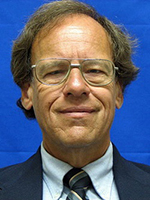
David Peter Alan has been reporting on passenger trains and rail transit in the United States and Canada since 2004. A long-time passenger rail advocate, he came to reporting after gaining two decades of advocacy experience. He is a member and has previously served as Chair of the Senior Citizens and Disabled Residents Transportation Advisory Committee (SCDRTAC) at New Jersey Transit, the Lackawanna Coalition (which concentrates on New Jersey), and the Essex County (New Jersey) Transportation Advisory Board. Nationally, he belongs to the Rail Users’ Network (RUN) and has been a member of its Board of Directors since 2005. Admitted to the New Jersey and New York Bars in 1981, he is a member of the U.S. Supreme Court Bar and a Registered Patent Attorney specializing in intellectual property and business law. Alan holds a B.S. in Biology from Massachusetts Institute of Technology (1970); M.S. in Management Science (M.B.A.) from M.I.T. Sloan School of Management (1971); M.Phil. from Columbia University (1976); and a J.D. from Rutgers Law School (1981). He has ridden the entire Amtrak and VIA Rail networks and nearly all rail transit in the United States and Canada.