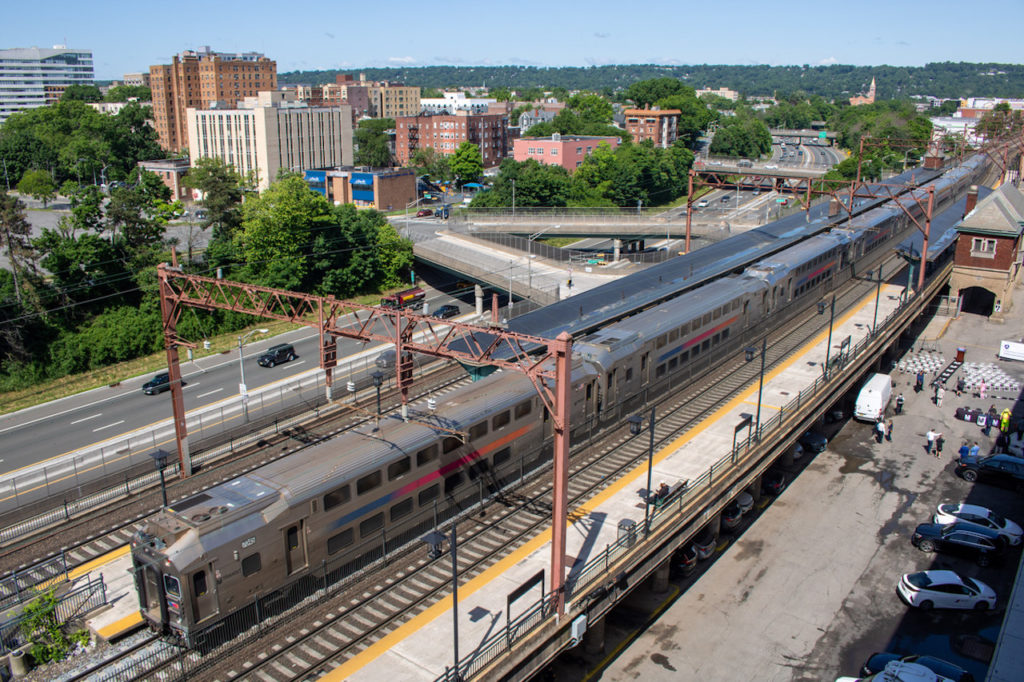
The purchase, NJ Transit says, continues to advance the agency’s plan to phase out the oldest single-level railcars from its fleet. The Multilevel IIIs are Electric Multiple Units (EMU), self-propelled and don’t require a separate locomotive. Electric motors are incorporated within one or a number of the vehicles on the train.
The Multilevel IIIs will offer a range of benefits over the older single-level railcars they will replace, according to the agency. The vehicle maximum speed will increase to 110 MPH. The cars will be compliant with the latest federal regulations, including Positive Train Control (PTC). Other customer amenities will include USB charging ports for customers and new, onboard information displays.
The contract, according to NJ Transit, utilizes options on the existing contract with Alstom Transportation at a cost not to exceed $170 million plus 5% for contingencies, subject to the availability of funds. NJ Transit already has orders in for 138 new Multilevel III vehicles, which are in production. The first of these vehicles is scheduled to arrive in New Jersey for testing later this year.
In December 2018, the NJ Transit Board of Directors approved a rail rolling stock vehicle procurement award to Bombardier, which Alstom acquired in early 2021, for 113 Multilevel IIIs to replace the single-level, self-propelled Arrow III rail vehicles manufactured more than 40 years ago. In February 2022, the NJ Transit Board approved the purchase of an additional 25 Multilevel IIIs.
“This significant investment brings the total of new multilevel railcars we’ve purchased since 2018 to 174,” said NJ Transit President and CEO Kevin S. Corbett. “These new cars will substantially reduce the overall age of the rail fleet, improving reliability, capacity and customer comfort.”