Federal provisions concerning passenger rail liability are creating a headache that may threaten commuter rail service across the nation.
The adage of “like watching a train wreck” is really not one that passenger rail agencies and rail suppliers like to use or enjoy hearing, but if there ever was an appropriate metaphor for an issue that is heading in that direction, the excess liability insurance problem for commuter rail agencies is it. And this one is made only possible by a federal provision that may have the unintended consequence of shutting down commuter rail services across the nation this time next year.
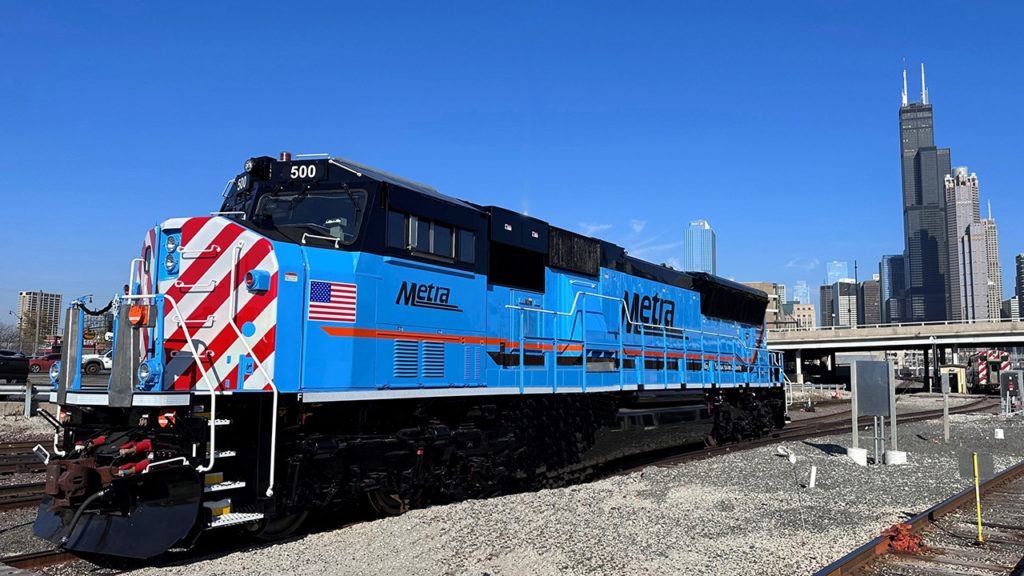
Excess liability insurance coverage is the coverage that commuter rail agencies such as the Long Island Rail Road, New Jersey Transit, Metra and Virginia Railway Express, among many others, purchase from private insurers for catastrophic losses. While all passenger rail, including commuter rail, is incredibly safe, making such coverage appear almost unnecessary, a federal provision of law effectively forces commuter rail agencies to procure this coverage under circumstances that may prove to be impossible.
When Congress enacted limitations (caps) on rail passenger liability in the Fixing America’s Surface Transportation Act (FAST Act), a comprehensive five-year surface transportation bill in December 2015, they set a cap of $200 million per event. That meant, no loss involving passenger rail could exceed in total the $200 million cap on liability. Later, Congress adjusted the cap to $294,278,983—an amount that was calculated using the Consumer Price Index (CPI). The cap was also indexed to inflation to be adjusted every five years thereafter, again with an application of the CPI. With the passage of that provision, the index methodology was put in place to ensure that the aggregate allowable awards to all rail passengers, against all defendants, for all claims, including punitive damages, arising from a single accident or incident is based on current dollars adjusted for inflation.
The last time the cap was adjusted was Feb. 22, 2021, when then-Secretary of Transportation Pete Buttigieg published a notice in the Federal Register that the statutory adjustment to the rail passenger transportation liability cap would go into effect 30 days after Feb. 25, 2021—March 27, 2021. The liability cap was raised from $294,278,983 to its current level of $322,864,228. The cap is next scheduled to be adjusted in the first quarter of 2026. With the CPI as the sole determinant of the adjustment, it is anticipated there will be a very significant increase in the cap, perhaps to $400 million.
The problem is that allowing only 30 days to acquire additional excess liability insurance coverage is far too little time, and if commuter railroads are unable to secure coverage within the 30 days provided for in the law, then they will have to cease all operations. The process for securing coverage is quite complex and requires a time period far in excess of 30 days to complete.
Commuter rail agencies renew their coverage every 12 months. Currently all commuter rail agencies and Amtrak procure a large proportion of their coverage from overseas insurers, as U.S.-based insurers generally don’t offer such coverage—not because passenger rail carries significant risk of loss, but because many other losses from occurrences such as wildfires and hurricanes, in addition to large jury verdicts for trucking accidents and other such losses, has caused U.S.-based insurers to place their bets elsewhere.
The more-than 30 commuter rail agencies nationwide follow a similar process of renewal—one that involves months of underwriting and analysis by insurers. And commuter rail agencies do not renew their coverage at the exact same time, but rather over the course of the entire calendar. The provision in law that requires an updated liability cap to become effective in just 30 days forces all 30-plus commuter rail agencies to simultaneously seek coverage, causing more stress than the marketplace can handle. This is a classic case of a federal requirement causing a crisis that need not exist. And getting Congress to address the issue requires legislation, which is hard to come by these days.
Also, a notable fact about the liability cap is that it only directly applies to Amtrak and any other federal passenger rail service. Commuter railroad agencies are creatures of the states in which they reside and thus fall under state sovereign immunity whereby a state cannot be sued in federal and state court without its consent. The Eleventh Amendment’s explicit directives allow a state to invoke immunity when sued under an otherwise valid federal law and can define the scope of their immunity from suits based on its own law. So, state limitations on liability would apply to losses suffered by a commuter railroad and the federal cap in all cases would be far more than all state limitations.
So, if sovereign immunity protects states from excess losses, how does the federal limitation on liability come into play, and why do commuter railroads procure expensive coverage to insure themselves up to that federal cap? Once again, the federal action has prompted freight rail carriers and critical infrastructure contractors to insist that commuter rail agencies also insure themselves up to the federal limit. And under threat of refusal to allow commuter railroads to, in the case of freight railroads enter their trackage, or in the case of license holders of anti-collision technology (Positive Train Control), license use of their technology, commuter railroads are forced to procure excess liability coverage up to the federal limit.
States by no means have surrendered their sovereign immunity and would almost assuredly invoke those limitations in the event of a loss, but federal action has forced their hand. This is but one more example of a federal action causing repercussions. And now Congress needs to fix the problem and extend the effective date from 30 days to 365 days, thus allowing commuter railroads an orderly adjustment to the new cap when they conduct their annual renewal.
The bottom line is, commuter rail agencies have their hand forced by third parties and must procure coverage up to the federal limit, even if they are technically not potentially liable for losses at that level. The least Congress can do is make the process an orderly and manageable one.

KellyAnne Gallagher is CEO of the Commuter Rail Coalition (CRC). A public transportation policy professional and a strategic advisor to industry leaders, she has more than 20 years serving across industry sectors. In 2019, she founded CRC, where she is shaping policy and driving the agenda of the association, which serves as the singular voice of the commuter rail industry. Previously, Gallagher was a member of the New York MTA’s senior leadership team, which she joined after 16 years with the American Public Transportation Association.